-
Welcome to CivilWarTalk, a forum about the American Civil War! - Join today! It's fast, simple, and FREE!
You are using an out of date browser. It may not display this or other websites correctly.
You should upgrade or use an alternative browser.
You should upgrade or use an alternative browser.
New guy with ammo question.
- Thread starter jordanka16
- Start date


- Joined
- Jul 28, 2015
The ram-rod looks shorter than it should be, was this a new or used purchase? Welcome from Maryland!well it's hard to get a good picture from the camera that shows it, but the rifling sure seems to be the same depth all through the bore. I should have a chance to shoot it this weekend so I will find out if it likes these minies sized at .576 or if something larger is in order. Here is a photo by the way.
jordanka16
Cadet
- Joined
- Oct 2, 2018
- Location
- Albany, Oregon
The ram-rod looks shorter than it should be, was this a new or used purchase? Welcome from Maryland!
It was a used purchase, the ramrod measures 39.5".

JPChurch
First Sergeant
- Joined
- Dec 30, 2016
- Location
- Manassas VA
I agree about the ramrod length. Does the end of it have the threading on it for a worm? Mine does have the threading and measures 40". It is a Japanese 1863 Springfield sold by Dixie Gun Works that was a kit from the early 80's. Shot it with the standard .575 cast minies, Lyman 575213 mold. Pure 100% lead, lubed the skirts with 50-50 beesewax/Crisco. About 50 grains of 3FG Goex. Held a nice group at 50 yards but the sights were way off. Like 8" low and to left of the bull's eye. Never had them adjusted by my fellow members of the N-SSA. It would be a great shooter if I ever get that done. I believe the barrel is fluted. Now this was not with paper cartridges, but the red plastic tubes that are used for N-SSA skirmishing, check the weapons forums, there is a heading the N-SSA posted about membership. Not sure if there's any regions within the N-SSA that incorporate Oregon. I shot with the N-SSA for almost 3 years in Winchester, the national hdqtrs back in the late 80's. It was a great fun and I really learned a lot from fellow members.
Last edited:
jordanka16
Cadet
- Joined
- Oct 2, 2018
- Location
- Albany, Oregon
The end is threaded, I dont know what thread pattern, and I didn't get any accessories that would fit it, just a nipple wrench. Which reminds me, what would be some good tools and accessories to have on hand for it?

 Forum Host
- Joined
- Oct 10, 2012
- Location
- Mt. Jackson, Va
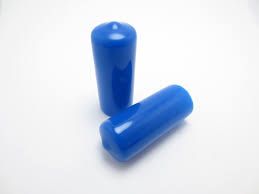
Why not try plastic cartridge tubes? They are reusable, more convenient, and you don't have to worry about the lube leeching into the paper. http://www.lodgewood.com/Quick-Load-Tube--58-Caliber_p_29.html
jordanka16
Cadet
- Joined
- Oct 2, 2018
- Location
- Albany, Oregon
Why not try plastic cartridge tubes? They are reusable, more convenient, and you don't have to worry about the lube leeching into the paper. http://www.lodgewood.com/Quick-Load-Tube--58-Caliber_p_29.html
View attachment 206140
I actually got a bunch of tubes with it, that I presume were used for NSSA, but I want to have the paper ones for the experience, for me and others I take shooting.
- Joined
- Oct 10, 2012
- Location
- Mt. Jackson, Va
One recommendation - get a .58 cal bullet sizer because not all minie balls come exactly sized out of the box. Some will be at .580 cal and others can vary from .578 - .582. And if you try to load a .582 minie down a barrel ( especially if you've already fired a few rounds through it ) you will have a helluva time ramming it all the way down. They are available from Lodgewood.com as well.

jordanka16:
It's no good to do any sizing till, you have an idea of the bore size. If you need to, PM me, I can send you Minies sized:
.575"
.577"
.578"
.580"
You can see which ones will start to fit down your barrel, and which ones are tight, or won't go at all.
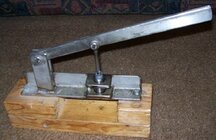
That would go a long way towards getting you an idea of what size to work with. A sizing apparatus does not have to be complex, I made my own push-thru press. (see photo)
Kevin Dally
It's no good to do any sizing till, you have an idea of the bore size. If you need to, PM me, I can send you Minies sized:
.575"
.577"
.578"
.580"
You can see which ones will start to fit down your barrel, and which ones are tight, or won't go at all.
That would go a long way towards getting you an idea of what size to work with. A sizing apparatus does not have to be complex, I made my own push-thru press. (see photo)
Kevin Dally
Attachments
jordanka16
Cadet
- Joined
- Oct 2, 2018
- Location
- Albany, Oregon
jordanka16:
It's no good to do any sizing till, you have an idea of the bore size. If you need to, PM me, I can send you Minies sized:
.575"
.577"
.578"
.580"
You can see which ones will start to fit down your barrel, and which ones are tight, or won't go at all.
That would go a long way towards getting you an idea of what size to work with. A sizing apparatus does not have to be complex, I made my own push-thru press. (see photo)
Kevin Dally
That would be really helpful, thanks!
JPChurch
First Sergeant
- Joined
- Dec 30, 2016
- Location
- Manassas VA
That link to Lodgewood shows cleaning rods. Get the proper one of those and the cleaning wire brush that screws into the end. These can be found at most CW weapons suppliers on the internet. Not sure why your ramrod is short. Maybe from a different rifle musket. When mine is placed all the way down through the stock it's even with the end of the barrel.
jordanka16
Cadet
- Joined
- Oct 2, 2018
- Location
- Albany, Oregon
That link to Lodgewood shows cleaning rods. Get the proper one of those and the cleaning wire brush that screws into the end. These can be found at most CW weapons suppliers on the internet. Not sure why your ramrod is short. Maybe from a different rifle musket. When mine is placed all the way down through the stock it's even with the end of the barrel.
What is the proper procedure to clean it? I've cleaned black powder arms before but never a muzzleloader, reversing the brush in the bore just seems bad, and how do you run a patch through it without it getting stuck?
Manuals of the period preserved the recommended fashion for cleaning the piece in the field:What is the proper procedure to clean it? I've cleaned black powder arms before but never a muzzleloader, reversing the brush in the bore just seems bad, and how do you run a patch through it without it getting stuck?
"It is not essential for the musket to be dismounted every time that it is cleaned . . . it can be perfectly cleaned as follows: Put a piece of rag or soft leather on the top of the cone, let the hammer down upon it: pour a gill [four ounces] of water into the muzzle carefully, so that it does not run down the outside: put a plug of wood [not tompion!] into the muzzle, and shake the gun up and down, changing the water repeatedly until it runs clear. Then withdraw the leather and stand the musket on the muzzle a few moments, then wipe out the barrel [by screwing the wiper, sometimes erroneously referred to as the "worm," onto the end of the ramrod and putting a piece of dry cloth or tow around it, sufficient to prevent it from chafing the grooves of the barrel: wipe the barrel quite dry, changing . . . the cloth two or three times], and also wiper the exterior of the lock and the outside of the barrel around the cone [sometimes erroneously referred to as the "nipple"] and cone-seat, first with a damp rag, then with a dry one, and lastly with a rag that has been lightly oiled. In this way, all the dirt from firing may be removed without taking out a screw. If, however, the hammer works stiffly or grates upon the tumbler, the lock must be immediately taken off and the parts cleaned and touched with oil" (Rules for the Management and Cleaning of the Rifle Musket, Model 1855, 1862, p. 24).
Consider the experience of Leander Stillwell, 61st Illinois, who commenced to clean his musket in a soggy bivouac while en route to Bolivar, Tennessee, mid-July, 1862. He wrote:
"We were required to keep all the metal parts (except the butt-plate) as bright and shining as silver dollars. I have put in many an hour working on my gun [an Austrian rifle-musket] with an old rag and powdered dirt, and a corn cob, or pine stick, polishing the barrel, the bands, lockplate and trigger-guard until they were fit to pass inspection. The inside of the barrel we would keep clean by the use of a greased wiper and plenty of hot water. In doing this, we would ordinarily, with our screwdrivers, take the gun to pieces, and remove from the stock all metal pieces. . . . We soon learned to take care of our pieces in a rain by thoroughly greasing them with a piece of bacon, which would largely prevent rust from striking in" (Stillwell, The Story of a Common Soldier pp. 90-91).
Practical experience has shown that the use of very hot water will allow the barrel interior to dry quickly, and without rust. It is recommended that the barrel be "oiled" as stated above after each cleaning. Metal parts should be cleaned with "fine flour of emery-cloth" (Rules for the Management and Cleaning of the Rifle Musket, Model 1855, 1862, p. 23) and also given a light coat of oil. Avoid the use of modern gun lubricants (nothing smells so much like a petroleum-based product than these lubricants), using instead sweet oil, beef tallow or bacon fat sparingly, in the manner of the original soldiers. Don't forget to clean the ramrod, taking care to clean the head end (sometimes erroneously referred to as the "tulip"). as well as the threaded end. Similarly, the bayonet should be cleaned with emery-cloth and lightly coated with oil or cooking grease. And if for whatever reason, you cannot achieve machine-shop perfection in the cleaning of your rifle musket, consider the exchange between a soldier of the 21st Massachusetts and a regular of Syke's V Corps on the march near Fox's Gap, Maryland, September 15, 1862. As the dusty V Corps men marched by, the Massachusetts soldier remarked (quite out loud) that he didn't see any difference between a regular and a volunteer. A sergeant of the Regulars stepped out of the column and shoved his "polished and spotless musket" into the man's face and growled. "Here's where the difference comes in!" The New Englander glanced at the piece but a moment, then remarked. "Yes, we use ours to fight with" (Priest, Before Antietam: The Battle for South Mountain p. 331). (A special note: never replace your bayonet into its scabbard after you have fired with the bayonet fixed. Clean it first. By replacing it in the scabbard without cleaning, you will be coating the inside of your scabbard with powder fouling, which you can never get out, and the acidic fouling will promote an instantly rusty bayonet.)
https://regtqm.com/product/common-screwdriver-with-worm-musket/
http://www.fcsutler.com/fcfirearmaccessories.asp
Worm, .58 cal, Otherwise known as a "Wiper". Screws onto the end of the .58 cal. Italian ramrods as well as the cleaning rod set sold below.
Reproduction of the originals...............................$24.95
Kevin Dally
Last edited:
JPChurch
First Sergeant
- Joined
- Dec 30, 2016
- Location
- Manassas VA
I've always used real warm dish soap water poured down the barrel with the wire brush on the cleaning rod first. That's with the cone and lock off with it in the laundry sink barrel up. Or you can take the barrel off instead of the lock, but the cone needs to come off. Then ream it out good with warm water without soap with cleaning patches till the bore is dry. Oil the bore lightly with whatever you wanna use with the cleaning rod and patches. The barrel should sing/whistle a little bit when doing so while withdrawing the cleaning rod. That's when you know it's nice and clean. Run clean patches down the bore prior to firing again to get the oil out. Snap a few caps first before loading.

Couple of comments-
I am NSSA and will be competing at Nationals this weekend in Winchester. I did reenact for a bunch of years during the 125th to 135th cycles and while it was memorable, nothing touches shooting live with the old guns!
Go join the NSSA board, there are guys there who shoot these guns live with a depth of knowledge you won't find anywhere else on how to make them tack drivers. Authentic rounds are ok if you want to, but not really practical if you're into shooting. Try them, then just do it the NSSA way. They keep way better. There are tons of lube recipies out there. Just ask any 10 NSSA members and you'll get 12 answers. Here's what I've found to work really, really well. Beeswax 40% Lard 60%. I tested lard against crisco and there was no comparison, every gun shot better with lard or a lard derivative except one and that one was no change. On a couple, namely my 63 Sharps and 58 Parker Hale, the difference was startling. In the Sharps, the group size was 1.75in at 50yds, but went to a single hole with lard. The Parker Hale went from a 2.5in group at 100 to 1.5, yup, 1.5 with iron sights, one big ragged hole. Point is, experiment, observe, change one variable at the time and you'll find the Miroku to be a sweet shooting musket. Also try some different bullets. If your Miroku is like one I have some experience with, the bore is oversize. The one I shot needed a 579 bullet as the bore was 580. Not all minies are the same, some shoot better than others. Both my 62 Colt Contracts like the Rapine "trashcan" and will shoot them into one hole at 50yds, but neither shoots well with about any normal minie I've tried. For a bullet selection, get with Pat Vebosky aka Bullet Man. He is on the Lodgewood website. Order a selection and have fun experimenting.
Last thing, don't get wrapped up in charge levels. These guns generally shoot best at about 60-75% service charge. My 62 Contracts are shooting 44.5gr 3f Old Eynsford and the Parker Hale is shooting 42gr 3f same powder.
I am NSSA and will be competing at Nationals this weekend in Winchester. I did reenact for a bunch of years during the 125th to 135th cycles and while it was memorable, nothing touches shooting live with the old guns!
Go join the NSSA board, there are guys there who shoot these guns live with a depth of knowledge you won't find anywhere else on how to make them tack drivers. Authentic rounds are ok if you want to, but not really practical if you're into shooting. Try them, then just do it the NSSA way. They keep way better. There are tons of lube recipies out there. Just ask any 10 NSSA members and you'll get 12 answers. Here's what I've found to work really, really well. Beeswax 40% Lard 60%. I tested lard against crisco and there was no comparison, every gun shot better with lard or a lard derivative except one and that one was no change. On a couple, namely my 63 Sharps and 58 Parker Hale, the difference was startling. In the Sharps, the group size was 1.75in at 50yds, but went to a single hole with lard. The Parker Hale went from a 2.5in group at 100 to 1.5, yup, 1.5 with iron sights, one big ragged hole. Point is, experiment, observe, change one variable at the time and you'll find the Miroku to be a sweet shooting musket. Also try some different bullets. If your Miroku is like one I have some experience with, the bore is oversize. The one I shot needed a 579 bullet as the bore was 580. Not all minies are the same, some shoot better than others. Both my 62 Colt Contracts like the Rapine "trashcan" and will shoot them into one hole at 50yds, but neither shoots well with about any normal minie I've tried. For a bullet selection, get with Pat Vebosky aka Bullet Man. He is on the Lodgewood website. Order a selection and have fun experimenting.
Last thing, don't get wrapped up in charge levels. These guns generally shoot best at about 60-75% service charge. My 62 Contracts are shooting 44.5gr 3f Old Eynsford and the Parker Hale is shooting 42gr 3f same powder.
Cleaning-
NOTHING and I mean NOTHING I've tried over the years including the "original method" will hold a candle to Windex brand window cleaner. Several spritzes down the bore, wipe clean, repeat, wipe with dry patch, oil, clean cone with same stuff, oil and done. Doesn't get any easier.
NOTHING and I mean NOTHING I've tried over the years including the "original method" will hold a candle to Windex brand window cleaner. Several spritzes down the bore, wipe clean, repeat, wipe with dry patch, oil, clean cone with same stuff, oil and done. Doesn't get any easier.
jordanka16
Cadet
- Joined
- Oct 2, 2018
- Location
- Albany, Oregon
Awesome info guys, appreciate all of it. Looks like I'll be needing to place an order for a few more accessories, and I will definitely look up that bullet guy, if I could order 20-25 of a few different styles to try that would be excellent. Tin cup is sending me some minies of various sizes to get an idea of what bore diameter I am working with, so once I figure that out I can go from there with the experimentation, which is my favorite part of getting a new gun, finding out what it likes.
When the ramrod is dropped into the barrel it only sticks up a very small amount, a little over 1/4", is that too short? I would rather not spend the money on a new ramrod if it's unnecessary, but if it will give me trouble I will.
When the ramrod is dropped into the barrel it only sticks up a very small amount, a little over 1/4", is that too short? I would rather not spend the money on a new ramrod if it's unnecessary, but if it will give me trouble I will.
once I figure that out I can go from there with the experimentation, which is my favorite part of getting a new gun, finding out what it likes.
When the ramrod is dropped into the barrel it only sticks up a very small amount, a little over 1/4", is that too short? I would rather not spend the money on a new ramrod if it's unnecessary, but if it will give me trouble I will.
If you screw a wiper on the end of the rammer, it sticks out a good bit further!
Kevin Dally

FedericoFCavada
First Sergeant
- Joined
- Jan 27, 2015
- Location
- San Antonio, Texas
Awesome info guys, appreciate all of it. Looks like I'll be needing to place an order for a few more accessories, and I will definitely look up that bullet guy, if I could order 20-25 of a few different styles to try that would be excellent. Tin cup is sending me some minies of various sizes to get an idea of what bore diameter I am working with, so once I figure that out I can go from there with the experimentation, which is my favorite part of getting a new gun, finding out what it likes.
When the ramrod is dropped into the barrel it only sticks up a very small amount, a little over 1/4", is that too short? I would rather not spend the money on a new ramrod if it's unnecessary, but if it will give me trouble I will.
Cleaning: I like the Windex method posted by poorjack! I use water, an appropriate size jag on a range rod, cotton patches, and often linen tow, a waste fiber from flax processing. I keep it on hand as a tinder for making fires with flint and steel or for re-enactment/impression uses. After I'm through shooting, I stop up the cone and add some water, put my hand over the muzzle and slosh it around, dump it out, and repeat before I start to head home where I can be more fastidious.
Minie/Burton lube: I can tell you that the original 8 parts beeswax to 1 part tallow mixture used at the end of the war when it was being fought in the southeastern states is too thick in my experience. Even in Texas! I just made up some three parts tallow to one part beeswax for some cartridges. I also made up some Enfield-type cartridges and used six parts tallow to one part wax, but that basically just greases the paper around the skirt of the Pritchett-type bullet. Probably too runny for Minie/Burton grooves? Your lube may be just fine, but be advised that some of the older, more experienced, saltier type skirmishers I know swear off Crisco. The claim is that it results in more "cook offs" when a powder charge is introduced to the bore of a rapidly fired musket. Be careful of those, and keep your appendages away from the muzzle. Seen it happen. Of course, these same skirmishers I know probably think I'm a bit nutty for making paper cartridges rather than using just the tubes. The tubes are handy! Just add your charge, put the bullet in nose down, and then hand dip the skirt in some hot lube in a double-boiler type arrangement and it seals the whole round.
I might recommend getting a forming rod and pre-cut cartridge papers per Tin Cup's measurements from https://www.thejeffersonarsenal.com/
Great people, and very nice kit with good instructions, authentic flax twine, a chocking cord, etc. etc. You just supply your own powder and bullets. I've used the kits, forming rod, etc. to make round ball paper cartridges of different kinds from 1836 to 1861 styles for smooth bores, and .58 Minie/Burton cartridges for my rifle. I'm currently making up both Model 1855 and Model 1861 cartridges for a .69 caliber rifled and sighted Model 1842! One can always save some of the pre-cut papers and then make templates for cutting your own. I have done that, but I've also followed Tin Cup's instructions in order to approximate a template for the three-piece cartridge for the large .68 caliber Minie.
The consistency of the paper for the powder cylinder might be good to see and feel from Jefferson Arsenal's kit before you go scrounge up your own. I'd think that some types of butcher paper might be ideal. Having made Model 1855 and Model 1861 cartridges, allow me to observe that I greatly prefer making Model 1863 cartridges! These are two pieces of paper like the Model 1861s, and choked, but omit any flax thread at all, simply relying on twisting and back folding of the paper. Much simpler. Model 1861s are still fairly sturdy, and much, much easier to make than the three piece Model 1855. Good luck and good shooting to you! I hope you can find skirmishing events out there in Oregon! The team events in particular are a lot of fun, and quite challenging.
FedericoFCavada
First Sergeant
- Joined
- Jan 27, 2015
- Location
- San Antonio, Texas
PS: Pat Kaboskey up in Wisconsin has contact information at Lodgewood's website. He can cast bullets for you for a batch while you wait to get started casting your own.
I've finally accumulated all the stuff I need to start casting, but since I'll do it outside/out of doors, I'm waiting for a rainless day to get started. My first attempts will be trying to do the smooth bore conical "type II" so-called "Nessler" (a misnomer) bullet for use in a Model 1842, before I start making round balls and .575" Minies.
I've finally accumulated all the stuff I need to start casting, but since I'll do it outside/out of doors, I'm waiting for a rainless day to get started. My first attempts will be trying to do the smooth bore conical "type II" so-called "Nessler" (a misnomer) bullet for use in a Model 1842, before I start making round balls and .575" Minies.
Similar threads

- Replies
- 9
- Views
- 559

- Replies
- 58
- Views
- 3K

- Replies
- 43
- Views
- 814

Similar threads
- Replies
- 7
- Views
- 397

- Learn About Us
- ►About CivilWarTalk
- ►Contact the Webmaster
- ►Meet the Staff
- ►Link to CivilWarTalk
- Join Our Community
- ►Register
- ►Browse Forums
- ►View Today's Discussions
- ►Search the Forum
- Get Help
- ►FAQ
- ►Student Guide
- ►Forum Rules & Etiquette
- ►Copyright / DMCA
 Bringing the