{⋆★⋆} BG Jackson, William Lowther

William Lowther "Mudwall" Jackson Jr.

Born: February 3, 1825
General jackson.jpg


Birthplace:
Clarksburg, West Virginia

Father: William Lowther Jackson Sr. 1798 – 1836
(Buried: Jackson Cemetery, Clarksburg, West Virginia)

Mother: Harriet Wilson Blackburn 1805 – 1889
(Buried: Jackson Cemetery, Clarksburg, West Virginia)

Wife: Sarah Elizabeth Creel 1837 – 1913
(Buried: Cave Hill Cemetery, Louisville, Kentucky)

Notable Relationship: Cousin of Lt. Gen. Thomas J. "Stonewall" Jackson

Children:

Alexander Herbert Jackson 1851 – 1932​
(Buried: Cave Hill Cemetery, Louisville, Kentucky)​
William Lowther Jackson III 1854 – 1895​
(Buried: Cave Hill Cemetery, Louisville, Kentucky)​

Occupation before War:

Commonwealth Attorney in Virginia​
Member of Virginia State House of Delegates
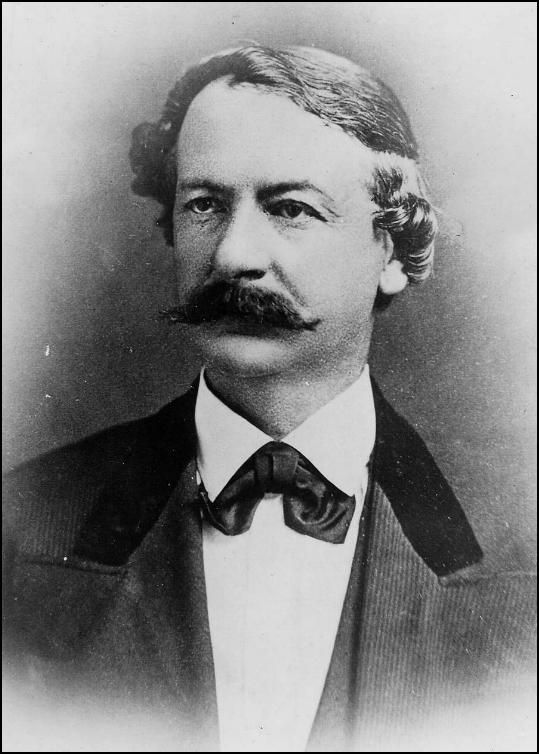
Jackson.jpeg
Auditor and Superintendent of Virginia State Literary Fund​
1857 – 1860: Lt. Governor of Virginia​
Judge of 19th Judicial District for the State of Virginia​

Civil War Career:

Colonel of 31st Virginia Infantry Regiment​
1861: Participated in the fighting in Western Virginia​
Staff Officer to his Cousin Gen. Thomas Jonathan Jackson​
1863 – 1864: Colonel of 19th Virginia Cavalry Regiment​
1863: Participated in raids with the Confederate Cavalry​
1864: Participated in the Battle of Cloyd's Mountain, Virginia​
1864: Assisted in the defense of Lynchburg, Virginia
After war 1.jpg
1864: Participated in the Washington, D.C. Campaign​
1864: Participated in the fighting around Winchester, Virginia​
1864 – 1865: Brigadier General of Confederate Army Cavalry​
1865: Paroled by the Union Army in Brownsville, Texas (July 26th)​

Occupation after War:

1865 – 1872: Attorney in Louisville, Kentucky​
1872 – 1890: Circuit Court Judge in Kentucky​

Died: March 26, 1890

Place of Death: Louisville, Kentucky

Age at time of Death: 65 years old

Burial Place: Cave Hill Cemetery, Louisville, Kentucky
 
Last edited by a moderator:
It sounds like Jackson was possibly intending to go to Mexico following Lee's surrender. He disbanded his brigade on April 15,1865 and was paroled in Brownsville, Texas on July 26,1865.
 
2nd cousin of Stonewall and one of at least three Confederate generals given the sobriquet "Mudwall". From what I've read he seems to have been a reasonably competent and commander operating with limited resources in a largely forgotten corner of the War.
William L.Jackson ,Alfred E.Jackson,and John K.Jackson. we're all at one time called"Mudwall".
 
Sirs, an article from @Eric Wittenberg ...


And from @east tennessee roots ...


Cheers,
USS ALASKA
 
Last edited:
"Mudwall" Jackson led failed attack on fort in central W.Va.
By David Sibray
Editor-in-Chief
February 24, 2022

During the first years of the U.S. Civil War, marauding bands of guerillas roamed the hills in what's now central West Virginia. Most were loyal to the Confederacy, though they often acted in their own interests, raiding towns and farms at will. To counter their activities, the Union established a fort on the old Weston-and-Gauley Turnpike near Bulltown on the Little Kanawha River. Soldiers raised a blockhouse and dug trenches from which they could defend the road, which served as the chief passage through the wilderness between the valleys of the Kanawha and Monongahela rivers. In the summer of 1863, following the declaration of West Virginia statehood and a period of heightened rebel activity, the Union added more defenses and a barracks and ordered that 117 men and seven officers of the 6th and 11th West Virginia infantry occupy the fort. Not to be outdone, the Confederacy took action and in October ordered William "Mudwall" Jackson to lead 700 men from his headquarters in the Greenbrier Valley at Lewisburg north to capture the garrison and proceed to a raid along the Ohio River.

Full article with pics can be read here - https://wvexplorer.com/2022/02/24/wall-jackson-attack-bulltown-west-virginia-wv/

Please also see - https://www.wvencyclopedia.org/articles/946

Cheers,
USS ALASKA
 
WILLIAM LOWTHER JACKSON AND THE CIVIL WAR IN WEST VIRGINIA'S MOUNTAINS
Ronald V. Hardway
Marshall University
Huntington, West Virginia
3 August 1999
Master of Arts
History

INTRODUCTION
On the eve of the American Civil War one of the most prominent politicians and businessmen in western Virginia was Judge William Lowther Jackson of Parkersburg, Wood County. Jackson, a native of Harrison County and a member of one of the wealthiest and most politically powerful clans in northwestern Virginia, represented his region In the Virginia Assembly for three consecutive terms in the 1850s. He served as Second Auditor for the State of Virginia and directed the Virginia Literary Fund for public education. He had been lieutenant governor of the state during the administration of Governor Henry A. Wise. He served two terms as prosecuting attorney for Pleasants County. He was the recognized leader of the Democratic Party in Wood, Pleasants, and Ritchie counties during the 1850s. In 1860 voters elected him judge of the nineteenth circuit of the Superior Court of Virginia. His judicial circuit covered the central section of western Virginia from Lewis County to the Ohio River. Jackson played a leading role in extending the Baltimore and Ohio Railroad from Grafton to Parkersburg. He invested heavily in real estate in Wood and Pleasants counties. He owned three slaves. He acquired a share of the Burning Springs oil field in Wirt County and operated his own oil wells. His pre-war political and business associates included Johnson N. Camden, Arthur I. Boreman, John J. and Jacob Jackson, Jacob B. Blair, John C. Rathbone, William J. Bland, Matthew Edmiston, and William E. Stevenson. All of these men became prominent figures in the formation of West Virginia and post-war political and economic development of the new state.

When the Civil War began in 1861 Judge Jackson did not hesitate to offer his services to the state of Virginia which he had served faithfully since his admission to the Virginia bar in 1847. He organized the first Confederate regiment in northwestern Virginia and was elected colonel of the regiment. He led the regiment safely through the first hectic six months of the war and directed defense of the Confederacy's western front with only a few companies of inexperienced volunteers. William Jackson served as aide-de-camp on Stonewall Jackson's staff during the latter days of Jackson's famous Shenandoah Valley Campaign. He accompanied General Jackson cavalry regiments for Virginia service. The regiments were created to regain control of western Virginia's breakaway northern counties, but during the last year of the war Jackson's troops defended the Shenandoah Valley. By the end of the war Jackson held the rank of brigadier general in the Confederate States Army commanding three regiments and two battalions.


Cheers,
USS ALASKA
 

Attachments


Learn About Us
About CivilWarTalk
Contact the Webmaster
Meet the Staff
Link to CivilWarTalk
Join Our Community
Register
Browse Forums
View Today's Discussions
Search the Forum
Get Help
FAQ
Student Guide
Forum Rules & Etiquette
Copyright / DMCA

     Contact Us CivilwarTalk on Facebook CivilWarTalk on YouTube CivilWarTalk on Twitter RSS Feed

Bringing the American Civil War and More to Life.
© 1999 - , CIVILWARTALK, LLC - Site Version 10.0

SlaveryTalk.com - SecessionTalk.com - CivilWarTalk.com - ReconstructionTalk.com
Back
Top