William Williams Stringfield was a prominent nineteenth-century Southern figure whose life encompassed military service, public leadership, and civic development in both Tennessee and North Carolina. Born on May 7, 1837, in Nashville, Davidson County, Tennessee, he was the son of Reverend Thomas Stringfield (1797–1858) and Sarah King Williams (1812–1842), both of whom are buried in the Stringfield Cemetery in Jefferson County, Tennessee. Raised during a period of profound national change, Stringfield's early years were shaped by strong religious influences and the cultural traditions of the American South.
During the Civil War, William Williams Stringfield rendered extensive service to the Confederate cause, rising steadily through the ranks and holding multiple positions of responsibility. He began his military career as a private in the 1st Tennessee Cavalry Regiment and later became Captain of Company E of the 31st Tennessee Infantry Regiment. His leadership abilities earned him appointment as Assistant Provost Marshal in Knoxville, Tennessee. As the war progressed, he continued his service in North Carolina, where he attained the rank of Major and later Lieutenant Colonel in the 69th North Carolina Infantry Regiment. These roles reflected both his commitment to military duty and the trust placed in him by his superiors.
Following the war, Stringfield redirected his energies toward rebuilding and public service. He became the owner and builder of the White Sulphur Hotel in Waynesville, North Carolina, contributing to the economic and social development of the region. His leadership extended into politics, as he served as a member of the North Carolina State Legislature from 1882 to 1883 and later as a North Carolina State Senator from 1901 to 1905. In addition to his legislative work, he remained active in veterans' affairs, serving as Commander of the United Confederate Veterans of Western North Carolina and as a member of the Military and Veterans Committee of the North Carolina UCV.
William Williams Stringfield was also a devoted family man. He married Maria Melvina Love (1842–1909), who is buried at Green Hill Cemetery in Waynesville, North Carolina. Together they raised eight children: Dr. Thomas Stringfield (1872–1954), Mary Love Stringfield Wulbern (1873–1907), James Love Stringfield (1875–1958), Sarah Burney "Sallie" Stringfield Sloan (1877–1939), Margaret Josephine Stringfield (1879–1958), Dr. Samuel Lanier Stringfield (1881–1947), and Jenny Linda Stringfield Sloan (1883–1919). Most of the family is interred at Green Hill Cemetery in Waynesville, with Mary Love Stringfield Wulbern buried at Bethany Cemetery in Charleston, South Carolina. Several of his children went on to distinguished professional lives, continuing the family's legacy of service and accomplishment.
William Williams Stringfield died on March 6, 1923, in Harnett County, North Carolina, at the age of 85, from natural causes. He was laid to rest at Green Hill Cemetery in Waynesville, North Carolina. His long life reflected the sweeping changes of the nineteenth and early twentieth centuries, and his enduring legacy lies in his military service, public leadership, entrepreneurial efforts, and dedication to family and community.
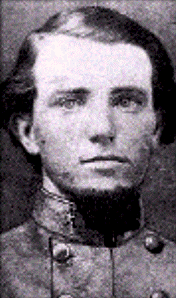
If you have any other information about Lt. Colonel Stringfield please message me.
During the Civil War, William Williams Stringfield rendered extensive service to the Confederate cause, rising steadily through the ranks and holding multiple positions of responsibility. He began his military career as a private in the 1st Tennessee Cavalry Regiment and later became Captain of Company E of the 31st Tennessee Infantry Regiment. His leadership abilities earned him appointment as Assistant Provost Marshal in Knoxville, Tennessee. As the war progressed, he continued his service in North Carolina, where he attained the rank of Major and later Lieutenant Colonel in the 69th North Carolina Infantry Regiment. These roles reflected both his commitment to military duty and the trust placed in him by his superiors.
Following the war, Stringfield redirected his energies toward rebuilding and public service. He became the owner and builder of the White Sulphur Hotel in Waynesville, North Carolina, contributing to the economic and social development of the region. His leadership extended into politics, as he served as a member of the North Carolina State Legislature from 1882 to 1883 and later as a North Carolina State Senator from 1901 to 1905. In addition to his legislative work, he remained active in veterans' affairs, serving as Commander of the United Confederate Veterans of Western North Carolina and as a member of the Military and Veterans Committee of the North Carolina UCV.
William Williams Stringfield was also a devoted family man. He married Maria Melvina Love (1842–1909), who is buried at Green Hill Cemetery in Waynesville, North Carolina. Together they raised eight children: Dr. Thomas Stringfield (1872–1954), Mary Love Stringfield Wulbern (1873–1907), James Love Stringfield (1875–1958), Sarah Burney "Sallie" Stringfield Sloan (1877–1939), Margaret Josephine Stringfield (1879–1958), Dr. Samuel Lanier Stringfield (1881–1947), and Jenny Linda Stringfield Sloan (1883–1919). Most of the family is interred at Green Hill Cemetery in Waynesville, with Mary Love Stringfield Wulbern buried at Bethany Cemetery in Charleston, South Carolina. Several of his children went on to distinguished professional lives, continuing the family's legacy of service and accomplishment.
William Williams Stringfield died on March 6, 1923, in Harnett County, North Carolina, at the age of 85, from natural causes. He was laid to rest at Green Hill Cemetery in Waynesville, North Carolina. His long life reflected the sweeping changes of the nineteenth and early twentieth centuries, and his enduring legacy lies in his military service, public leadership, entrepreneurial efforts, and dedication to family and community.
If you have any other information about Lt. Colonel Stringfield please message me.


 Bringing the