General Lee's "Lost Order" # 191

frontrank2

Major
Forum Host
Joined
Oct 10, 2012
Location
Mt. Jackson, Va
HDQRS. ARMY OF NORTHERN VIRGINIA, SEPTEMBER 9, 1862
Robert E. Lee issued Special Order 191 during the Maryland campaign, before the Battle of Antietam. A copy of the order having been lost, was recovered by Union soldiers of the 27th Indiana on the Best Farm in Maryland. The order provided the Union Army with valuable information concerning the Army of Northern Virginia's movements and campaign plans. Upon receiving Lee's "Lost Order", Maj. Gen. George B. McClellan, leading the Union Army of the Potomac, would exclaim "Here is a paper with which, if I cannot whip Bobby Lee, I will be willing to go home." The practical value of this intelligence, which was quickly growing obsolescent, continues to be the subject of much debate.

1. The citizens of Fredericktown being unwilling while overrun by members of this army, to open their stores, in order to give them confidence, and to secure to officers and men purchasing supplies for benefit of this command, all officers and men of this army are strictly prohibited from visiting Fredericktown except on business, in which cases they will bear evidence of this in writing from division commanders. The provost-marshal in Fredericktown will see that his guard rigidly enforces this order.

2. Major Taylor will proceed to Leesburg, Virginia, and arrange for transportation of the sick and those unable to walk to Winchester, securing the transportation of the country for this purpose. The route between this and Culpepper Court-House east of the mountains being unsafe, will no longer be traveled. Those on the way to this army already across the river will move up promptly; all others will proceed to Winchester collectively and under command of officers, at which point, being the general depot of this army, its movements will be known and instructions given by commanding officer regulating further movements.
3. The army will resume its march tomorrow, taking the Hagerstown road. General Jackson's command will form the advance, and, after passing Middletown, with such portion as he may select, take the route toward Sharpsburg, cross the Potomac at the most convenient point, and by Friday morning take possession of the Baltimore and Ohio Railroad, capture such of them as may be at Martinsburg, and intercept such as may attempt to escape from Harpers Ferry.
4. General Longstreet's command will pursue the same road as far as Boonsborough, where it will halt, with reserve, supply, and baggage trains of the army.
5. General McLaws, with his own division and that of General R. H. Anderson, will follow General Longstreet. On reaching Middletown will take the route to Harpers Ferry, and by Friday morning possess himself of the Maryland Heights and endeavor to capture the enemy at Harpers Ferry and vicinity.
6. General Walker, with his division, after accomplishing the object in which he is now engaged, will cross the Potomac at Cheek's Ford, ascend its right bank to Lovettsville, take possession of Loudoun Heights, if practicable, by Friday morning, Key's Ford on his left, and the road between the end of the mountain and the Potomac on his right. He will, as far as practicable, cooperate with General McLaws and Jackson, and intercept retreat of the enemy.
7. General D. H. Hill's division will form the rear guard of the army, pursuing the road taken by the main body. The reserve artillery, ordnance, and supply trains, &c., will precede General Hill.
8. General Stuart will detach a squadron of cavalry to accompany the commands of Generals Longstreet, Jackson, and McLaws, and, with the main body of the cavalry, will cover the route of the army, bringing up all stragglers that may have been left behind.
9. The commands of Generals Jackson, McLaws, and Walker, after accomplishing the objects for which they have been detached, will join the main body of the army at Boonsborough or Hagerstown.

10. Each regiment on the march will habitually carry its axes in the regimental ordnance-wagons, for use of the men at their encampments, to procure wood &c.

By command of General R. E. Lee
R. H. Chilton, Assistant Adjutant General
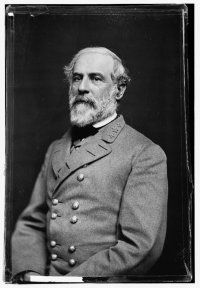
lee_web.jpg

posted on Facebook by the Civil War Trust


HDQRS. ARMY OF NORTHERN VIRGINIA, SEPTEMBER 9, 1862
Robert E. Lee issued Special Order 191 during the Maryland campaign, before the Battle of Antietam. A copy of the order having been lost, was recovered by Union soldiers of the 27th Indiana on the Best Farm in Maryland. The order provided the Union Army with valuable information concerning the Army of Northern Virginia's movements and campaign plans. Upon receiving Lee's "Lost Order", Maj. Gen. George B. McClellan, leading the Union Army of the Potomac, would exclaim "Here is a paper with which, if I cannot whip Bobby Lee, I will be willing to go home." The practical value of this intelligence, which was quickly growing obsolescent, continues to be the subject of much debate.

1. The citizens of Fredericktown being unwilling while overrun by members of this army, to open their stores, in order to give them confidence, and to secure to officers and men purchasing supplies for benefit of this command, all officers and men of this army are strictly prohibited from visiting Fredericktown except on business, in which cases they will bear evidence of this in writing from division commanders. The provost-marshal in Fredericktown will see that his guard rigidly enforces this order.

2. Major Taylor will proceed to Leesburg, Virginia, and arrange for transportation of the sick and those unable to walk to Winchester, securing the transportation of the country for this purpose. The route between this and Culpepper Court-House east of the mountains being unsafe, will no longer be traveled. Those on the way to this army already across the river will move up promptly; all others will proceed to Winchester collectively and under command of officers, at which point, being the general depot of this army, its movements will be known and instructions given by commanding officer regulating further movements.
3. The army will resume its march tomorrow, taking the Hagerstown road. General Jackson's command will form the advance, and, after passing Middletown, with such portion as he may select, take the route toward Sharpsburg, cross the Potomac at the most convenient point, and by Friday morning take possession of the Baltimore and Ohio Railroad, capture such of them as may be at Martinsburg, and intercept such as may attempt to escape from Harpers Ferry.
4. General Longstreet's command will pursue the same road as far as Boonsborough, where it will halt, with reserve, supply, and baggage trains of the army.
5. General McLaws, with his own division and that of General R. H. Anderson, will follow General Longstreet. On reaching Middletown will take the route to Harpers Ferry, and by Friday morning possess himself of the Maryland Heights and endeavor to capture the enemy at Harpers Ferry and vicinity.
6. General Walker, with his division, after accomplishing the object in which he is now engaged, will cross the Potomac at Cheek's Ford, ascend its right bank to Lovettsville, take possession of Loudoun Heights, if practicable, by Friday morning, Key's Ford on his left, and the road between the end of the mountain and the Potomac on his right. He will, as far as practicable, cooperate with General McLaws and Jackson, and intercept retreat of the enemy.
7. General D. H. Hill's division will form the rear guard of the army, pursuing the road taken by the main body. The reserve artillery, ordnance, and supply trains, &c., will precede General Hill.
8. General Stuart will detach a squadron of cavalry to accompany the commands of Generals Longstreet, Jackson, and McLaws, and, with the main body of the cavalry, will cover the route of the army, bringing up all stragglers that may have been left behind.
9. The commands of Generals Jackson, McLaws, and Walker, after accomplishing the objects for which they have been detached, will join the main body of the army at Boonsborough or Hagerstown.

10. Each regiment on the march will habitually carry its axes in the regimental ordnance-wagons, for use of the men at their encampments, to procure wood &c.

By command of General R. E. Lee
R. H. Chilton, Assistant Adjutant General

View attachment 47026
posted on Facebook by the Civil War Trust


Credited with finding Lee's "lost order" was Corporal Barton Warren Mitchell of the 27th Indiana Infantry. A resident of Putnam County, Indiana, a 45 year-old "railroad man." Enlisted and mustered into Company F as a Private on 9/12/1861. He mustered out on 9/1/1864 at Indianapolis, Indiana. He was wounded at Antietam 9/17/1862, ( in the left calf.) He returned 4/11/1863. Detached to the Ambulance Corps 9/22/1863. Reduced in rank back to Private, (at his request) 10/31/1863. Returned 7/15/1864. Stood 5'10," lived in Hartsville, Indiana where he died in 1868. Buried in the local Baptist cemetery.
- Report of the Adjutant General of the State of Indiana.
.....................................................................................................................................
Antietam after battle report:

Report of col. Silas Colgrove, Twenty-seventh Indiana Infantry,
of the battle of Antietam.

HDQRS. TWENTY-SEVENTH REGIMENT INDIANA VOLS.
September 22, 1862.
SIR: I be leave to submit the following report of the part taken by my
regiment (Twenty-seventh Indiana Volunteers) in the action of the 17 the
instant, near Sharpsburg, Md.:

About sunrise in the morning I received orders to get my regiment under
arms. I immediately formed my regiment in column by battalions closed in
mass, right in front. The brigade was promptly moved to the front, the
Second Massachusetts occupying the right, the Third Wisconsin second, my
regiment third, the One hundred and seventh New York fourth, and the
Thirteenth New Jersey the left or rear. In this position the brigade was
moved forward, I should judge, a distance of two-thirds of a mile. At this
point, as by this time the action had become general and severe on our left
your direction, the brigade was immediately to the left. The Second
Massachusetts, Third Wisconsin, and Twenty-seventh Indiana Regiments
move to a point designated by you, formed their line of battle on a swell of
ground immediately in front of a corn-field, in which the battle had been
raging for some time. Our troops in the corn-field, a part of Gen.
Hooker's division, had been badly cut up, and were slowly retreating. When
we first gained our position, the corn-field or nearly all of it, was occupied
by the enemy. This field was on a low piece of ground, the corn very heavy
and serving to some to screen the enemy from view, yet the colors and
battle-flags of several regiments appearing above the corn clearly indicated
the advance of the enemy in force. Immediately in front or beyond the
corn-field, upon open ground at a distance of about 400 yards, were three
regiments in line of battle and farther to the right, on a high ridge of
ground, was still another regiment in line diagonally to our line. When we
first took our position it was impossible to immediately open fire upon the
enemy without firing into our own troops, who were retreating out of the
corn-field. As soon as these troops had field past my left, I immediately
ordered my regiment to fire, which was done in good order. The firing was
very heavy on both sides, and must have continued for more than two hours
without any change of position on either side. It was very evident from the
firing that the enemy was greatly superior in numbers at this point. The only
force during this time place engaged was the three old regiments of
your brigade. At one time during this part of the engagement the fire of the
enemy was so terribly , destructive it seemed that our little force would be
entirely annihilated.

After the fight had raged for about two hours without any perceptible
Advantage to either side, some of our forces (I have never learned whose)
came up on our left in a piece of woods on the left of the corn field, and
opened and enfilanding fire upon the enemy. This fire and ours in there front
soon proved too hard for them. They broke and fled, in utter confusion, into
a piece of woods on the right. We were then ordered to fix bayonets and
advance, which was promptly done. Advancing through the corn-field, we
changed front to the right by throwing our left forward. We had advanced
over the larger portion of the ground when we were ordered to halt. I soon
discovered that Gen. Summer's corps had arrived and were fresh, not yet
having been in the action, and the work of dislodging the enemy from the
woods, designed for your shattered brigade, had been assigned to them.
At a later hour in the day my regiment and the Third Wisconsin were
ordered to advance nearly over the same ground to the support of the
Second Massachusetts, Thirteenth New Jersey, and One hundred and seventh
New York who had been posted in or near the woods held by the rebels, to
the rear of the corn-field. We promptly advanced nearly to the woods, but
before we could get there our forces had been cut up and had fallen back.
The two regiments held their position until the enemy had been driven back
by a well directed shower of grape, and canister from one of our batteries,
after which we took up a position in rear and in support of the batteries.

The Twenty-seventh Regiment, as well as the balance of your brigade of
your brigade, was under arms from before sunrise until after dark, and
although the main part of the fighting they were engaged in occurred in the
fore part of the day, yet during the whole day they were frequently exposed
to heavy fire from the enemy's artillery. At night I was temporarily, by
you, place in command of the brigade, and the whole brigade marched to the
front and nears the front and nearest the enemy in support of our batteries
in front. Although our men had gone into the fight without breakfast and had
fought all day, they performed this arduous duty at night, not only without
grumbling but with cheerfulness.

Subsequent events of the day have disclosed to us that the troops your
brigade so bravely fought and conquered at the battle of Antietam were the
same troops you fought at Winchester on the 25th of May last--Ewell's old
division, eight regiments--Louisiana, Georgia and South Carolina regiments.
I am proud to be able to report to you that I believe every officer and man
of my regiment who went into the fight with me did his whole duty. I saw
no man or officer who took a backward step during the whole day unless
ordered to do so.

I went into the fight with 443, rank and file. My loss in action was, in
killed 17, in wounded, 192. Most of the wounds are slight, may, however, severe,
and mortal. Quite a number of the wounds amputations have been necessary.
Twelve deaths among the wounded have been reported to me. A list of killed
and wounded is herewith submitted.* Your obedient servant,

S. COLGROVE,
Col. Twenty-seventh Regiment Indiana Volunteers.

Brig. Gen. GEORGE H. GORDON,
Comdg. 3rd Brig., 1st Div., Bank's Corps, Army of the Potomac.

Source: Official Records: Series I. Vol. 19. Part I, Reports. Serial No. 27

************************************************************************
 
This lost order was displayed at the Monocacy battlefield visitor's center a few years ago, alogning with the 150th anniversary. The order was written on both sides of the paper, in pencil (to my surprise) -in the handwriting of Ad. Gen. Chilton. This part was key, for as the found orders were sent 'up the chain', a union officer who had worked in an office with Chilton pre-war easily confirmed his handwriting.

Quite a bit of luck, I do say!
 
With about 90,000 troops, McClellan could have defeated Lee's two widely separated corps before they concentrated. But McClellan did nothing for two days. Pity.
 
I am sure not an expert in this, but it looks to me that the blunder of the Lost Order was Daniel Harvey Hill's fault.

I've read his defense, but it's not very convncing.

What do y'all think?
Alexander recalled, "I think this is how it happened. D. H. Hill's division had recently been considered a part of Jackson's corps & orders were sent it from Jackson's headquarters. It was now to go with Longstreet- detached from Jackson. And somehow two copies of Lee's order, dated Sep. 9th, were made out somewhere, & one reached Hill & was duly preserved, & the other was found in one of our old camps & was taken to Gen. McClellan on the 13th."< Gary W. Gallagher, Fighting for the Confederacy: The Personal Recollections of General Edward Porter Alexander. (Chapel Hill, NC: University of North Carolina Press, 1989), p. 141>
 
I created a thread on this a while ago, and this is the question I posed: 'Does anyone know is Special Order 191 was encoded, and if not, why not? It seems Coding came into use early in the CW, prior even to the 1st Battle of Manassas/Bull Run. If not, losing the Order was not the only major 'slip up' the Confederates made in this instance'.

No answers were forthcoming, but the question remains...although it seems the Union side had more prowess when it came to coding and decoding in the larger scheme of things.
 
I am sure not an expert in this, but it looks to me that the blunder of the Lost Order was Daniel Harvey Hill's fault.

I've read his defense, but it's not very convncing.

What do y'all think?

DH Hill never received the copy that was lost. DH Hill had a copy of the order in Jackson's own handwriting, which Jackson had copied. The copy from Lee's HQ to DH Hill was the one lost, and was dropped almost certainly by Maj. Henry Kyd Douglas.
 
I created a thread on this a while ago, and this is the question I posed: 'Does anyone know is Special Order 191 was encoded, and if not, why not? It seems Coding came into use early in the CW, prior even to the 1st Battle of Manassas/Bull Run. If not, losing the Order was not the only major 'slip up' the Confederates made in this instance'.

No answers were forthcoming, but the question remains...although it seems the Union side had more prowess when it came to coding and decoding in the larger scheme of things.

No mystery. The copy of the Lost Order was not encoded.
 
DH Hill never received the copy that was lost. DH Hill had a copy of the order in Jackson's own handwriting, which Jackson had copied. The copy from Lee's HQ to DH Hill was the one lost, and was dropped almost certainly by Maj. Henry Kyd Douglas.

I didn't mean that Hill personally wrapped up the cigars and laid it on the ground for the Yankees. I mean that that Lost Order was delivered to his HQ and then carelessly discarded by staff.

I've heard this Douglas theory before. I apologize, but remind me please what is the basis of this theory? He never admitted it, did he?
 
With about 90,000 troops, McClellan could have defeated Lee's two widely separated corps before they concentrated. But McClellan did nothing for two days. Pity.

McClellan was handed SO191 between 1430 and 1500 hrs on the 13th September. He had just returned from launching Burnside's wing against South Mountain and seeing the lead division (Cox's) march out of town for the attack. I will repeat this - McClellan launched the attack against Lee before he'd received SO191.

The reason being that his cavalry had reported all the salient facts to him the evening of the 12th. He knew Lee's forces were split, and decided to attack them immediately. All SO191 did was fill in a couple of blanks about which body of troops was where (and erroneously).

Dawn on the 14th and Burnside's lead forces deploy at Fox's Gap. They are repulsed and as more troops come down the road off the march ultimately Burnside has two full corps both repulsed and stopped in their tracks - the 9th at Fox's Gap and the 1st at Turner's. McClellan tries to get 2nd Corps around the traffic jam to South Mountain, but Sumner's corps struggles over the narrow trails.

Further south Franklin's 6th Corps fights through Crampton's Gap, but he refuses to push into the valley given the 6 brigades he can see drawn up to strike his troops as they come down off the hill. However, it is here that the rebel position becomes untenable, and Lee orders a retreat despite defeating 1st and 9th Corps.

The next morning with Lee moving McClellan orders all commanders to pursue. Richardson's division was placed under Hooker's command for the move through Turner's Gap and led the way. The 9th Corps was found still to be sitting and eating at noon when Sykes' division reached Fox's gap, and Sykes asked permission from McClellan to push through and received it. Burnside would face a stern rebuke for failing to pursue.

McClellan reached the Antietam late afternoon of the 15th and found only two divisions (Richardson and Sykes) were there, with the rest strung out on the march. After an artillery duel he gave orders for the other divisions to take places he assigned.

The morning of the 16th Sykes and Richardson were at the Porter (middle) bridge and 1st Corps covered the northern bridge and the fords. Sumner with 4 divisions of the 2nd and 12th Corps was in camp and coming into reserve. The 9th Corps was still distant and strung out, and Morell's division (rushing from Washington) around Frederick. Couch was in the Pleasant Valley.

There was a dense fog until ca. 1000 hrs, and as it burned off McClellan could see the enemy position. His first action was to ride down to Burnside, and verbal brief him on his part of the battle, telling him either to be ready to go ASAP or simply to go. He then rode north and lead in Hooker's 1st Corps personally, returning to his command post around 1600-1700, whence he ordered 12th Corps to Hooker's support.

So I don't think McClellan was inactive at all.
 
McClellan was handed SO191 between 1430 and 1500 hrs on the 13th September. He had just returned from launching Burnside's wing against South Mountain and seeing the lead division (Cox's) march out of town for the attack. I will repeat this - McClellan launched the attack against Lee before he'd received SO191.

The reason being that his cavalry had reported all the salient facts to him the evening of the 12th. He knew Lee's forces were split, and decided to attack them immediately. All SO191 did was fill in a couple of blanks about which body of troops was where (and erroneously).

Dawn on the 14th and Burnside's lead forces deploy at Fox's Gap. They are repulsed and as more troops come down the road off the march ultimately Burnside has two full corps both repulsed and stopped in their tracks - the 9th at Fox's Gap and the 1st at Turner's. McClellan tries to get 2nd Corps around the traffic jam to South Mountain, but Sumner's corps struggles over the narrow trails.

Further south Franklin's 6th Corps fights through Crampton's Gap, but he refuses to push into the valley given the 6 brigades he can see drawn up to strike his troops as they come down off the hill. However, it is here that the rebel position becomes untenable, and Lee orders a retreat despite defeating 1st and 9th Corps.

The next morning with Lee moving McClellan orders all commanders to pursue. Richardson's division was placed under Hooker's command for the move through Turner's Gap and led the way. The 9th Corps was found still to be sitting and eating at noon when Sykes' division reached Fox's gap, and Sykes asked permission from McClellan to push through and received it. Burnside would face a stern rebuke for failing to pursue.

McClellan reached the Antietam late afternoon of the 15th and found only two divisions (Richardson and Sykes) were there, with the rest strung out on the march. After an artillery duel he gave orders for the other divisions to take places he assigned.

The morning of the 16th Sykes and Richardson were at the Porter (middle) bridge and 1st Corps covered the northern bridge and the fords. Sumner with 4 divisions of the 2nd and 12th Corps was in camp and coming into reserve. The 9th Corps was still distant and strung out, and Morell's division (rushing from Washington) around Frederick. Couch was in the Pleasant Valley.

There was a dense fog until ca. 1000 hrs, and as it burned off McClellan could see the enemy position. His first action was to ride down to Burnside, and verbal brief him on his part of the battle, telling him either to be ready to go ASAP or simply to go. He then rode north and lead in Hooker's 1st Corps personally, returning to his command post around 1600-1700, whence he ordered 12th Corps to Hooker's support.

So I don't think McClellan was inactive at all.

Yes, your chronology is supported by numerous first-hand accounts of the senior officers involved.

The common criticism that McClellan was dilatory is really only based on the Monday Morning Quarterbacking that holds McClellan would have achieved a more smashing victory at Antietam if he had launched his attack a day earlier. This, of course, is purely speculative, and meant to support the pre-conceived notion that McClellan was a bad general, or worse.
 
I am sure not an expert in this, but it looks to me that the blunder of the Lost Order was Daniel Harvey Hill's fault.

I've read his defense, but it's not very convncing.

What do y'all think?
IMO someone in Jackson's staff decided that Hill should have a copy of Jackson's as Hill was leaving Jackson's command. Lee's staff had already sent Hill a copy but didn't bother to tell either Jackson men or Hill's. Bad staff work and poor communication.
 
McClellan was handed SO191 between 1430 and 1500 hrs on the 13th September. He had just returned from launching Burnside's wing against South Mountain and seeing the lead division (Cox's) march out of town for the attack. I will repeat this - McClellan launched the attack against Lee before he'd received SO191.

The reason being that his cavalry had reported all the salient facts to him the evening of the 12th. He knew Lee's forces were split, and decided to attack them immediately. All SO191 did was fill in a couple of blanks about which body of troops was where (and erroneously).

Dawn on the 14th and Burnside's lead forces deploy at Fox's Gap. They are repulsed and as more troops come down the road off the march ultimately Burnside has two full corps both repulsed and stopped in their tracks - the 9th at Fox's Gap and the 1st at Turner's. McClellan tries to get 2nd Corps around the traffic jam to South Mountain, but Sumner's corps struggles over the narrow trails.

Further south Franklin's 6th Corps fights through Crampton's Gap, but he refuses to push into the valley given the 6 brigades he can see drawn up to strike his troops as they come down off the hill. However, it is here that the rebel position becomes untenable, and Lee orders a retreat despite defeating 1st and 9th Corps.

The next morning with Lee moving McClellan orders all commanders to pursue. Richardson's division was placed under Hooker's command for the move through Turner's Gap and led the way. The 9th Corps was found still to be sitting and eating at noon when Sykes' division reached Fox's gap, and Sykes asked permission from McClellan to push through and received it. Burnside would face a stern rebuke for failing to pursue.

McClellan reached the Antietam late afternoon of the 15th and found only two divisions (Richardson and Sykes) were there, with the rest strung out on the march. After an artillery duel he gave orders for the other divisions to take places he assigned.

The morning of the 16th Sykes and Richardson were at the Porter (middle) bridge and 1st Corps covered the northern bridge and the fords. Sumner with 4 divisions of the 2nd and 12th Corps was in camp and coming into reserve. The 9th Corps was still distant and strung out, and Morell's division (rushing from Washington) around Frederick. Couch was in the Pleasant Valley.

There was a dense fog until ca. 1000 hrs, and as it burned off McClellan could see the enemy position. His first action was to ride down to Burnside, and verbal brief him on his part of the battle, telling him either to be ready to go ASAP or simply to go. He then rode north and lead in Hooker's 1st Corps personally, returning to his command post around 1600-1700, whence he ordered 12th Corps to Hooker's support.

So I don't think McClellan was inactive at all.
Thanks for your response.
I appreciate your detailed information: It looks like I owe McClellan an apology.
 
[McClellan's] cavalry had reported all the salient facts to him the evening of the 12th. He knew Lee's forces were split, and decided to attack them immediately. All SO191 did was fill in a couple of blanks about which body of troops was where (and erroneously).
So I don't think McClellan was inactive at all.
Longstreet, in describing the incident, agrees that McClellan already knew of Lee's dispositions from his cavalry:

The strange losing and stranger finding of Lee's "General Order No. 191," commonly referred to as "the lost despatch," which he had issued September 9 for the movement of his army, made a difference in our Maryland campaign for better or for worse.

Before this tell-tale slip of paper found its way to McClellan's head-quarters he was well advised by his cavalry, and by despatches wired him from east and west, of the movements of Lee's army, and later, on that eventful 13th day of September, he received more valuable information, even to a complete revelation of his adversary's plans and purpose, such as no other commander, in the history of war, has had at a time so momentous. So well satisfied was he that he was master of the military zodiac that he despatched the Washington authorities of Lee's "gross mistake" and exposure to severe penalties. There was not a point upon which he wanted further information nor a plea for a moment of delay. His army was moving rapidly; all that he wished for was that the plans of the enemy would not be changed. The only change that occurred in the plans was the delay of their execution, which worked to his greater advantage. By following the operations of the armies through the complications of the campaign we may form better judgment of the work of the commanders in finding ways through its intricacies:

With the knowledge afforded by securing Lee's "lost order" the passes of the South Mountain became important points. If he could force them, McClellan might fall on the divided columns of the Confederates and reach Harper's Ferry in time to save its garrison; but Lee received intelligence of his only moderate forward movement, and, without knowing then how it came to be made, recalled a force to make resistance, and, so supplementing or complementing by his rapid moves the Federal commander's slowness, saved his campaign from the disastrous failure that threatened it.

General McClellan claimed to have been more vigorous in pursuit after he received the "lost despatch," but events do not support the claim. He had time after the despatch was handed him to march his army to the foot of South Mountain before night, but gave no orders, except his letter to General Franklin calling for vigorous action, which was afterwards tempered by caution to wait for developments at Turner's Pass. He gave no intimation of the despatch to his cavalry leader, who should have been the first to be advised of the points in his possession. General Pleasonton had pushed the Confederate cavalry back into the mountains long before night of the 13th under his instructions of the 12th. Had he been informed of the points known by his chief in the afternoon, he would have occupied South Mountain at Turner's Pass before any of the Confederate infantry was there or apprised of his approach. General McClellan's orders for the 14th were dated,—

"13th, 6.45 p.m., Couch to move to Jefferson with his whole division, and join Franklin.

"13th, 8.45 p.m., Sumner to move at seven a.m.

"13th, 11.30 p.m., Hooker to march at daylight to Middletown.

"13th, 11.30 p.m., Sykes to move at six a.m., after Hooker on the Middletown and Hagerstown road.

"14th, one a.m., artillery reserve to follow Sykes closely.

"14th, nine a.m., Sumner ordered to take the Shockstown road to Middletown.

"Franklin's corps at Buckeystown to march for Burkittsville.​

<James Longstreet, From Manassas to Appomattox: Memoirs of The Civil War in America, (Philadelphia, PA: J. B. Lippincott Company, 1896), pp. 212-217.>

 
Longstreet, in describing the incident, agrees that McClellan already knew of Lee's dispositions from his cavalry:

The strange losing and stranger finding of Lee's "General Order No. 191," commonly referred to as "the lost despatch," which he had issued September 9 for the movement of his army, made a difference in our Maryland campaign for better or for worse.

Before this tell-tale slip of paper found its way to McClellan's head-quarters he was well advised by his cavalry, and by despatches wired him from east and west, of the movements of Lee's army, and later, on that eventful 13th day of September, he received more valuable information, even to a complete revelation of his adversary's plans and purpose, such as no other commander, in the history of war, has had at a time so momentous. So well satisfied was he that he was master of the military zodiac that he despatched the Washington authorities of Lee's "gross mistake" and exposure to severe penalties. There was not a point upon which he wanted further information nor a plea for a moment of delay. His army was moving rapidly; all that he wished for was that the plans of the enemy would not be changed. The only change that occurred in the plans was the delay of their execution, which worked to his greater advantage. By following the operations of the armies through the complications of the campaign we may form better judgment of the work of the commanders in finding ways through its intricacies:

With the knowledge afforded by securing Lee's "lost order" the passes of the South Mountain became important points. If he could force them, McClellan might fall on the divided columns of the Confederates and reach Harper's Ferry in time to save its garrison; but Lee received intelligence of his only moderate forward movement, and, without knowing then how it came to be made, recalled a force to make resistance, and, so supplementing or complementing by his rapid moves the Federal commander's slowness, saved his campaign from the disastrous failure that threatened it.

General McClellan claimed to have been more vigorous in pursuit after he received the "lost despatch," but events do not support the claim. He had time after the despatch was handed him to march his army to the foot of South Mountain before night, but gave no orders, except his letter to General Franklin calling for vigorous action, which was afterwards tempered by caution to wait for developments at Turner's Pass. He gave no intimation of the despatch to his cavalry leader, who should have been the first to be advised of the points in his possession. General Pleasonton had pushed the Confederate cavalry back into the mountains long before night of the 13th under his instructions of the 12th. Had he been informed of the points known by his chief in the afternoon, he would have occupied South Mountain at Turner's Pass before any of the Confederate infantry was there or apprised of his approach. General McClellan's orders for the 14th were dated,—

"13th, 6.45 p.m., Couch to move to Jefferson with his whole division, and join Franklin.

"13th, 8.45 p.m., Sumner to move at seven a.m.

"13th, 11.30 p.m., Hooker to march at daylight to Middletown.

"13th, 11.30 p.m., Sykes to move at six a.m., after Hooker on the Middletown and Hagerstown road.

"14th, one a.m., artillery reserve to follow Sykes closely.

"14th, nine a.m., Sumner ordered to take the Shockstown road to Middletown.

"Franklin's corps at Buckeystown to march for Burkittsville.​

<James Longstreet, From Manassas to Appomattox: Memoirs of The Civil War in America, (Philadelphia, PA: J. B. Lippincott Company, 1896), pp. 212-217.>

Vigorous is a subjective word. For McClellan that was vigorous.
 
This lost order was displayed at the Monocacy battlefield visitor's center a few years ago, alogning with the 150th anniversary. The order was written on both sides of the paper, in pencil (to my surprise) -in the handwriting of Ad. Gen. Chilton. This part was key, for as the found orders were sent 'up the chain', a union officer who had worked in an office with Chilton pre-war easily confirmed his handwriting.

I have heard people pooh-pooh the idea that anyone could recognize another person's handwriting so easily. As an 8th grade teacher, I can personally assert that you can easily become so familiar with someone's handwriting to be able to recognize it without difficulty.
 
Vigorous enough to send Lee back.
And Mac had about 65,000. Some were not part of his army. He gathered the various parts and defeated his enemy. Easiest way to make excuses for a loss is ridicule the winner. The next part is find who dropped the ball. Blame is just rolling down hill.
 
IMO someone in Jackson's staff decided that Hill should have a copy of Jackson's as Hill was leaving Jackson's command. Lee's staff had already sent Hill a copy but didn't bother to tell either Jackson men or Hill's. Bad staff work and poor communication.
Didn't really matter . A local man found General Lee and told him about the lost orders being found.- Sears Landscape Turned Red.
 
Vigorous is a subjective word. For McClellan that was vigorous.
Do you mean to snarkily imply that McClellan was slow, and if so how do you think a better general would have reacted? When?

As we've seen from 67th's cronology, McClellan "reacted" before he actually got the order - to be any quicker to react to the information would have required a time machine.


For some, I think, McClellan is the only reason for some that the war didn't end in 1862, which is a very strange thing to think about someone who was repeatedly denied the resources he had been promised and who nevertheless managed to get his army into a situation in mid-1862 it later took the entire bloody Overland Campaign to achieve again. (I speak of the situation of the Army of the Potomac, on the James, supplied by sea and able to move on Petersburg.)
 

Learn About Us
About CivilWarTalk
Contact the Webmaster
Meet the Staff
Link to CivilWarTalk
Join Our Community
Register
Browse Forums
View Today's Discussions
Search the Forum
Get Help
FAQ
Student Guide
Forum Rules & Etiquette
Copyright / DMCA

     Contact Us CivilwarTalk on Facebook CivilWarTalk on YouTube CivilWarTalk on Twitter RSS Feed

Bringing the American Civil War and More to Life.
© 1999 - , CIVILWARTALK, LLC - Site Version 10.0

SlaveryTalk.com - SecessionTalk.com - CivilWarTalk.com - ReconstructionTalk.com
Back
Top