Question About Newspaper Artists'.

Homeschooler

Private
Joined
Aug 11, 2025
I'm curious about what a civil war era sketchbook looked like, particularly what the newspaper or "special" artists used. I'm also curious on how newspaper artists got more sketchbooks, pencils, etc., while out in the field. Would the newspaper send them art supplies or would the artist have to buy the supplies from a town or city?
 
A general statement...

1764974888942.webp


From a post-war description of 1893 of some of the leaders in the field...

1764975314562.webp

1764975339425.webp

1764975368060.webp

1764975396362.webp

1764975417592.webp


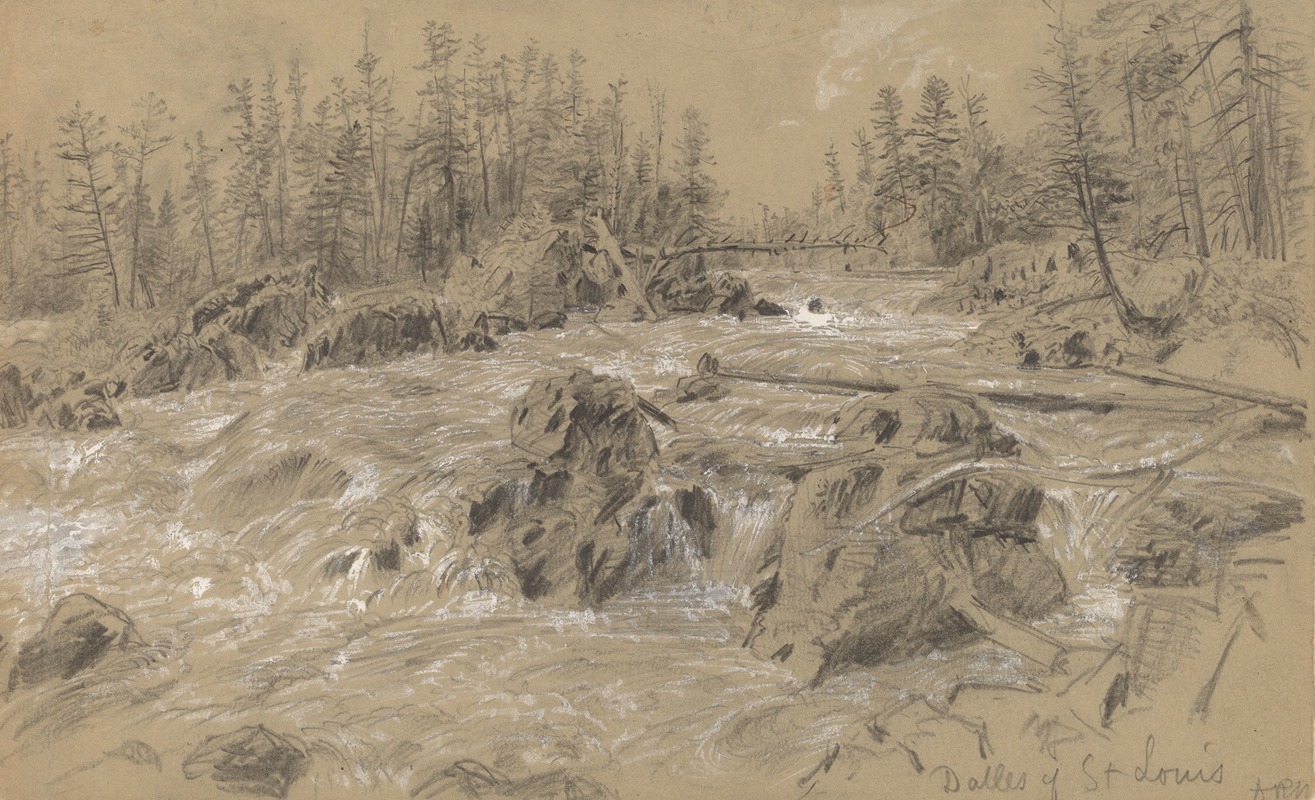
Here's A.R. Waud sketching at Gettysburg after the battle...

1764974515138.webp
 
A general statement...

View attachment 569558


From a post-war description of 1893 of some of the leaders in the field...

View attachment 569560
View attachment 569561
View attachment 569563
View attachment 569564
View attachment 569566


Here's A.R. Waud sketching at Gettysburg after the battle...

View attachment 569557

Full collection of Mr. Alfred Waud's illustrations. Truly remarkable works.
 
I'm curious about what a civil war era sketchbook looked like, particularly what the newspaper or "special" artists used. I'm also curious on how newspaper artists got more sketchbooks, pencils, etc., while out in the field. Would the newspaper send them art supplies or would the artist have to buy the supplies from a town or city?

Have I got a deal for you.

When what we would call the art director of Leslie's Illustrated retired he carried what we would call the morgue with him. The Becker Collection has over 300 special corespondent drawings with him. Read more here.

Link:


The Library of Congress has a collection of Civil War drawings. The site is easy to use. Read more here,

Link:


Adolph Metzner was not a special corespondent. He was a soldier. The drawings submitted to Leslie's & Harpers were self censored. Metzner drew what he saw. The Library of Congress collection covers a wide variety of subjects. Read more here.

Link:


Winslow Homer was a remarkable draftsman. His were more formally composed than his peers. Read more here.

Link:


These collections are a comprehensive representation of the work submitted by the special correspondents.
 
Oh my! The book shown below was left for me yesterday on the desk in the "office" for the book side of the used book and record shop where I volunteer. Unfortunately, it was more than a bit beat and at 11 x 15 x 1.5 inches and 512 pages hardbound would have been difficult to transport and/or mail for my Civil War book sale activity so I didn't buy it. We put it in a collection of books for a collage artist whose works are made out of/from books. She was invited to a program out East that seeks US history-themed works, so we thought it would be perfect for her.

Edited to add: Since copy/paste of images is now not working for me, either, we'll do it this way.

 
The Next Question…

How Were The Drawings Turned Into The Printed Page?


After the intrepid members of the "Bohemian Brigade" had observed a scene, made their drawing, refined it & sent it off to the publisher, then what? Read more here.

Link:


Link:


The sketches were rendered onto end grain blanks made up of blocks of apple wood by skilled woodblock engravers.

Link:

As a professional artist, I have always been deeply impressed with the observational skills & draftsmanship of the Bohemian Brigade special corespondents. They were the best in the world at what they did. Today, we understand that their ability to take in a scene, remember it & render it is facilitated by hyperphantasia.

That describes a direct link between the frontal cortex and the visual cortex in the back of the brain. Spacial Hyperphantasia where the subject can, in effect, watch vivid full detailed movies of past experiences occurs in (+/-) 1 % of the population.

Marvelous as that is, the results would have been confined to a sketchbook or portfolio without the exquisite craftsmanship of the woodblock engravers that converted the images into printing plates.

Link:

You might imagine that after photographic processes replaced wood block engraving the craft would have died out very quickly. Not so, read more here.

Link:

 
I'm curious about what a civil war era sketchbook looked like, particularly what the newspaper or "special" artists used. I'm also curious on how newspaper artists got more sketchbooks, pencils, etc., while out in the field. Would the newspaper send them art supplies or would the artist have to buy the supplies from a town or city?
Newsprint. China White and Charcoal pencils. Regular pencils with pen knife and emory board. Gum rubber eraser. Big drawing board like made today. Clips and rubber band to stabilize paper to board. Their own tent with easel or portable draughting board. Straight edges. T Square. Watercolors. Brushes. Wash Payne's Grey. Watercolor paper. All the pencils and brushes roll up in a cloth or leather wrap. Various sizes bound sketchbooks.
That should get ya started.
 
The Next Question…

How Were The Drawings Turned Into The Printed Page?


After the intrepid members of the "Bohemian Brigade" had observed a scene, made their drawing, refined it & sent it off to the publisher, then what? Read more here.

Link:


Link:


The sketches were rendered onto end grain blanks made up of blocks of apple wood by skilled woodblock engravers.

Link:

As a professional artist, I have always been deeply impressed with the observational skills & draftsmanship of the Bohemian Brigade special corespondents. They were the best in the world at what they did. Today, we understand that their ability to take in a scene, remember it & render it is facilitated by hyperphantasia.

That describes a direct link between the frontal cortex and the visual cortex in the back of the brain. Spacial Hyperphantasia where the subject can, in effect, watch vivid full detailed movies of past experiences occurs in (+/-) 1 % of the population.

Marvelous as that is, the results would have been confined to a sketchbook or portfolio without the exquisite craftsmanship of the woodblock engravers that converted the images into printing plates.

Link:

You might imagine that after photographic processes replaced wood block engraving the craft would have died out very quickly. Not so, read more here.

Link:

This info is integral to my field artist's impression and Living History. I haven t seen it before I don't think. If I could get my hands on a field offset printer....now that would be nice.
Thanks for posting this

Cheers!
 
Here is a link to a book that you will want to read., 'The Bohemian Brigade, Civil War Newsmen In Action." Read book here.

Link:


This is an excellent article. It includes a quote that I have found handy, "… the Union army used 10 different types of saddles…." referring to how the illustrators checked the accuracy of their drawings with soldiers on the spot. Read more here.

Link;

 
Last edited:
I was an artist / illustrator in Peace Corps Ecuador in the 1970's. I carried a sketchbook with me at all times. I have been a living history volunteer at Stones River since 1994. Drawing in the field isn't always easy.

I don't have any idea why the recent upgrade on CWT or my phone rolls images to the right.


IMG_1705.webp


IMG_1897.webp


IMG_1431.webp


IMG_1422.webp


IMG_1416.webp


IMG_1409.webp


I would suggest that you carry a hard bound sketchbook. It will be easy to handle & have a period appearance.

A gunner's leather bag is just the right size. Put a piece of 1/4" plywood in it as a backing. That makes a very practical field desk.

You will want to join "Our Bohemian Brigade" private Facebook group.
 
As far as media goes, keep it simple. En pleinaire drawing is challenging. You will have to work very quickly with a solid graphite pencil to block in the scene & figures. Work loose as you develop the shapes.

I do not recommend trying to ink over the pencil in the field. A quill pen & ink is awkward at any time. One gust of wind & it is Buster Keaton's impression of an artist at work.

Carry an iPhone in a pistol holster. It is readily at hand & to put back.

Use a pair of tabletop metal easels from Michael's to ink loose preliminary pencil sketches .

IMG_3793.webp

Here is a sideways view of my set up.

IMG_3795.webp


Here is the pleinaire sketch side by side with the photo. I have become very fond of using this brand of sumi brush marker.

IMG_3796.webp


It looks & feels like a real brush. Unlike other brands I have tried, it holds its point. Also find it at Mechael's.

IMG_3800.webp


This is my canvas haversack from Blockade Runner in Wartrace TN & the Bristol paper spiral bound sketchbook that fits it nicely.

IMG_3798.webp

Here is a birthday present still on the box.

I am in no way attempting to make a photo realistic illustration. I don't erase the pencil lines after I ink it. I really like having the process a part of the image.

IMG_3799.webp


Do post images of your work. We need to add a Bohemian Brigade to CWT.

RC
 
Last edited:
I was an artist / illustrator in Peace Corps Ecuador in the 1970's. I carried a sketchbook with me at all times. I have been a living history volunteer at Stones River since 1994. Drawing in the field isn't always easy.

I don't have any idea why the recent upgrade on CWT or my phone rolls images to the right.


View attachment 569815


View attachment 569816


View attachment 569817


View attachment 569818


View attachment 569819


View attachment 569820

I would suggest that you carry a hard bound sketchbook. It will be easy to handle & have a period appearance.

A gunner's leather bag is just the right size. Put a piece of 1/4" plywood in it as a backing. That makes a very practical field desk.

You will want to join "Our Bohemian Brigade" private Facebook group.
Those are nice. I illustrated some things also. Impractical to be a soldier and illustrator for 3 days. Those guys lived in the field and had plenty of time to sketch around.
 
Thank you all for the information, it is really helpful. My mom joined the Facebook group. Here are some examples of my work.View attachment 569829 View attachment 569830 View attachment 569831 View attachment 569832 View attachment 569833


I usually don't sketch during reenactments because I portray a soldier, but I'm interested in doing a sketch artist impression.
Really good stuff. I'm impressed. When I was young I would constantly be drawing human forms. I got so natural with it that my little sketches in the margins of school notes surprise me today. I also like to leave the construction lines. It gives a sense of movement with a dynamic figure or scene. I tried taking photos and then blowing up the image on xerox machines to get the images together as one. Not so good with that. Inkjet copiers are awesome though. Rough sketch on drawing paper and then copying onto watercolor paper with the ability to adjust size and then dry wash watercolor paint and fill in the lines where detail is lacking with assorted ink sizes. It works great and if that one doesn't float yer boat you can always start over with the original. Slap them into dollar store frames and behind the glass they looked great. Finance your impression with some Pre made stock. Hard to sell at events while soldiering also. Find a time and place to hawk your wares.
What size are these sketches?
Sorry. I don't mean to Lord over your. I just get excited with reenactors and then and extra push for artists and musicians. Take and us what you will or ignore my blathering. Its up to you.
Good luck for sure.
 

Learn About Us
About CivilWarTalk
Contact the Webmaster
Meet the Staff
Link to CivilWarTalk
Join Our Community
Register
Browse Forums
View Today's Discussions
Search the Forum
Get Help
FAQ
Student Guide
Forum Rules & Etiquette
Copyright / DMCA

     Contact Us CivilwarTalk on Facebook CivilWarTalk on YouTube CivilWarTalk on Twitter RSS Feed

Bringing the American Civil War and More to Life.
© 1999 - , CIVILWARTALK, LLC - Site Version 10.0

SlaveryTalk.com - SecessionTalk.com - CivilWarTalk.com - ReconstructionTalk.com
Back
Top