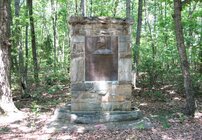
"Lee to the rear!"

Sorah_45thVA

Private
Joined
May 31, 2018
Location
Knoxville
I was intrested in reading some first hand accounts of the infamous incident at ThevWilderness. Any information regarding this subject would be great. Also, any thoughts from the community on this?
Thanks
 
  • Like
Reactions: WJC
Robert Campbell, courier on Brig. Gen. John Gregg's staff:

In the fall of 1863, Gen. Longstreet, with two divisions of his corps, (Hood's and McLaws') was ordered to Georgia to reinforce Gen. Bragg. This we did, and participated in the battle of "Chickamauga," after which we were ordered to Knoxville, Tennessee to lay siege to the place, and which was done without success.

In the latter part of April 1864, Gen. Longstreet found himself and corps in the vicinity of Bristol, on the Virginia and Tennessee line. About May 1st, 1864, we took up the line of March, and were transported to Cobham station, on the Virginia Central Railroad, near Charlottesville. At this place new clothing, guns, bayonets, ammunition and ample provisions were issued to our corps, and we were reviewed by Generals Lee and Longstreet. At that time our corps contained only the two divisions that Longstreet took with him to Georgia. . . .

We took up the line of march from Cobham station about the 2nd or 3rd of May—which, I now forget—and continued on a steady march until the night of the 5th, going into camp about 7 or 8 p. m. Late in the evening of the 5th we heard the report of cannon, and were informed that we were near Gen. Lee's army. We did not know at the time that the grand battle of the "Wilderness" had begun on the 5th, and merely deemed the report of cannon "a feeling of the enemy's position." At this time, as I had been for several months, I was acting on Gen. Gregg's staff as courier— and in a position to see and know all that I have, or may hereafter relate.

By 3 a. m., on the morning of the 6th, the long roll beat, the men were aroused, under arms, and the march soon began, we moved steadily on, though rather at a rapid pace, with the "Texas Brigade" leading the van of Gen. Field's division. By daylight, or perhaps a little later, we had reached the turnpike known as the "Fredericksburg Turnpike." By daylight the boom of cannon, and the distant rattle of small arms, were borne upon the breeze, and knowing that the two armies were immediately facing each other, we recognized that a grand battle had begun, and we would soon be called upon to act well our part. Reaching the turnpike, we took the direction leading to Fredericksburg, and before going very far not only was our speed accelerated, but Gen. Kershaw's division (the other division of our corps) occupied the pike side and side with us, and thus situated, the two divisions moved rapidly down the pike in the direction of the firing—the men of separate commands mingling one with another.

When moving down this pike, the sun rose beautifully, but to the notice of all had a deep, red color, and the brave Gen. Gregg, upon seeing this, remarked to those who were riding near him, "there is the sun of Austerlitz"—a prophecy that found verification ere it sunk to rest among the sombre shades of night. The nearer our steps led us towards the firing, the din of battle became louder and more terrible.

Faster and faster our columns moved on to the scene of conflict, until we were almost at a double-quick. Directly horsemen came dashing to and fro; aids were cantering about; ambulances containing the wounded went flying to the rear ; litters with their unfortunate burdens were moving towards the hospitals; stragglers without number were flocking back with tales of distress, annihilation and defeat—all these signs betokened that bloody and desperate work was going on, and that too not many yards distant. A half mile more, and by 6 o'clock, we found ourselves upon the scene. Both of our divisions mingled together in one mass upon the turnpike. . . .

The position where we found ourselves upon being halted, was near the brink of a hill which gradually sloped down for the distance of 200 yards, where immediately began the dense undergrowth known as the wilderness. The turnpike led over and down this hill and continued on into the wilderness. Immediately at the turn of the hill, where the turn-pike or plank-road passed, hasty breastworks were partially constructed and under construction; and along these were strewn a body of stragglers that had been rallied, as well as some half dozen pieces of artillery that were playing upon the dense wilderness below. Near this hasty defense we found, upon our arrival, our loved commander-in-chief, Gen. Lee, Gen. Longstreet, their staffs, and bodyguards. I have often seen Gen. Lee, but never did I see him so excited, so disturbed—never did anxiety or care manifest itself before so plainly upon his countenance. If I mistake not he was almost moved to tears—if in error, others share it with me, and his voice was anxious and tremulous. . . .

As we stood upon this hill, Lee excited and in close consolation with Longstreet. . . . The cannon thundered, musketry rolled, stragglers were fleeing, couriers riding here and there in posthaste, minnies began to sing, the dying and wounded were jolted by the flying ambulances, and filling the road-side, adding to the excitement the terror of death. The "Texas brigade," was in front of Field's division—while "Humphrey's brigade" of Mississippians led the van of Kershaw's division.

The consultation ended. Gen. Gregg and Gen. Humphrey were ordered to form their brigades in line of battle, which was quickly done, and we found ourselves near the brow of the hill, Gregg on the left, Humphrey on the right. "Gen. Gregg prepare to move." was the order from Gen. L.

About this time, Gen. Lee, with his staff, rode up to Gen. Gregg. "General what brigade is this?" said Lee.
"The Texas brigade," was General G.'s reply.

"I am glad to see it," said Lee. "When you go in there, I wish you to give those men the cold steel—they will stand and fire all day, and never move unless you charge them."

"That is my experience," replied the brave Gregg.

By this time an aid from General Longstreet rode up and repeated the order, "advance your command, Gen. Gregg." And now comes the point upon which the interest of this "o'er true tale" hangs. "Attention Texas Brigade" was rung upon the morning air, by Gen. Gregg, "the eyes of General Lee are upon you, forward, march." Scarce had we moved a step, when Gen. Lee, in front of the whole command, raised himself in voice, explained above the din of confusion of the hour, "Texans always move them."

. . . never before in my lifetime or since, did I ever witness such a scene as was enacted when Lee pronounced these words, with the appealing look that he gave. A yell rent the air that must have been heard for miles around, and but few eyes in that old brigade of veterans and heroes of many a bloody field was undimmed by honest, heart-felt tears. Leonard Gee, a courier to Gen. Gregg, and riding by my side, with tears coursing down his cheeks and yells issuing from his throat exclaimed, "I would charge hell itself for that old man." It was not what Gen. Lee said that so infused and excited the men, as his tone and look, which each one of us knew were born to the dangers of the hour.

With yell after yell we moved forward, passed the brow of the hill, and moved down the declivity towards the undergrowth—a distance in all not exceeding 200 yards. After moving over half the ground we saw that Gen. Lee was following us into battle—care and anxiety upon his countenance—refusing to come back at the request and advice of his staff. If I recall correctly, the brigade halted when they discovered Gen. Lee's intention, and all eyes turned upon him. Five and six of his staff would gather around him, seize him, his arms, his horse's reins, but he shook them off and moved forward. Thus did he continue just before we reached the undergrowth, not, however, until the balls began to fill and whistle threw the air. Seeing that we would do all that men could do to retrieve the misfortune of the hour, accepting the advice of his staff, and hearkening to the protest of his advancing soldiers, he at last turned round and rode back to a position on the hill.

We reached the undergrowth—entered it with a yell, and in less than 100 yards came face to face with the advancing, triumphant, and sanguine foe—confronted only by a few brave souls who could only fire and yield their ground. The enemy were at least five or six to one of us, and death seemed to be our portion. With only 15 or 20 paces separating us, the contest waxed hotter and deadlier. We gave a cheer and tried a charge, but with our handful of men our only success was to rush up to them, shoot them down, and shove them back some 10 to 15 yards. For 25 minutes we held them steady—not a foot did they advance, and at the expiration of that time more than half of our brave fellows lay around us dead, dying and wounded, and the few survivors could stand it no longer. By order of Gen. Gregg, whose manly form was seen wherever danger gloried most—I bore the order to the 5th and 1st Texas [probably the 4th], to fall back in order.

After retreating some 50 yards, a most deafening yell was borne upon the breeze, and ere we were prepared to realize its cause, Gen. Longstreet's corps came sweeping by us, reformed, and reinforced by Gen. Anderson's division, and with a valor that stands unrivaled swept everything before them for three long miles—driving, in that long charge, the yankees from four different lines of breastworks that they had thrown up in their rear. The "Battle of the Wilderness" was won—all other fighting by the enemy that day and the next was to prevent defeat from terminating in destruction.

The object, reader, of the advance made by Gregg and Humphrey, was to hold the enemy in check, to give Longstreet time to reform his corps. We accomplished our objective.

The "Texas Brigade" entered the fight 673 strong. We lost, in killed and wounded over 450 [the actual strength was around 800-850 engaged and anywhere from 440-565 losses according to different sources]. Did we or did we not do all that men could? Gen. Gregg entered the fight with at least 12 commissioned and non-commissioned on his staff. Of these, several were killed, some wounded, and only two horses untouched. Gen. G's. horse was pierced by 5 balls—each creating a mortal wound—though he rode him until we fell back—sent him to the rear where he died. My task is finished—and I have only to say if there ever lived a brave, fearless, unflinching and noble soldier—if ever there breathed a pure and honest patriot, he is to be found in that mouldering dust of a certain coffin in Hollywood cemetery, which contains the remains of Brig. Gen. Jno. Gregg, who fell near Richmond, Va., Oct. 7th. 1864, one of the best, the truest, the noblest men that Texas ever claimed.​

- "Texans always move them." by Robert Campbell in The Land We Love, 1868, Vol. 5
 
Last edited:
There were actually a couple incidents. Gen. Lee first approached the brigade when they formed in the Widow Tapp field behind Poague's artillery battalion, spoke to Gen. Gregg and inquired who they were. Some of the men told him to retire to a safer area then. After the brigade advanced Lee then followed behind them, attempting to lead them into battle, when the men rushed over, grabbed his bridle rein and shouted for him to "go to the rear!"

Texan who held General Lee's horse 1.jpg

Texan who held General Lee's horse 2.jpg

Texan who held General Lee's horse 3.jpg

- Confederate Veteran, Vol. 12, (October 1904), p. 478

Lee at the Wilderness, Henry Arthur McArdle, 1872.jpg

Lee at the Wilderness by Henry Arthur McCardle. An artist originally born in Belfast, Ireland, McCardle served as a draftsman in the Confederate Navy and later cartographer for Gen. Lee during the war. After moving to Independence, Texas, McCardle spent five years (1867-1872) researching and working on this painting, interviewing veterans the Texas Brigade, making use of their photographs for facial features and having a few serve as studio models. Unfortunately, while on display at the Texas State Capitol it was lost in the capitol fire of 1881. There were at least several men who claimed or were said to have grabbed Traveller's reins; McCardle decided to depict Leonard Grace Gee of Co. E, 5th Texas Infantry based of Gee's testimony and perhaps that of others.
 
Lt. Col. Richard J. Harding, 1st Texas Infantry:

As we pressed forward, I never heard such a shout, as when we saw General Lee, mounted upon his splendid horse, appearing a warrior where every god had set the seal, with his glittering staff in the wake, the gates of the morning at the instant opened, the sunlight glinted the tops of the virgin forest, revealed the gray smoke of the artillery. Men were falling, the air was rent with the thunder of cannon. The scene was at once beautiful from surrounding nature, and terrible in the wrath of men. We were hurried into position.

The right of the First Texas rested on the left of the Fourth, a small interval between them. Through this opening General Gregg rode and said in a loud voice that the eyes of General Lee were upon us, and would lead the charge. Just then General Lee rode into the same opening between the First and Fourth. I was on the left of the First and as General Gregg made the announcement, I looked around and saw General Lee in ten feet of the spot where I was standing, moving forward on his iron gray horse, Traveler. Bullets were flying, men were falling and every man knew that something terrible and desperate was at hand. I ran to General Lee and caught his horse by the bridle rein.

About the same instant Whit Randle caught the rein on the other side of the hone and Cross Lawrence raised his hand in the face of the horse as if to stop him. About six or eight men from both regiments rushed to General Lee for the same purpose, but all could not get hands on him. They formed a living barrier to stop his further progress. A simultaneous shout went up from every man who saw General Lee exposing himself. "Go back, General Lee! Go back, General Lee! Lee to the rear!" and kept this up for some time. Traveler became restless and General Lee, with the tears streaming down his cheeks, patted him on his shoulder to quiet him and said : "Charge them then." General Lee then rode to the right toward the top of the hill and General Gregg led the charge.

I did not know Grace Darling. It may have been he who caught the other rein of the bridle or who raised his hand immediately in the face of the horse. It was a desperate moment and no time for remembering faces. I have heard of many men from other commands claiming to have been the actors in this scene. I had never mentioned my name in connection with this incident until twenty years afterward when brave Billy Barry of the Fourth Texas, now at Navasota, related to me the scene as he witnessed it, and asked me for my recollection of it. We remembered it alike. Captain Barry was shot down and witnessed the whole thing as he lay on the ground. Please communicate with him at Navasota.

General Gregg and I talked about this the evening after the battle. We both saw it alike. He told me that the act of the brigade would find a place in history. The men who caught General Lee's horse are entitled to nothing more for this act than those who did not. Every man would have done so if he could. I have always spoken of it as the act of the Texas Brigade, feeling amply paid by being a member of Hood's Brigade. At the unveiling of the Lee monument in Richmond, Va., I met a son of General Lee, and we talked about the incident. His father had spoken to him about it. General Lee said it brought tears to his eyes when he saw men willing to face death if he would go to a place of safety. You asked for a sketch from "start to finish." I have given it accurately and truthfully. As it is to be historical, I will stand to history on this sketch. Your friend and comrade.
R. J. HARDING.​


- Unveiling and Dedication of Monument to Hood's Texas Brigade, comp. F. B. Chilton, pp. 174-175.​
 
Lt. Col. Richard J. Harding, 1st Texas Infantry:

As we pressed forward, I never heard such a shout, as when we saw General Lee, mounted upon his splendid horse, appearing a warrior where every god had set the seal, with his glittering staff in the wake, the gates of the morning at the instant opened, the sunlight glinted the tops of the virgin forest, revealed the gray smoke of the artillery. Men were falling, the air was rent with the thunder of cannon. The scene was at once beautiful from surrounding nature, and terrible in the wrath of men. We were hurried into position.

The right of the First Texas rested on the left of the Fourth, a small interval between them. Through this opening General Gregg rode and said in a loud voice that the eyes of General Lee were upon us, and would lead the charge. Just then General Lee rode into the same opening between the First and Fourth. I was on the left of the First and as General Gregg made the announcement, I looked around and saw General Lee in ten feet of the spot where I was standing, moving forward on his iron gray horse, Traveler. Bullets were flying, men were falling and every man knew that something terrible and desperate was at hand. I ran to General Lee and caught his horse by the bridle rein.

About the same instant Whit Randle caught the rein on the other side of the hone and Cross Lawrence raised his hand in the face of the horse as if to stop him. About six or eight men from both regiments rushed to General Lee for the same purpose, but all could not get hands on him. They formed a living barrier to stop his further progress. A simultaneous shout went up from every man who saw General Lee exposing himself. "Go back, General Lee! Go back, General Lee! Lee to the rear!" and kept this up for some time. Traveler became restless and General Lee, with the tears streaming down his cheeks, patted him on his shoulder to quiet him and said : "Charge them then." General Lee then rode to the right toward the top of the hill and General Gregg led the charge.

I did not know Grace Darling. It may have been he who caught the other rein of the bridle or who raised his hand immediately in the face of the horse. It was a desperate moment and no time for remembering faces. I have heard of many men from other commands claiming to have been the actors in this scene. I had never mentioned my name in connection with this incident until twenty years afterward when brave Billy Barry of the Fourth Texas, now at Navasota, related to me the scene as he witnessed it, and asked me for my recollection of it. We remembered it alike. Captain Barry was shot down and witnessed the whole thing as he lay on the ground. Please communicate with him at Navasota.

General Gregg and I talked about this the evening after the battle. We both saw it alike. He told me that the act of the brigade would find a place in history. The men who caught General Lee's horse are entitled to nothing more for this act than those who did not. Every man would have done so if he could. I have always spoken of it as the act of the Texas Brigade, feeling amply paid by being a member of Hood's Brigade. At the unveiling of the Lee monument in Richmond, Va., I met a son of General Lee, and we talked about the incident. His father had spoken to him about it. General Lee said it brought tears to his eyes when he saw men willing to face death if he would go to a place of safety. You asked for a sketch from "start to finish." I have given it accurately and truthfully. As it is to be historical, I will stand to history on this sketch. Your friend and comrade.
R. J. HARDING.​


- Unveiling and Dedication of Monument to Hood's Texas Brigade, comp. F. B. Chilton, pp. 174-175.​


Thank you very much sir! This story makes me emotional when I hear it talked about or if I am relating it. I really think that this event is a textbook example of how absolutely larger than life this era is.
 
  • Like
Reactions: AUG
Texans_attack-LS1k_8415-768x576.jpg

The small "Lee to the rear!" monument and the State of Texas monument are nearby.

From the marker:

The Texans Attack
Brigadier General John Gregg formed his four Confederate regiments near the far edge of the Tapp Field behind you and advanced them about 400 yards toward the Union battle line, which stood near here. The Southerners moved diagonally across the clearing so that the right half of the brigade crossed the Orange Plank Road as it reached the enemy.

Federal troops under Brigadier General James S. Wadsworth, including the renowned Iron Brigade, unleashed a storm of bullets while the Texans and Arkansans dashed toward them. According to one observer, when Gregg's troops reached Wadsworth's position, near where you are now standing, "there was a terrible crash, mingled with wild yelling which settled down to a steady roar of musketry."

The hand-to-hand combat lasted less than ten minutes before Gregg ordered a retreat. More than half of his 800 men remained where they fell, either killed or wounded. Other brigades repeated the Texans' deadly experience. Together, they halted the Federal offensive.

Texans_Attack_CU1k_8414-768x470.jpg
 
There high commanders on both sides around the 'Lee to the rear' story. Gens Wadsworth and Hays on the Union side. Longstreet, Micah Jenkins, Lee threatened...hot fight.
 
I was intrested in reading some first hand accounts of the infamous incident at ThevWilderness. Any information regarding this subject would be great. Also, any thoughts from the community on this?
Thanks

He was really ready to lead a counterattack at this place. He knew what had to happen there. @AUG351 is really your 'go to' guy on this stuff.

- Signed, GG grandson of a 1st Texas Infantry Brigade veteran.
 
  • Like
Reactions: AUG
Yeah, the rout of A.P. Hill's Corps that morning might've been the worst panic the ANV experienced up to that time and Lee was certainly glad to see Longstreet and his men come marching up. The troops in Longstreet's Corps knew the situation was critical when they were rushed to the battlefield and were also glad to be back fighting with Lee's army after their experience in Tennessee.

I think what the Texas Brigade did there was akin to the 1st Minnesota at Gettysburg. They were thrown in to halt the Federal breakthrough and charged into a force at least several times their number, were shot to pieces but checked Hancock's advance until the rest of Longstreet's Corps could form in the rear.

Law's Alabama Brigade was also sent into action not long after the Texas Brigade and Lee was said to have cheered them on also. According to Col. P. D. Bowles of the 4th Alabama, "General Lee was riding his horse up and down the columns and calling out to the men, 'Go on, my brave Alabamians, and drive them back.' . . . At this time, the Fifteenth Alabama Regiment, under the command of the gallant W. C. Oates, was just in my front, and there was a corpulent captain (the old hero, Captain Hatcher) of the regiment some fifteen paces in the rear of his company and trying to get up at a good run, and when he passed General Lee the latter called out: 'Go on, my brave Alabama captain, and drive them back!' I must confess that this was one of the times that I thought things were getting a little squally." Law's men also went on to do some good fighting that day.
 
There were also two other "Lee to the rear" incidents at Spotsylvania after the collapse of the Mule Shoe salient and Confederate counterattacks to reclaim it. One was with John B. Gordon's troops and the other with Harris's Mississippi Brigade as they were sent in to action.
 
There were also two other "Lee to the rear" incidents at Spotsylvania after the collapse of the Mule Shoe salient and Confederate counterattacks to reclaim it. One was with John B. Gordon's troops and the other with Harris's Mississippi Brigade as they were sent in to action.

Yes, I am not nearly as knowledgable on these later occurances but am aware they happened. What would you accreit these moments to? I think Lee knew that it was only a matter of time with Grant, and Lincoln's re-election and Lee found dying this way on battle was preferable to surviving the war. Maybe that's too over analytical but still. Haha
 
He was really ready to lead a counterattack at this place. He knew what had to happen there. @AUG351 is really your 'go to' guy on this stuff.

- Signed, GG grandson of a 1st Texas Infantry Brigade veteran.


I'm jealous that you can claim such an honorable ancestor! My 4x great grandfather was in the Valley with Stonewall's Brigade, and died at Cedar Mountain, I just wish I could have felt the emotion of "Lee to the rear." Such unity and devotion to ideas has never been repeated and never will again.
 
I'm jealous that you can claim such an honorable ancestor! My 4x great grandfather was in the Valley with Stonewall's Brigade, and died at Cedar Mountain, I just wish I could have felt the emotion of "Lee to the rear." Such unity and devotion to ideas has never been repeated and never will again.

I hereby bow to a descendent of the Stonewall Brigade. Hood's Texan's were awesome to be sure, but Jackson's men are up there in the Pantheon!
 
I hereby bow to a descendent of the Stonewall Brigade. Hood's Texan's were awesome to be sure, but Jackson's men are up there in the Pantheon!

They were indeed! It gives me chillbumbs to think of what it must have been like fighting in the Valley with Jackson! What are your thoughts on Hood commanding the Army of Tennessee? Obviously given his health it wasn't a good fit, but I don't think he was intoxicated like some historians insist.
 
Yes, I am not nearly as knowledgable on these later occurances but am aware they happened. What would you accreit these moments to? I think Lee knew that it was only a matter of time with Grant, and Lincoln's re-election and Lee found dying this way on battle was preferable to surviving the war. Maybe that's too over analytical but still. Haha
The collapse of the Mule Shoe at Spotsylvania was just as desperate a situation for the ANV as on the second day of the Wilderness. I don't think Lee was suicidal in that regard, just excited and eager to see the reinforcements sent into action. He probably also knew the effect his presence had on the troops' morale and wanted them to know he was right there with them, even if it meant putting his life on the line. Also, at Spotsylvania Lee's headquarters was not too far away from the action (at the Harrison house near the base of the Mule Shoe salient) and some of the troops passed by there or were formed nearby before being sent into battle.


Here's Gen. John B. Gordon's account of the first incident at Spotsylvania, as he formed his men for action (his Georgia brigade and a Virginia brigade):

General Lee knew, as did every one else who realized the momentous import of the situation, that the bulk of the Confederate army was in such imminent peril that nothing could rescue it except a counter-movement, quick, impetuous, and decisive. Lee resolved to save it, and, if need be, to save it at the sacrifice of his own life. With perfect self-poise, he rode to the margin of that breach, and appeared upon the scene just as I had completed the alignment of my troops and was in the act of moving in that crucial countercharge upon which so much depended.

As he rode majestically in front of my line of battle, with uncovered head and mounted on Old Traveller, Lee looked a very god of war. Calmly and grandly, he rode to a point near the centre of my line and turned his horse's head to the front, evidently resolved to lead in person the desperate charge and drive Hancock back or perish in the effort. I knew what he meant; and although the passing moments were of priceless value, I resolved to arrest him in his effort, and thus save to the Confederacy the life of its great leader.

I was at the centre of that line when General Lee rode to it. With uncovered head, he turned his face toward Hancock's advancing column. Instantly I spurred my horse across Old Traveller's front, and grasping his bridle in my hand, I checked him. Then, in a voice which I hoped might reach the ears of my men and command their attention, I called out, "General Lee, you shall not lead my men in a charge. No man can do that, sir. Another is here for that purpose. These men behind you are Georgians, Virginians, and Carolinians. They have never failed you on any field. They will not fail you here. Will you, boys?" The response came like a mighty anthem that must have stirred his emotions as no other music could have done. Although the answer to those three words, "Will you, boys?" came in the monosyllables, "No, no, no; we will not fail him," yet they were doubtless to him more eloquent because of their simplicity and momentous meaning. But his great heart was destined to be quickly cheered by a still sublimer testimony of their deathless devotion.

As this first thrilling response died away, I uttered the words for which they were now fully prepared. I shouted to General Lee, "You must go to rear." The echo, "General Lee to the rear, General Lee to the rear!" rolled back with tremendous emphasis from the throats of my men; and they gathered around him, turned his horse in the opposite direction, some clutching his bridle, some his stirrups, while others pressed close to Old Traveller's hips, ready to shove him by main force to the rear. I verily believe that, had it been necessary or possible, they would have carried on their shoulders both horse and rider to a place of safety.

This entire scene, with all its details of wonderful pathos and deep meaning, had lasted but a few minutes, and yet it was a powerful factor in the rescue of Lee's army. It had lifted these soldiers to the very highest plane of martial enthusiasm. The presence of their idolized commander-in-chief, his purpose to lead them in person, his magnetic and majestic presence, and the spontaneous pledges which they had just made to him, all conspired to fill them with an ardor and intensity of emotion such as have rarely possessed a body of troops in any war. The most commonplace soldier was uplifted and transformed into a veritable Ajax. To say that every man in those brigades was prepared for the most heroic work or to meet a heroic death would be but a lame description of the impulse which seemed to bear them forward in wildest transport. Fully realizing the value of such inspiration for the accomplishment of the bloody task assigned them, I turned to my men as Lee was forced to the rear, and reminding them of their pledges to him, and of the fact that the eyes of their great leader were still upon them, I ordered, "Forward!" With the fury of a cyclone, and almost with its resistless power, they rushed upon Hancock's advancing column.​

- Reminiscences of the Civil War by John B. Gordon, pp. 278-280.


Pvt. William W. Smith, 49th Virginia Infantry:

It was an hour of destiny. The thin line stood confronting the massing enemy in our trenches only some two thousand yards away; obscured they were, it is true, by the underbrush and in some cases by the contour of the land, but ready to push forward to capture of the parked reserve artillery ammunition just behind us. General Lee's headquarters were but a short distance away. . . . A moment later I noticed a quiet officer ride in front of our line. He was a large man on an iron gray horse, and had come up without retinue, even, I think, without a single staff officer or orderly. It was when he turned face towards us and with a silent gesture of extended arm pointed towards the enemy we recognized our idolized Lee. Already the bullets were zipping past, aimed chiefly at the struggling remnant of Johnson's division, that had been overwhelmed in the trenches. What of one should kill Lee? "Get in front of him, keep the bullets off," was the instinctive feeling of each man.

Just then from the right General J. B. Gordon came dashing down the line. At the sight of Lee he reined up his handsome bay so sharply as to throw him on his haunches. It was a picture never to be forgotten. "General Lee, this is no place for you. Go back, General; we will drive them back. These men are Virginians and they never failed me; they will not fail me; will you boys?" Then rose the oft-quoted shout: "General Lee to the rear! Lee to the rear!" " Go back, General, we can't charge until you go back." "We will drive them back, General." Some one got hold of his bridle and back through the line of the 49th Regiment Lee was led. The whole scene was not fifty paces from where I stood, and stand out like a glorious picture to-day.

"Forward!" cried Gordon, and the line stepped off with the steady tread of a dress-parade. There was no shout, no rebel yell, but, as I looked down the line, I saw their stem faces and set teeth of men who have undertaken to do a desperate deed, and do not intend to fail.

With the freedom of the volunteers, I said to those next to me: "Pass it down the line, boys; General Lee is looking at us." "Aye, and depending upon us, too," and the silent line moved on with long, swift strides. In a few moments we marched down into the bottom, then rising, parted the undergrowth, and were upon them, packed thick as blackbirds in our trenches. A fearful volley wrought havoc and started those in advance to get back to their line. Those behind, seeing these returning, became alarmed. Without pausing to reload, we rushed upon them, so quickly, indeed, that we did not give them time to run. Many surrendered upon demand; some gave us the bayonet. With these we had short, stern argument, using chiefly our clubbed guns. My gun being to short for such use and quite handy to load, I gave my stubborn opponent, who refused to surrender, the leaded contents at short range, and passed on after finding that he was beyond the need of assistance from me. As we rushed on, hundreds threw up their hands and said: "I surrender," but we could not afford to send men back from the charging line with prisoners, and would say: "Throw down your guns and go to the rear." Many did so; many obliqued to the left and finally escaped and joined their comrades, but we passed on, driving the ruck before us.​

- "Account of Dr. William W. Smith." In Southern Historical Society Papers, Vol. 32.
 

Learn About Us
About CivilWarTalk
Contact the Webmaster
Meet the Staff
Link to CivilWarTalk
Join Our Community
Register
Browse Forums
View Today's Discussions
Search the Forum
Get Help
FAQ
Student Guide
Forum Rules & Etiquette
Copyright / DMCA

     Contact Us CivilwarTalk on Facebook CivilWarTalk on YouTube CivilWarTalk on Twitter RSS Feed

Bringing the American Civil War and More to Life.
© 1999 - , CIVILWARTALK, LLC - Site Version 10.0

SlaveryTalk.com - SecessionTalk.com - CivilWarTalk.com - ReconstructionTalk.com
Back
Top