{⋆★⋆} BG Alexander, Edward Porter

Edward Porter Alexander

:CSA1stNat:
1622033108301.png


Edward Porter Alexander was a military engineer, railroad executive, planter, and author. He served first as an officer in the United States Army and later, in the Confederate Army, rising to the rank of brigadier general.

Born: May 26, 1835

Birthplace: Washington, Georgia

Father: Adam Leopold Alexander Sr. 1803 – 1882
(Buried: Linwood Cemetery, Columbus, Georgia)​

Mother: Sarah Hillhouse Gilbert 1805 – 1855
(Buried: Bonaventure Cemetery, Savannah, Georgia)​

1st​ Wife: Betty Jacqueline Mason 1836 – 1890
(Buried: Magnolia Cemetery, Augusta, Georgia)​

Married: April 3, 1860 in King George County, Virginia

2nd​ Wife: Mary Landon Mason 1861 – 1946
(Buried: Rose Hill Cemetery, Hagerstown, Maryland)​

Married: October 1, 1901 in Augusta, Richmond County, Georgia

Children:

Bessie Mason Alexander Ficklen 1861 – 1945​
(Buried: Bonaventure Cemetery, Savannah, Georgia)​
Edward Porter Alexander II 1863 – 1930​
Lucy Roy Alexander 1863 – 1900​
(Buried: Magnolia Cemetery, Augusta, Georgia)​
Adam Leopold Alexander 1867 – 1911​
(Buried: Bonaventure Cemetery, Savannah, Georgia)​
William Mason Alexander 1868 – 1936​
(Buried: Magnolia Cemetery, Augusta, Georgia)​

Signature:
1622033371769.png
E. P. Alexander Cadet.jpg


Education:

1857: Graduated from West Point Military Academy (3rd​ in class)​

Occupation:

1857 – 1858: Brevet 2nd​ Lt. United States Army Corps of Engineers​
1858 – 1861: 2nd​ Lt. United States Army Corps of Engineers​
1858 – 1859: Assistant Instructor at West Point Military Academy​
1859: Instructor of Small Arms at West Point Military Academy​
1860: Assistant Instructor at West Point Military Academy​
1860: Member of Board for trial of Small Arms​
1861: Assistant Engineer Defense Construction at Alcatraz Island​
1861: Resigned from United States Army on May 1, 1861​

Civil War Career:
1861: Captain in the Confederate Army Engineers​
1861: Chief Engineer & Signal Officer to General Beauregard​
1861: Participated in the First Battle of Bull Run​
1861 – 1862: Lt. Colonel of Confederate Army Artillery Staff officer​
1861 – 1862: Chief of Ordnance to General Joseph E. Johnston​
1862: Participated in the Peninsula Campaign as Ordnance Officer​
1862: Participated in the Seven Days Campaign as Ordnance Officer​
1862 – 1864: Colonel of Confederate Army Artillery
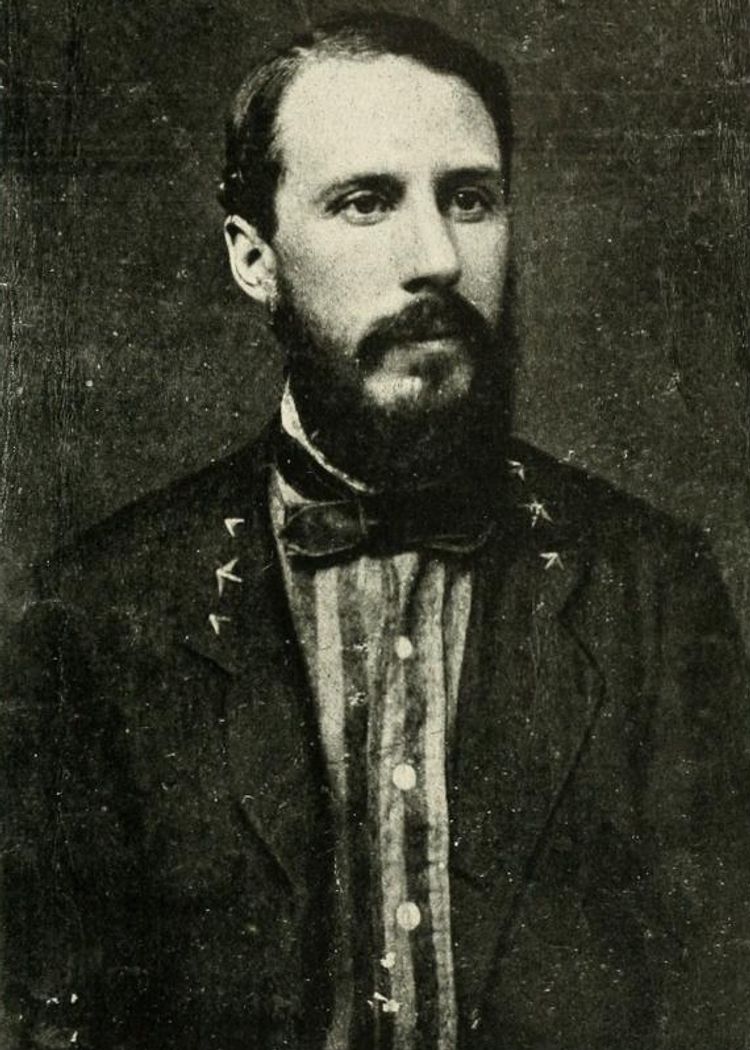
Alexander.jpg
1862: Participated in the Battle of Fredericksburg, Virginia (Artillery)​
1863: Participated in the Battle of Chancellorsville, Virginia (Artillery)​
1863: Participated in the Battle of Gettysburg, Pennsylvania​
1863: Arrived too late to participate in the Battle of Chickamuga​
1863 – 1864: Chief of Artillery for Department of East Tennessee​
1864: Participated in the Overland Campaign​
1864 – 1865: Brigadier General of Confederate Army Cavalry​
1864 – 1865: Participated in the Siege of Petersburg, Virginia​
1865: Proposed to General Lee to fight war in guerrilla war style​
1865: Participated in the Appomattox Virginia Campaign​
1865: Surrendered at Appomattox Court House Appomattox, Virginia​

Occupation after War:

1866 – 1869: Mathematics Professor at University of South Carolina​
1869 – 1871: President of Columbia Oil Company​
1870 – 1872: Actuary of Policy Holders Carolina life Insurance Co.​
1871 – 1872: Superintendent Charlotte, Columbia, Augusta Railroad​
1872 – 1875: President of Savannah and Memphis Railroad Co.​
1875 – 1878: President & General Manager Western Railroad of Ala.​
1878 – 1880: President of Georgia Railroad and Banking Company​
1880 – 1882: Vice President Louisville and Nashville Railroad Co.
General Alexander after war.jpg
1883 – 1888: Georgia State Capitol Commissioner​
President of Central Railroad and Banking Company of Georgia​
1892 – 1893: Engineers Committee to Columbia River Navigation​
1893 – 1894: Engineers Committee Chesapeake and Delaware​
Duck Hunted with President Grover Cleveland​

Died: April 28, 1910

Place of Death: Savannah, Georgia

Cause of Death: Arteriosclerosis, coma, stroke

Age at time of Death: 74 years old

Burial Place: Magnolia Cemetery, Savannah, Georgia

IMG_4827.JPG
 
Last edited by a moderator:
Alexander was an astute observer who generally made realistic assessments of situations. He often made made the best use of the limited resources, lower quality guns and faulty ammunition available to him, as an artillery commander.

In his recollections, 'Fighting for the Confederacy', Alexander did not consider Gettysburg as a decisive battle for the Confederacy, regardless of the result. (This view is interesting, given his role at Gettysburg, especially on day 3).

At page 110, he wrote,

..."I do not count Gettysburg as a place where the end of the war might have been the result of a victory.......But it seemed to me always that the fact that our nearest railroad point to replenish supplies & ammunition was at Staunton, Va., about 150 miles by wagon road, was bound to put a short period to our stay in Pa. whatever our success in battle might be, so I don't myself exactly figure on Gettysburg as one of the places where, as we might say, 'the war was lost'...."
 
Last edited:
One feature that struck me throughout Alexander's perspectives in his recollections, was the nostalgia expressed during his wartime experiences.

He would frequently refer (often fondly) to his past close friendships/acquaintances made with the many Union and Confederate officers he met prior to hostilities. He also repeatedly mentioned the positive interactions he had with various civilian families that he encountered during campaigns.

After reading Alexander's memoirs, I get the impression that he was an amiable person who behaved amicably in his dealings (i.e. one who did not rock the boat), as well as a thoughtful and considerate individual.

As a senior artillery officer, I believe Alexander could aptly be summed up as a trustworthy and obedient subordinate who was also resourceful, improvising and highly capable.
 
Last edited:
The 1st Corps' Chief of Artillery for the Army of Northern Virginia was Col. James B.Walton. Alexander had been chief of the Reserve artillery but at Gettysburg Walton was superseded by Alexander. This move was said to have humiliated Walton as Alexander was a subordinate.
 
The 1st Corps' Chief of Artillery for the Army of Northern Virginia was Col. James B. Walton. Alexander had been chief of the Reserve artillery but at Gettysburg Walton was superseded by Alexander. This move was said to have humiliated Walton as Alexander was a subordinate.
Alexander was assigned to the First Corps Reserve Artillery in November 1862. I can only think that he made a strong impression on Longstreet during his initial months with that command. In his book The Long Arm of Lee (Volume II, pages 755-756) Jennings Cropper Wise writes the following concerning Alexander's displacement of Walton:
"At Fredericksburg, he was the directing genius of Longstreet's defense. It was there, in referring to the positions of his guns on Marye's Hill, that he remarked to his corps commander: "We cover that ground so well, that we will comb it as with a fine-tooth comb. A chicken could not live on that field when we open on it." And as has been seen, Alexander's forecast was quite fulfilled. Again at Gettysburg where Col. Walton, his senior, and the nominal Chief of Artillery, was present, Alexander was in complete control of the Artillery in the fight. On former occasions, his recognized ability had merely enabled him to influence the disposition of the artillery under Walton's immediate control, but at Gettysburg we find him as a junior officer actually in command, while his senior was present and participating in the battle. This has always seemed a remarkable anomaly, not so much as to the wisdom of it, but that Walton would consent to it. A careful investigation and study of the matter discloses that it came about in the following way : Col. Walton was old, and physically unequal to the exertions of the campaign. Though a meritorious officer, of dauntless courage, and with a fine military record, he now lacked the energy to keep pace with events. Already one of his former battery commanders, Eshleman, had supplanted him as active leader of the celebrated Washington Artillery Battalion. Longstreet knew Walton's capabilities full well, and while he retained the gallant old officer as Chief of Artillery of his corps, both for political and personal reasons, he did not feel that he would be justified in committing the tactical leadership of the artillery to his hands, for those or any other considerations. In the movement upon Gettysburg, Walton's Battalion was held back, whether intentionally or not cannot be determined, but at any rate, Alexander arrived on the field some time in advance of Walton and was placed in charge of the artillery already up. An important mission was entrusted to him, and upon its discharge the young officer had already entered when his senior arrived. The situation was such that when Walton did come up, no consideration of rank could be allowed to jeopardize the success of the battle already under way. Such arguments were unanswerable, and however chagrined Col. Walton may have felt, he was powerless to deny the force of the circumstances which debarred him from the exercise of the tactical command to which his rank entitled him. That he was chagrined is quite well established by the verbal testimony of his contemporaries and his own letters, and it was not long before he expressed the desire to be transferred to service at Mobile. In justice to the old officer, his wish should have been instantly complied with. In fact, he should have been given the opportunity to transfer, before being publicly overslaughed. But he was retained on the roll of the 1st Corps, and after being gradually sidetracked by being assigned to duty as Inspector-General of Artillery at Large and placed on detached duty, relinquished his commission in the 1st Corps July 8, 1864."​
This would also seem to be a source of the "A chicken could not live on that field." quote attributed to Alexander. The book was published three years following Alexander's death so he could not refute the quote.
 

Learn About Us
About CivilWarTalk
Contact the Webmaster
Meet the Staff
Link to CivilWarTalk
Join Our Community
Register
Browse Forums
View Today's Discussions
Search the Forum
Get Help
FAQ
Student Guide
Forum Rules & Etiquette
Copyright / DMCA

     Contact Us CivilwarTalk on Facebook CivilWarTalk on YouTube CivilWarTalk on Twitter RSS Feed

Bringing the American Civil War and More to Life.
© 1999 - , CIVILWARTALK, LLC - Site Version 10.0

SlaveryTalk.com - SecessionTalk.com - CivilWarTalk.com - ReconstructionTalk.com
Back
Top