
alan polk
1st Lieutenant
- Joined
- Jun 11, 2012
Here are the results from our first attempt at cooking one of my 3 x great grandmother's recipes.
It turned out better than expected. It was easy and very hearty.
Thanks to the following members who gave advice and suggestions: @donna, @JPK Huson 1863, @Yankeedave, @Eleanor Rose, @amweiner, @Albert Sailhorst, @mofederal, @Northern Light
So here is the recipe cut out of an 1870 newspaper that was tucked between the pages of my ancestor's 1859 cookbook:
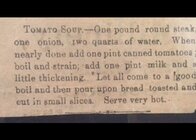
It's pretty sparse in its directions and, as Albert Sailhurst noted, assumes the cook has the requisite knowledge before hand. Of course, the original was likely cooked with a wood stove or over an open fire. Our method was simply over a gas stovetop with modern cookery (no Dutch oven or cast iron).
The first concerns were, "What happens to the round steak after it is strained? How long do we cook it?"
My wife and I soon learned we were simply over thinking the recipe.
The wife informed me via text from the store that the below was the only round steak our local grocery store had available.
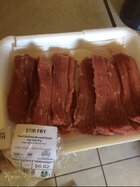
Oh well... I was hoping something whole, maybe with a bone. We went with it anyway and, as it turned out, worked perfectly!
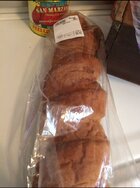
She then grabbed a 28 ounce can of tomatoes and some French bread. French bread was all the store had, but as Donna stated, salted bread would be best. I agree, but this had to suffice! In addition, we used 1 large yellow onion.
The recipe does not specify for spices, but I'm sure it assumed folks would use salt and pepper. We were concerned about it being bland, so we first put about a half tablespoon of olive oil in a pan, threw about 1/4 of the chopped onion into it along with the steak strips, sprinkled some creole seasoning over it all and browned.
We then added 2 quarts water (per directions) into a separate pan and sprinkled a bit of salt in the water. After the meat and the portion of onions were browned (about 5 minutes) we dumped the browned meat and translucent onions (including any drippings) into the pan of water. We then added the rest of the raw onion into the pan as seen below:
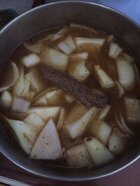
We let this cook for an hour (uncovered). After an hour, we put in the canned tomatoes. The recipe calls for a pint of canned tomatoes, so we put in about 2 cups of the canned tomatoes into the pan with the meat and onions.
We didn't know whether to cover it or not, so we kinda did both. We let it go for about another hour uncovered, then covered for another 30 minutes until the meat was very tender. (I don't think covering or uncovering mattered).
Then we strained the dish per the direction and it looked like this after separation:
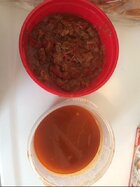
Without a doubt, the reason it is strained is because it is easier to add the thickening agent and milk without chunks of tomatoes, onions and meat!
After separation, We added a cup of milk (though the recipe called for a pint) into the strained sauce. Then we began stirring in a slurry of milk and flour to thicken the sauce. It took a few minutes but we finally got it where we liked it.
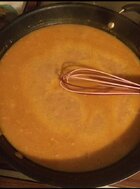
The addition of milk turned the sauce from tomato red to a kind of gravy beige. That's when we both said, "Oh, this is going to be more a gravy than a soup"!
We began tasting it at this point, adjusting creole seasoning for taste, and were absolutely surprised at the flavor!
Once the desired thickness was acquired, we dumped in the meat, chunks of tomatoes and onions back into the sauce:

The wife cut up the French bread, toasted the thick slices in our air fryer, grabbed some paper plates and we got after it!
On our second run, my wife sprinkled some fresh grated Parmesan cheese on hers and it was amazing!
Here is how it looked before cheese was sprinkled on top.
Thanks for looking!

It turned out better than expected. It was easy and very hearty.
Thanks to the following members who gave advice and suggestions: @donna, @JPK Huson 1863, @Yankeedave, @Eleanor Rose, @amweiner, @Albert Sailhorst, @mofederal, @Northern Light
So here is the recipe cut out of an 1870 newspaper that was tucked between the pages of my ancestor's 1859 cookbook:
It's pretty sparse in its directions and, as Albert Sailhurst noted, assumes the cook has the requisite knowledge before hand. Of course, the original was likely cooked with a wood stove or over an open fire. Our method was simply over a gas stovetop with modern cookery (no Dutch oven or cast iron).
The first concerns were, "What happens to the round steak after it is strained? How long do we cook it?"
My wife and I soon learned we were simply over thinking the recipe.
The wife informed me via text from the store that the below was the only round steak our local grocery store had available.
Oh well... I was hoping something whole, maybe with a bone. We went with it anyway and, as it turned out, worked perfectly!
She then grabbed a 28 ounce can of tomatoes and some French bread. French bread was all the store had, but as Donna stated, salted bread would be best. I agree, but this had to suffice! In addition, we used 1 large yellow onion.
The recipe does not specify for spices, but I'm sure it assumed folks would use salt and pepper. We were concerned about it being bland, so we first put about a half tablespoon of olive oil in a pan, threw about 1/4 of the chopped onion into it along with the steak strips, sprinkled some creole seasoning over it all and browned.
We then added 2 quarts water (per directions) into a separate pan and sprinkled a bit of salt in the water. After the meat and the portion of onions were browned (about 5 minutes) we dumped the browned meat and translucent onions (including any drippings) into the pan of water. We then added the rest of the raw onion into the pan as seen below:
We let this cook for an hour (uncovered). After an hour, we put in the canned tomatoes. The recipe calls for a pint of canned tomatoes, so we put in about 2 cups of the canned tomatoes into the pan with the meat and onions.
We didn't know whether to cover it or not, so we kinda did both. We let it go for about another hour uncovered, then covered for another 30 minutes until the meat was very tender. (I don't think covering or uncovering mattered).
Then we strained the dish per the direction and it looked like this after separation:
Without a doubt, the reason it is strained is because it is easier to add the thickening agent and milk without chunks of tomatoes, onions and meat!
After separation, We added a cup of milk (though the recipe called for a pint) into the strained sauce. Then we began stirring in a slurry of milk and flour to thicken the sauce. It took a few minutes but we finally got it where we liked it.
The addition of milk turned the sauce from tomato red to a kind of gravy beige. That's when we both said, "Oh, this is going to be more a gravy than a soup"!
We began tasting it at this point, adjusting creole seasoning for taste, and were absolutely surprised at the flavor!
Once the desired thickness was acquired, we dumped in the meat, chunks of tomatoes and onions back into the sauce:
The wife cut up the French bread, toasted the thick slices in our air fryer, grabbed some paper plates and we got after it!
On our second run, my wife sprinkled some fresh grated Parmesan cheese on hers and it was amazing!
Here is how it looked before cheese was sprinkled on top.
Thanks for looking!
Last edited:

 You've turned out an excellent period recreation!

 Forum Host


 Bringing the