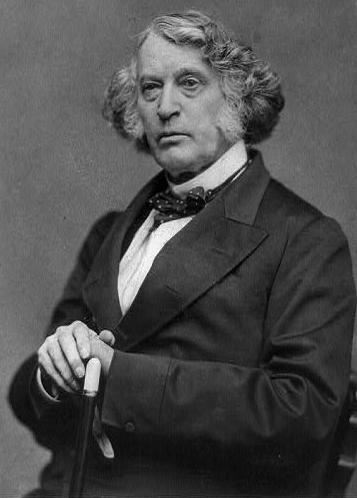
US Con Sumner, Charles - U.S. Senator, MA

Charles Sumner

Sumner.jpg
Born:
January 6, 1811

Birthplace: Boston, Massachusetts

Father: Sheriff Charles Pinckney Sumner 1776 – 1839
(Buried: Mount Auburn Cemetery, Cambridge, Massachusetts)

Mother: Relief Jacobs 1785 – 1866
(Buried: Mount Auburn Cemetery, Cambridge, Massachusetts)

Wife: Alice Mason 1838 – 1913
(Buried: Northhall Cemetery, Markinch, Scotland)

Married: October 17, 1866, Marriage ended in Divorce

Signature:
Sumner Signature.png


Education:


1830: Graduated from Harvard University​
1833: Graduated from Harvard Law School​

Occupation before War:

Attorney in Boston, Massachusetts​
1836 – 1837: Lecturer at Harvard Law School​
1837 – 1840: Traveled in Europe​
1846: Declined Whig Nomination for United States Congressman​
1848: One of the founders of Free - Soil Political Party​
1848: Unsuccessful Candidate for United States Congressman​
1851 – 1874: United States Senator from Massachusetts​
1856: Denounced the Kansas – Nebraska Act​
1856: Delivered his "Crime against Kansas" Speech​
1856: Assaulted U.S. Senate Chamber by Congressman Preston Brooks​
1856 – 1859: Suffered from Head trauma caused by Brooks​
1860: Received 1 vote for the Republican Party Nomination​

Civil War Career:

1851 – 1874: United States Senator from Massachusetts​
1861 – 1871: Senate Chairman of Senate Foreign Affairs Committee​
Believed with emancipation it would keep Great Britain out of war​
Castigated Brig. General Charles P. Stone in a Senate Speech​
1862: Helped to get Haiti United States Recognition
Sumner 1.jpg
Advocate for enlisting African Americans in Union Army​
Advocate for the establishment of the Freedmen's Bureau​
1865: Against a memorial for Chief Justice Roger B. Taney​

Occupation after War:

1851 – 1874: United States Senator from Massachusetts​
1861 – 1871: Senate Chairman of Senate Foreign Affairs Committee​
1871: Removed as Foreign Relation's Chairman over disagreement with President Grant over policy of San Domingo​
1871 – 1873: Senate Chairman of Privileges and Elections​
1872: Joined the Liberal Republican Political Party​
1872: Introduced a Senate resolution providing that Civil War battle names should not appear as "battle honors" on regimental flags​

Died: March 11, 1874

Place of Death: Washington, D.C.

Cause of Death: Heart Attack

Age at time of Death: 63 years old

Funeral facts: His body lay in state at U.S. Capitol Rotunda

Burial Place: Mount Auburn Cemetery, Cambridge, Massachusetts
 
Last edited by a moderator:
After His beating from Brooks, Sumner remained absent from the Senate for about a 2 month period. During this time he was reelected to the Senate without even campaigning.
 
After His beating from Brooks, Sumner remained absent from the Senate for about a 2 month period. During this time he was reelected to the Senate without even campaigning.

His absence was much longer than 2 months.... The beating by Brooks occurred in May 1856 and Sumner did not return to duties in the Senate until late 1859. During his time off he traveled in Europe extensively.
 
His absence was much longer than 2 months.... The beating by Brooks occurred in May 1856 and Sumner did not return to duties in the Senate until late 1859. During his time off he traveled in Europe extensively.
Sorry, I meant over two years instead of almost two months. But the point was He reelected without campaigning. So it would seem Sumner was just as much a hero to Massachusetts as Brooks was to South Carolina.
 
CHARLES SUMNER'S USE OF ORATORY AS A TOOL OF SOCIAL INFLUENCE
B. L. Ware, Jr.
Department of Speech
University of Houston
Master of Arts
December 1970

ABSTRACT
The purpose of this study was to answer the question: how did Charles Sumner's oratory aid and/or hinder him in acquiring immense political influence? The method of accomplishing this purpose was the result of a combination of Aristotelian and Burkian critical principles. Specifically, the method consisted of (1) reducing the texts of Sumner's speeches to enthymematic form, (2) determining whether or not the Senator made his lines of argument consubstantial with the common thoughts of his auditors, and (3) explaining and evaluating why and how Sumner failed and succeeded in achieving consubstantiality with his audiences. The combination of purpose and method employed in this study affirmed the tripartite thesis therein advanced. First, Sumner identified his reform proposals with ideas widely accepted by Americans in the fifteen years prior to the Civil War. Second, this identification through rhetorical strategies approached completeness only with Sumner's specific audience composed of Northern reformers. Third, Sumner was never able to achieve substantial identification between his proposals and the ideas of his auditors on a national level. Hence, he failed to maximize the Influence obtainable in an ideal sense from his rhetorical endeavors. This thesis was affirmed through the study of nine speeches on various social issues delivered by Sumner between the years 1845 to 1860. The success of Sumner in utilizing oratory as an instrument of political influence came from his ability to support his proposals with ideas central to the public faith and philosophy of most mid-nineteenth-century Americans. Through the use of rhetorical strategies such as religiofication and victimage, Sumner was able to create for many of his listeners a secular religion of human progress. The persuasive impact of this secular analogue of the Christian faith was more localized in the case of Sumner's addresses on social reform and pacificism. On these two issues, he achieved consubstantiality with only a small group of Northern philanthropists because most Americans simply were not as ego-involved on the questions of social reform and pacificism as was Sumner. The Massachusetts Senator was, therefore, never able to completely establish his secular faith in the minds of most Americans on these two issues. With his speeches against slavery, however, Sumner found an issue felt very intensely by most Antebellum Americans, and he was able to utilize his oratory in such a way as to capitalize upon these feelings. Again relying on the strategies of religiofication and victimage, always couched in terms found in the everyday beliefs of his auditors. Sumner gained immense support from Northern opponents to slavery as a result of his oratory. The increasing number of people in the North who came to oppose slavery served to increase Sumner's political influence. His oratory, although it did not cause the antislavery movement and perhaps did not even significantly swell the ranks of the movement, was the necessary instrument which spotlighted Sumner as a political leader of slavery's opponents. As a result of the sectional appeal of Sumner's oratory, however, he never was successful in identifying himself with a sufficient number of Americans to become a national political leader. In this way, therefore, his oratory limited his political influence.


Cheers,
USS ALASKA
 

Attachments


Learn About Us
About CivilWarTalk
Contact the Webmaster
Meet the Staff
Link to CivilWarTalk
Join Our Community
Register
Browse Forums
View Today's Discussions
Search the Forum
Get Help
FAQ
Student Guide
Forum Rules & Etiquette
Copyright / DMCA

     Contact Us CivilwarTalk on Facebook CivilWarTalk on YouTube CivilWarTalk on Twitter RSS Feed

Bringing the American Civil War and More to Life.
© 1999 - , CIVILWARTALK, LLC - Site Version 10.0

SlaveryTalk.com - SecessionTalk.com - CivilWarTalk.com - ReconstructionTalk.com
Back
Top