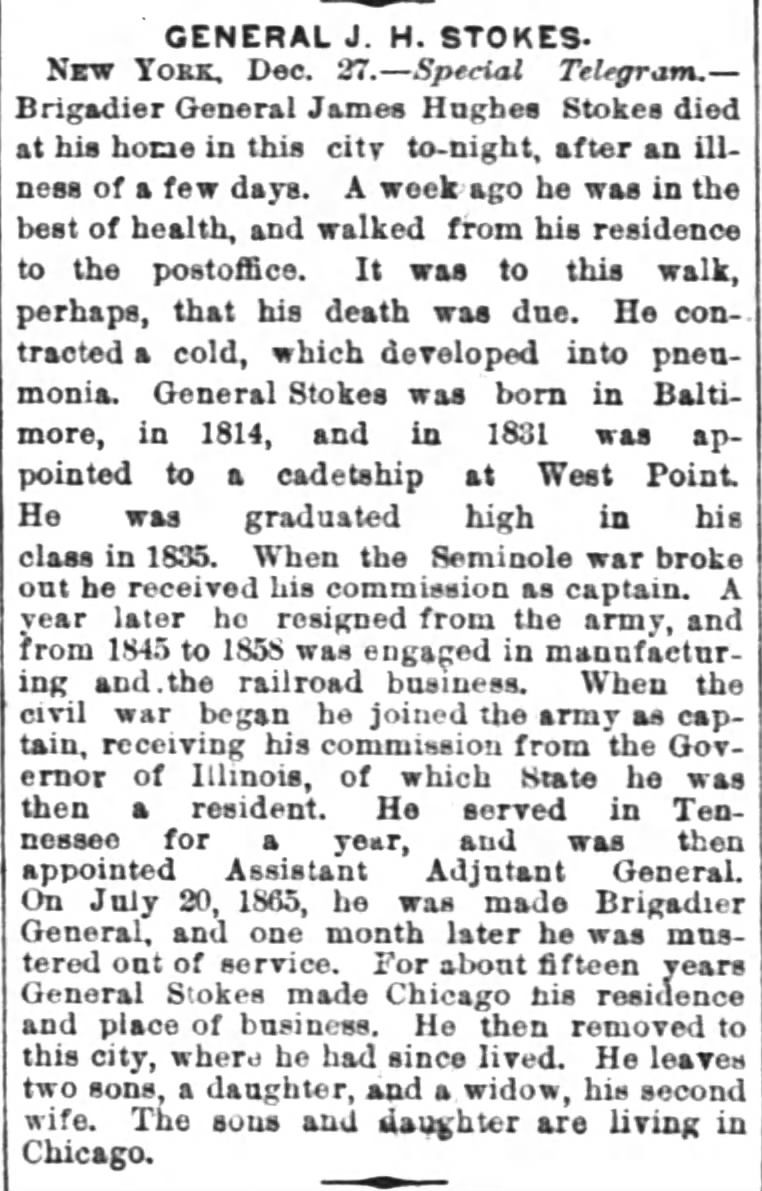
James Hughes Stokes

Born: July 11, 1816
Birthplace: Havre de Grace, Maryland
Father: William Brooke Stokes 1784 – 1866
Mother: Henrietta Maria Hughes 1791 – 1860
Wife: Mary Kidder 1832 – 1899
(Buried: Washington Street Cemetery, Geneva, New York)
Education:
1835: Graduated from West Point Military Academy – (17th in class)
Occupation before War:
1835: Brevet 2nd Lt. United States Army, 2nd Artillery
1835 – 1836: Brevet 2nd Lt. United States Army, 4th Artillery
1835 – 1836: Garrison Duty at Fort Hamilton, New York
1836 – 1838: 2nd Lt. United States Army 4th Artillery
1836: Served in the fighting against the Creek Nation
1836 – 1838: Served in the Seminole War in Florida
1837: Served in the Battle of Okee–cho–bee
1838: Served in the fighting against the Creek Nation
1838: Helped transfer Native Americans into the west
1838: Garrison Duty at Fort Columbus, New York
1838 – 1839: 1st Lt. United States Army 4th Artillery
1838 – 1839: Quartermaster Duty purchasing horses for the Army.
1839 – 1840: Quartermaster Duty at New York
1839 – 1843: Captain United States Army, Assistant Quartermaster
1840: Assistant Quartermaster in Winnebago County, New York
1840 – 1841: Assistant Quartermaster in the Seminole War
1841 – 1843: Assistant Quartermaster in Buffalo, New York
1843: Resigned from the United States Army on September 30th
1843 – 1854: Proprietor of Clyde Glass Factory in New York
1856 – 1858: Treasurer and Secretary New York and Boston Railroad
1858 – 1861: Auditor and Treasurer of Illinois Central Railroad
Civil War Career:
1861: Removed small arms from St. Louis Arsenal to Springfield, Illinois
1861: Helped equip volunteers in Springfield, Illinois
1861: Illinois State Commissioner to Purchase Arms for volunteers
1862 – 1864: Captain of Illinois Volunteers Artillery
1862: Commander of Chicago Board of Trade Battery in Kentucky
1862: Served in the Battle of Perryville, Kentucky
1862 – 1863: Commander of Pioneers and Battery in Tennessee
1862 – 1863: Served in the Battle of Stones River, Tennessee
1863: Served in the capture of Chattanooga, Tennessee
1863: Served in the Battle of Chickamauga
1863: Served against General Wheeler's Raid in Middle Tennessee
1863: Served in the Battle of Farmington, Tennessee
1863 – 1864: Commander of Artillery Division
1863: Served in the Battle of Missionary Ridge
1864: Lt. Colonel United States Army Volunteers
1864: Inspector of Quartermaster Department Division of Mississippi
1864: Made inspections in New Orleans, Louisiana
1864: Mustered out of the Union Army on August 22nd
1864 – 1865: Captain & Assistant Adjutant General U.S. Army
1864 – 1865: Served in the Defenses of Washington, D.C.
1865: Brigadier General United States Army Volunteers
1865: Mustered out of the United States Army on August 24th
Occupation after War:
1865 – 1880: Real Estate Businessman in Chicago, Illinois
1868: Became blind from disease he contracted in Seminole War
1880 – 1887: Real Estate Businessman in New York City, New York
1887 – 1890: Unable to work due to poor health
Died: December 27, 1890Place of Death: New York City, New York
Cause of Death: Pneumonia
Age at time of Death: 74 years old
Burial Place: Washington Street Cemetery, Geneva, New York
Last edited by a moderator:


 Bringing the