Relic Sword Identification

Joined
Jun 18, 2021
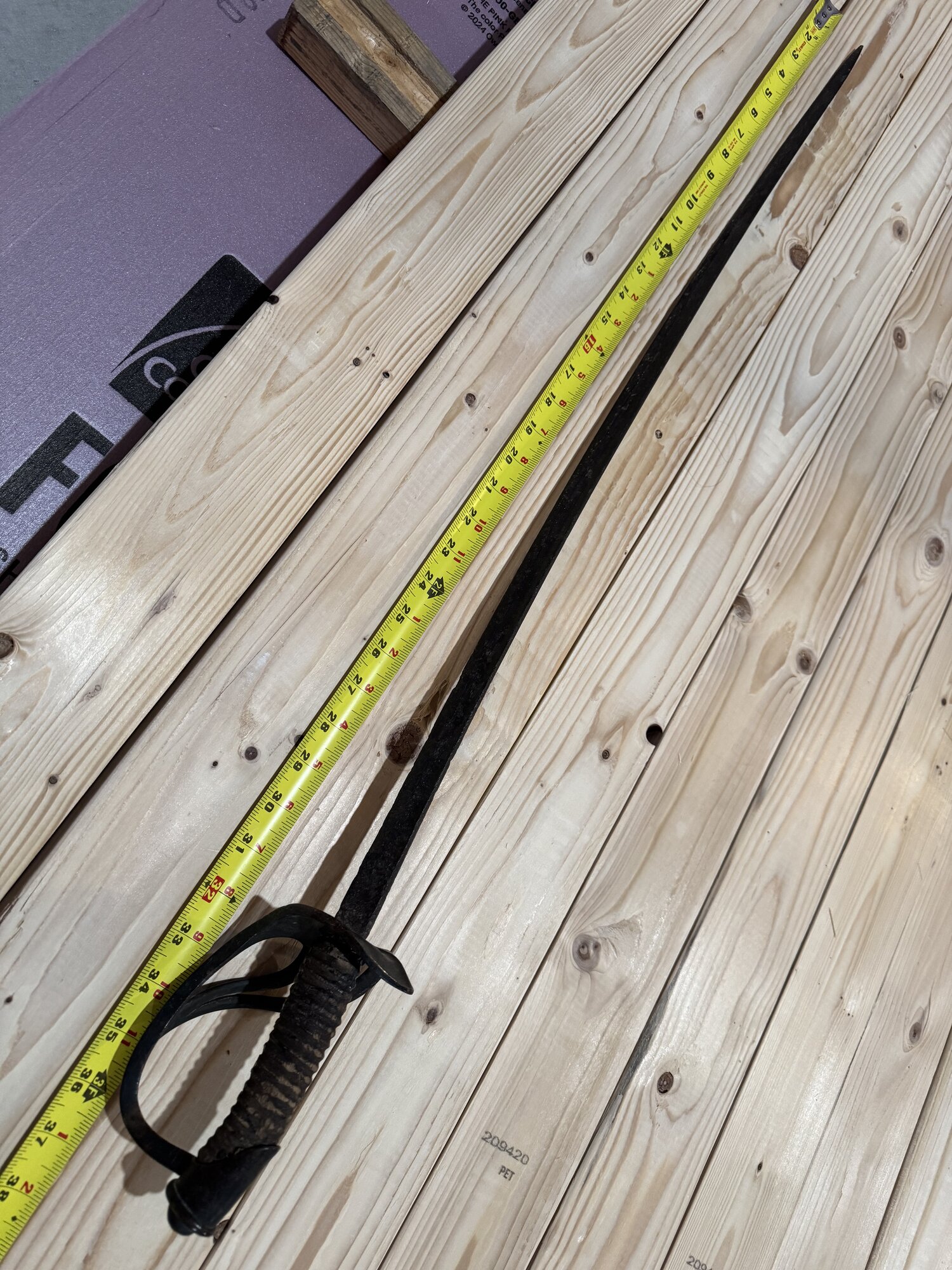
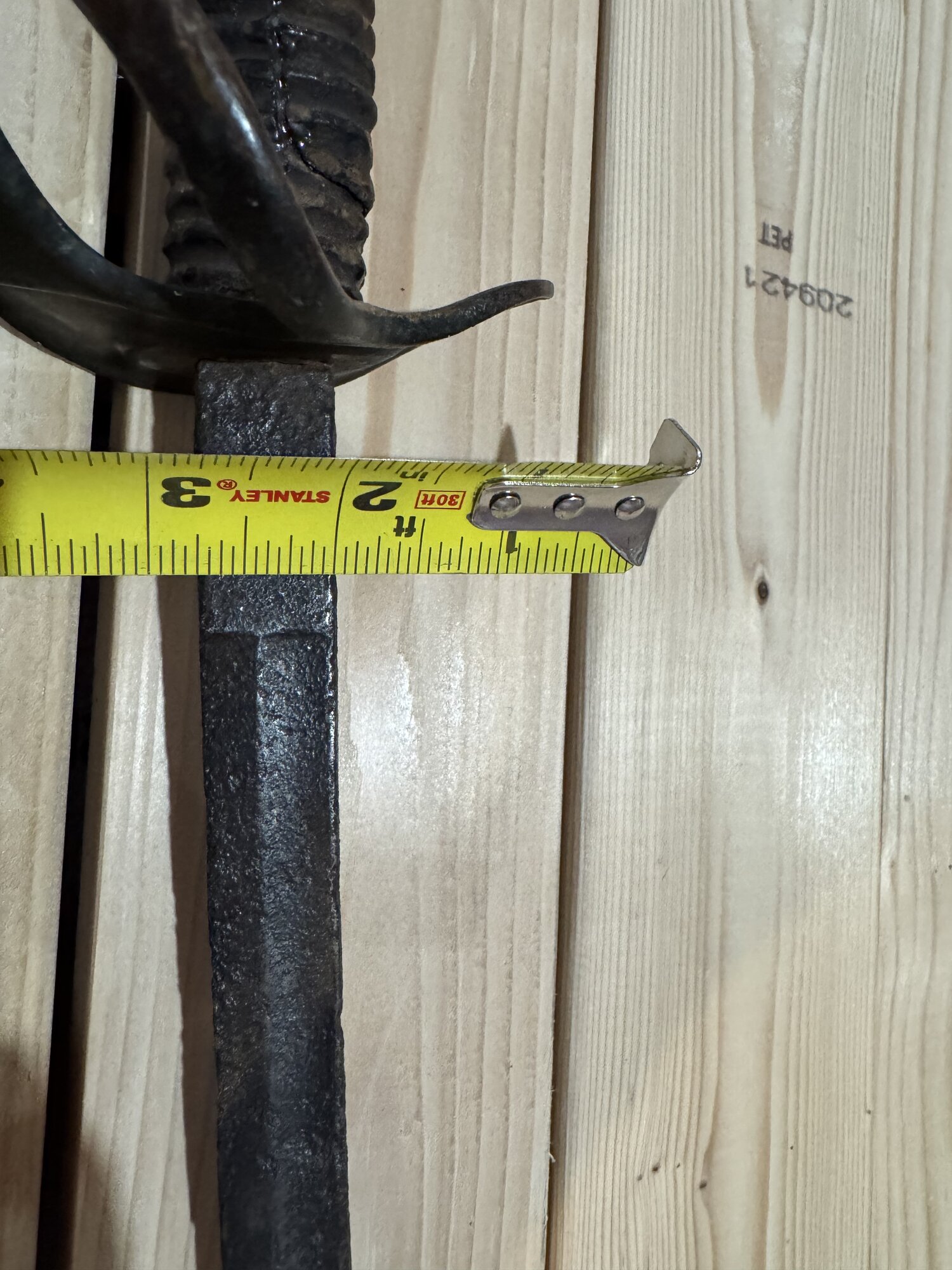
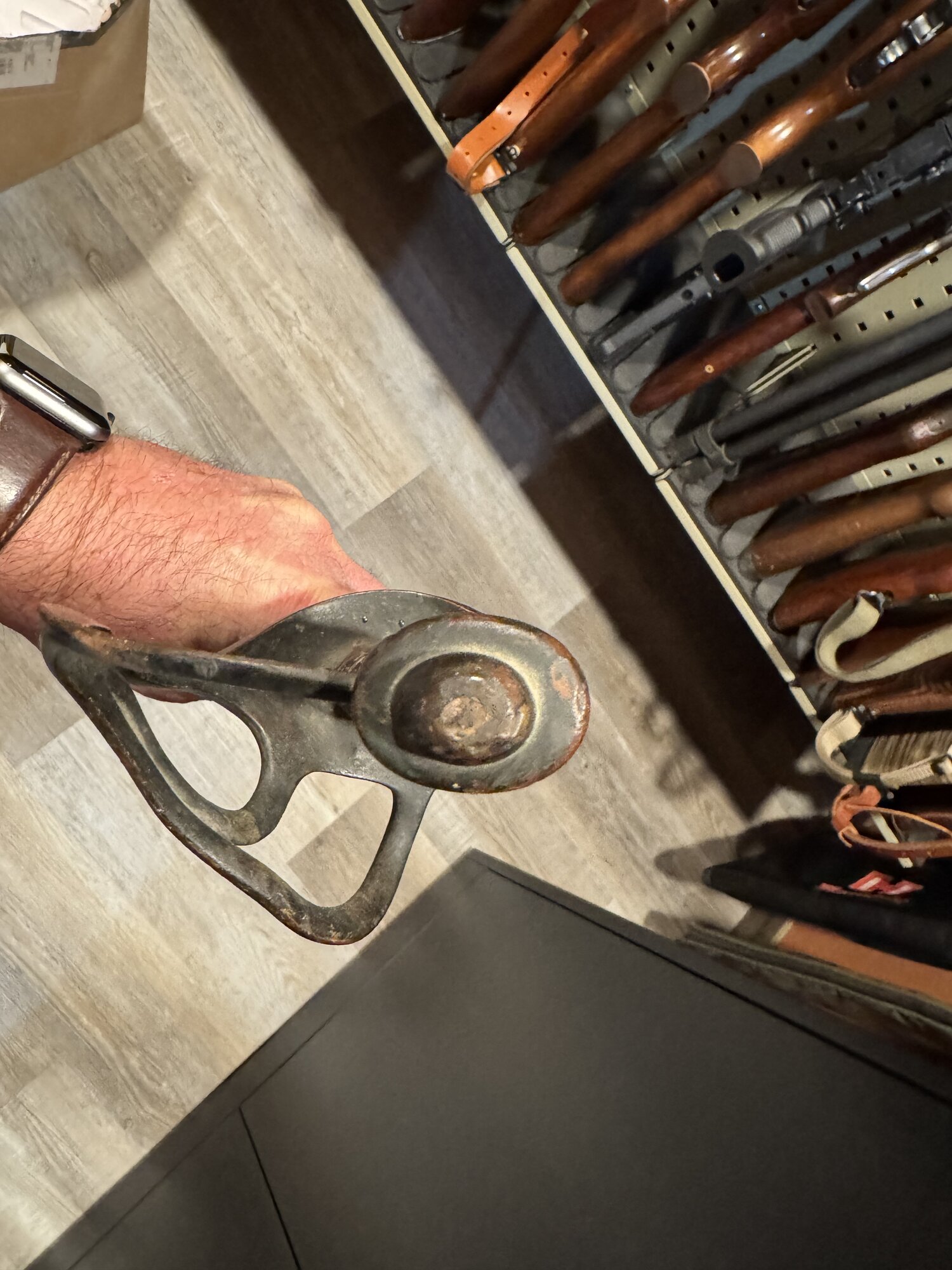
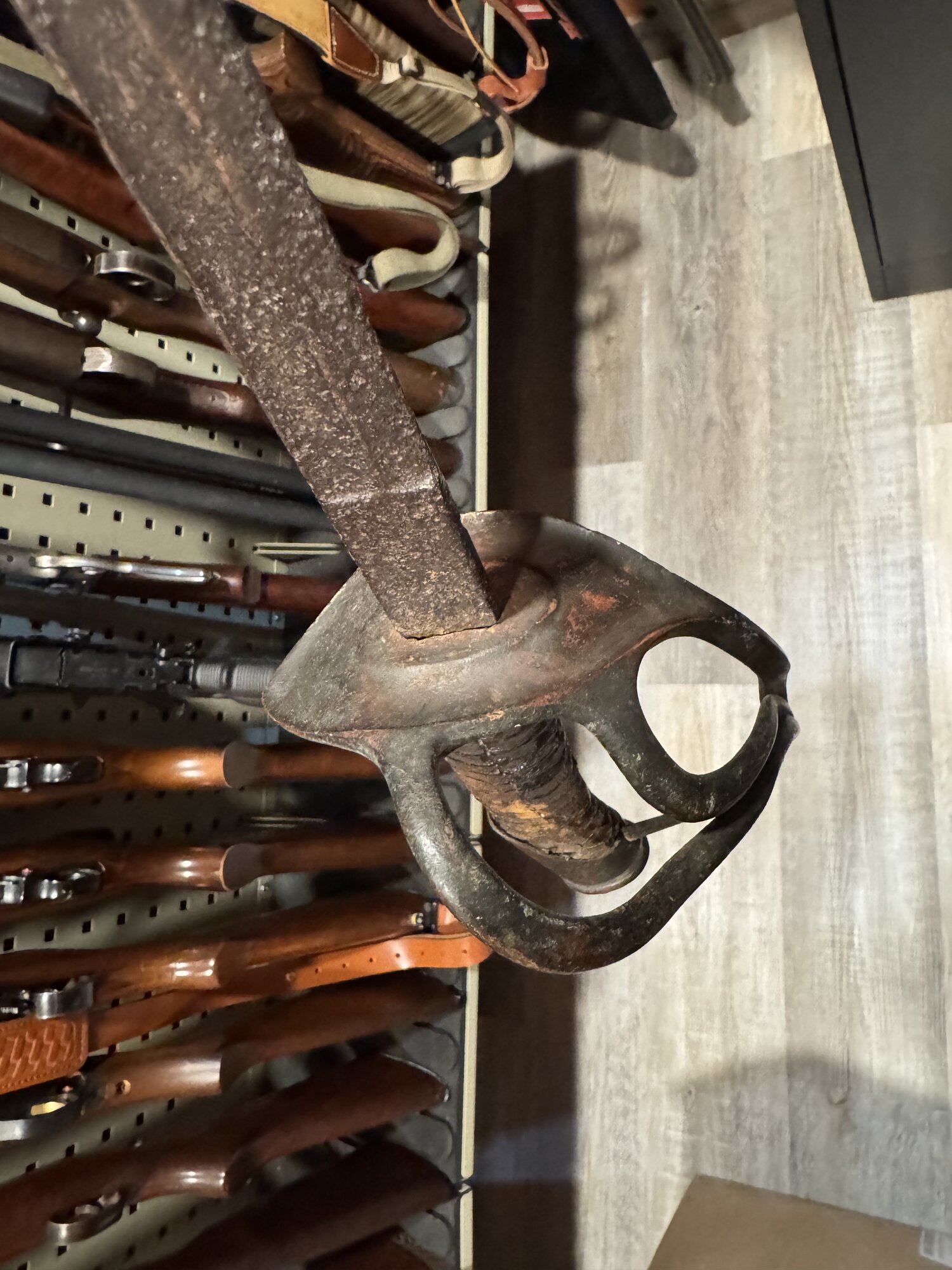
Good evening, can anyone help me identify this sword? I have a small collection of swords but am by no means an expert. This one came up on an auction for cheap (condition obviously was a big factor) and I bought it mainly just to try to find out what model it is. The blade is too far gone to retain any markings and I haven't been able to find any markings on the brass either. I appreciate any input you may have!

IMG_4389.jpeg


IMG_4388.jpeg


IMG_4390.jpeg


IMG_4391.jpeg


IMG_4392.jpeg


IMG_4393.jpeg


IMG_4394.jpeg
 
Some things to note are the length of the blade, the width of the blade, the length of the ricasso, the lack of a second fuller, the full stop of the single fuller, the grip, the overall sturdiness of the hilt, the structure of the knuckle bow where it connects to the pommel, and the lack of inspection stamps on the pommel. I don't have time to go into detail at the moment, but I suspect this is a post 1870's Horstmann sword that would have had a lower case Old English letter "h" inside of a shield stamped on the ricasso.
 
Some things to note are the length of the blade, the width of the blade, the length of the ricasso, the lack of a second fuller, the full stop of the single fuller, the grip, the overall sturdiness of the hilt, the structure of the knuckle bow where it connects to the pommel, and the lack of inspection stamps on the pommel. I don't have time to go into detail at the moment, but I suspect this is a post 1870's Horstmann sword that would have had a lower case Old English letter "h" inside of a shield stamped on the ricasso.
Thanks for this insight. If you are correct, would that make it a non-regulation, or personal purchase type, or is there a particular model it could be attributed to?
 
In 1872 a new sword was prescribed for cavalry officers which was noticeably lighter than the model 1860 saber. The blade was much narrower, about 3/4 inch wide at the hilt, and the length of the blade was shortened to about 32 and 1/4 inches long. The length was on the order of a mounted infantry officer sword. I think cavalry officer swords tended to be at least 34 inches long, but officers paid for their own swords so there may have been some variation. Not all officers were the same size, so when dismounted there may have been a few short officers who would prefer a shorter sword. Swords were mostly badges of rank, even in the cavalry, and may not have gotten much use. In addition, many officers in the infantry or artillery preferred a cavalry style sword over the model 1860 officer's sword both during the Civil War and later. You can see that in photographs.

You can look up the 1872 cavalry officer's sword in Harold Peterson's "The American Sword 1775-1945." He has an example of the hilt and part of the blade by way of illustration. He mentions that the sword he shows was never sharpened and that sometimes these swords may have a ricasso of 8 or 9 inches. There is a single fuller on either side of the blade. In true Victorian Period fashion, the brass hilt is very busy with decoration. There are laurel leaves along the branches, there is an eagle holding arrows on top of the guard and a design on the bottom side of the guard. There is a fancy leaf and round structure where the knuckle bow attaches to the pommel and the pommel may have decorations such as a shield.

This was the 1872 officer's sword. There was no 1872 enlisted man's sword, well, no U.S. Army Model 1872 enlisted man's sword. There were so many left over from the Civil War that they didn't need to declare a new model, they needed to use up what they had. After the Civil War the cavalry didn't use swords much. For example, when Custer took the 7th Cavalry on campaign to the Little Big Horn in 1876, they didn't carry their swords with them. Peterson's opinion of the 1872 cavalry officer sword was that it was worthless, but not quite as worthless as the Model 1860 officer's sword. There were enlisted versions of the 1872 officer's sword, but they were non-regulation and probably were carried by National Guard units, state militias, and veterans' organizations. They are rather plain and look similar to you sword but where the knuckle bow attaches to the pommel they have a disk structure, mirroring the officer model but with none of the decoration. Needless to say, you don't see that many enlisted style swords.

I have to apologize; at this point I had intended to have illustrations of the 1872 officer sword and enlisted version, but I just can't put my hand on them at the moment. I have also been trying to get an example of the Horstmann enlisted cavalry sword similar to yours for a while. I might have one... somewhere. Usually I see them listed as Civil War Period, which they are not, for a lot more than I want to pay for what might be a 20th century, non-official U.S. sword. While I don't have any hard information on them, I believe they are post 1872 and might date to the 1890's or later. I have probably seen one with a blade marked, "GERMANY," which leads me to believe it was made after a Tariff was passed in the U.S. around 1890. It is not an officer sword, so not a Model 1872, and thus non-regulation. It is not the enlisted version of the officers' sword, so maybe not a militia or national guard but on the other hand, maybe it is. It's a tad short so maybe for a short cavalryman, but then maybe for a cadet in a military school. It's an interesting sword and a good example of what is not a Civil War sword. The fact that it is in relic condition makes it look neat and you could spin any number of yarns that could possibly be true for it to end up that way.

I also need to add my disclaimer that I am not an expert. I could be off on the identification (I wish I could find my example swords) although I don't believe so. If someone else has something to add, please do. There should be enough info in my responses that you could do your own research and see if you arrive at the same conclusion.
 
In 1872 a new sword was prescribed for cavalry officers which was noticeably lighter than the model 1860 saber. The blade was much narrower, about 3/4 inch wide at the hilt, and the length of the blade was shortened to about 32 and 1/4 inches long. The length was on the order of a mounted infantry officer sword. I think cavalry officer swords tended to be at least 34 inches long, but officers paid for their own swords so there may have been some variation. Not all officers were the same size, so when dismounted there may have been a few short officers who would prefer a shorter sword. Swords were mostly badges of rank, even in the cavalry, and may not have gotten much use. In addition, many officers in the infantry or artillery preferred a cavalry style sword over the model 1860 officer's sword both during the Civil War and later. You can see that in photographs.

You can look up the 1872 cavalry officer's sword in Harold Peterson's "The American Sword 1775-1945." He has an example of the hilt and part of the blade by way of illustration. He mentions that the sword he shows was never sharpened and that sometimes these swords may have a ricasso of 8 or 9 inches. There is a single fuller on either side of the blade. In true Victorian Period fashion, the brass hilt is very busy with decoration. There are laurel leaves along the branches, there is an eagle holding arrows on top of the guard and a design on the bottom side of the guard. There is a fancy leaf and round structure where the knuckle bow attaches to the pommel and the pommel may have decorations such as a shield.

This was the 1872 officer's sword. There was no 1872 enlisted man's sword, well, no U.S. Army Model 1872 enlisted man's sword. There were so many left over from the Civil War that they didn't need to declare a new model, they needed to use up what they had. After the Civil War the cavalry didn't use swords much. For example, when Custer took the 7th Cavalry on campaign to the Little Big Horn in 1876, they didn't carry their swords with them. Peterson's opinion of the 1872 cavalry officer sword was that it was worthless, but not quite as worthless as the Model 1860 officer's sword. There were enlisted versions of the 1872 officer's sword, but they were non-regulation and probably were carried by National Guard units, state militias, and veterans' organizations. They are rather plain and look similar to you sword but where the knuckle bow attaches to the pommel they have a disk structure, mirroring the officer model but with none of the decoration. Needless to say, you don't see that many enlisted style swords.

I have to apologize; at this point I had intended to have illustrations of the 1872 officer sword and enlisted version, but I just can't put my hand on them at the moment. I have also been trying to get an example of the Horstmann enlisted cavalry sword similar to yours for a while. I might have one... somewhere. Usually I see them listed as Civil War Period, which they are not, for a lot more than I want to pay for what might be a 20th century, non-official U.S. sword. While I don't have any hard information on them, I believe they are post 1872 and might date to the 1890's or later. I have probably seen one with a blade marked, "GERMANY," which leads me to believe it was made after a Tariff was passed in the U.S. around 1890. It is not an officer sword, so not a Model 1872, and thus non-regulation. It is not the enlisted version of the officers' sword, so maybe not a militia or national guard but on the other hand, maybe it is. It's a tad short so maybe for a short cavalryman, but then maybe for a cadet in a military school. It's an interesting sword and a good example of what is not a Civil War sword. The fact that it is in relic condition makes it look neat and you could spin any number of yarns that could possibly be true for it to end up that way.

I also need to add my disclaimer that I am not an expert. I could be off on the identification (I wish I could find my example swords) although I don't believe so. If someone else has something to add, please do. There should be enough info in my responses that you could do your own research and see if you arrive at the same conclusion.
Thank you very much for this extensive response, I really appreciate your help!
 
IMG_2383.jpeg

Odd Fellows lodge regalia.

In the late 19th & early 20th Century lodges were ubiquitous. Many of them included swords, some of them of quite fanciful design, in their regalia.
IMG_2385.jpeg

Knights of Pythias.

The point being there are many sword patterns that have nothing to do with the military.

Agree with those up thread. I don't recognize yours either.
 
Here is something that you could find useful. The "upper quillion" on your guard is swept backwards. Whereas in U.S. guards the upper quillion is swept forward or straight.

As Socrates said, you can't have a discussion without agreeing on the definition of the words. This diagram is very helpful when the arcane language of sword hilts is used.

Parts of a Typical US Cavalry Sword Hilt

cavshilt.jpg
Sword and Scabbard Regulations
(in effect at the time of the Civil War)

  • General Officers - straight sword, gilt hilt, silver grip, brass or steel scabbard.​
  • Officers of the Adjutant-General's, Inspector-General's, Quartermaster-General's, and Subsistence Departments, Corps of Engineers, Topographical Engineers, Ordnance, the Judge-Advocate of the Army, Aides-de-Camp, Field Officers of the Artillery, Infantry and Foot Riflemen, and for the Light Artillery - the sword of the pattern adopted by the War Department, April 9, 1850; or the one described in General Orders No. 21, of August 28, 1860, for officers therein designated.​
  • Medical and Pay Departments - small sword and scabbard, according to pattern in the Surgeon-General's office.​
  • Medical Cadets - the sword and belt and plate will be the same as for non-commissioned officers.​
  • Officers of Cavalry - sabre and scabbard now in use, according to pattern in the Ordnance Department.​
  • Artillery, Infantry, and Foot Riflemen, except the field officers - the sword of the pattern adopted by the War Department, April 9, 1850.​
  • The sword and sword-belt will be worn upon all occasions of duty, without exception.​
  • When on foot, the sabre will be suspended from the hook attached to the belt.​
  • When not on military duty, officers may wear swords of honor, or the prescribed sword, with a scabbard, gilt, or of leather with gilt mountings.​


IMG_2386.jpeg

1872 model saber


Note: A personal observation, having the upper quillion swept backward would defeat the purpose. It is intended to catch & deflect a sword blade. That would argue for a decorative / stage prop origin.
 
I have 2 M1860 cavalry swords both dated 1859. 1 the quillon in bent forward the other straight up but a slight angle backwards hardly noticed (but also a small crack on the bottom of the quillon inside. Guess he could not make up his mind, forward, back, straight). My understanding is they were issued straight up. Not uncommon to find Rev War swords with the quillon broken off. Of course they were thinner back then but it was done because it would get hung up on the clothing and equipment. Same reason some had no (removed by owner or manufactured that way) inside guard, prevent chafing from rubbing and tighter against the body.
 

Learn About Us
About CivilWarTalk
Contact the Webmaster
Meet the Staff
Link to CivilWarTalk
Join Our Community
Register
Browse Forums
View Today's Discussions
Search the Forum
Get Help
FAQ
Student Guide
Forum Rules & Etiquette
Copyright / DMCA

     Contact Us CivilwarTalk on Facebook CivilWarTalk on YouTube CivilWarTalk on Twitter RSS Feed

Bringing the American Civil War and More to Life.
© 1999 - , CIVILWARTALK, LLC - Site Version 10.0

SlaveryTalk.com - SecessionTalk.com - CivilWarTalk.com - ReconstructionTalk.com
Back
Top