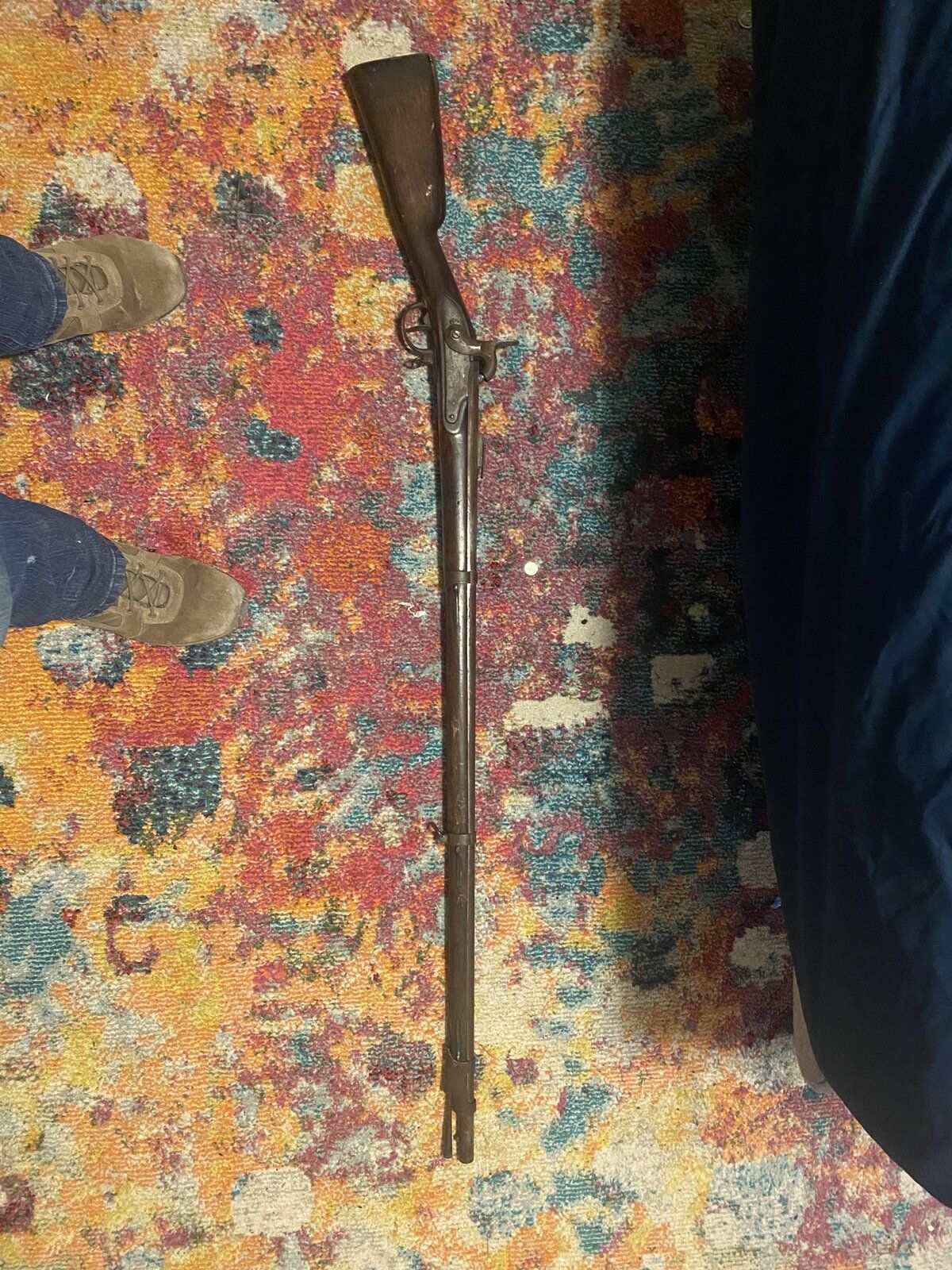
Muskets from France and the low countries can be very hard to identify in ordnance returns and other period accounts due to the general similarity of most of the arms, especially infantry muskets. The Dutch M1815 was patterned after the Belgian M1777 and the French Year 9 Muskets. All three of those are generally similar to the French Mle1822 as well. All of them are 42 inch barreled nominally .70 caliber muskets. All are iron mounted, and originally smoothbore flintlock muskets.
The Dutch started altering their flintlock arms to percussion in 1841. The style of percussion alteration on this example is known as the "Belgian method". This manner of percussion alteration was observed by US Ordnance officials in Belgium in the 1840s, and the name was derived from their inspections. It is quite possible that this musket was actually percussion converted in Belgium since the Dutch did not have a robust arms manufacturing system of their own. Dutch muskets also show up with a cone seat style alteration as well, but in my experience the cone-in-barrel "Belgian" style is more prevalent. The style of rear sight on this musket is also typical for arms rifled in Belgium, though it is occasionally seen on French arms as well. I believe the Dutch started rifling their arms in 1853
Something on the order of 147,000 French and Belgian longarms were imported during the war, with the vast majority being Federal purchases. That figure also includes a large number of back action lock arms after the French M1840 style. IMHO, it is likely, given the number of these muskets in the States, that Dutch M1815s were included in some of these purchases. Due to the similarity of the percussion altered infantry muskets of France, Belgium, and Holland, I doubt there will ever be a firmly established figure for which specific muskets composed which deliveries. Usually we are doing good to be able to determine if the muskets in question were percussion converted or made new as percussion arms.
The best books on these arms are "Firearms from Europe" and "European Arms in the Civil War". Neither copy is particularly expensive, so if you are interested in studying imported arms further I highly recommend you get one or both. "European Arms in the Civil War" is the more recent of the two and makes some clarifications and changes to model designations on some of the more obscure weapons.




 Forum Host


 Bringing the