Confederacy P53?

Steveoko922

Private
Joined
Dec 4, 2020
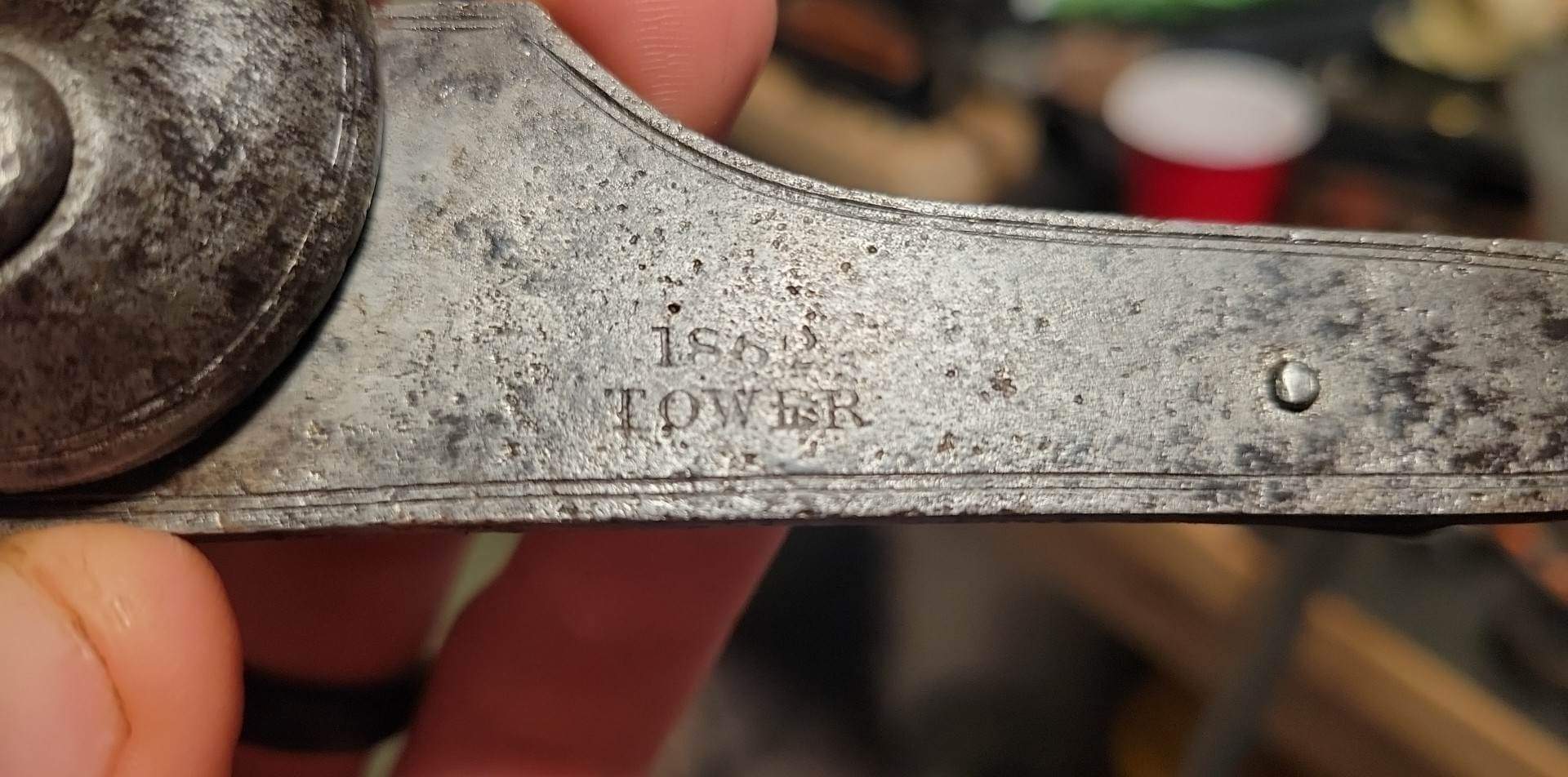
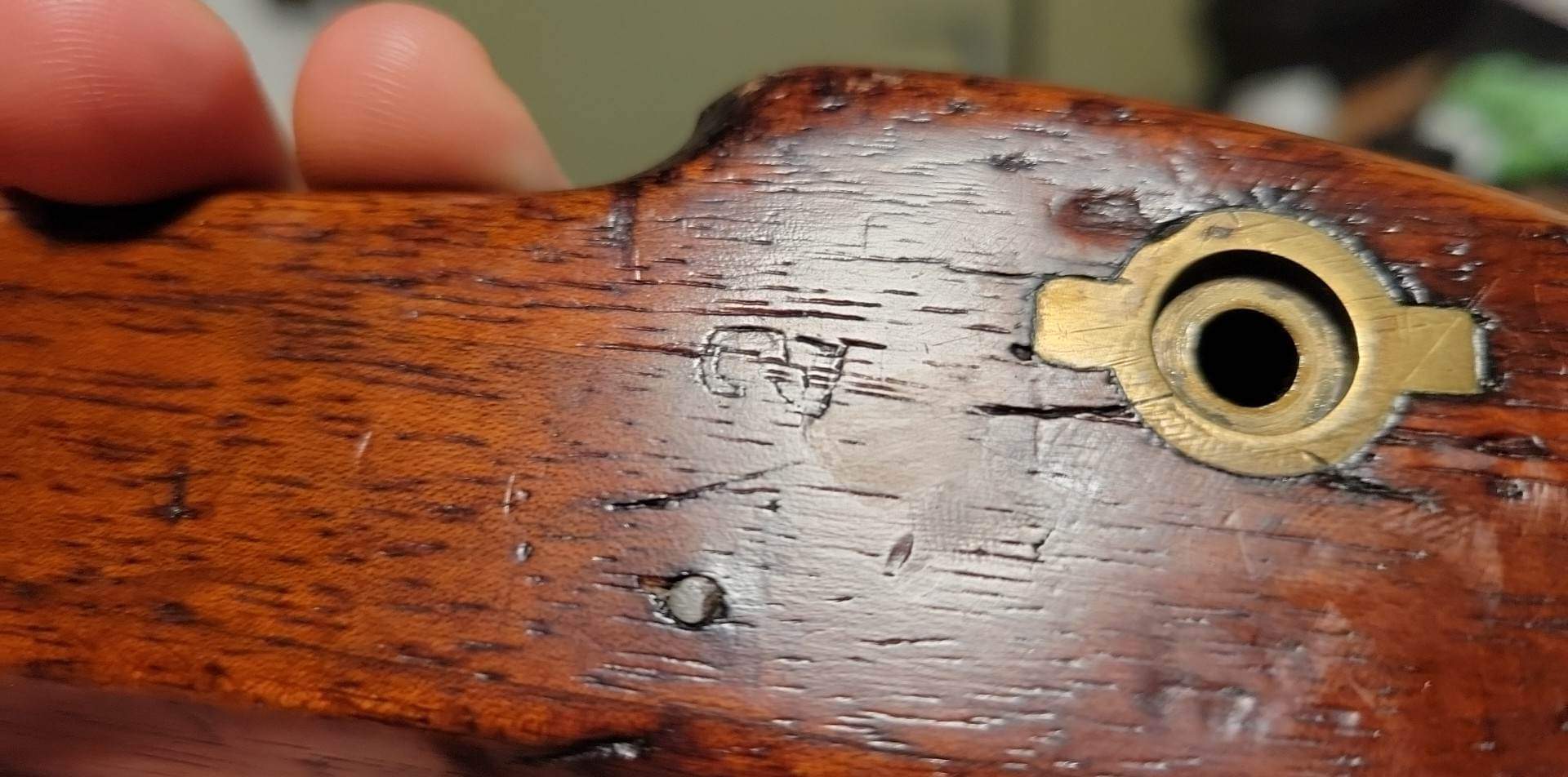
I managed to flush out an Enfield rifle from a local collection and was excited to see some marking that may indicate usage in the Civil War. What do I have here? Or is it just a average commercial P53? The "2" stamp and the "WD" on the wrist are very puzzling.

received_1276078179607181.jpeg


received_6216514635039104.jpeg


received_915036029691229.jpeg


received_1199636497588508.jpeg


received_2374950865993101.jpeg


received_704059557859741.jpeg


20230216_142758.jpg


20230216_141216.jpg


20230216_143059.jpg


received_1276078179607181.jpeg


20230216_140302.jpg
 
My understanding is the WD means War Department that were meant for the British Army and never made it over here. For your sake I hope I'm wrong.
 
The "2" looks like it was carved or scratched with a penknife as opposed to being stamped. The "WD" stamp isn't an Ordnance acceptance mark and is likely related to the stocker or a subinspector. The barrel has commerical Birmingham proofs which is consistent with the lock markings and further indicates this was not a British Government piece.
 
I learned a long time ago when it comes to Enfields, Fools rush in where angels fear to tread. Craig and LP will have the 411.
 
The "2" looks like it was carved or scratched with a penknife as opposed to being stamped. The "WD" stamp isn't an Ordnance acceptance mark and is likely related to the stocker or a subinspector. The barrel has commerical Birmingham proofs which is consistent with the lock markings and further indicates this was not a British Government piece.
If it was made in Birmingham would thet still use parts made in London? The SIDDONS name on the back of the lockplate had his shop in London apparently.
 
If it was made in Birmingham would thet still use parts made in London? The SIDDONS name on the back of the lockplate had his shop in London apparently.
I don't suppose wouldn't be impossible for a London made part, especially a small part, to show up on a Birmingham gun, but I wouldn't generally expect it. However, from what I understand Siddons & Sons was located at 16 St. Mary's Row & Whittall Street in the Birmingham Gun Quarter during the war.
 
I don't suppose wouldn't be impossible for a London made part, especially a small part, to show up on a Birmingham gun, but I wouldn't generally expect it. However, from what I understand Siddons & Sons was located at 16 St. Mary's Row & Whittall Street in the Birmingham Gun Quarter during the war.
Interesting because Merwyn Carey has his Shop listed in London making Percussion Rifles about 1840 onwards.
Also has him creating a Blisset Patent, any idea what that is?
 
There are also no markings shown that indicate it was Confederate purchased or used.
I agree that this is a standard sort of civilian Model 1853, not made for the British army, and it has no markings that tell where it was sold or to whom it was sold.
You will find folks who tell you those hash marks on the barrel, bottom of guard, etc. are confederate marks, showing it was rebuilt in the South.
Not true.
These sort of marks are found on most arms that required hand fitting so that the fitted parts could be kept together. It is true that arms converted or repaired by southern gunsmiths may be so marked - but that's true for arms taken apart by gunsmiths north or south!
Look on the bottom of the stock closer to the mark you show and see if you see a name stamped there...most Birmingham arms will be marked there with the name of the actual maker.
 
I agree that this is a standard sort of civilian Model 1853, not made for the British army, and it has no markings that tell where it was sold or to whom it was sold.
You will find folks who tell you those hash marks on the barrel, bottom of guard, etc. are confederate marks, showing it was rebuilt in the South.
Not true.
These sort of marks are found on most arms that required hand fitting so that the fitted parts could be kept together. It is true that arms converted or repaired by southern gunsmiths may be so marked - but that's true for arms taken apart by gunsmiths north or south!
Look on the bottom of the stock closer to the mark you show and see if you see a name stamped there...most Birmingham arms will be marked there with the name of the actual maker.
Yes even if you disassemble the earlier Brit Brown Bess's you will see those Roman Numeral marks on many of the parts. There called Musket Assembly Numbers.
 
Yes even if you disassemble the earlier Brit Brown Bess's you will see those Roman Numeral marks on many of the parts. There called Musket Assembly Numbers.
Yes, as Lanyard Puller once explained, they could be marked with a single screwdriver blade, no need for a set of number stamps.
 
Interesting because Merwyn Carey has his Shop listed in London making Percussion Rifles about 1840 onwards.
Also has him creating a Blisset Patent, any idea what that is?
The gun lock makers (William) Siddons & Sons were, and as posted by 'Grayrock Volunteer' above, in Birmingham 1855 - 1864 ('British Gunlock Makers' by Tony Gibbs-Murray). All the references to Siddons that I have are Birmingham. Outside of Carey's book, I haven't found a reference to Siddons gunmaker in London (there was though James Sidden c1802).

John Blissett had a patent in 1855 relating to revolving chamber firearms. Not found any others

David
 
This is a typical civilian rifle musket buit to P1853 specification. The XIIII is the assemblers mark made with a chisel/turnscrew to identify the parts as his rifle (and his bonus - or not, if it wasn't up to standard!). It is Birmingham proofed and was started and finished as a .577 (25-bore). Any 24s indicate a barrel made or converted to .58 (Union standard). The WD without the arrow is the stock maker or inspector. The WD with arrow is a government acceptance stamp and would not appear on a rifle sent abroad to the Confederacy. The only ones that were carried the opposed arrows -X- (sold out of service) and were usually type 2s (spring retained bands) and would bear a civilian proof. Confederate examples often bear an acceptance stamp below the trigger guard tang - a common one is 'anchor over JS', but this is not always so.

BTW - Lockmakers = it was common practice for a Birmingham gunmaker to have a London shop. VERY confusing.
 

Learn About Us
About CivilWarTalk
Contact the Webmaster
Meet the Staff
Link to CivilWarTalk
Join Our Community
Register
Browse Forums
View Today's Discussions
Search the Forum
Get Help
FAQ
Student Guide
Forum Rules & Etiquette
Copyright / DMCA

     Contact Us CivilwarTalk on Facebook CivilWarTalk on YouTube CivilWarTalk on Twitter RSS Feed

Bringing the American Civil War and More to Life.
© 1999 - , CIVILWARTALK, LLC - Site Version 10.0

SlaveryTalk.com - SecessionTalk.com - CivilWarTalk.com - ReconstructionTalk.com
Back
Top