British Pattern Greene Carbine

vmicraig

Sergeant
Joined
Mar 12, 2018
Location
Midlothian, VA
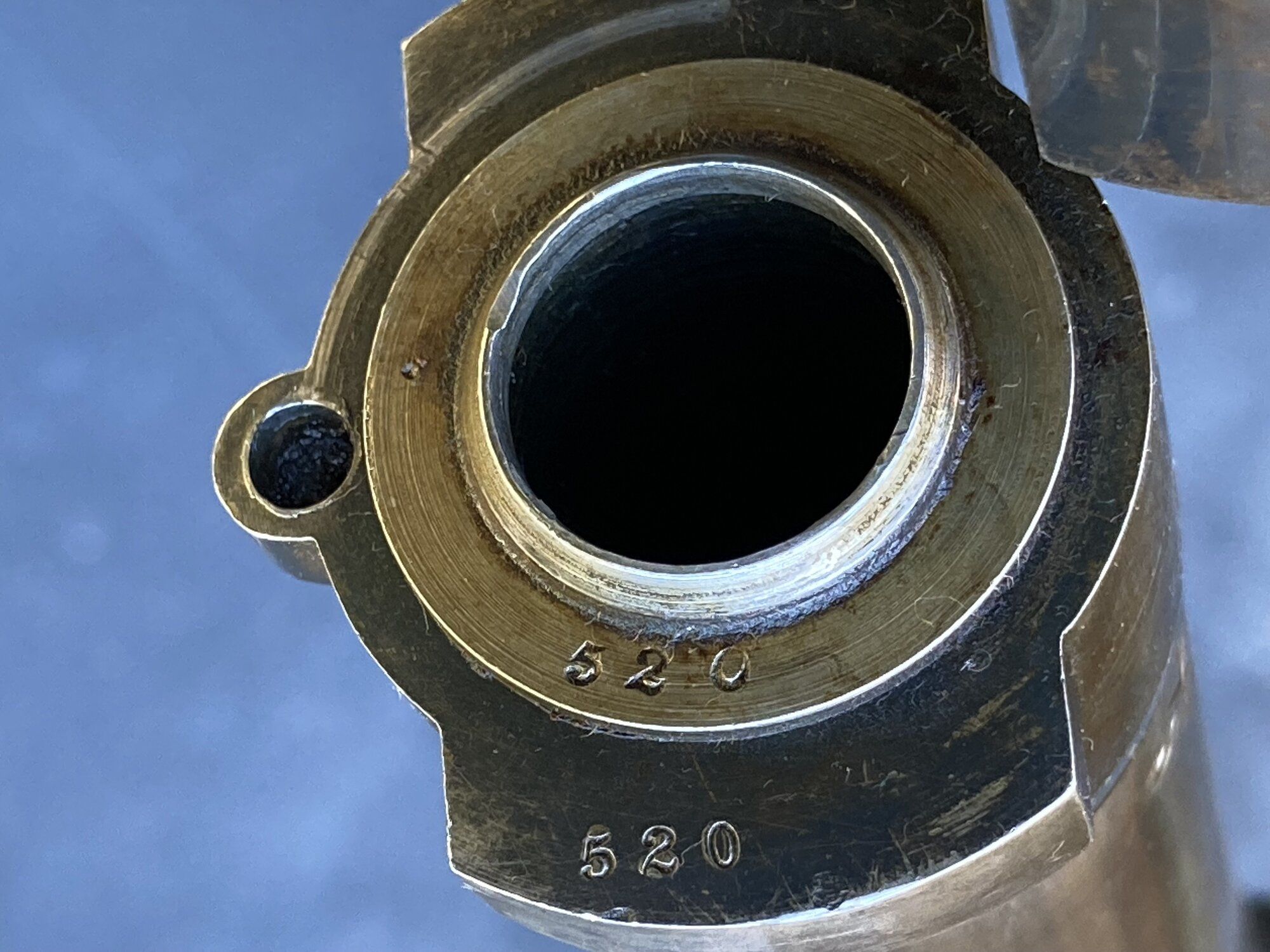
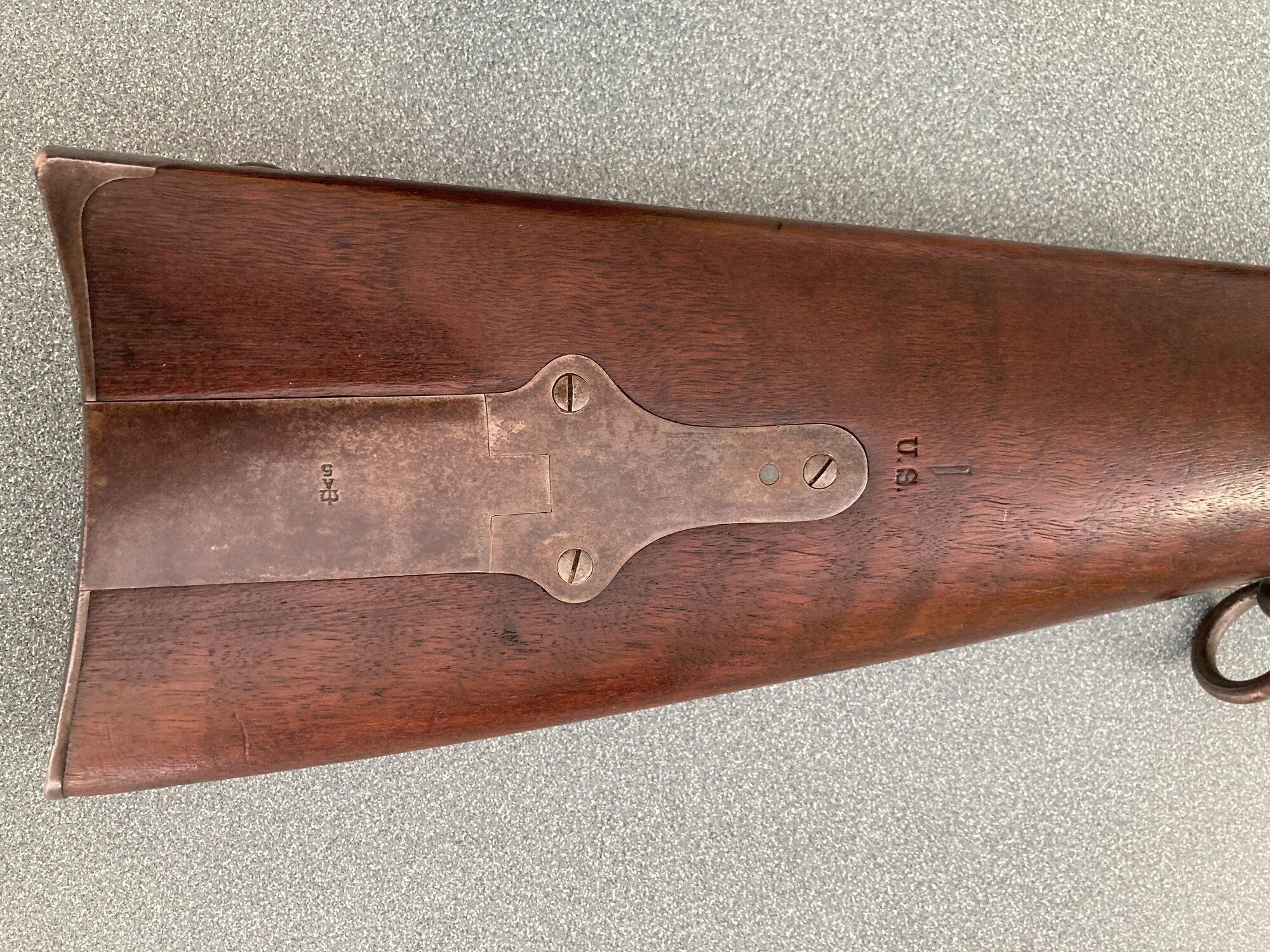
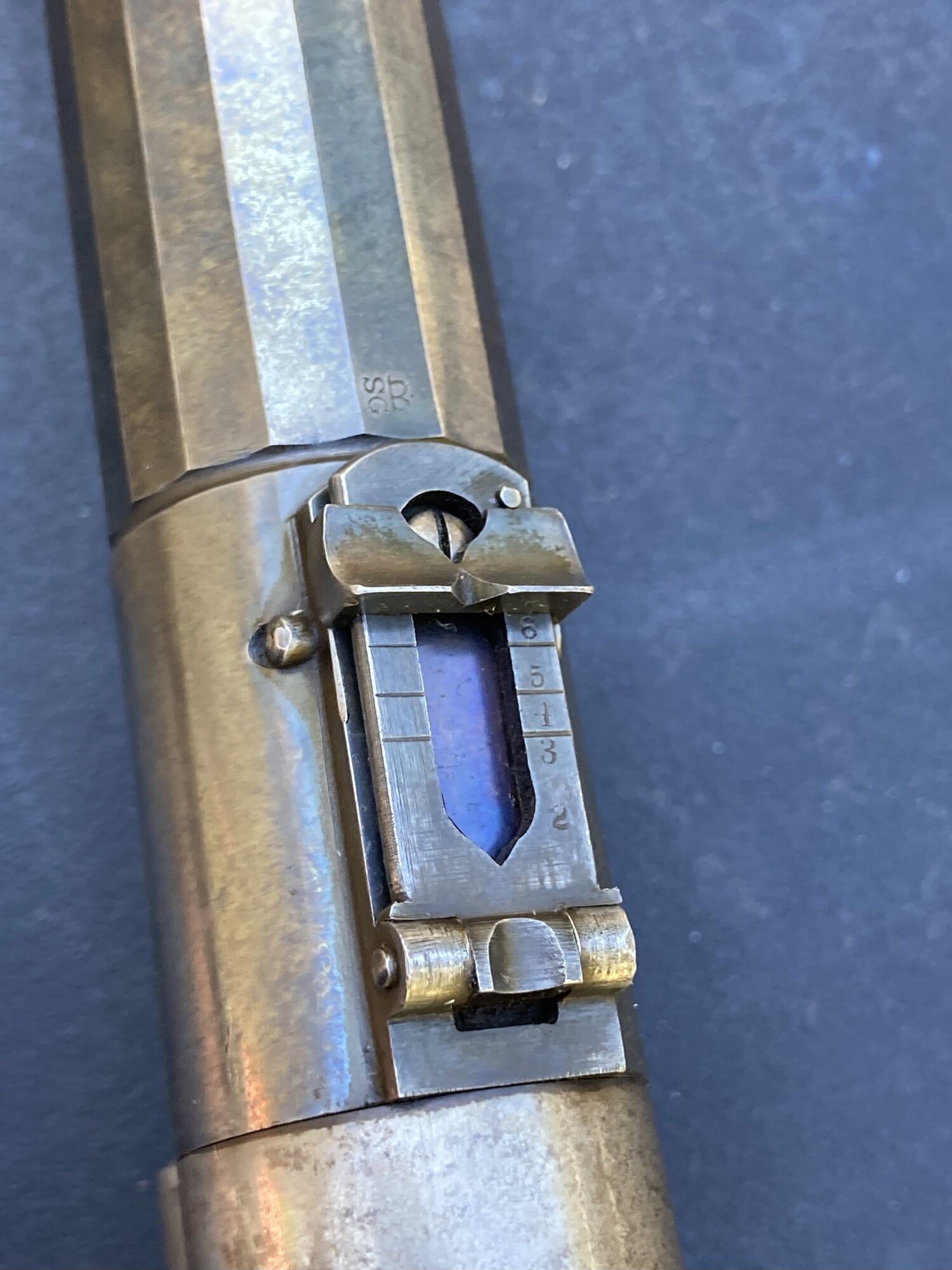
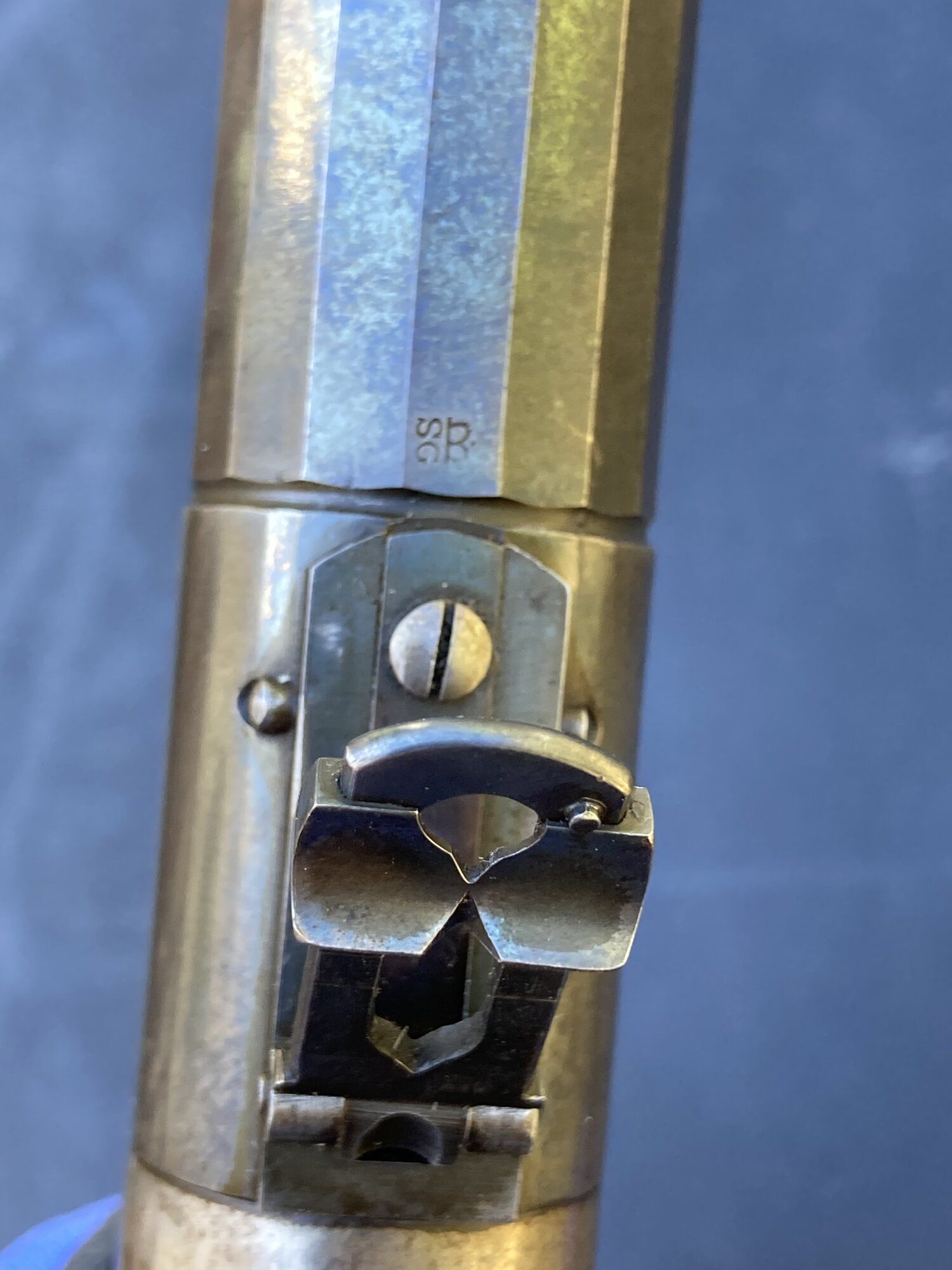
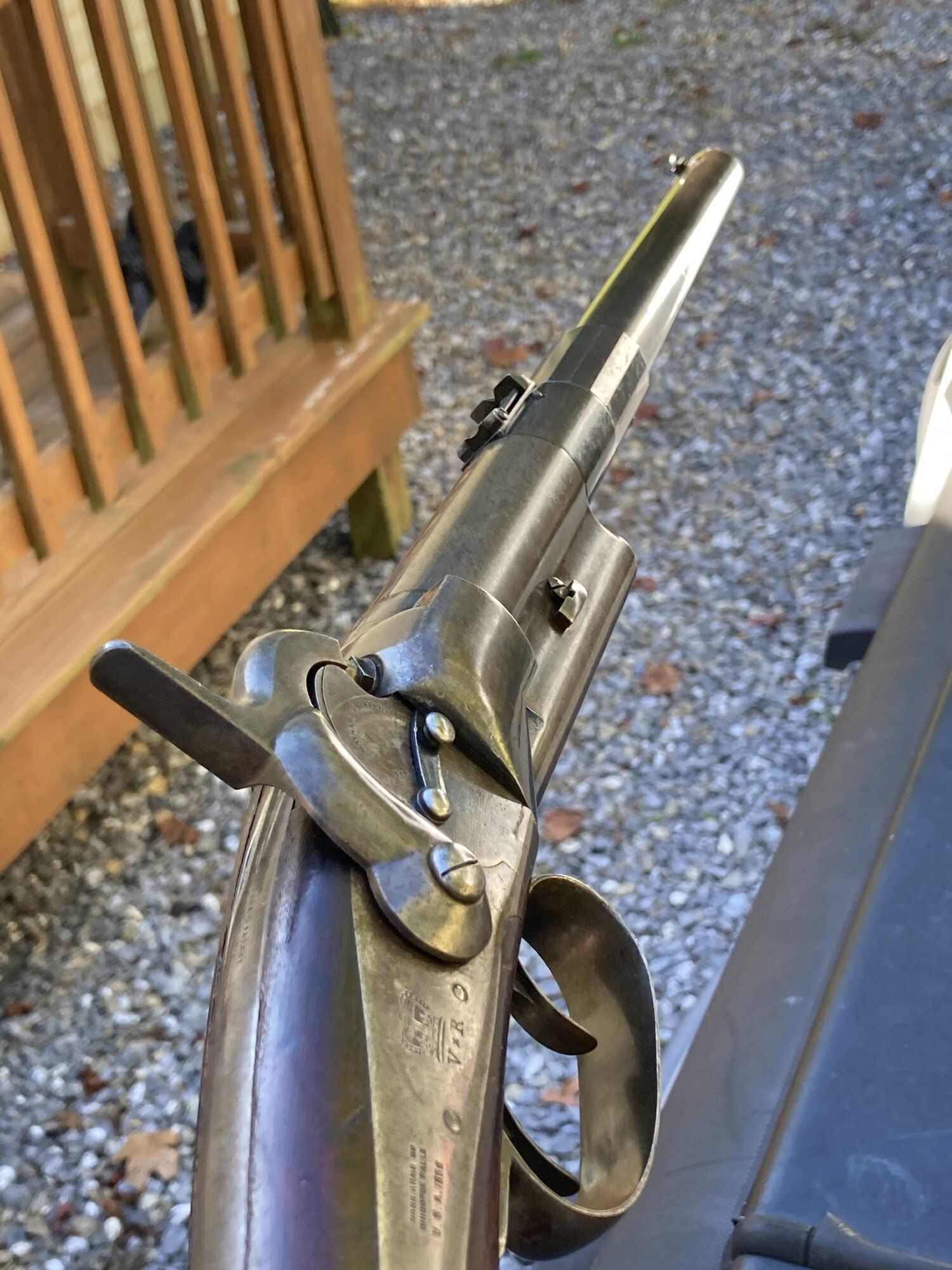
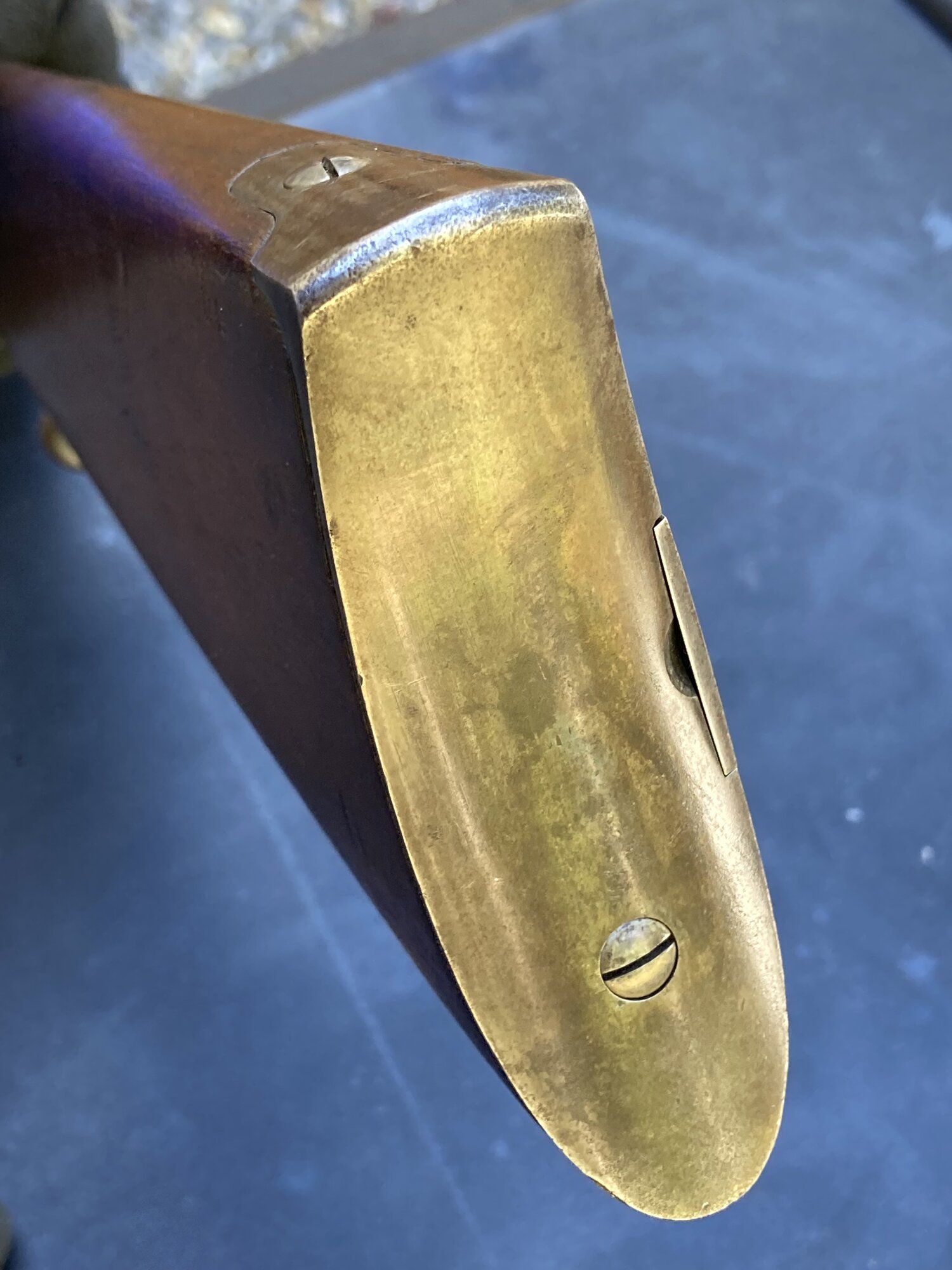
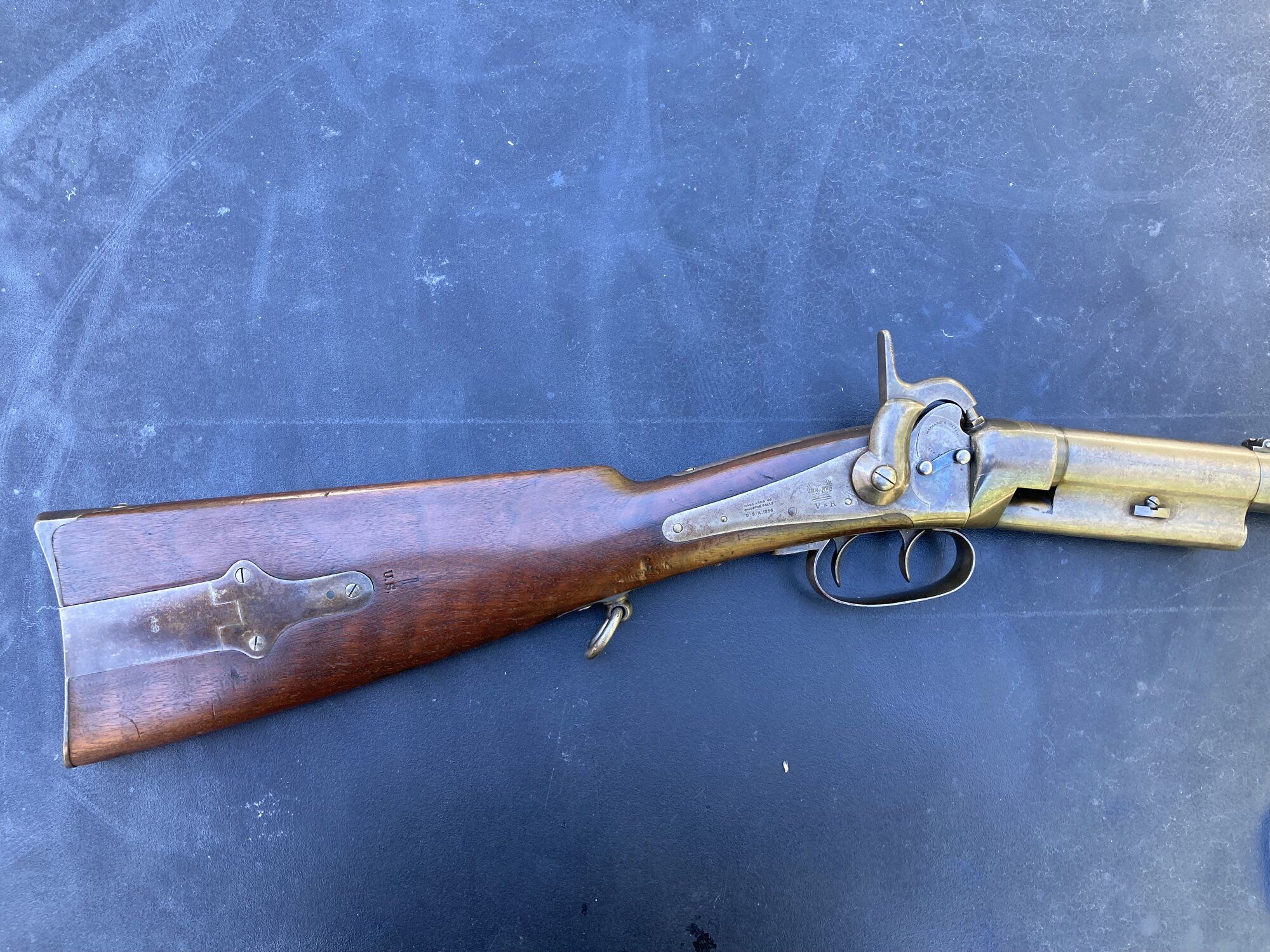
I just moved back to the US last month and unboxed my beautiful British Pattern Greene carbine bought last winter while overseas. I am overjoyed. I've posted previously about Greene Carbines, but I don't mind repeating myself with new photos and tweeked info.

Despite failing selection by the US Ordnance Dept. for use by federal forces, the British agreed to purchase 2,000 slightly modified versions of the American Pattern Greene (subsequently dubbed the British Pattern) for use in the Crimean war, but they arrived too late for service. Additionally, ammunition issues prevented them from becoming standard issue weapons, thus most languished in storage in the Tower of London for years, with only a few being issued to British Yeomanry units for testing and evaluation. Those specimens bear British unit markings on their stocks.

Of the 2,000 British patterns produced, approximately half were destroyed during the great "Tower Purge", with the survivors eventually being sold off to speculators, surplus buyers and the civilian market. Records indicate Schuyler, Hartley and Graham (among others including Boker) bought at least 200 Greene's both prior to and after 1865.

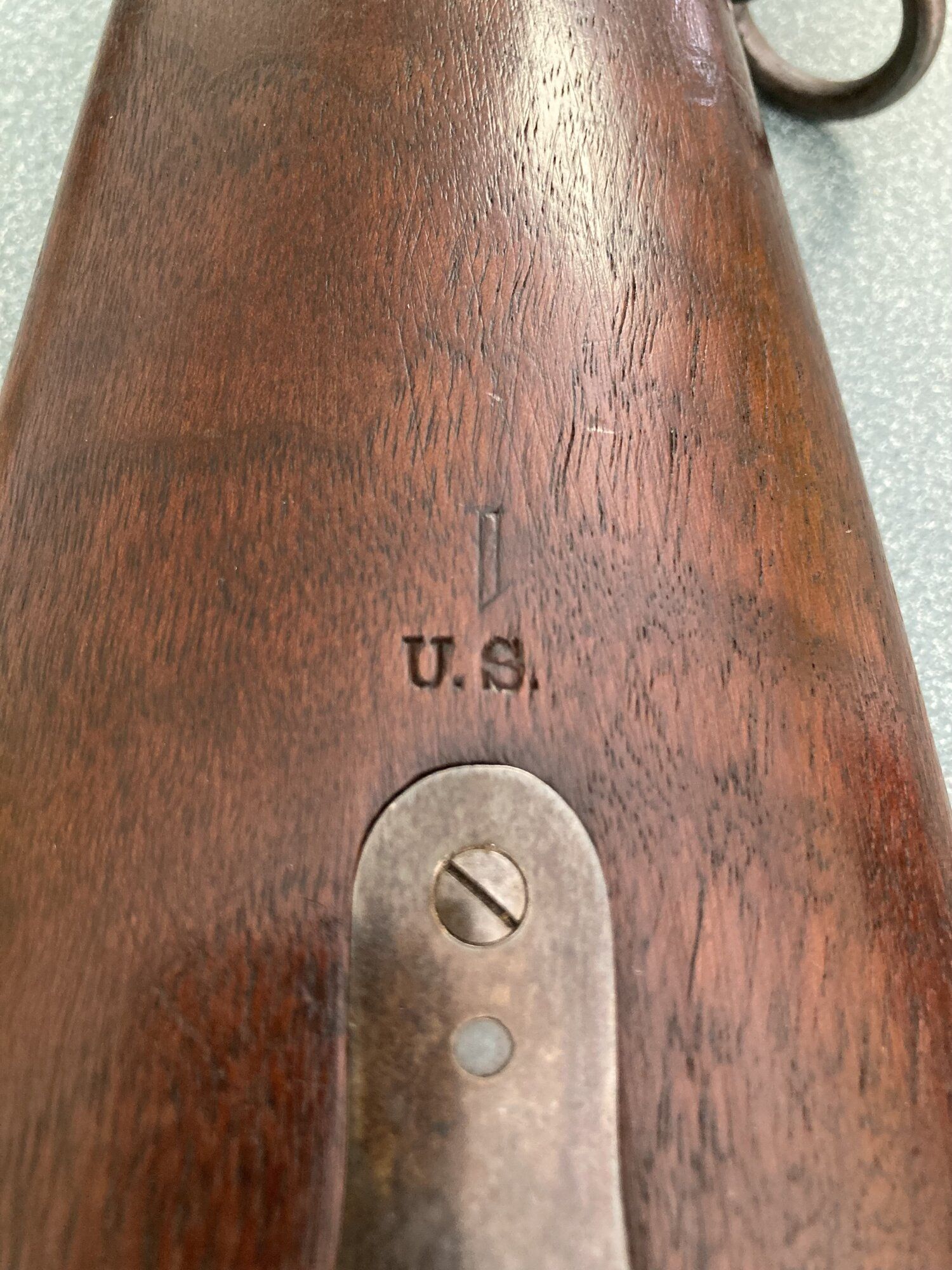
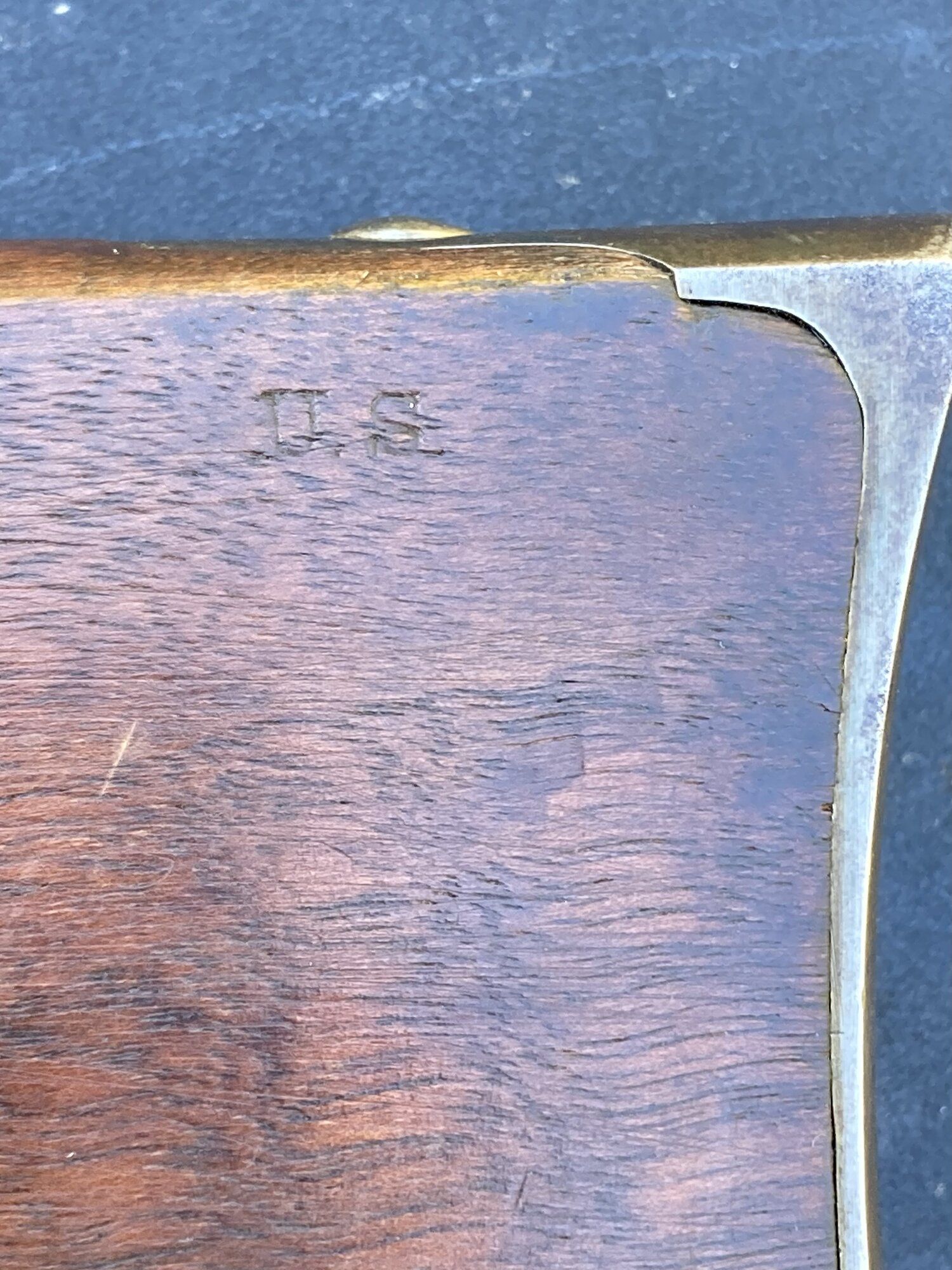
Although most BP Greene's brought back to the US were sold off to private citizens and collectors, it wasn't uncommon for firms like SHG or Boker to market their surplus arms to the US Govt or northern states for use by their militias. It appears a few of the British patterns (estimated around 40 or so) were indeed sold back to the Union and actually received U.S. surcharge stamps, allegedly seeing "some" service in the latter part of the war, likely the 6th Ohio volunteer cavalry.

Today, less than 1,000 BP Greene's are known to exist, with many having been broken up into parts with locks and furniture found at auction decades ago. While not nearly as valuable as the rare American Pattern Greene's, the British Pattern Greene's, particularly U.S. surcharged ones like this example, are a scarcity.
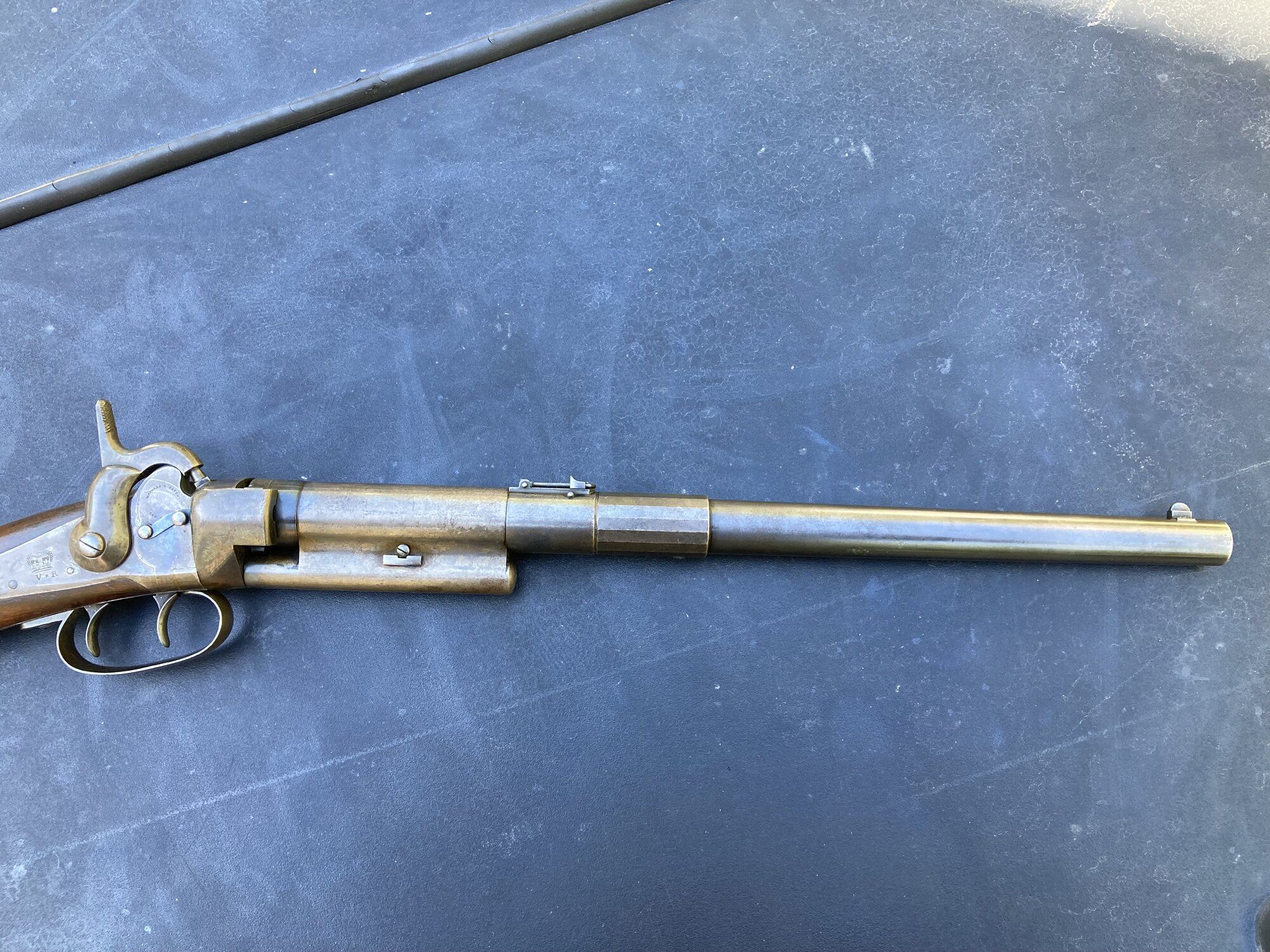
IMG_8907.jpeg


IMG_8908.jpeg


IMG_8900.jpeg


IMG_8899.jpeg


IMG_8898.jpeg


IMG_8896.jpeg


IMG_8894.jpeg


IMG_8893.jpeg


IMG_8909.jpeg


IMG_8912.jpeg


IMG_8913.jpeg


IMG_8914.jpeg


IMG_8915.jpeg


IMG_8918.jpeg


Screenshot 2025-10-16 at 14.10.31.png
 
This is another of Tim Prince "College Hill Arsenal" sales write up explaining functioning.
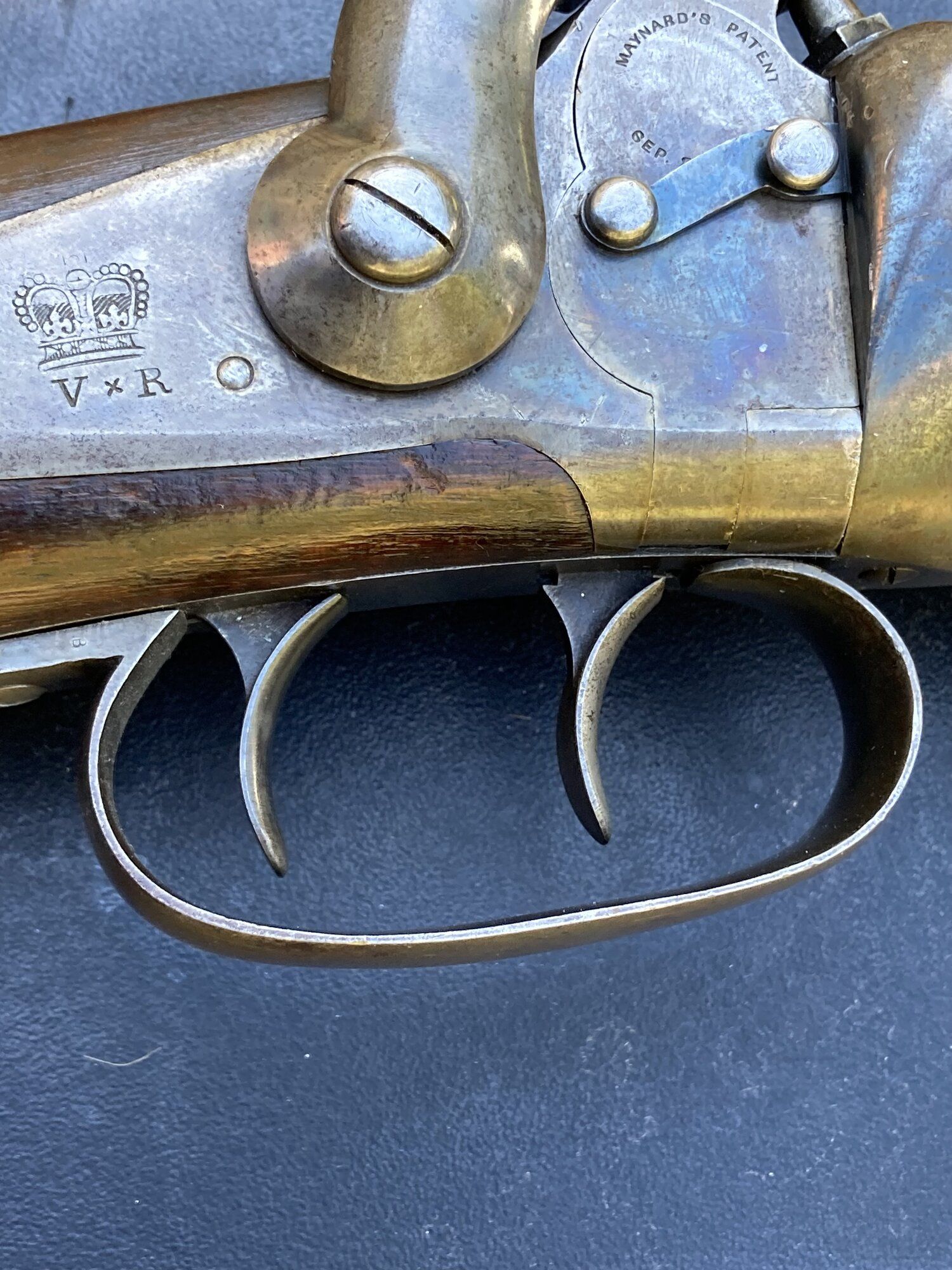
"The design revolved around a hinged breech system that was locked by a rotating barrel with two massive lugs opposed 180 degrees from each other. A 2nd trigger, forward of the one that fired the gun, retracted the breech mechanism locking pin when it was depressed. This allowed the user to rotate the breech and barrel section of the carbine 90 degrees in a counter-clockwise (anti-clockwise to the British) direction, and unlock the two large lugs from the frame recesses they engaged. The hinged breech and barrel assembly could then be pushed forward and swung open to the right by 90 degrees, exposing the chamber to load a cartridge. When the nitrated paper or linen cartridge was loaded, the barrel section was then swung back to the left, pulled to the rear and rotated clockwise to lock it. While the process sounds somewhat complicated, it was actually rather simple to do and the action worked smoothly. When the barrel section was pulled back to seat against the receiver of the carbine, a pointed, hollow extension from the breech face punctured the cartridge and made sure that the spark from the primer flash was communicated directly into the power in the cartridge. The carbine also utilized the newly adopted Maynard patent tape priming mechanism. This mechanical priming system, developed by Dr. Edward Maynard, used a varnished paper roll of priming pellets, much like a modern roll of caps used in a child's cap gun. The system advanced the roll every time the hammer was cocked, placing a fresh primer pellet over the cone (nipple). A sharp cutting edge on the bottom face of the hammer cut off the spent piece of priming tape when the hammer fell."
 
Very nice carbine. Did these take a paper cartridge or was it like a Maynard with a self-contained cartridge?
The VxR must denote a weapon made in the USA. British made issue weapons had V.R, Belgian made weapons had a V*R (five-point star) and French made weapons (Yes, early P53s were made by St Etienne) had a V+R.
You are correct, the x designates the US
 
Last edited:
Just a few photos of my British Greene that I picked up yesterday. It is serial number 1626 and like vmicraig's it has the U.S. surcharge stamp on the rear top of the butt. Guess we will never know for sure that these marked carbines did in fact come back to the US and were bought and issued but it is an interesting quandary. Unlike others I have seen mine has an extra screw through the butt on opposite side to the hammer. I am guessing this was a period repair of some kind; I will leave it as is.

gr01.webp


gr02.webp


gr03.webp


gr04.webp


gr05.webp


gr06.webp


gr07.webp


gr08.webp


gr09.webp


gr10.webp
 
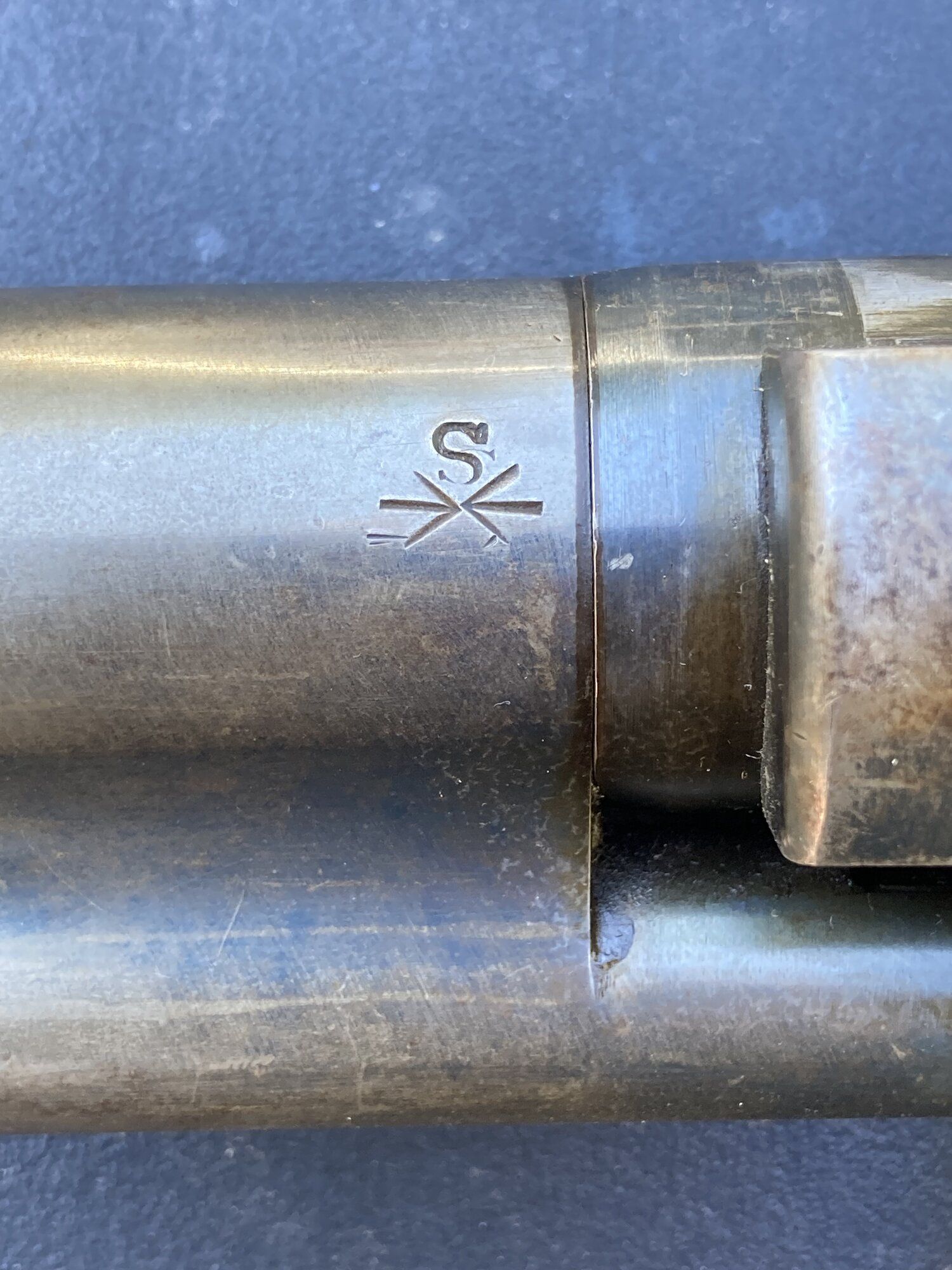
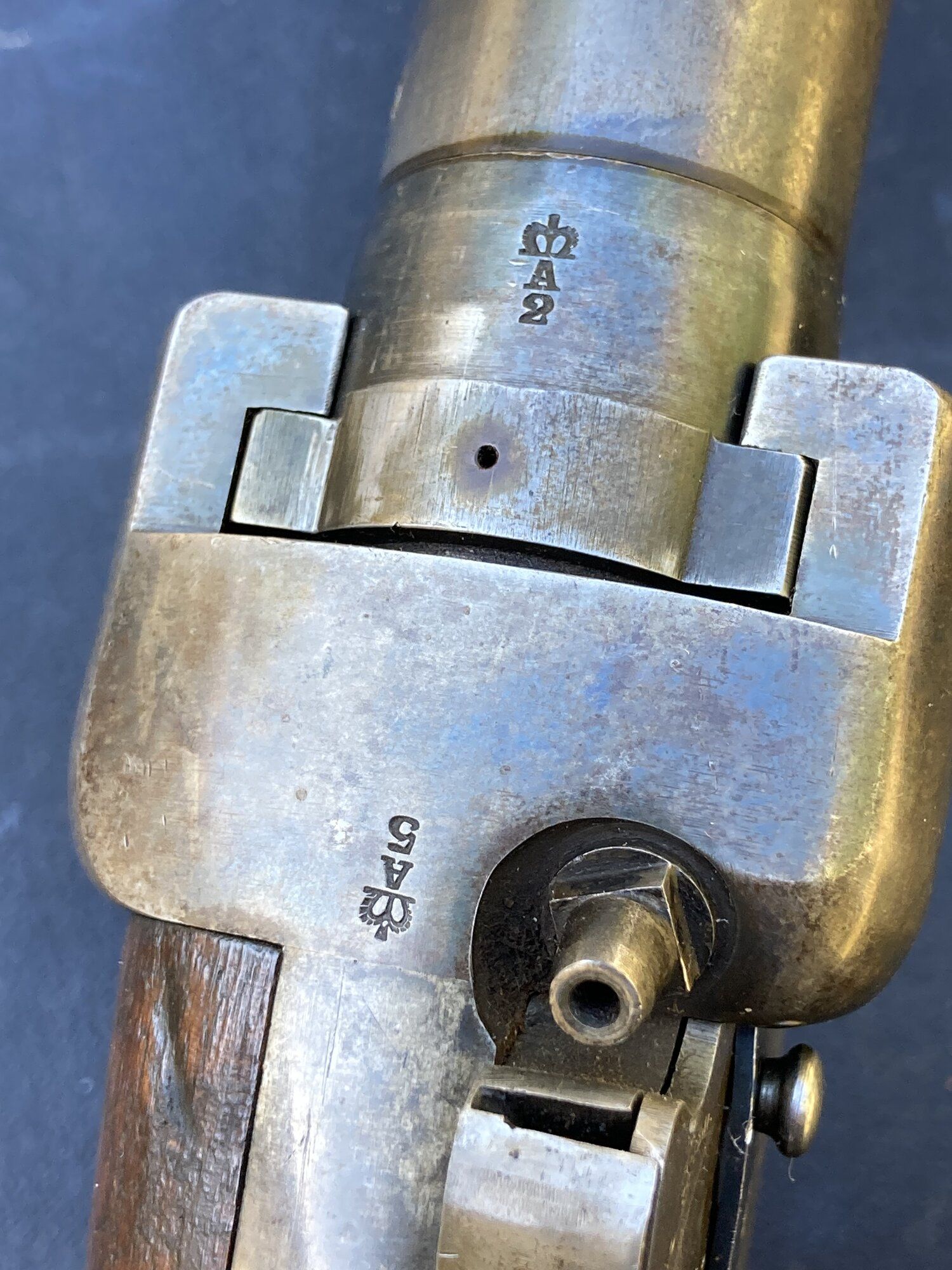
As already established the Crown/ V+R means a US-sourced arm. The crown/A.(number) tells us that the inspector was in the USA when these were bought The opposing arrows and 'S' tells us it was an issue weapon in Britain and that it was 'sold out of service'. (In Britain that 'S' is struck through any service proofs thus cancelling them. For resale in Britain a civilian proof was required to shoot them I see none.

Taking that into account, it seems that they were sold out of service to the USA possibly bought back by the manufacturers - or the government - for resale. They were not sold in Britain. 1859 - 62 was the time that the British Army was looking to rearm with breechloaders. Capping breechloaders topped the list as the copper rimfire cartridges of the time were not in favour. (A paper cartridge was inserted into the breech, breech closed, hammer cocked to hit a percussion cap - or strip - The spark went through the paper to ignite the charge. There was usually a wad of some kind to prevent blowback)

I am currently restoring one of ours - a rather corroded Westley Richards 'Monkey Tail' carbine (.45") - a trials weapon of 1860. It was eventually selected for production as a cavalry carbine, but was overtaken by technological advances - the brass centerfire cartridge and the Snider conversions that followed (far cheaper). It was produced by Enfield but only equipped Yeomanry (mounted militia) regiments in Britain. it was bought by Yeomanry and competition shots as a match rifle as it had a form of Whitworth rifling and was quite accurate. Variations were used by Volunteers and police in Australia and New Zealand and it was a favorite with rhe Boers of South Africa. It was not declared obsolete until 1881!
###Right.webp

 
As already established the Crown/ V+R means a US-sourced arm. The crown/A.(number) tells us that the inspector was in the USA when these were bought The opposing arrows and 'S' tells us it was an issue weapon in Britain and that it was 'sold out of service'. (In Britain that 'S' is struck through any service proofs thus cancelling them. For resale in Britain a civilian proof was required to shoot them I see none.

Taking that into account, it seems that they were sold out of service to the USA possibly bought back by the manufacturers - or the government - for resale. They were not sold in Britain. 1859 - 62 was the time that the British Army was looking to rearm with breechloaders. Capping breechloaders topped the list as the copper rimfire cartridges of the time were not in favour. (A paper cartridge was inserted into the breech, breech closed, hammer cocked to hit a percussion cap - or strip - The spark went through the paper to ignite the charge. There was usually a wad of some kind to prevent blowback)

I am currently restoring one of ours - a rather corroded Westley Richards 'Monkey Tail' carbine (.45") - a trials weapon of 1860. It was eventually selected for production as a cavalry carbine, but was overtaken by technological advances - the brass centerfire cartridge and the Snider conversions that followed (far cheaper). It was produced by Enfield but only equipped Yeomanry (mounted militia) regiments in Britain. it was bought by Yeomanry and competition shots as a match rifle as it had a form of Whitworth rifling and was quite accurate. Variations were used by Volunteers and police in Australia and New Zealand and it was a favorite with rhe Boers of South Africa. It was not declared obsolete until 1881!
View attachment 582866
Thank you very much for the information, really interesting. I see you are in Yorkshire, a fellow Brit, are you involved in any way with the Leeds Royal Armouries?
 
As already established the Crown/ V+R means a US-sourced arm. The crown/A.(number) tells us that the inspector was in the USA when these were bought The opposing arrows and 'S' tells us it was an issue weapon in Britain and that it was 'sold out of service'. (In Britain that 'S' is struck through any service proofs thus cancelling them. For resale in Britain a civilian proof was required to shoot them I see none.

Taking that into account, it seems that they were sold out of service to the USA possibly bought back by the manufacturers - or the government - for resale. They were not sold in Britain. 1859 - 62 was the time that the British Army was looking to rearm with breechloaders. Capping breechloaders topped the list as the copper rimfire cartridges of the time were not in favour. (A paper cartridge was inserted into the breech, breech closed, hammer cocked to hit a percussion cap - or strip - The spark went through the paper to ignite the charge. There was usually a wad of some kind to prevent blowback)

I am currently restoring one of ours - a rather corroded Westley Richards 'Monkey Tail' carbine (.45") - a trials weapon of 1860. It was eventually selected for production as a cavalry carbine, but was overtaken by technological advances - the brass centerfire cartridge and the Snider conversions that followed (far cheaper). It was produced by Enfield but only equipped Yeomanry (mounted militia) regiments in Britain. it was bought by Yeomanry and competition shots as a match rifle as it had a form of Whitworth rifling and was quite accurate. Variations were used by Volunteers and police in Australia and New Zealand and it was a favorite with rhe Boers of South Africa. It was not declared obsolete until 1881!
View attachment 582866
As noted in the original post, it's believed that this particular carbine was indeed purchased by US speculators/traders, perhaps Schuyler himself, with the US surcharged ones possibly ending up in use before the war ended. With only about 40 or so believed to have the US surcharge, Bugattimiller has scored a great acquisition for his collection since it's nearly impossible to find an American Pattern (AP) Greene these days, which is the only Greene that is scarcer. Between the AP Greene and a Calisher and Terry, I'm not sure which one I covet more…and Bugattimiller has both!!!!!
 
As noted in the original post, it's believed that this particular carbine was indeed purchased by US speculators/traders, perhaps Schuyler himself, with the US surcharged ones possibly ending up in use before the war ended. With only about 40 or so believed to have the US surcharge, Bugattimiller has scored a great acquisition for his collection since it's nearly impossible to find an American Pattern (AP) Greene these days, which is the only Greene that is scarcer. Between the AP Greene and a Calisher and Terry, I'm not sure which one I covet more…and Bugattimiller has both!!!!!
I sense some jealousy there!
 

Learn About Us
About CivilWarTalk
Contact the Webmaster
Meet the Staff
Link to CivilWarTalk
Join Our Community
Register
Browse Forums
View Today's Discussions
Search the Forum
Get Help
FAQ
Student Guide
Forum Rules & Etiquette
Copyright / DMCA

     Contact Us CivilwarTalk on Facebook CivilWarTalk on YouTube CivilWarTalk on Twitter RSS Feed

Bringing the American Civil War and More to Life.
© 1999 - , CIVILWARTALK, LLC - Site Version 10.0

SlaveryTalk.com - SecessionTalk.com - CivilWarTalk.com - ReconstructionTalk.com
Back
Top