
vmicraig
Sergeant
- Joined
- Mar 12, 2018
- Location
- Midlothian, VA
The Ballard was a breech loading, metallic cartridge carbine invented by Charles H. Ballard of Worchester, Massachusetts, and patented in November of 1861. Ballard was an inventor and not a manufacturer, thus he partnered with the New York sales agents Merwin & Bray, who quickly found a ready market for the Ballard and negotiated it's manufacturing with several companies, including Ball & Williams and Dwight Chapin & Co. Between 1862 and 1866, Ball & Williams produced some 17,000 rifles and carbines under the Ballard patent in well over a dozen different calibres, including .32, .38, .32-40, 40-63/70, .44, .54. Almost 12,200 were sold as military arms. The various designs included rifles, sporting models, saddle rifles and military/state militia models. Most, but not all military models saw at least some limited service in varying degrees through a combination of issuance to federal troops, state militias or even through individual purchases and ownership by wealthy Cavalry officers.
Ballard's first military-styled carbines that were commonly used in the Civil War were chambered in .54 calibre and are often referred to as the "Old Model", most of which were delivered to the State of Kentucky for use by their cavalry. The Vermont State Militia and New York State also received a small number, but most saw service in KY units.
Subsequent models produced in .44 calibre are generally referred to as the "Model 1864". Six thousand six hundred (6,600) M1864 carbines in .44 cal were purchased by the Ordnance Department and by various state militias. Further, an additional order of 1,000 carbines and 1,000 rifles were ordered in .56-.56 Spencer rimfire configuration, with 115 pieces delivered to the Ordnance Department and the remainder sold to the State of KY. Since Ball & Williams were overloaded with their previous contracts and could not take on any more work, Merwin & Bray subcontracted the work to Dwight, Chapin & Company to produce the guns. After the delivery of the 115 sent to the Ordnance Dept., the company failed, resulting in Ball & Williams buying both the finished and unfinished guns and parts at auction in order to try to complete the contract. The guns and receivers that originally had Dwight, Chapin & Co markings had those marking removed prior to their sale by Ball & Williams. It appears at least a few of the carbines were inspected and received cartouches, although most of the .56-56 Ballards have no US stamps or inspection marks.
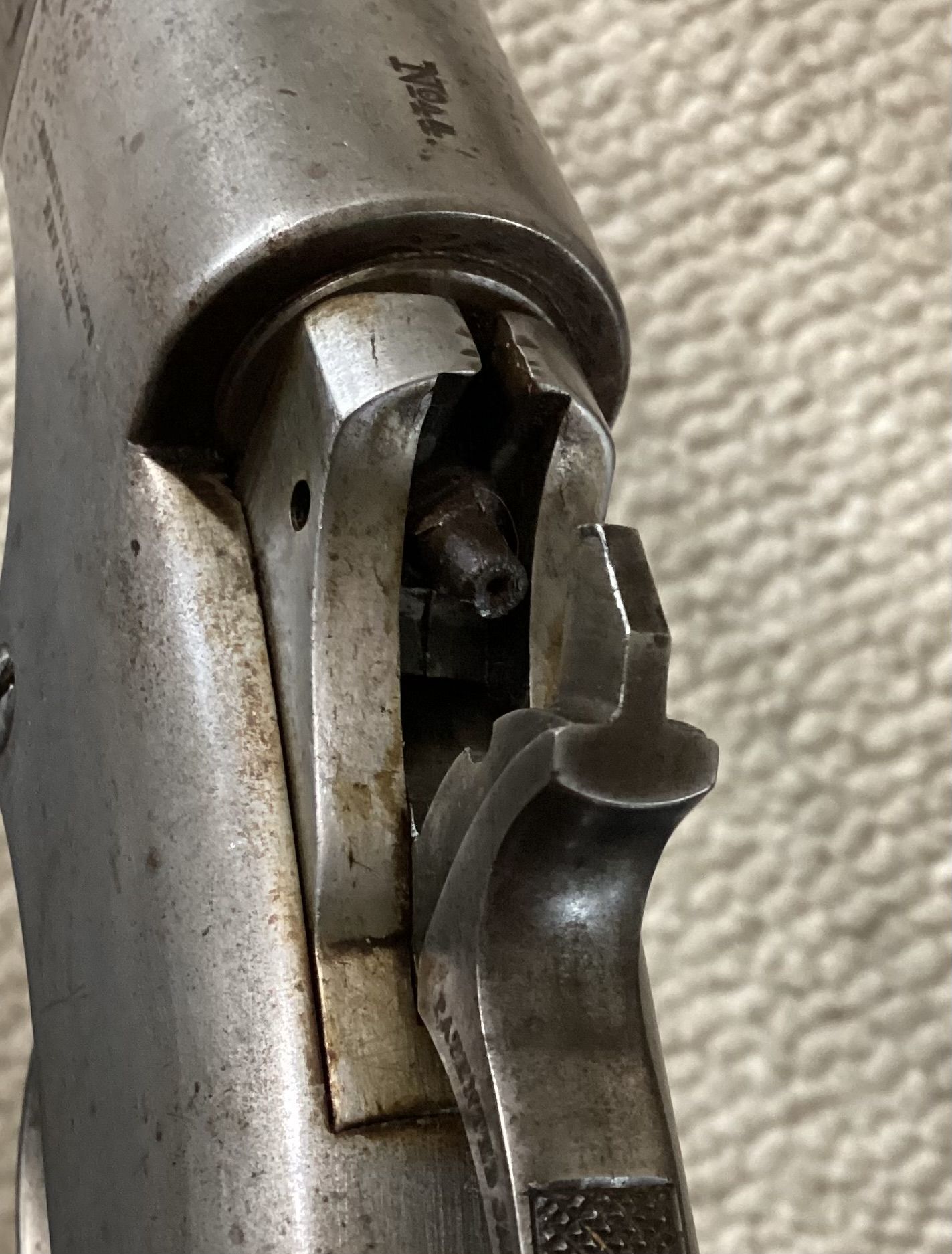
Approximately 2000 Ballard rifles and 200 carbines were produced with a unique Dual Ignition system that allowed them to be used as rimfire weapons and also as percussion arms if rimfire ammunition was not available. However, most dual ignition carbines weren't even made until after the Civil War, with no record of a dual ignition arm sold to the U.S. Government or to any state as part of a military contract. Still, it was not uncommon for post-war militia officers to purchase .44 Ballards for personal use or for use on duty within their individual state militias, including dual ignition models.
While most cavalry carbines of the era were produced with a sling bar and ring, the Ballard was manufactured with a pair of sling swivels, one on the single barrel band and one in the toe of the buttstock.
Renowned carbine expert George Layman wrote the collector's "Guide to the Ballard Breechloader", a well-documented work that helps distinguish the minor differences that help identify Ballards from each other, some nearly imperceptible to anyone who hasn't studied them in detail. More recently, Ballard aficionado John Holland, a member of this forum and probably the most knowledgeable Ballard expert around, categorized his research on Ballards in "Skirmish Line", Vol. 52, Issue 4, 2007, and provides a slightly different and very insightful categorization of each design, as follows:
No. 1: The Ballard Civil War Carbine. Produced by Ball & Williams, and chambered in .44 Ballard.
No. 2: The Ballard Half Stock Rifle. This is also by Ball & Williams. This arm has a 30" octagon to round rifle barrel, in .44 Ballard calibre, mounted on a Carbine receiver.
No. 3: The Civil War Ballard Rifle, aka Kentucky Ballard Rifle. Again by Ball & Williams, in .46 Ballard calibre, also contracted for by the State of Kentucky and so marked on top of the receiver.
No. 4: The Dwight, Chapin & Co. Rifles and Carbines. This was a sub-contract let out by Merwin & Bray, who controlled the manufacturing and sales of the Ball & Williams rifles and carbines, all are cambered in .56-56.
No. 5: The R. Ball & Co. Carbine. This carbine was produced from mid-1865 to late 1866. It is in dual ignition, and utilized surplus round top Civil War rifle model receivers with tang straps. It has a full round barrel, with the octagonal part of the barrel having been eliminated, chambered in .44 Ballard.
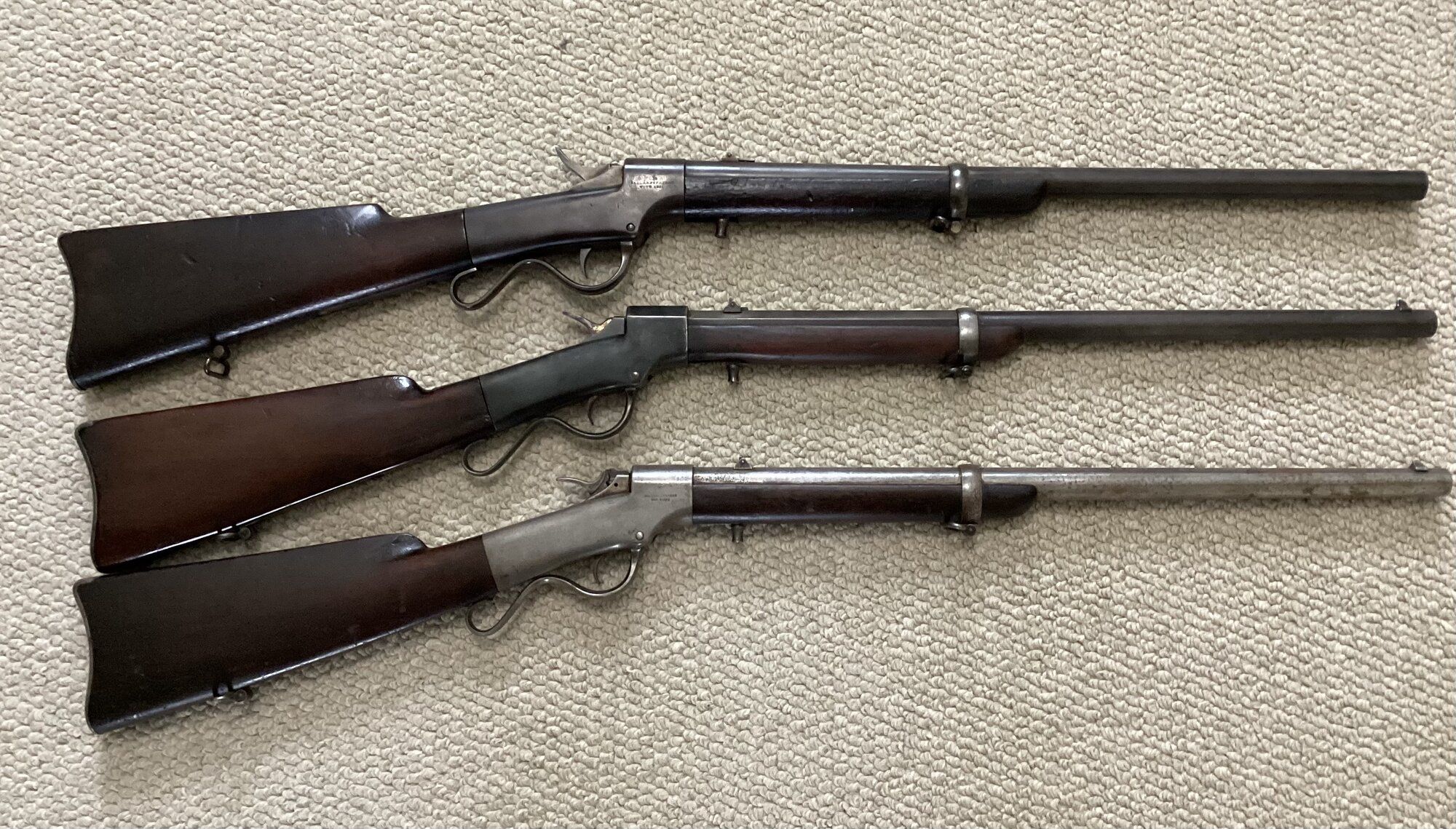
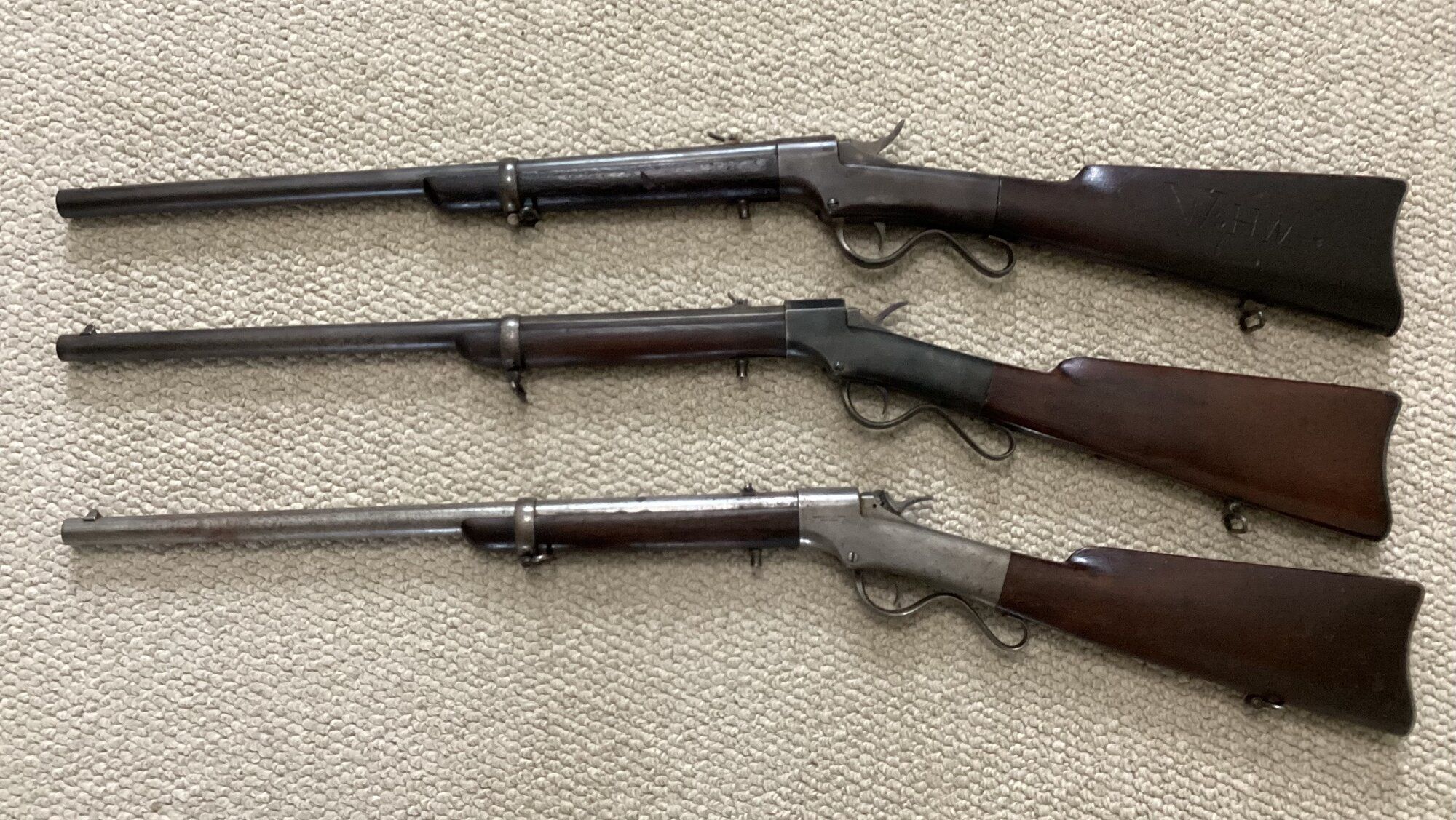
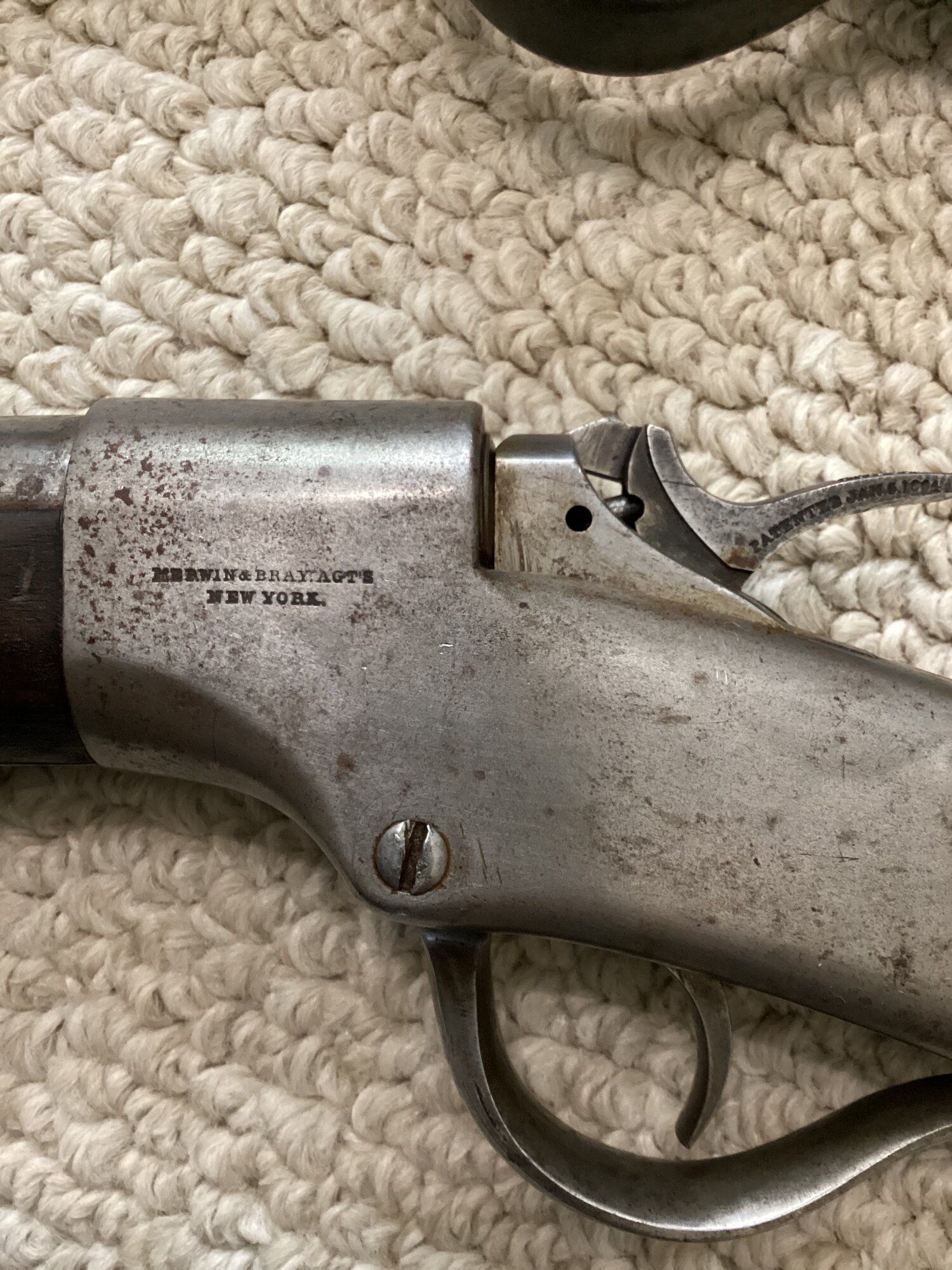
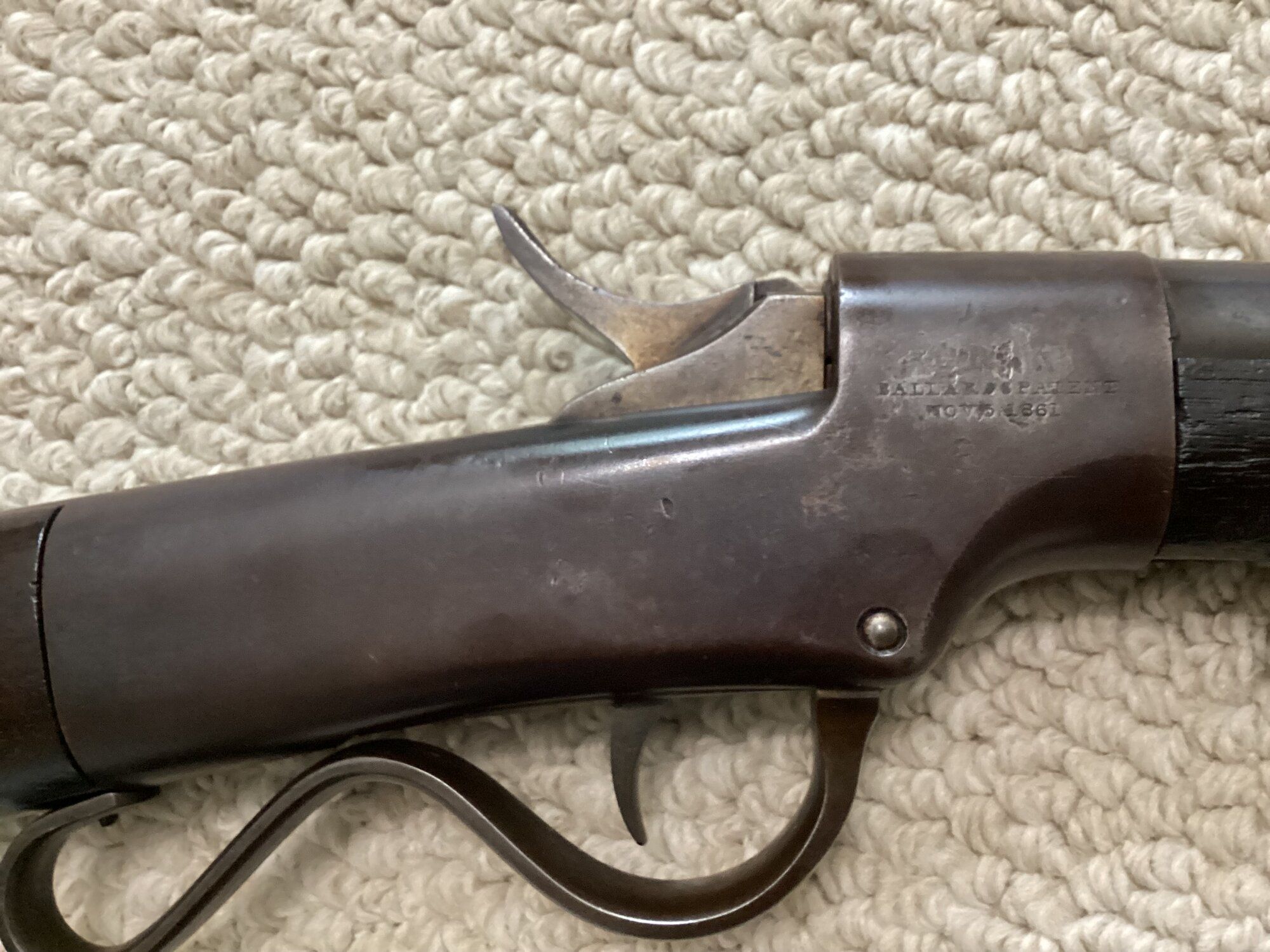
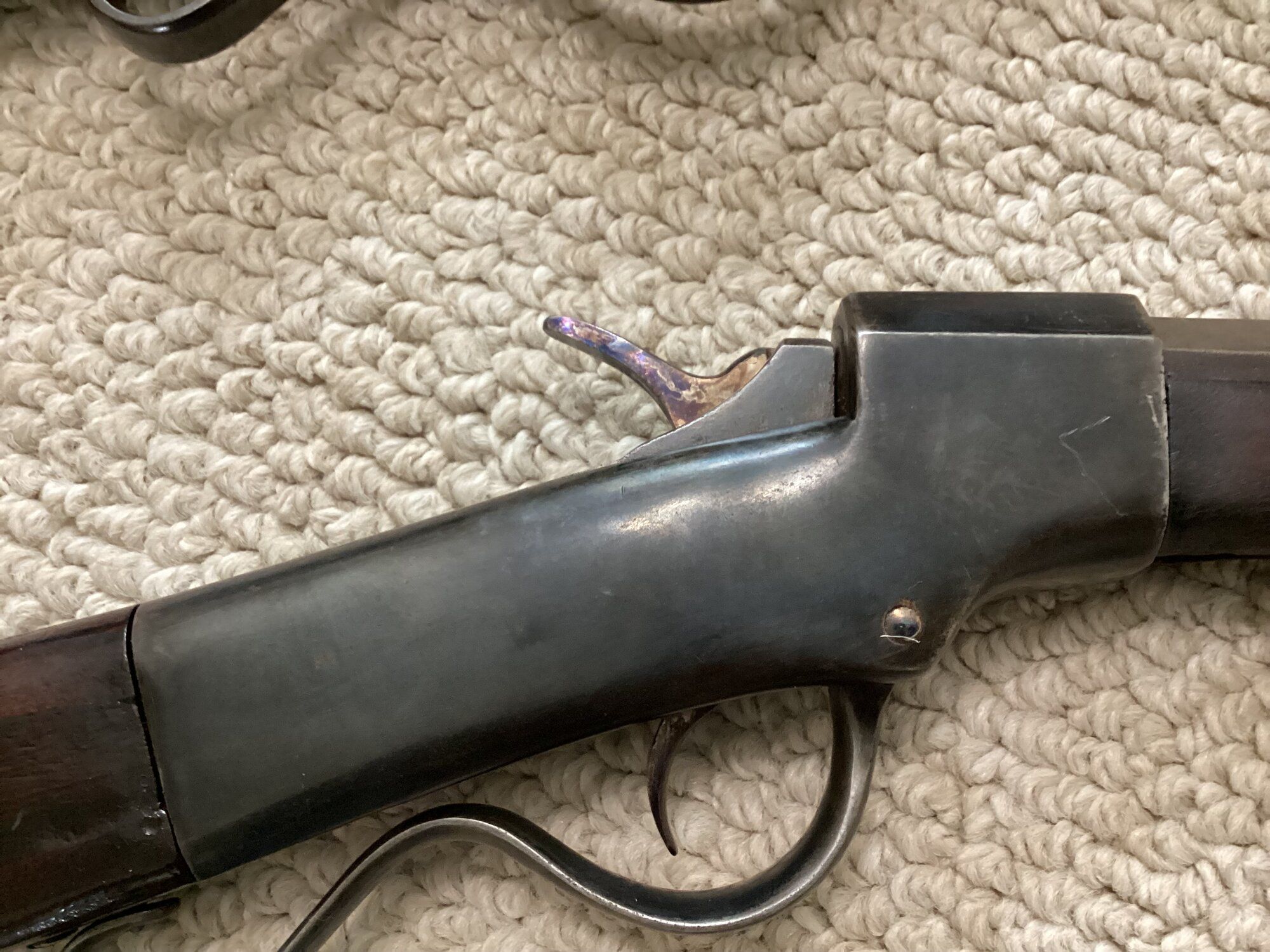
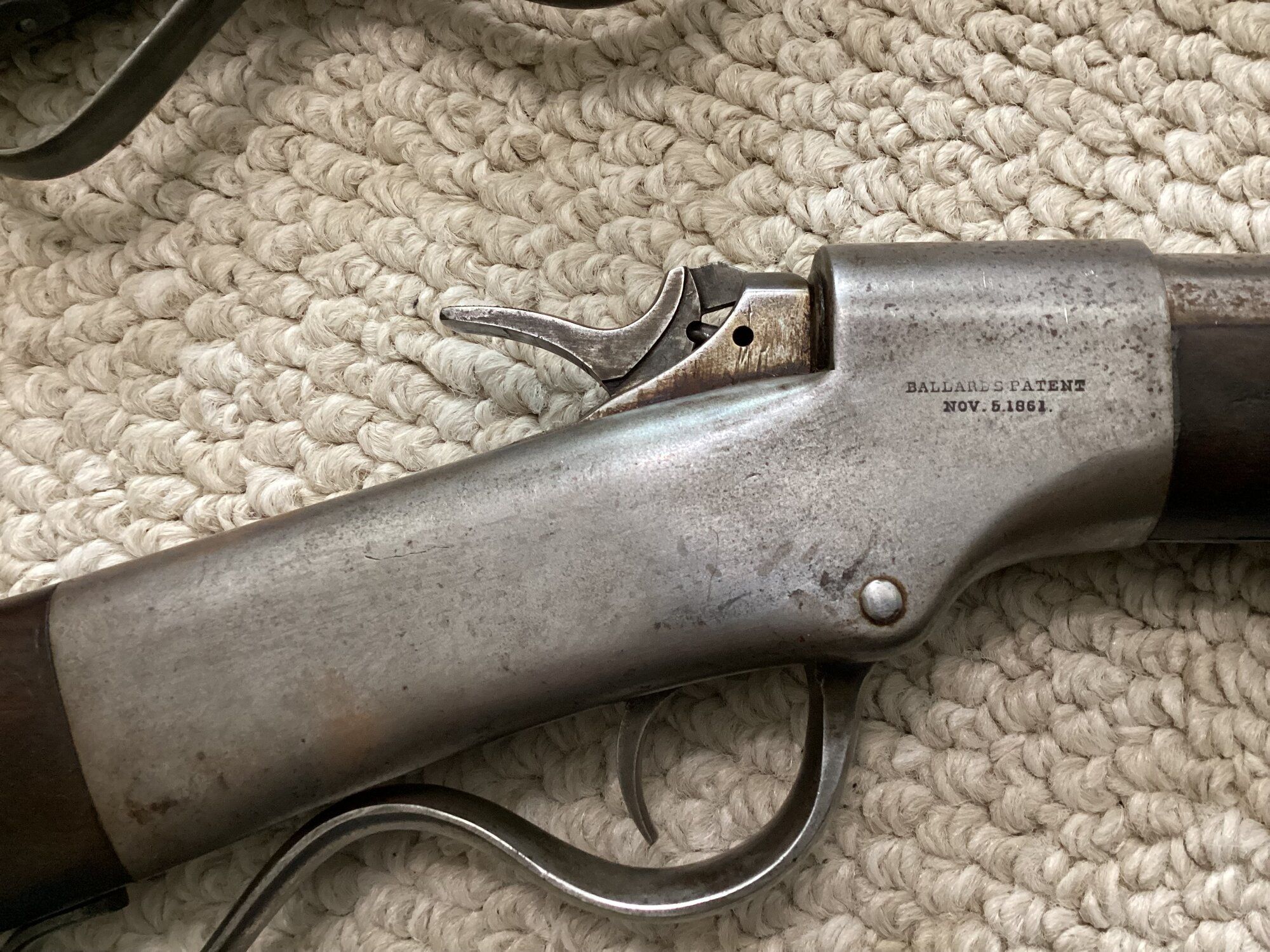
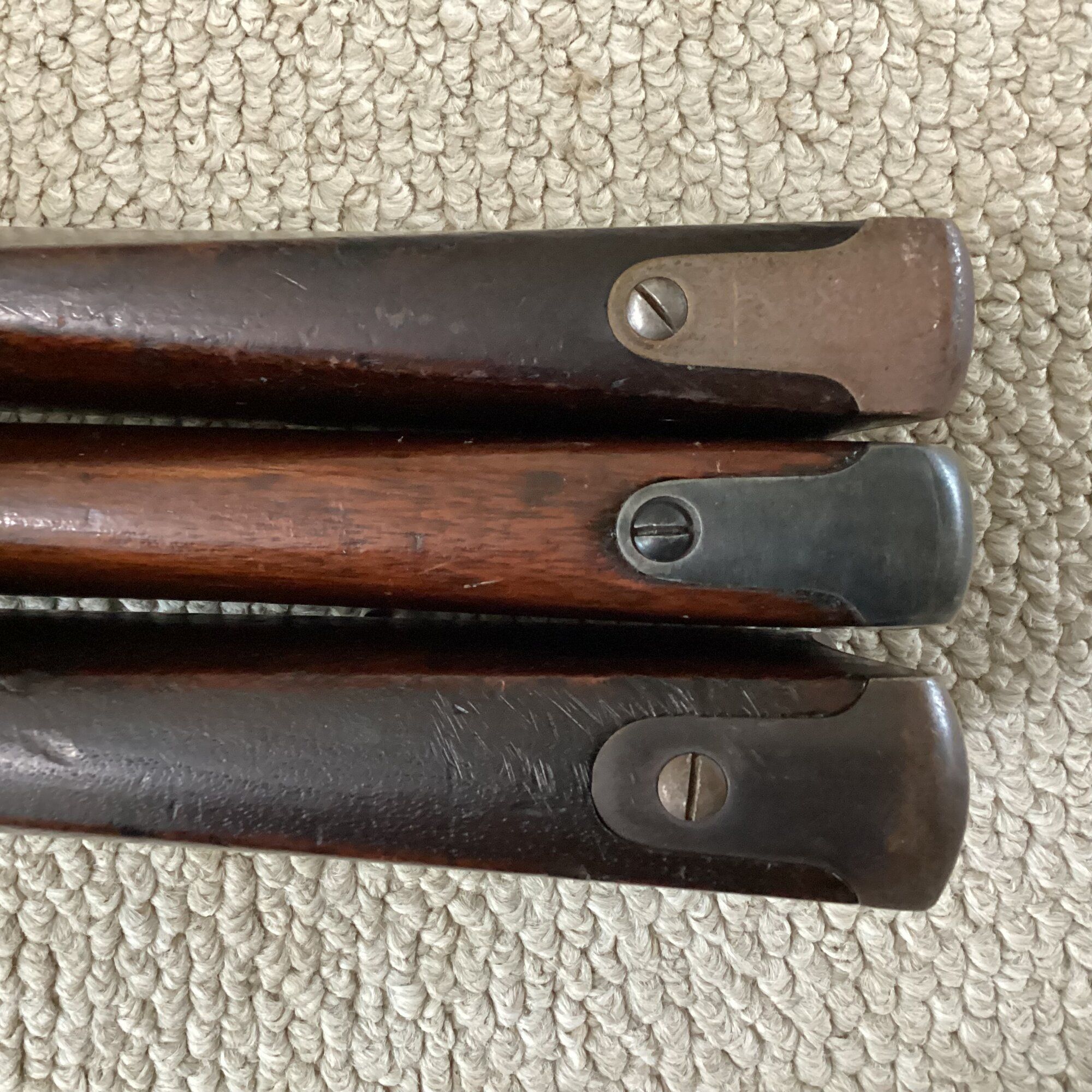
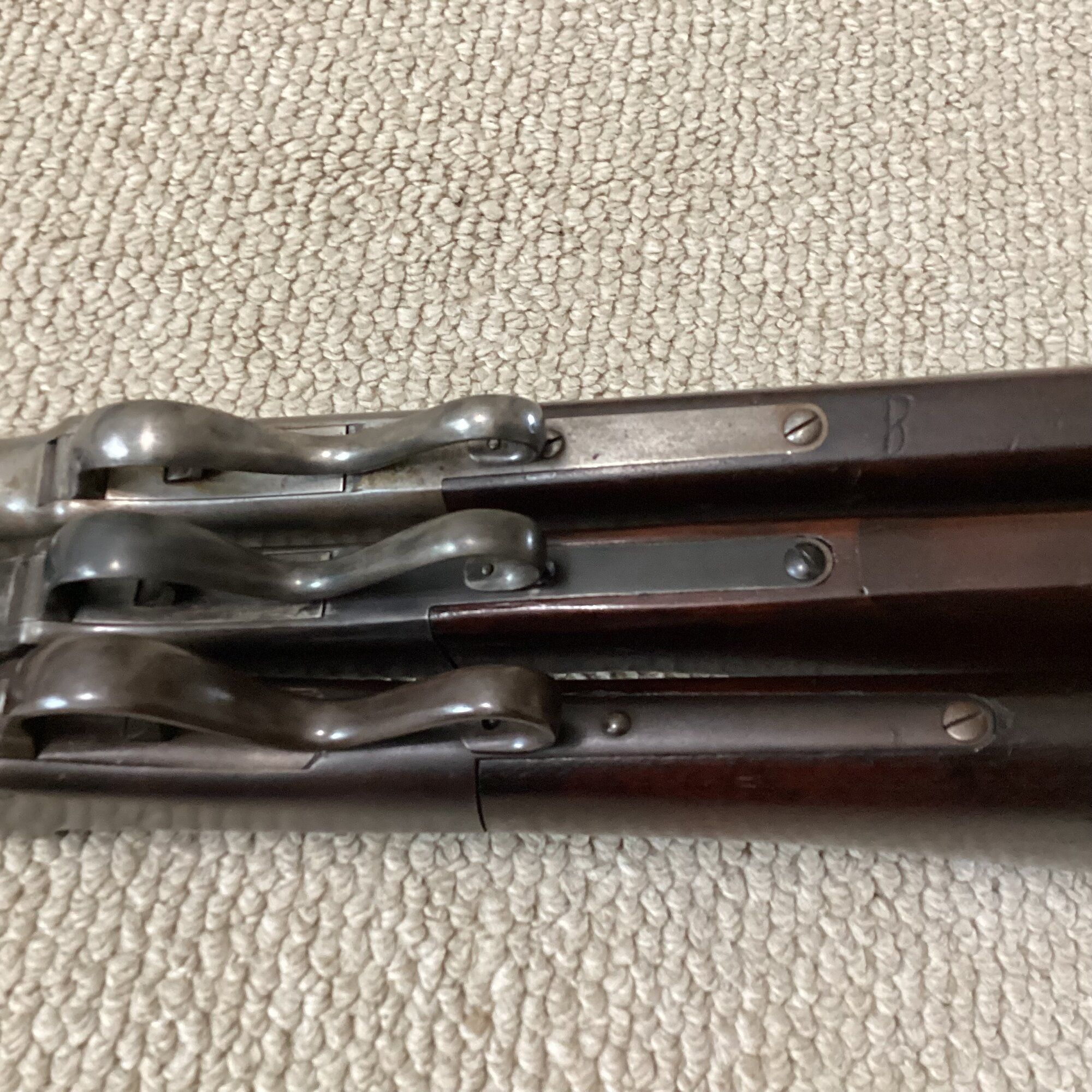
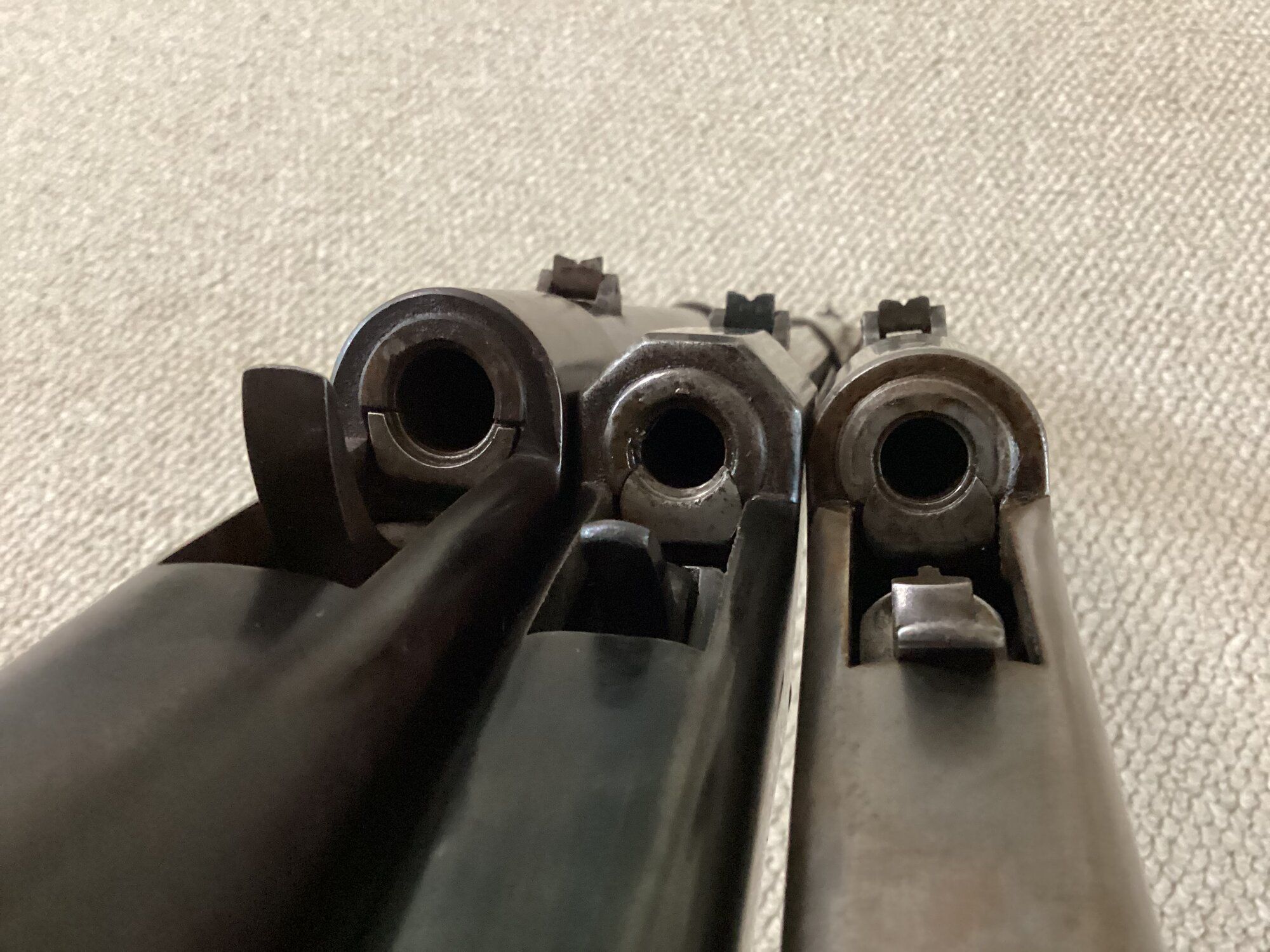
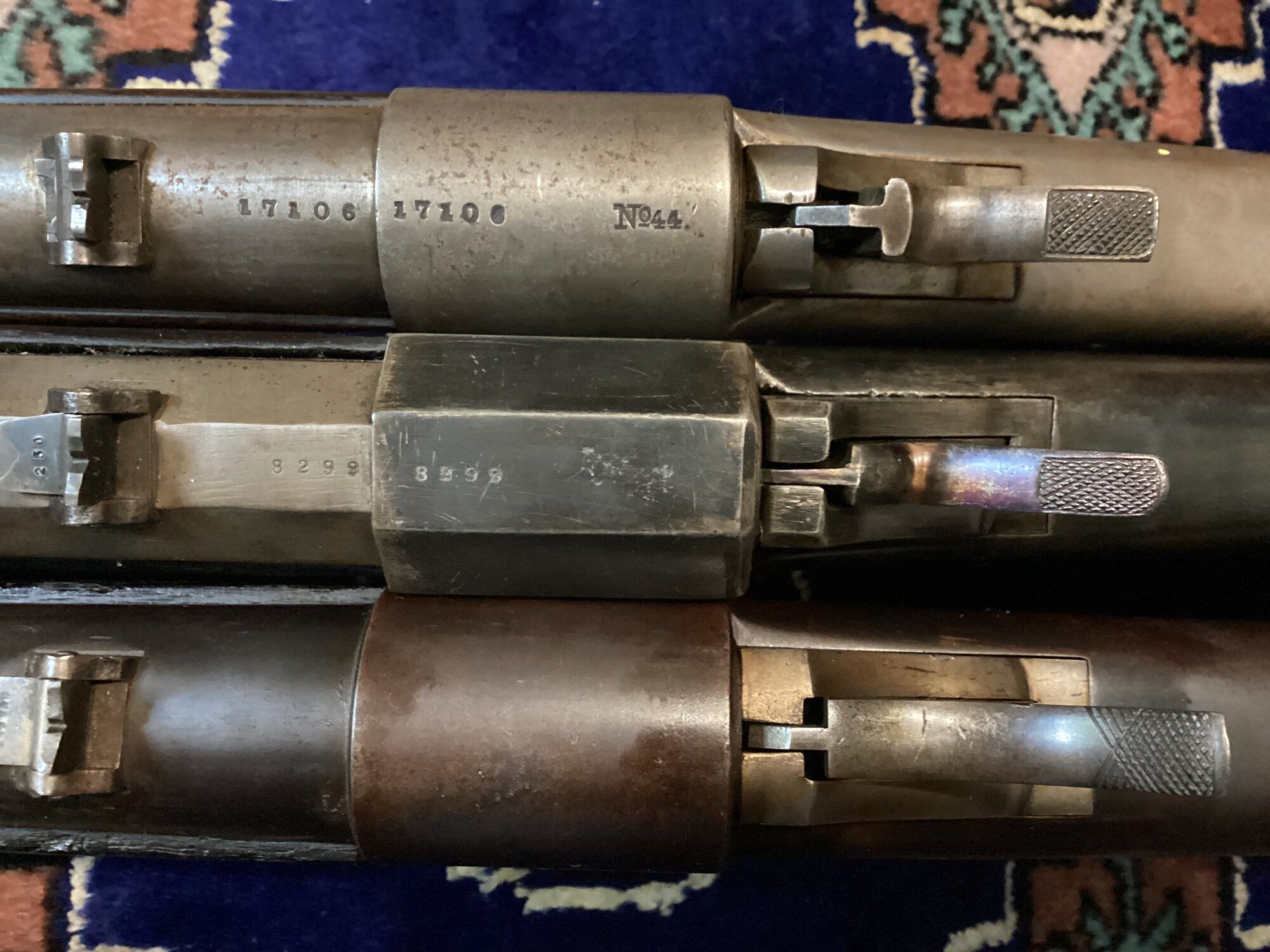
The photos I've included show three different military models. The term "military model" doesn't necessarily indicate it was purchased by or issued to the military, but rather was produced to military standards and in a style for potential purchase and use by federal or militia forces. Military models differ from sporting models by the presence of dual sling swivels, a shorter 22" barrel (as opposed to the typical sporting model barrel lengths of 24"-30"), and the lack of deeper, crescent shaped buttstocks. For the standard Model 1864 .44 calibre version, the military models characteristically have barrels with the first 9 inches octagon and the remaining length round.
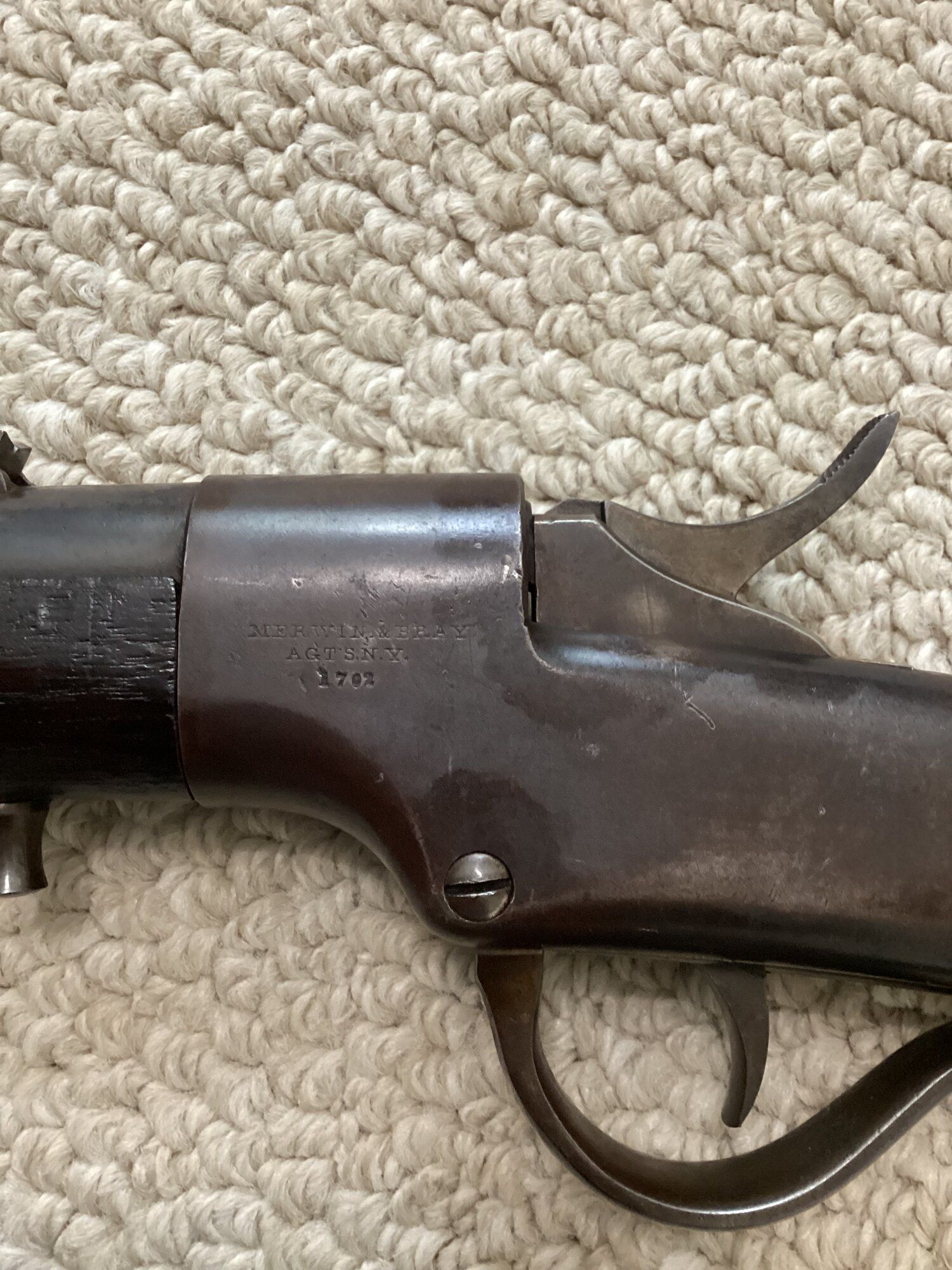
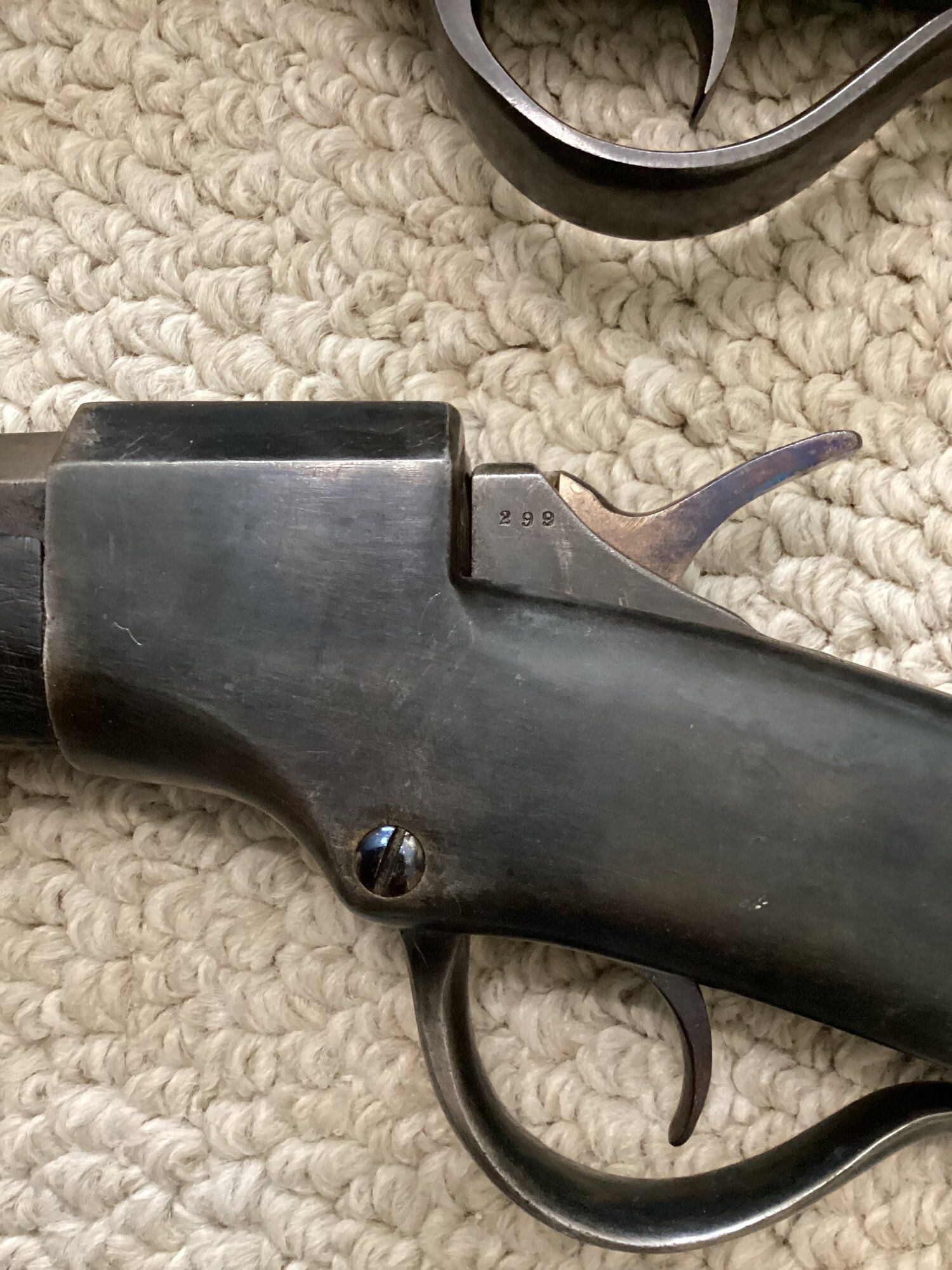
No cartouches are visible, indicating they were either never present or worn/sanded off. IMO, they were likely never stamped and thus produced for State militias.
The models depicted include a .44 Dual Ignition model; a Kentucky purchase .44 Ballard Military Carbine (U.S Martial/State Militia Model); and a .56-.56 Ballard Military Carbine.

Ballard's first military-styled carbines that were commonly used in the Civil War were chambered in .54 calibre and are often referred to as the "Old Model", most of which were delivered to the State of Kentucky for use by their cavalry. The Vermont State Militia and New York State also received a small number, but most saw service in KY units.
Subsequent models produced in .44 calibre are generally referred to as the "Model 1864". Six thousand six hundred (6,600) M1864 carbines in .44 cal were purchased by the Ordnance Department and by various state militias. Further, an additional order of 1,000 carbines and 1,000 rifles were ordered in .56-.56 Spencer rimfire configuration, with 115 pieces delivered to the Ordnance Department and the remainder sold to the State of KY. Since Ball & Williams were overloaded with their previous contracts and could not take on any more work, Merwin & Bray subcontracted the work to Dwight, Chapin & Company to produce the guns. After the delivery of the 115 sent to the Ordnance Dept., the company failed, resulting in Ball & Williams buying both the finished and unfinished guns and parts at auction in order to try to complete the contract. The guns and receivers that originally had Dwight, Chapin & Co markings had those marking removed prior to their sale by Ball & Williams. It appears at least a few of the carbines were inspected and received cartouches, although most of the .56-56 Ballards have no US stamps or inspection marks.
Approximately 2000 Ballard rifles and 200 carbines were produced with a unique Dual Ignition system that allowed them to be used as rimfire weapons and also as percussion arms if rimfire ammunition was not available. However, most dual ignition carbines weren't even made until after the Civil War, with no record of a dual ignition arm sold to the U.S. Government or to any state as part of a military contract. Still, it was not uncommon for post-war militia officers to purchase .44 Ballards for personal use or for use on duty within their individual state militias, including dual ignition models.
While most cavalry carbines of the era were produced with a sling bar and ring, the Ballard was manufactured with a pair of sling swivels, one on the single barrel band and one in the toe of the buttstock.
Renowned carbine expert George Layman wrote the collector's "Guide to the Ballard Breechloader", a well-documented work that helps distinguish the minor differences that help identify Ballards from each other, some nearly imperceptible to anyone who hasn't studied them in detail. More recently, Ballard aficionado John Holland, a member of this forum and probably the most knowledgeable Ballard expert around, categorized his research on Ballards in "Skirmish Line", Vol. 52, Issue 4, 2007, and provides a slightly different and very insightful categorization of each design, as follows:
No. 1: The Ballard Civil War Carbine. Produced by Ball & Williams, and chambered in .44 Ballard.
No. 2: The Ballard Half Stock Rifle. This is also by Ball & Williams. This arm has a 30" octagon to round rifle barrel, in .44 Ballard calibre, mounted on a Carbine receiver.
No. 3: The Civil War Ballard Rifle, aka Kentucky Ballard Rifle. Again by Ball & Williams, in .46 Ballard calibre, also contracted for by the State of Kentucky and so marked on top of the receiver.
No. 4: The Dwight, Chapin & Co. Rifles and Carbines. This was a sub-contract let out by Merwin & Bray, who controlled the manufacturing and sales of the Ball & Williams rifles and carbines, all are cambered in .56-56.
No. 5: The R. Ball & Co. Carbine. This carbine was produced from mid-1865 to late 1866. It is in dual ignition, and utilized surplus round top Civil War rifle model receivers with tang straps. It has a full round barrel, with the octagonal part of the barrel having been eliminated, chambered in .44 Ballard.
The photos I've included show three different military models. The term "military model" doesn't necessarily indicate it was purchased by or issued to the military, but rather was produced to military standards and in a style for potential purchase and use by federal or militia forces. Military models differ from sporting models by the presence of dual sling swivels, a shorter 22" barrel (as opposed to the typical sporting model barrel lengths of 24"-30"), and the lack of deeper, crescent shaped buttstocks. For the standard Model 1864 .44 calibre version, the military models characteristically have barrels with the first 9 inches octagon and the remaining length round.
No cartouches are visible, indicating they were either never present or worn/sanded off. IMO, they were likely never stamped and thus produced for State militias.
The models depicted include a .44 Dual Ignition model; a Kentucky purchase .44 Ballard Military Carbine (U.S Martial/State Militia Model); and a .56-.56 Ballard Military Carbine.


 Bringing the