
vmicraig
Sergeant
- Joined
- Mar 12, 2018
- Location
- Midlothian, VA
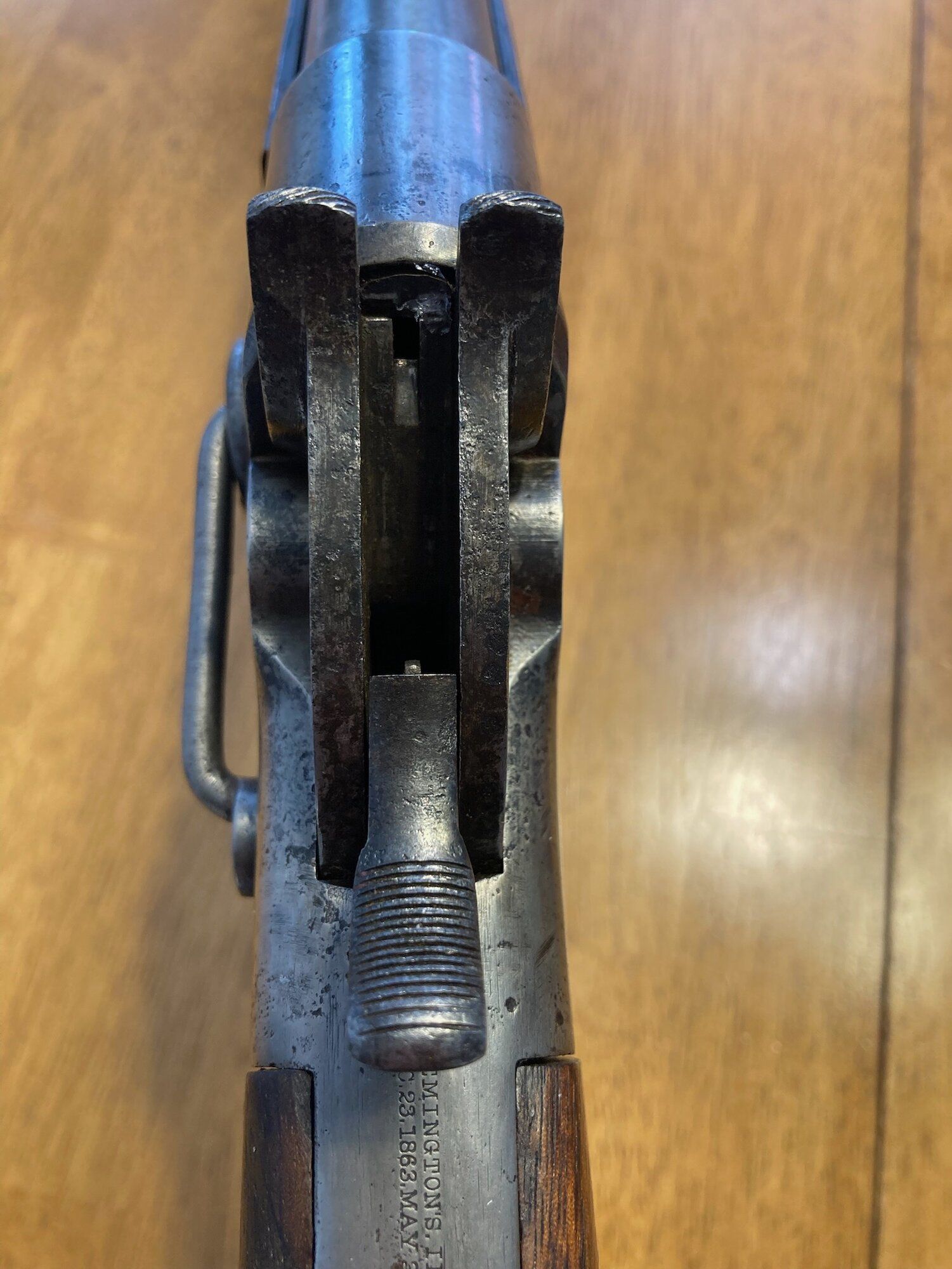
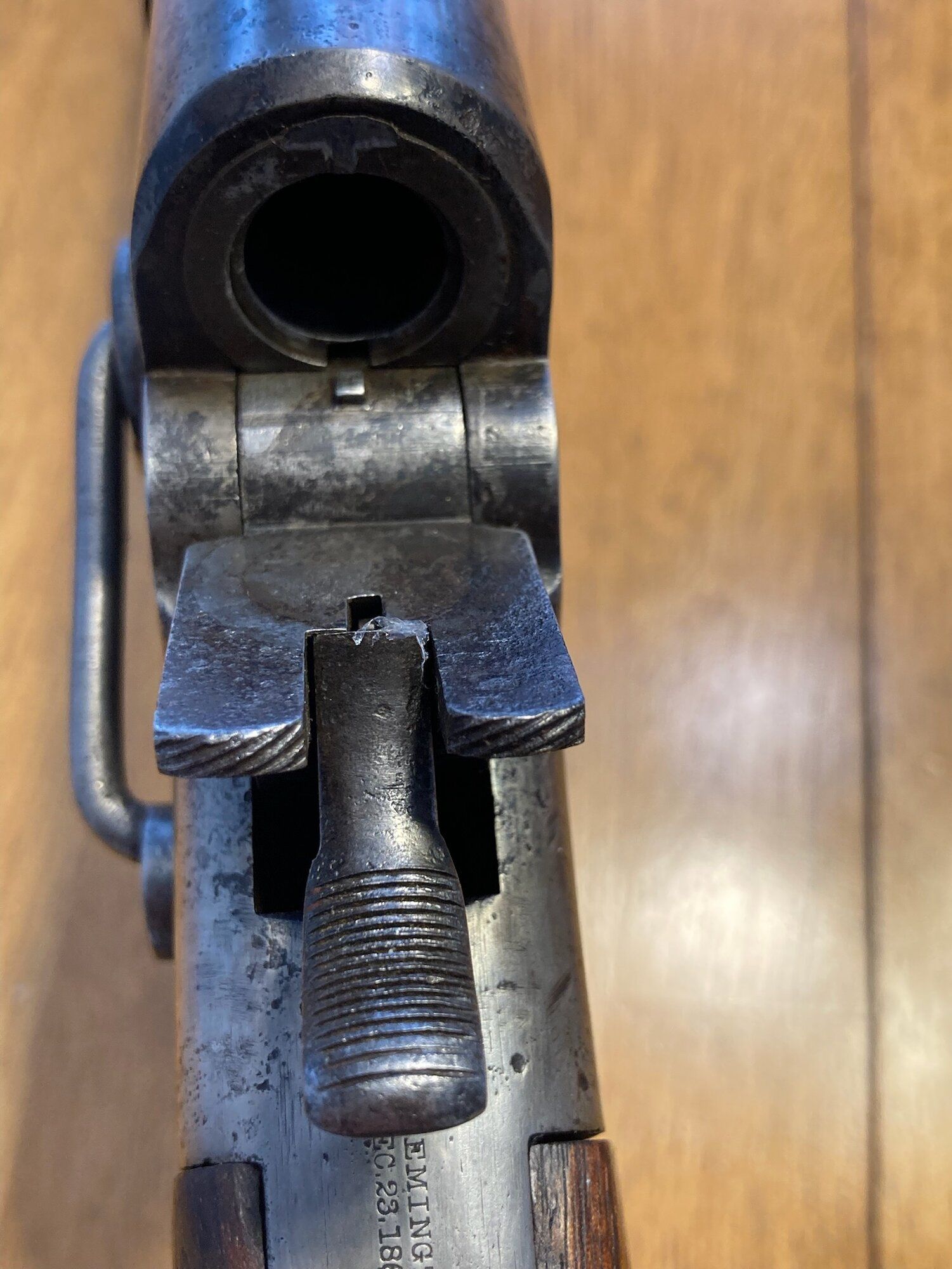
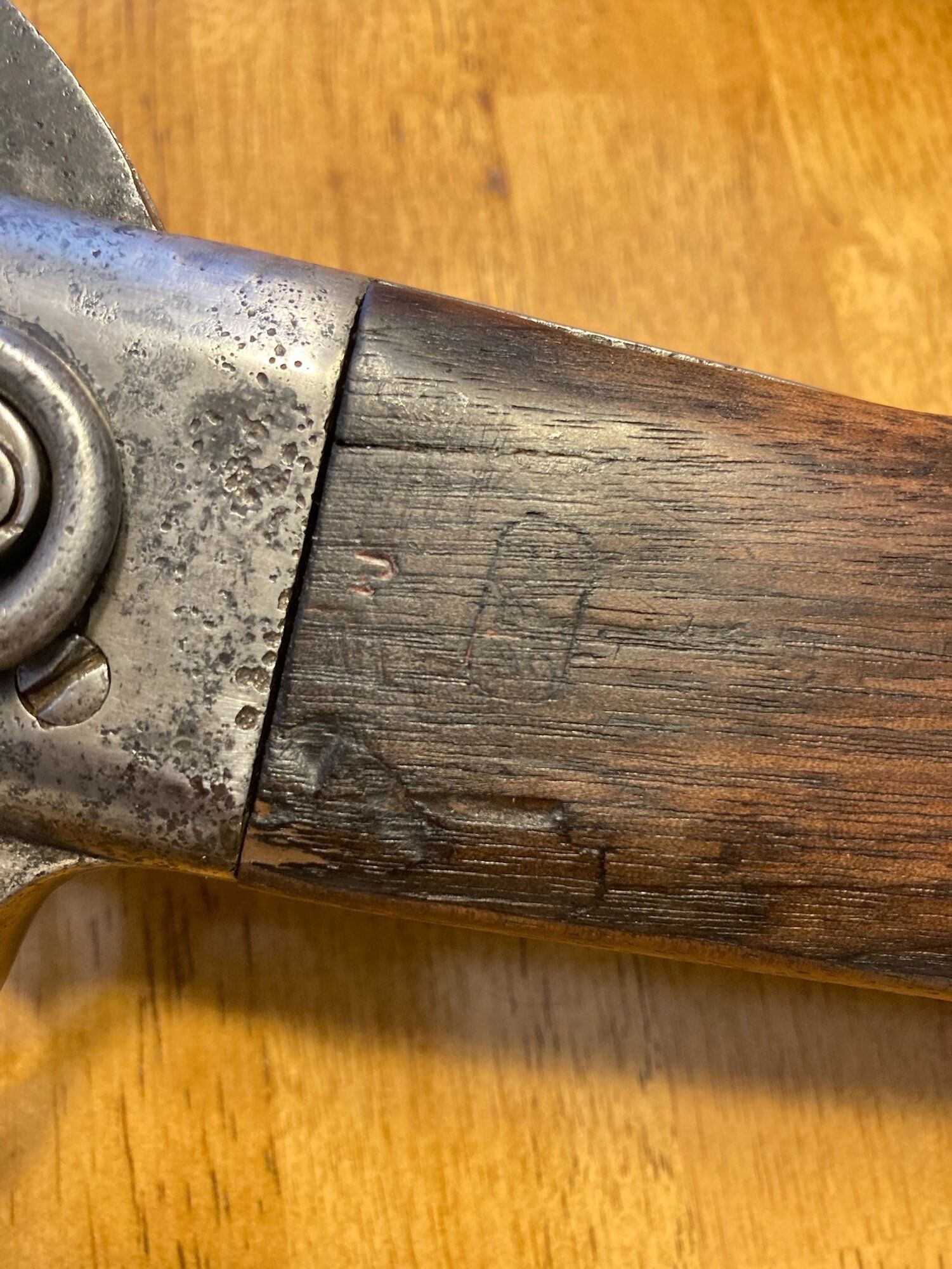
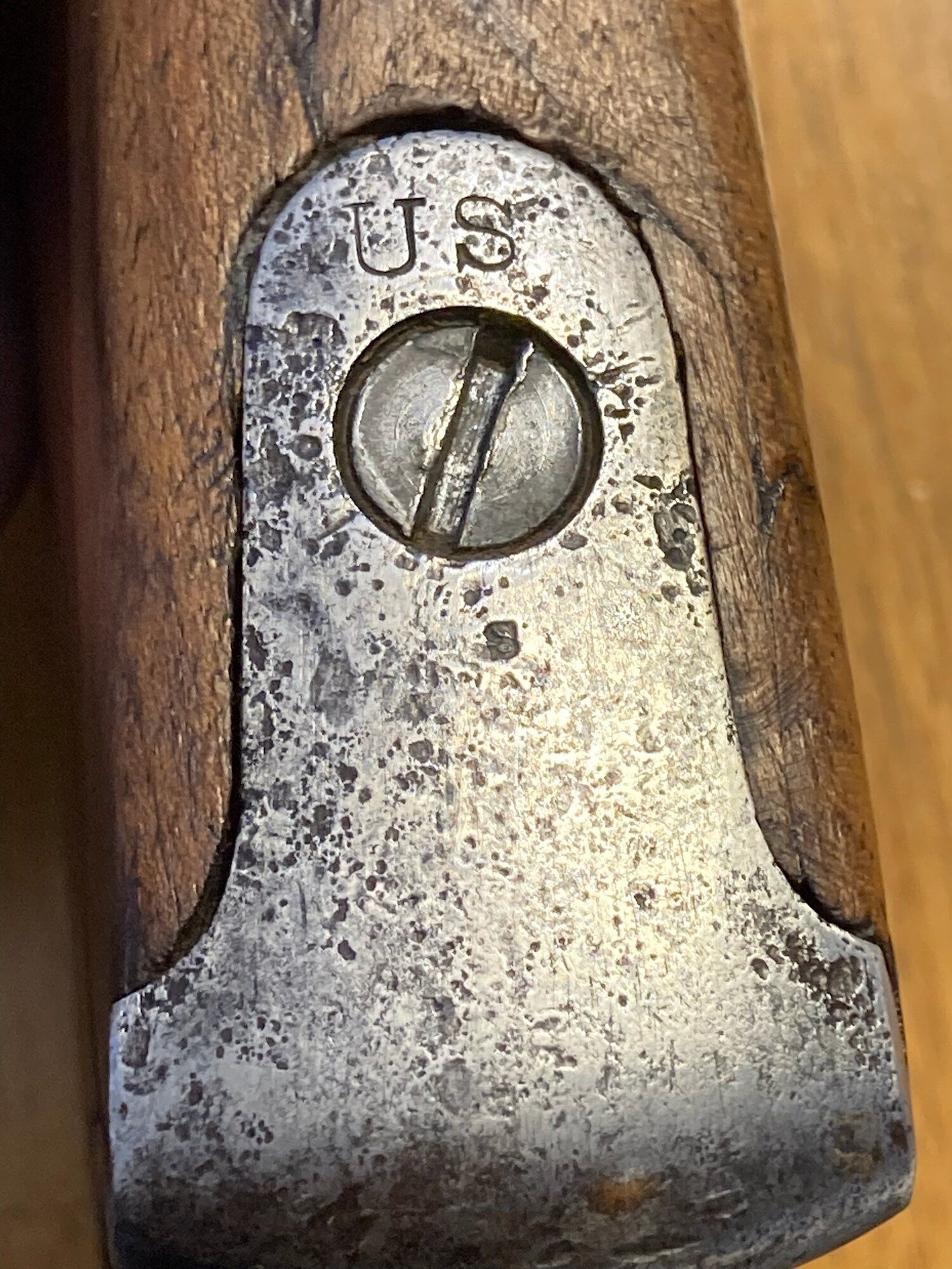
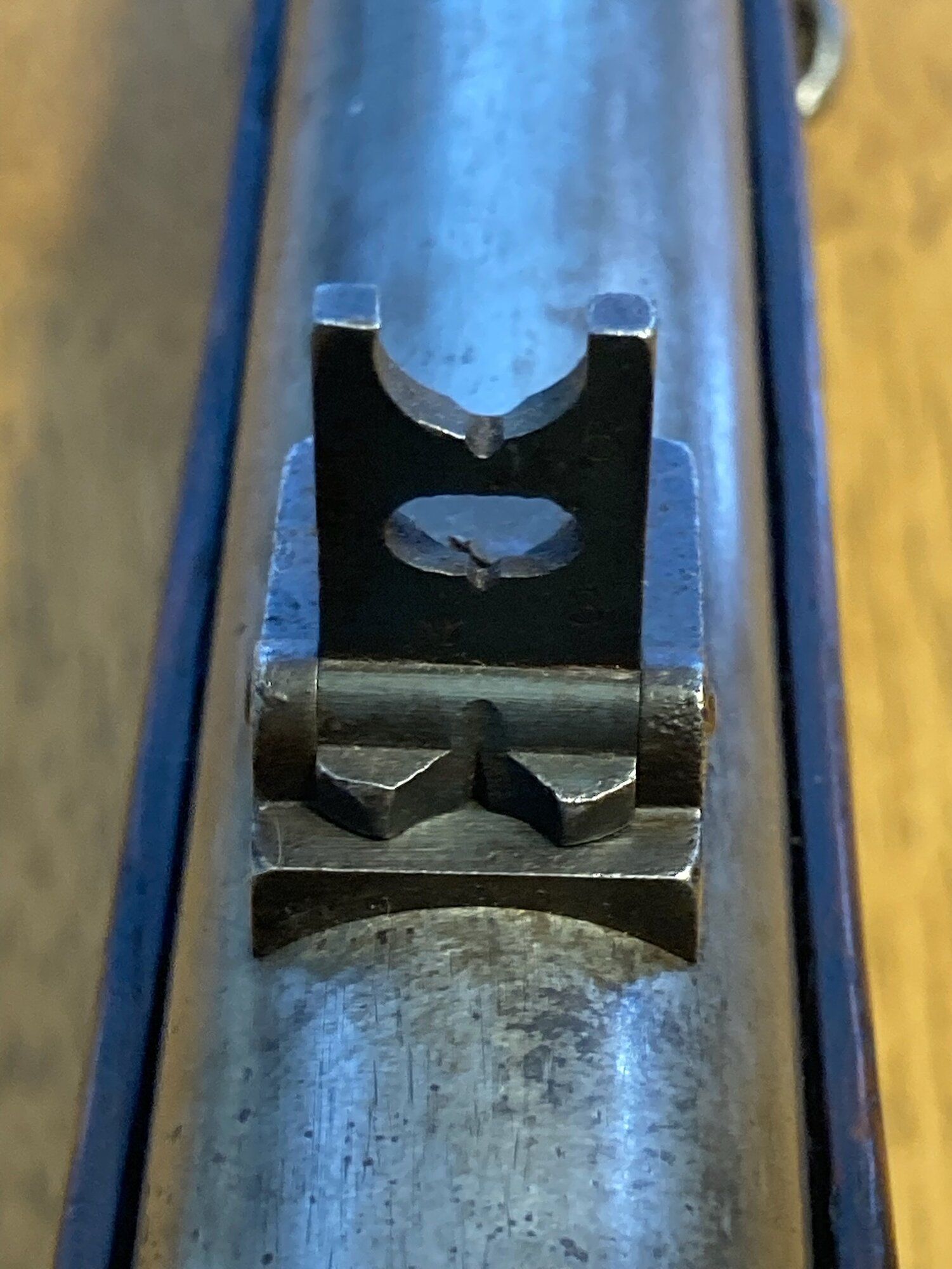
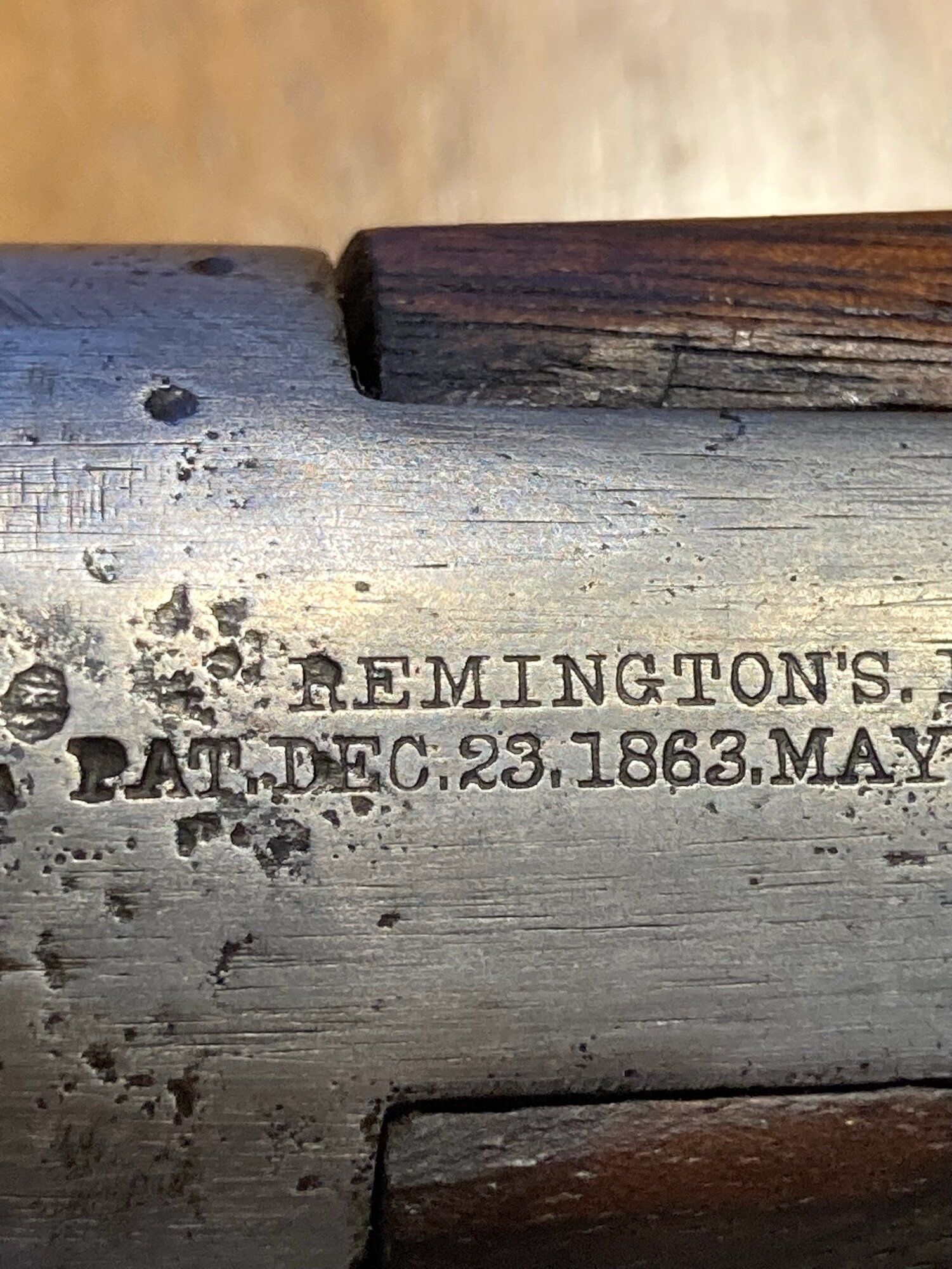
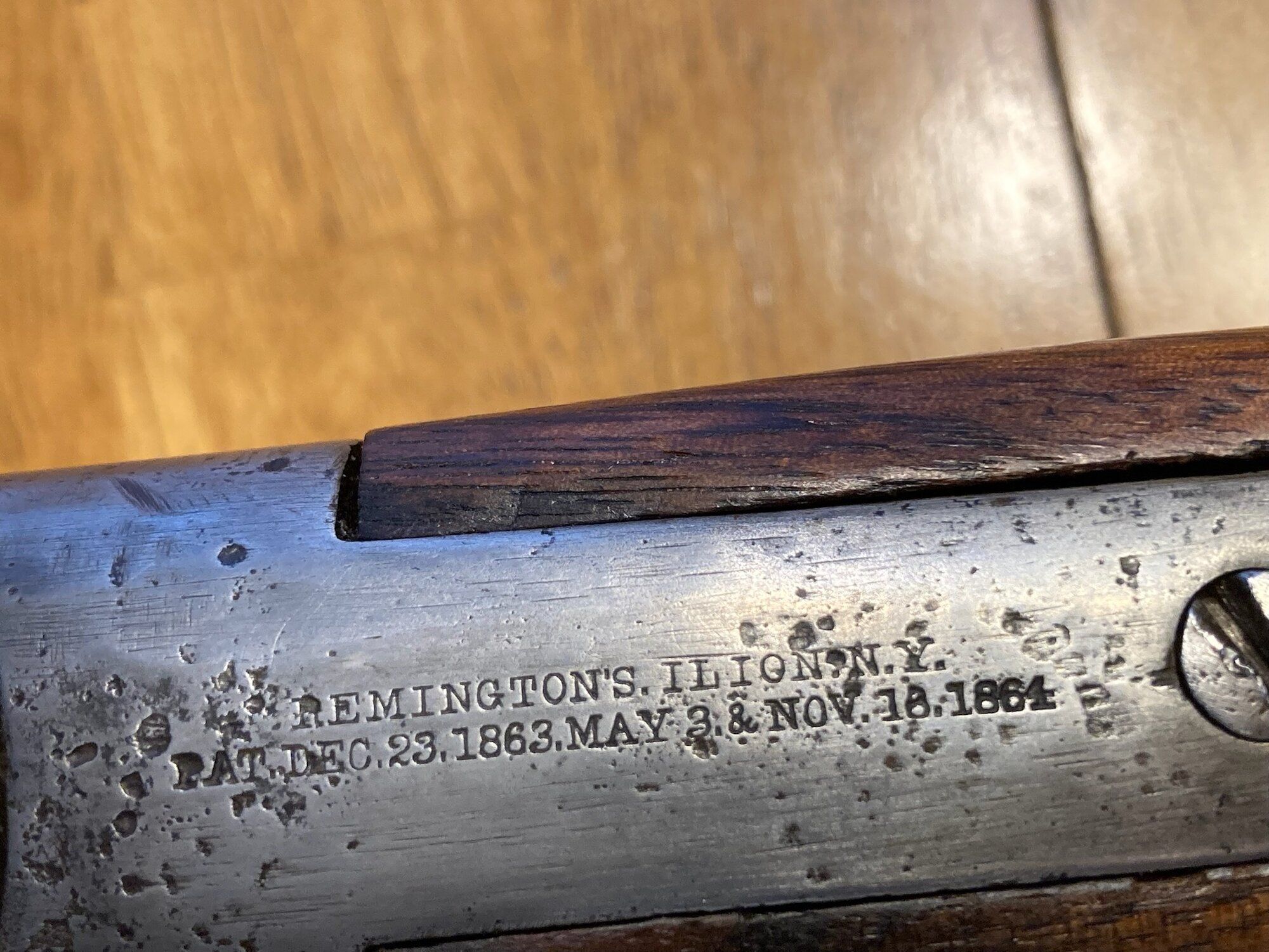
This is my well-used Remington second pattern "Split Breech" .44 cal Carbine. It's had heavy use in Europe with a stock that's been rebuilt in several spots, but at least a cartouche is still faintly visible. The split breech carbine was the last pattern of military carbine to be delivered to the US government during the American Civil War and the direct predecessor of what would become the rolling block, the most widely used single-shot, breech loading, military rifle action of the 19th century.
The development of the split breech action is attributed to Remington's Joseph Rider, who was responsible for the myriad of Remington-Rider firearms designs. His design was quite similar to a design by Leonard Geiger, who never followed through and produced a single gun. Geiger had patented some of his concept but relinquished his patent rights to business partner Charles Alger who also failed to follow through with the gun production. In the meantime, Remington engineer Joseph Rider came up with a similar idea, and being slightly different, was able to obtain a patent on behalf of Remington, who thought it had potential as a military weapon.
After realizing the patent crossover and potential legal issues, Remington paid royalties to Geiger and Alger, locking in the ability to move forward with the "rolling block" action design. Since the US Ordnance Department was interested in reviewing different carbine designs to support the war effort, Remington took a prototype to Washington in 1864 for demonstration to the Ordnance Department. While there, Remington officials met Samuel Norris (formerly of Norris & Clements), who was eager to make a deal and agreed to act as an agent for Remington. Assuring Remington that he could deal with the contracting and production, he agreed to accept Remington royalties while dealing with all the aspects involving contracting and production, a win-win deal for both.
Norris managed to arrange a contract for 1,000 first pattern small-frame carbines in .44 rimfire, and approached Savage firearms manufacturing to produce the firearm. However, Savage was unwilling to produce such a small number and wanted at least 10,000 guns ordered. Despite only having a contract for 1,000 arms from the government, Norris took the risk and made the deal, believing enough in the gun that if the government didn't want them all, he could sell them to someone. By Jan, 1865, however, the government upped the contract to 5,000 of the small-framed split breech carbines (Type 1), and since they had so much 56-50 Spencer ammunition in stock for Spencer arms, the Government offered an additional contract to Remington and Norris to manufacture an additional 15,000 larger frame, split breech carbines (Type 2, or second pattern) in the US government .50 metallic cartridge (aka 56-50 Spencer).
The pattern designs of the smaller frame and larger frame carbines were similar, although the first pattern is slightly smaller, since the 50 cal gun had to be dimensionally larger to fit the newer cartridge. Thus, a grand total of 20,000 guns were manufactured between the two, but the carbines arrived to late to have been issued for the war. The majority of the guns spent the next 5 years in storage in US arsenals, with about 1,400 being issued to various state militias and seeing some post-Civil War use. In 1870, with the coming of the Franco-Prussian War, Remington managed to buy back roughly 3,600 of the 5,000 Type 1 carbines, and sell them to France for use in that conflict, with the 56-50 models seeing heavy use in the French wars. The balance of the carbines were sold as surplus over the ensuing years, for significantly less than the $17.00 per carbine that the Ordnance Department initially paid for them.
The1,400 issued to state militias probably saw post-Civil War service, and both Types were classified as US Martial property firearms, despite the fact of arriving too late for the war. Not only were they the first type of military rolling block to be manufactured and see service, but they were also the grandfather of all subsequent rolling block designs.



The development of the split breech action is attributed to Remington's Joseph Rider, who was responsible for the myriad of Remington-Rider firearms designs. His design was quite similar to a design by Leonard Geiger, who never followed through and produced a single gun. Geiger had patented some of his concept but relinquished his patent rights to business partner Charles Alger who also failed to follow through with the gun production. In the meantime, Remington engineer Joseph Rider came up with a similar idea, and being slightly different, was able to obtain a patent on behalf of Remington, who thought it had potential as a military weapon.
After realizing the patent crossover and potential legal issues, Remington paid royalties to Geiger and Alger, locking in the ability to move forward with the "rolling block" action design. Since the US Ordnance Department was interested in reviewing different carbine designs to support the war effort, Remington took a prototype to Washington in 1864 for demonstration to the Ordnance Department. While there, Remington officials met Samuel Norris (formerly of Norris & Clements), who was eager to make a deal and agreed to act as an agent for Remington. Assuring Remington that he could deal with the contracting and production, he agreed to accept Remington royalties while dealing with all the aspects involving contracting and production, a win-win deal for both.
Norris managed to arrange a contract for 1,000 first pattern small-frame carbines in .44 rimfire, and approached Savage firearms manufacturing to produce the firearm. However, Savage was unwilling to produce such a small number and wanted at least 10,000 guns ordered. Despite only having a contract for 1,000 arms from the government, Norris took the risk and made the deal, believing enough in the gun that if the government didn't want them all, he could sell them to someone. By Jan, 1865, however, the government upped the contract to 5,000 of the small-framed split breech carbines (Type 1), and since they had so much 56-50 Spencer ammunition in stock for Spencer arms, the Government offered an additional contract to Remington and Norris to manufacture an additional 15,000 larger frame, split breech carbines (Type 2, or second pattern) in the US government .50 metallic cartridge (aka 56-50 Spencer).
The pattern designs of the smaller frame and larger frame carbines were similar, although the first pattern is slightly smaller, since the 50 cal gun had to be dimensionally larger to fit the newer cartridge. Thus, a grand total of 20,000 guns were manufactured between the two, but the carbines arrived to late to have been issued for the war. The majority of the guns spent the next 5 years in storage in US arsenals, with about 1,400 being issued to various state militias and seeing some post-Civil War use. In 1870, with the coming of the Franco-Prussian War, Remington managed to buy back roughly 3,600 of the 5,000 Type 1 carbines, and sell them to France for use in that conflict, with the 56-50 models seeing heavy use in the French wars. The balance of the carbines were sold as surplus over the ensuing years, for significantly less than the $17.00 per carbine that the Ordnance Department initially paid for them.
The1,400 issued to state militias probably saw post-Civil War service, and both Types were classified as US Martial property firearms, despite the fact of arriving too late for the war. Not only were they the first type of military rolling block to be manufactured and see service, but they were also the grandfather of all subsequent rolling block designs.


 Bringing the