The 12-pounder Whitworth Breechloading Rifle, manufactured in England, was invented by Sir Joseph Whitworth, and imported into North America during the Civil War. It was a very rare gun during the war, but was an interesting precursor to modern artillery in that it was loaded from the breech and had exceptional accuracy over an enormous range. An engineering magazine wrote in 1864 that, "At 1600 yards the Whitworth gun fired 10 shots with a lateral deviation of only 5 inches." This degree of accuracy made them effective in counter-battery fire, used almost as the equivalent of a sharpshooter's rifle, and also for firing over bodies of water. They were not popular as anti-infantry weapons.
ARTILLERY PROFILE
FOR FURTHER READING

 www.gettysburgdaily.com

Whitworth gun, after being struck by a car on the battlefield.
ARTILLERY PROFILE
- In Service With:
- United States Army (6)
- United States Navy (2 for experimental purposes)
- Confederate States Army (4)
- Type: Breechloading Rifled Gun
- Purpose: Long Range Harassing Fire & Counter Battery Support
- Invented By: Sir Joseph Whitworth
- Patent: English Patent #2410 in 1855
- Years of Manufacture: 1861-1865
- Tube Composition: Steel
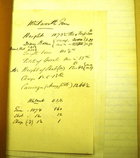
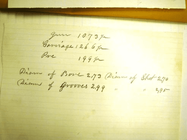
- Bore Diameter: Lands to Lands - 2.73 inches (Grove to Grove is 2.99)
- Rarity: Imported; Very Rare
- Rate of Fire: 1 to 2 rounds per minute
- Rifling Type: hexagonal (6 sided) one turn in 55 inches, right hand twist
- Standard Powder Charge: 1.75 lbs. Cannon Grade Black Powder
- Muzzle Velocity: 1,500 ft/sec.
- Effective Range (at 5°): 2,800 yards (1.59 miles)
- Max Range (at 35°): 10,000 yards (5.68 miles)
- Projectiles: 12 lb. 11 ounce cast iron hexagonal "bolt" (sold shot), Also bespoke hexagonal shells.
- Tube Length: 104 inches
- Tube Weight: 1,092 lbs.
- Carriage Type:
- Designed for use with a British Field Carriage
- Substitute with M1841 No. 1 Field Carriage (900 lbs.), 57" wheels
- Total Weight (Gun & Carriage): with No. 1 Field Carriage, 1,992 lbs.
- Horses Required to Pull: 6
- No. of Crew to Serve: 8
- No. in North America from 1861 to 1865: About 12 (US & CS)
- No. of Original Pieces You Can See in the Field Today: ??
- Cost in 1860: £300 in England (or $1,487.00 U.S. at 0.2017 exchange rate in 1860)
- Casting Foundry: Whitworth Ordnance Company, Manchester, England
- Variants: A 6-pdr. breechloader and a 12-pdr. muzzleloader variant was also produced.
- Special Notes:
The 2.75 inch bore of the Whitworth was hexagonal in cross-section, and the projectile a long bolt that twisted to conform to the rifling. It is said that these bolts made a very eerie sound when fired, which could be distinguished from other projectiles.
An article from the August 10, 1861 edition of Harper's Weekly described the gun:
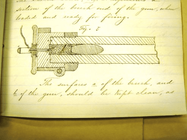
The Whitworth rifled cannon obtains its remarkable power and accuracy by the adoption of a polygonal spiral bore of uniform pitch, more rapid than could be obtained by grooves. The 12-pounder-one of which was a few days since exhibited in this city—with a bore of 3.2 inches, has one turn in sixty inches; it is eight feet long and breech-loading. The projectile is oblong, made of cast iron, and formed to fit the grooves of the barrel. The breech of the gun is covered with a cap which screws on, and on being removed swings to one side upon a hinge ; the projectile is then inserted into the open breech, and followed by a tin cartridge-case containing the powder, and capped by a cake of wax or other lubricating composition; the breech-cap is then swung to and screwed on by its handles, a fuse inserted into the vent, and the gun is discharged. The lubricating matter being carried out with the ball effectually cleanses the gun, and the deposit is afterward withdrawn with the cartridge-case. As there is no exhalation of gases from the breech-cap, one of the worst features of breech-loading guns is avoided. The range of this gun is said to be greater than the Armstrong gun, and its accuracy more positive. Guns of the size herein described cost £300 in England.
Despite the great range and accuracy of this rifle, the Whitworth was difficult to keep operational. First, ammunition was unique to the rifle, and also expensive and difficult to import. Second, the breechloading mechanism was prone to jam, forcing many guns to be loaded as a conventional muzzle-loader of the era.
The handle at the breech of the Whitworth with the heavy balls on the end act as a hand operated revolving "hammer action" that a cannoneer can use to deliver mechanically advantaged "strikes" to the breech cap, used to open a jammed breech cap, or screw it tightly closed. It's basically an integrated manual impact wrench, and the British call this cannon bit a "tappet".
Although the Whitworths are generally associated with the C.S.A.--most were run through the Union blockade--there was one 6 gun battery in Federal service in 1861. This battery only saw field service during the Peninsula Campaign in 1862, and for the remainder of the War was part of the defenses around Washington, DC.
Whitworth also exported a .451 caliber sharpshooter infantry rifle manufactured with the same hexagonal barrel and bullet concept. A small number were successfully delivered and used by Confederate States troops.
FOR FURTHER READING
- Civil War Artillery at Gettysburg, Cole, Philip M, Da Capo Press, New York, N.Y., 2002.
- Field Artillery Weapons of the Civil War, by Olmstead, Hazlett, & Parks, Univ of Delaware Press, 1988.
- Artillery and Ammunition of the Civil War, by Warren Ripley, Battery Press, 1984.
Gettysburg Artillery Part 7 With Licensed Battlefield Guide George Newton | Gettysburg Daily
Gettysburg Licensed Battlefield Guide George Newton is standing by a British-made Whitworth on Oak Hill.[...]
www.gettysburgdaily.com
Whitworth gun, after being struck by a car on the battlefield.
Last edited:




 Bringing the