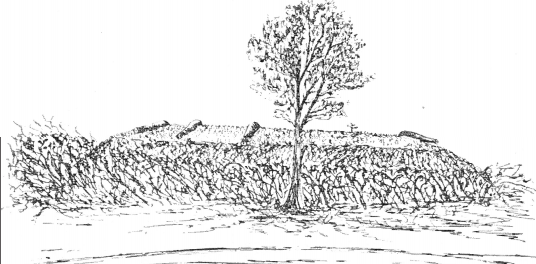
Deep Thoughts, with Jubal Early

I don't want to take this way, way out into left field, not too far anyways, but you have to have some sort of good characteristics to father four kids, and claim them in that era. Even now, plenty of people don't step up.

Having not seen portrait of Lee and Early like you Lee and Jackson, I never assumed he was privy to things first hand like that. That being said, Lee from what I have read became rather reserved in his middle age, not that was ever swearing at people and yelling at subordinate officer after blaming them for his mistakes. Yo know that even before you get to know Lee reading about him. And I have read a lot. And I have come to an admittedly unscholarly, and unqualified armchair opinion; I think Lee enjoyed certain people who got to do the things that he did not or could not bring himself to do.

Getting Ler angry at you, one had to have some sort of infraction. And his anger is almost legendary. With some Lee would listen to advice, though he might not take it. If their advice stunk, he could smell it. But he had blind spots. That is a big operation to be the brain of too. I bet sometimes he wanted to yell at someone, even if it wasn't their fault.

I know of occasions where he said a few off color remarks, laughed at few jokes that might have been uncouth. To spite the standard that he heald himself to, and was expecting of himself and others, Lee was human.l.

At arm's length is still close enough to lean over and tap on the shoulder. Aggression meant something to Lee, as did loyalty and carrying out a task.
Thought Lee's strategic aim was for Early to threaten (not unrealistically capture) Washington, in order to take the heat off his Richmond-Petersburg lines, by compelling Grant to divert significant numbers away to protect the national capital. (Interestingly, Lee maintained this aim until Sep., '64). But Early was less than effective in accomplishing Lee's aim, when he merely tentatively and temporarily demonstrated against the fort defenses on the Washington outskirts. (When Early withdrew, the opportunity to again menace Washington was lost, as Grant sent divisions to reinforce the city).

Early's campaign in the Valley also proved to be costly. By the end of this campaign his command had suffered large irreplaceable losses, which included the deaths of highly capable subordinates like Rodes, Ramseur and Sandie Pendleton.

In summary. Thought Early's command performances at key times (e.g. Fort Stevens, Cedar Creek) during the campaign could be labelled as tentative or indecisive. In retrospect, believe he was probably not the appropriate commander to appoint to prosecute Lee's aim at this stage of the war. Also believe his less than satisfactory command performances in this campaign probably tarnished his overall reputation for being considered as an able high commander, at least at corps level.
You made me think of the timing of Early move in Washington. I've heard that he was late jumping off.but if threatening the capital was the goal, TA her than taking it, then why did the timing matter. I mean if to draw troops off. Was it a matter of how much manpower they could draw away?

Without a plan to take it exactly how long was Lee thinking he could drag people away for? Or am I missing.
 
He had four children out of wedlock and claimed them with his name. His girlfriend went on to marry someone else eventually and have another child, so a half-sibling to these four.

Lee put up (and that's the operative words) with him because at the lower levels he was a good fighter and leader, but he was not in on Lee's war counsels or anything like that. Morally, he was everything Lee wasn't and Lee wasn't about to invite him home to see the girls. Lee kept him at arm's length.
I think with four kids in that era out of wedlock, Lee might have been doing him a favor by sending him home to see the girls, arm's length or not.

Also I think Lee kind of liked a polar opposite to him. Early was what Lee wasn't. Obviously profane, vain, crabby, but with enough loyalty, ambition and aggression to be a a subordinate officer with the capability of doing things, if not always being able to do them.

Except for Longstreet I can't think of anyone with a nickname from Lee.
 
Without a plan to take it exactly how long was Lee thinking he could drag people away for? Or am I missing.
Lee was typically gambling by dispatching Early's small force at the time. (Early was also charged with procuring supplies from the Northern countryside for Lee's army). By authorizing this movement thought Lee was buying time and hoping for somewhat of a miracle.

Lee wrote the following to Davis on Jul. 23, '64, about Early's actions north:-
...' I am aware of the difficulties and of the enemy's facilities for cutting off a small force, and our inability to apply a large one. Still I hope something can be obtained. I have no idea that Grant will evacuate his position unless forced. It is one from which he can attack us at three points, as he may select, and our success will depend upon our early information and celerity of movement, as we have not troops sufficient to guard all points.'...
('OR': Vol. 37, Part 2, @ p. 599)

But Lee's gamble didn't pay off. In undertaking this process, Early not only lost lots of men, including some good subordinates, he also wrecked his own career. There was perhaps also an unintended consequence of Early's Campaign northwards. Early's movement precipitated Grant resolving to deploy Sheridan's unified cavalry into the Shenandoah to destroy this fertile area that served as a granary for Lee's army.

As it turned out, Early's ineffectual movement north probably hastened the end of the war.
 
Lee was typically gambling by dispatching Early's small force at the time. (Early was also charged with procuring supplies from the Northern countryside for Lee's army). By authorizing this movement thought Lee was buying time and hoping for somewhat of a miracle.

Lee wrote the following to Davis on Jul. 23, '64, about Early's actions north:-
...' I am aware of the difficulties and of the enemy's facilities for cutting off a small force, and our inability to apply a large one. Still I hope something can be obtained. I have no idea that Grant will evacuate his position unless forced. It is one from which he can attack us at three points, as he may select, and our success will depend upon our early information and celerity of movement, as we have not troops sufficient to guard all points.'...
('OR': Vol. 37, Part 2, @ p. 599)

But Lee's gamble didn't pay off. In undertaking this process, Early not only lost lots of men, including some good subordinates, he also wrecked his own career. There was perhaps also an unintended consequence of Early's Campaign northwards. Early's movement precipitated Grant resolving to deploy Sheridan's unified cavalry into the Shenandoah to destroy this fertile area that served as a granary for Lee's army.

As it turned out, Early's ineffectual movement north probably hastened the end of the war.
From what you wrote it was playing odds. But at that point the best Lee could do was stal for time until the smart politicians in Richmond decided to get up and go. I think Davis said something like "Relieved of the necessities of guarding cities...: which probably wouldn't have been a bad thing to consider before your troops got stuck in a hole over the winter with little food, but many artillery round coming at them.

Why the government didn't have it in their minds to move after Cold Harbor, or before, I don't know. Chances are with an opposing force who's commanding general didn't mind fighting a two day battle at the Wilderness a contingency plan might have been a good idea.

But I'm all sorts of off topic. It's far to late, or early (ha!).git me to be writing on here.
 
You made me think of the timing of Early move in Washington. I've heard that he was late jumping off.but if threatening the capital was the goal, TA her than taking it, then why did the timing matter. I mean if to draw troops off. Was it a matter of how much manpower they could draw away?

Without a plan to take it exactly how long was Lee thinking he could drag people away for? Or am I missing.
I tend to think the idea he was late was more a play on his name, Early was late....ha ha ha... But the argument was that the 6th Corps arrived a day after Early did, so if Early had arrived a day or two earlier he would have had only the DC garrison to deal with. But even if only the garrison, I dont see Early taking DC given both how tentative he was before the forts of DC, but also the fact that the garrison was not insubstantial. But once the 6th Corps arrived it was game over.
 
It was a matter of time after the Federals invested Petersburg. Can't agree with this assessment
That's fine you disagree, but care to share your assessment of why, other than "I disagree"? It seems you are arguing that Lee should have just surrendered once he was invested at Petersburg, but I doubt that is what you are thinking.

The fact is, you are somewhat right. Once Grant trapped Lee at Petersburg the script was written absent some kind of major change of course. Other than Early's feeble Valley Campaign, Lee stayed the course with the inevitable result. At this point in the war the cause was already all but lost so it was going to require a much larger game changer strategy than just a resort to the old tried and trued raid through the Valley.

That is why I think Early could have been put to much better use by sending him to Georgia and trying to take advantage of Sherman's exposed condition during his March to the Sea. Its perhaps too much to hope for a ACW version of Saratoga, but if Sherman could have been stalled for any considerable amount of time his situation could have become dire. And it was going to take a lot more troops than what were on hand to do that. And given that Grant did not even know where Sherman was during the March, I dont think he could have easily sent the 6th Corps to reinforce him nor if that would have been a smart thing to do anyway with an army with no supply line and already many mouths to feed.

Would it have worked? Who knows? But at least it was better than starving and dying in front of Petersburg until it was time to surrender.
 
Last edited:
That's fine you disagree, but care to share your assessment of why, other than "I disagree"? It seems you are arguing that Lee should have just surrendered once he was invested at Petersburg, but I doubt that is what you are thinking.

The fact is, you are somewhat right. Once Grant trapped Lee at Petersburg the script was written absent some kind of major change of course. Other than Early's feeble Valley Campaign, Lee stayed the course with the inevitable result. At this point in the war the cause was already all but lost so it was going to require a much larger game changer strategy than just a resort to the old tried and trued raid through the Valley. And given that Grant did not even know where Sherman was during the March, I dont think he could have easily sent the 6th Corps to reinforce him nor if that would have been a smart thing to do anyway with an army with no supply line and already many mouths to feed.

That is why I think Early could have been put to much better use by sending him to Georgia and trying to take advantage of Sherman's exposed condition during his March to the Sea. Its perhaps too much to hope for a ACW version of Saratoga, but if Sherman could have been stalled for any considerable amount of time his situation could have become dire. And it was going to take a lot more troops than what were on hand to do that.

Would it have worked? Who knows? But at least it was better than starving and dying in front of Petersburg until it was time to surrender.
Sending Early to Georgia makes a lot sense actually even if only temporarily.
 
Also I think Lee kind of liked a polar opposite to him. Early was what Lee wasn't. Obviously profane, vain, crabby, but with
No - that wasn't Lee at all. Lee didn't tolerate jokes or off color stories in his own mess. If they couldn't be told in front of ladies, he didn't want to hear them either and he made no bones about it either. His mess absolutely knew what Lee was and what he meant. He didn't socialize with Early or particularly liked "having a polar opposite." He knew he was a bad, old man and stated it. He didn't like him or necessarily dislike him, he used him as a military tool that was available to him. I'm sure he would have preferred him to have some morals but Lee was a realist and knew that wasn't going to happen either.

Early was good at the beginning with fighting and then became inconsistent and was never going to move up to higher levels.

Lee was a military man and an honest man. If you weren't doing what you should, you were out.

Early did not do a good job at Cedar Creek. His troops were exhausted but he let them pillage the Union camp and that gave Sheridan's boys time to turn that situation around. Early confided to someone that he made a mistake there and turned what could have been a victory into a defeat. And this is what it earned him:

Lee told Early to go home and wait, then relieved Early of his command on March 30, writing:

While my own confidence in your ability, zeal, and devotion to the cause is unimpaired, I have nevertheless felt that I could not oppose what seems to be the current of opinion, without injustice to your reputation and injury to the service. I therefore felt constrained to endeavor to find a commander who would be more likely to develop the strength and resources of the country, and inspire the soldiers with confidence. ... [Thank you] for the fidelity and energy with which you have always supported my efforts, and for the courage and devotion you have ever manifested in the service ...
— Robert E. Lee, letter to Early

That was the end of Early's Confederate career.
 
Early's soldiers were physically incapable of mounting a coupe de main upon arrival in front of the Washington defenses.

I have waited for somebody to cite this. The weather during Early's raid was the hottest on record. Streams ran dry. It was a replay of Bragg's advance across Kentucky with pastures of nothing but cracking dry stubble.

A raid, is of course, absolutely dependent on alacrity of movement. Strait's fiasco is a testament to that principle. Early understood that. After all he was commanding the remnant of Jackson's foot cavalry. As befitted his personality, like Jackson Early was indifferent to the suffering of his own men on the march.

Almost from the moment that Early's men formed columns of fours for the advance on Washington, men were falling out. All along the route of march, men left the ranks, unable to continue due to the heat & lack of water. The reduced number (unknowable) of men who reached the approach to the Washington defenses did so in a straggling, exhausted condition.
IMG_0117.jpeg


"The annual invasion of Maryland, which, next to the weather, supplies the 'sensation' of this week, does not excite any very disturbing apprehension for the safety of Baltimore and Washington."

Early skirmished with Union cavalry at Rockville, Maryland. From that point on, regular reports were forwarded to Washington. His arrival would be no surprise. In fact, VI Corps were already in transit.

"Determined to press his advantage, Early pushed on, arriving in front of Fort Stevens about noon on July 11. Here he noted that the fort seemed undermanned, but, impressed by the "very formidable character of the works," he did not order an immediate assault. Some of his men thought he had made a mistake. One wrote later, "a volley, a Rebel yell, and a vigorous charge would have given us Washington." But Early suspected that Union reinforcements were on the way, and he knew that his own men were tired from a long march on a hot, dry day. He wanted to make a careful reconnaissance, give his men a rest, and form up his strung-out units properly for the attack. As it turned out, he was probably wise to hesitate. At the very moment he reached Fort Stevens, steam ships carrying thousands of Grant's veterans were docking downtown, to the cheers of the residents. Had Early attacked at noon he might have found getting out of the city much harder than getting in."

Note where Fort Stevens is. Could Early have ordered a coupe de main upon Fort Stephens' works? Then what… make a dash toward the city center? Then what? Going toe to toe with fresh VI Corps combatants without any food, water or ammunition while forces close in from behind would not be something that even Hood would have attempted.

Link:

 
Last edited:
No - that wasn't Lee at all. Lee didn't tolerate jokes or off color stories in his own mess. If they couldn't be told in front of ladies, he didn't want to hear them either and he made no bones about it either. His mess absolutely knew what Lee was and what he meant. He didn't socialize with Early or particularly liked "having a polar opposite." He knew he was a bad, old man and stated it. He didn't like him or necessarily dislike him, he used him as a military tool that was available to him. I'm sure he would have preferred him to have some morals but Lee was a realist and knew that wasn't going to happen either.

Early was good at the beginning with fighting and then became inconsistent and was never going to move up to higher levels.

Lee was a military man and an honest man. If you weren't doing what you should, you were out.

Early did not do a good job at Cedar Creek. His troops were exhausted but he let them pillage the Union camp and that gave Sheridan's boys time to turn that situation around. Early confided to someone that he made a mistake there and turned what could have been a victory into a defeat. And this is what it earned him:

Lee told Early to go home and wait, then relieved Early of his command on March 30, writing:


— Robert E. Lee, letter to Early

That was the end of Early's Confederate career.

Early's fate could have been worse. General Lee's dislike of joking took on an extreme form in March 1865 General Order Number Eight was issued. It was to be read aloud by officers & repeated every month. In it joking about desertion was forbidden. Violators were subject to the death penalty.

IMG_3281.jpeg


Good thing Early had been exiled before then or we might not have very much to chat about.
 
Last edited:
Thought Lee's strategic aim was for Early to threaten (not unrealistically capture) Washington, in order to take the heat off his Richmond-Petersburg lines, by compelling Grant to divert significant numbers away to protect the national capital. (Interestingly, Lee maintained this aim until Sep., '64). But Early was less than effective in accomplishing Lee's aim, when he merely tentatively and temporarily demonstrated against the fort defenses on the Washington outskirts. (When Early withdrew, the opportunity to again menace Washington was lost, as Grant sent divisions to reinforce the city).
Exactly what General Lee wanted him to do.
Early's campaign in the Valley also proved to be costly. By the end of this campaign his command had suffered large irreplaceable losses, which included the deaths of highly capable subordinates like Rodes, Ramseur and Sandie Pendleton.
General Lee was drawing down his forces. Early ordered a raid on chambersgurg to further hold the Washington forces in place.
In summary. Thought Early's command performances at key times (e.g. Fort Stevens, Cedar Creek) during the campaign could be labelled as tentative or indecisive. In retrospect, believe he was probably not the appropriate commander to appoint to prosecute Lee's aim at this stage of the war. Also believe his less than satisfactory command performances in this campaign probably tarnished his overall reputation for being considered as an able high commander, at least at corps level.
You have to keep in mind General Early was losing and he knew it.
 
I don't want to take this way, way out into left field, not too far anyways, but you have to have some sort of good characteristics to father four kids, and claim them in that era. Even now, plenty of people don't step up.

Having not seen portrait of Lee and Early like you Lee and Jackson, I never assumed he was privy to things first hand like that. That being said, Lee from what I have read became rather reserved in his middle age, not that was ever swearing at people and yelling at subordinate officer after blaming them for his mistakes. Yo know that even before you get to know Lee reading about him. And I have read a lot. And I have come to an admittedly unscholarly, and unqualified armchair opinion; I think Lee enjoyed certain people who got to do the things that he did not or could not bring himself to do.

Getting Ler angry at you, one had to have some sort of infraction. And his anger is almost legendary. With some Lee would listen to advice, though he might not take it. If their advice stunk, he could smell it. But he had blind spots. That is a big operation to be the brain of too. I bet sometimes he wanted to yell at someone, even if it wasn't their fault.

I know of occasions where he said a few off color remarks, laughed at few jokes that might have been uncouth. To spite the standard that he heald himself to, and was expecting of himself and others, Lee was human.l.

At arm's length is still close enough to lean over and tap on the shoulder. Aggression meant something to Lee, as did loyalty and carrying out a task.

You made me think of the timing of Early move in Washington. I've heard that he was late jumping off.but if threatening the capital was the goal, TA her than taking it, then why did the timing matter. I mean if to draw troops off. Was it a matter of how much manpower they could draw away?

Without a plan to take it exactly how long was Lee thinking he could drag people away for? Or am I missing.

Reality check. Early began with 14,000 men. In 1864-65 Grant commanded (+/-) 1,000,000 men. Grant's response to Early's raid was to tell Sheridan to kill as many of them as possible; which he did.

Swatting flies comes to mind.
 
Last edited:
I think you will find that military historians cite Lee's diversion / loss of irreplaceable men & material as a major tactical error. The temporary diversion of the VI Corps had no tactical impact on the siege of Petersburg
Retrospectively, diverting force from the Petersburg front was a failure (although by the summer of 1864) whatever extra manpower Lee might muster was probably too little too late. Anyway, I'm not sure that Lee necessarily planned such a diversion but was more or less forced into sending Early to the Valley in order to hinder Hunter's rampage. Once that threat was neutralized, Lee could have made the decision to relocate Early to Petersburg but chose otherwise.
 
Retrospectively, diverting force from the Petersburg front was a failure (although by the summer of 1864) whatever extra manpower Lee might muster was probably too little too late. Anyway, I'm not sure that Lee necessarily planned such a diversion but was more or less forced into sending Early to the Valley in order to hinder Hunter's rampage. Once that threat was neutralized, Lee could have made the decision to relocate Early to Petersburg but chose otherwise.

I don't understand the point of random speculation on what Lee might have done. History is about what happened.

Who would have figured Lee for the kind of person who orders a person killed for telling a joke, but General Order Number Eight was not an empty threat.
 
Last edited:
That's fine you disagree, but care to share your assessment of why, other than "I disagree"? It seems you are arguing that Lee should have just surrendered once he was invested at Petersburg, but I doubt that is what you are thinking.

The fact is, you are somewhat right. Once Grant trapped Lee at Petersburg the script was written absent some kind of major change of course. Other than Early's feeble Valley Campaign, Lee stayed the course with the inevitable result. At this point in the war the cause was already all but lost so it was going to require a much larger game changer strategy than just a resort to the old tried and trued raid through the Valley.

That is why I think Early could have been put to much better use by sending him to Georgia and trying to take advantage of Sherman's exposed condition during his March to the Sea. Its perhaps too much to hope for a ACW version of Saratoga, but if Sherman could have been stalled for any considerable amount of time his situation could have become dire. And it was going to take a lot more troops than what were on hand to do that. And given that Grant did not even know where Sherman was during the March, I dont think he could have easily sent the 6th Corps to reinforce him nor if that would have been a smart thing to do anyway with an army with no supply line and already many mouths to feed.

Would it have worked? Who knows? But at least it was better than starving and dying in front of Petersburg until it was time to surrender.
Early would have made no difference in opposing Sherman. It was always going to more beneficial threatening Maryland/DC and protecting the agricultural production in the Valley.
 
Early would have made no difference in opposing Sherman. It was always going to more beneficial threatening Maryland/DC and protecting the agricultural production in the Valley.
Sherman was never tested their were some question marks over his mentality like how he would react to a major defeat , Fortunately for Sherman he got Johnston & Hood both predictable However Early had some of best division commanders in Lee's army with some of the best troops it certainly would have boosted Hoods morale seeing some familiar faces not to mention the 15k veteran troops question is does he do what he did historically or does he bring Sherman to battle?.

Good what if.
 

Learn About Us
About CivilWarTalk
Contact the Webmaster
Meet the Staff
Link to CivilWarTalk
Join Our Community
Register
Browse Forums
View Today's Discussions
Search the Forum
Get Help
FAQ
Student Guide
Forum Rules & Etiquette
Copyright / DMCA

     Contact Us CivilwarTalk on Facebook CivilWarTalk on YouTube CivilWarTalk on Twitter RSS Feed

Bringing the American Civil War and More to Life.
© 1999 - , CIVILWARTALK, LLC - Site Version 10.0

SlaveryTalk.com - SecessionTalk.com - CivilWarTalk.com - ReconstructionTalk.com
Back
Top