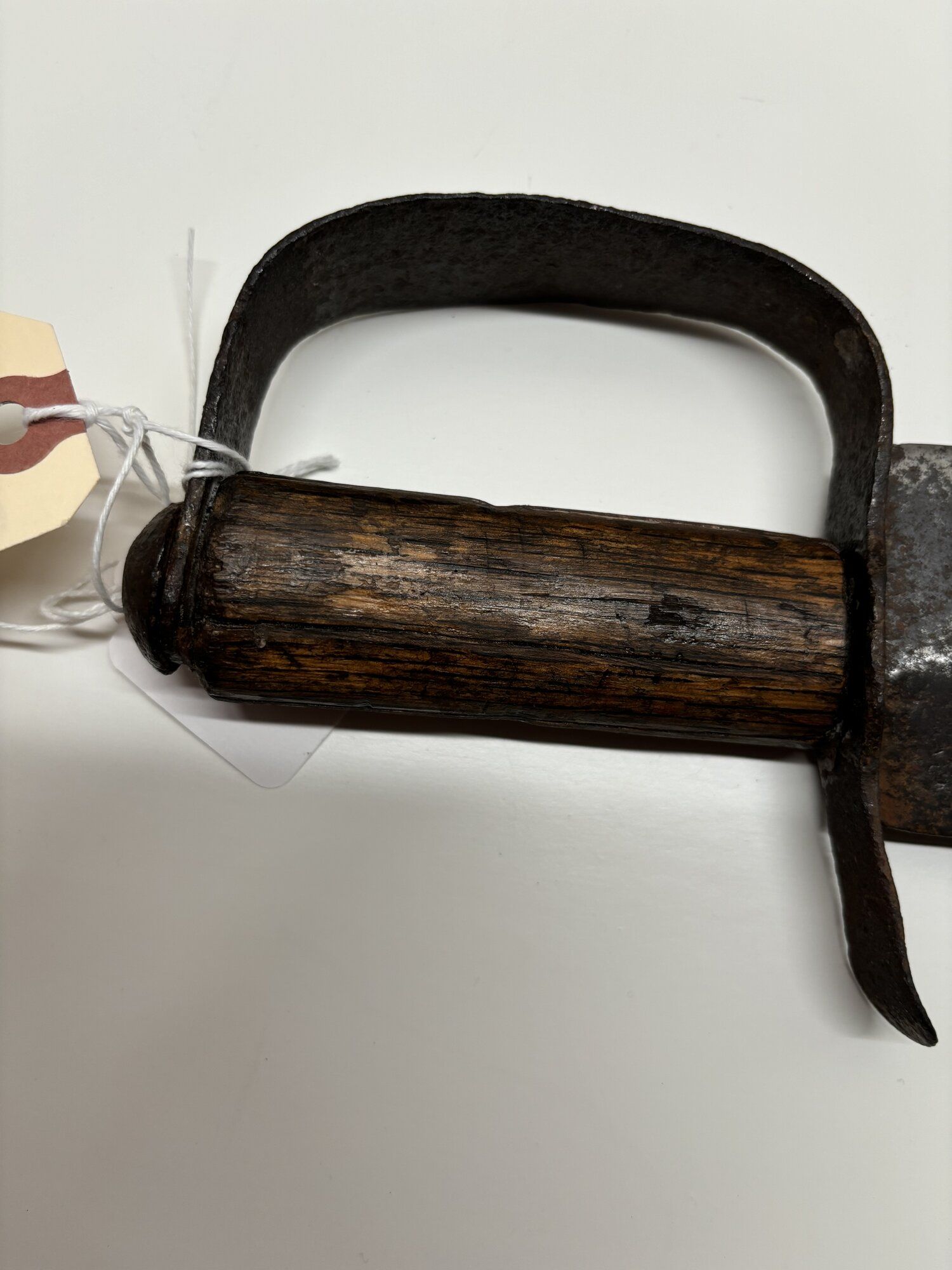
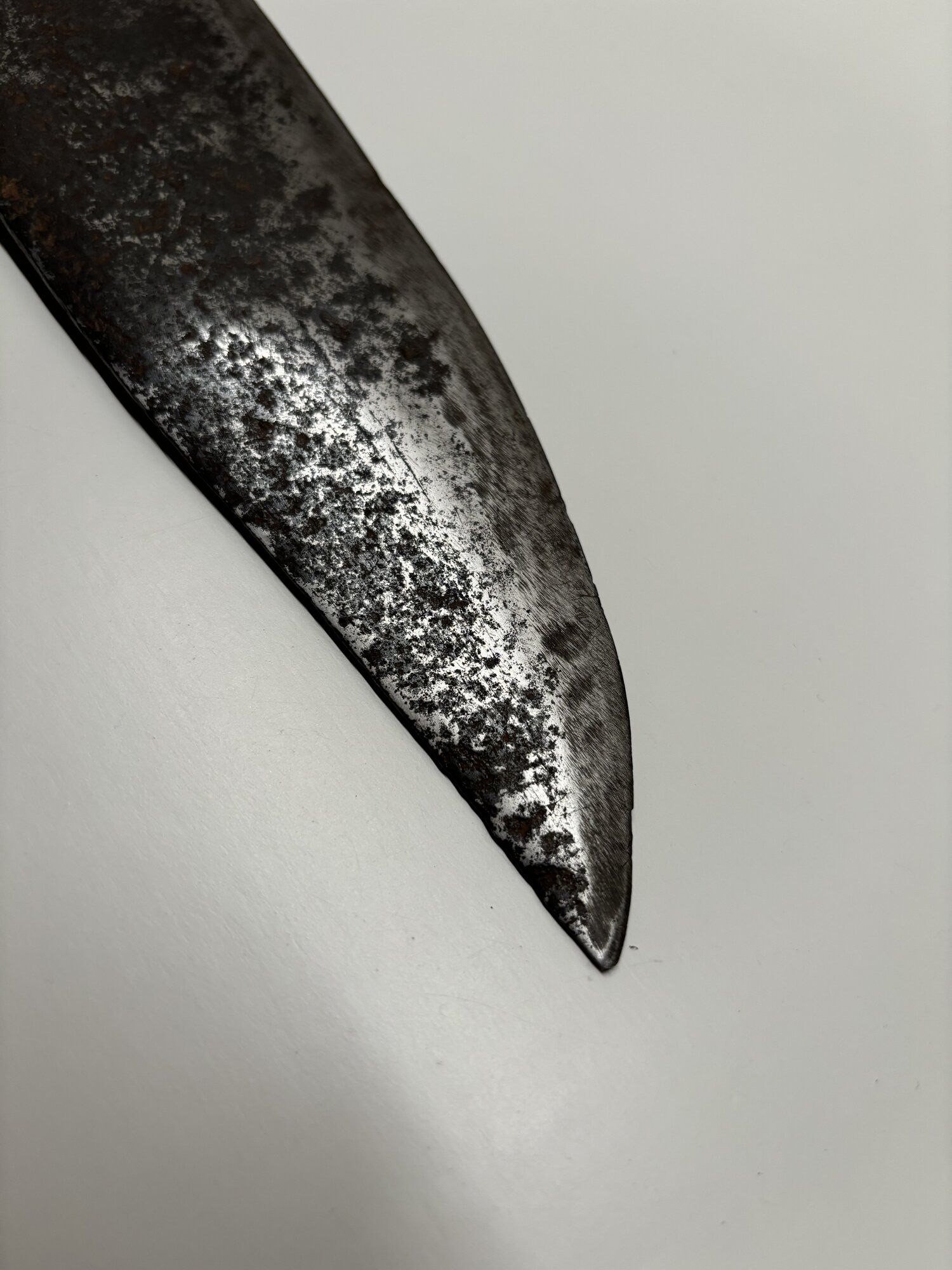
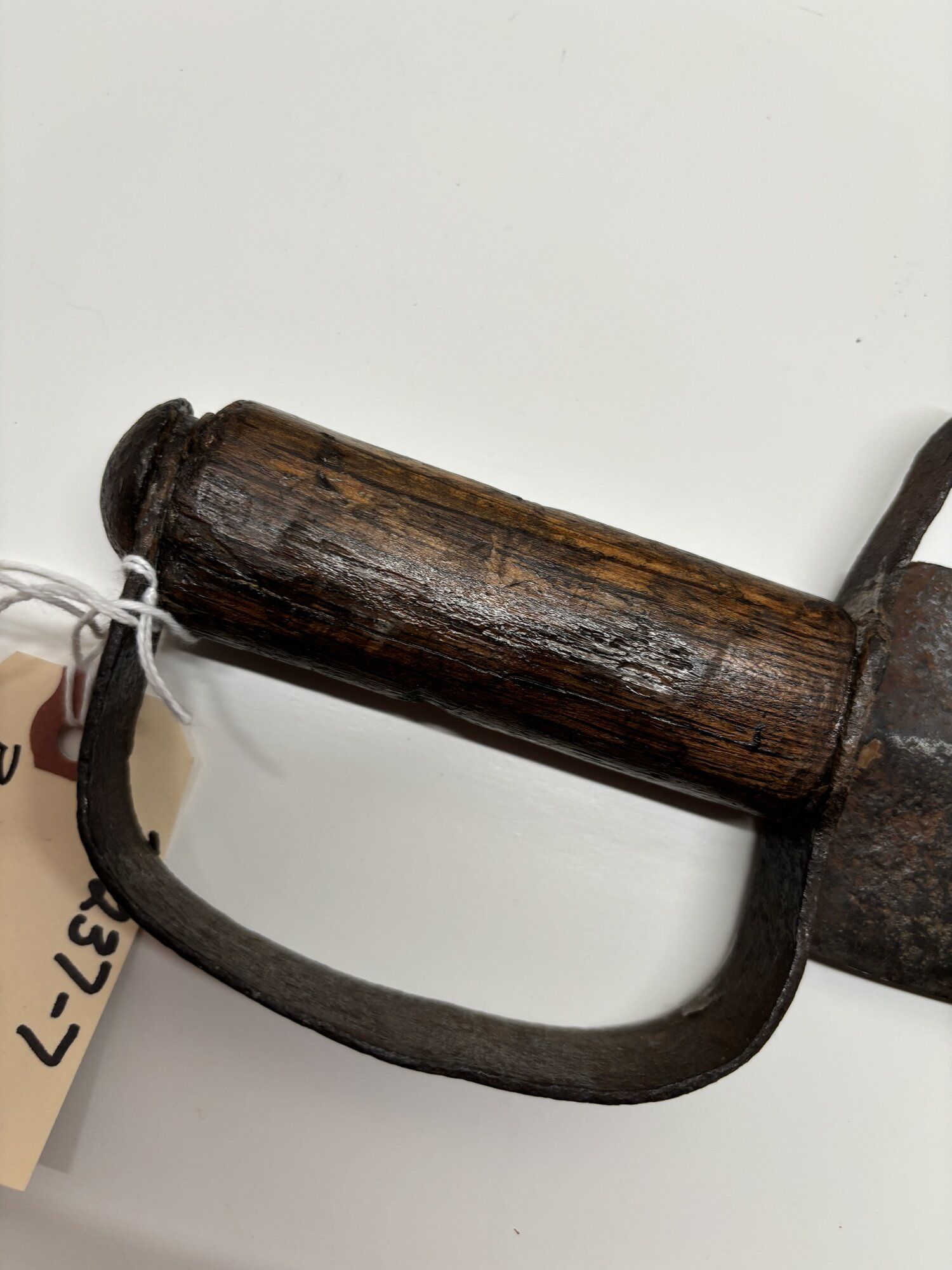
Thoughts on this D Guard

Jimfox85

Cadet
Joined
May 23, 2025
Hello All,
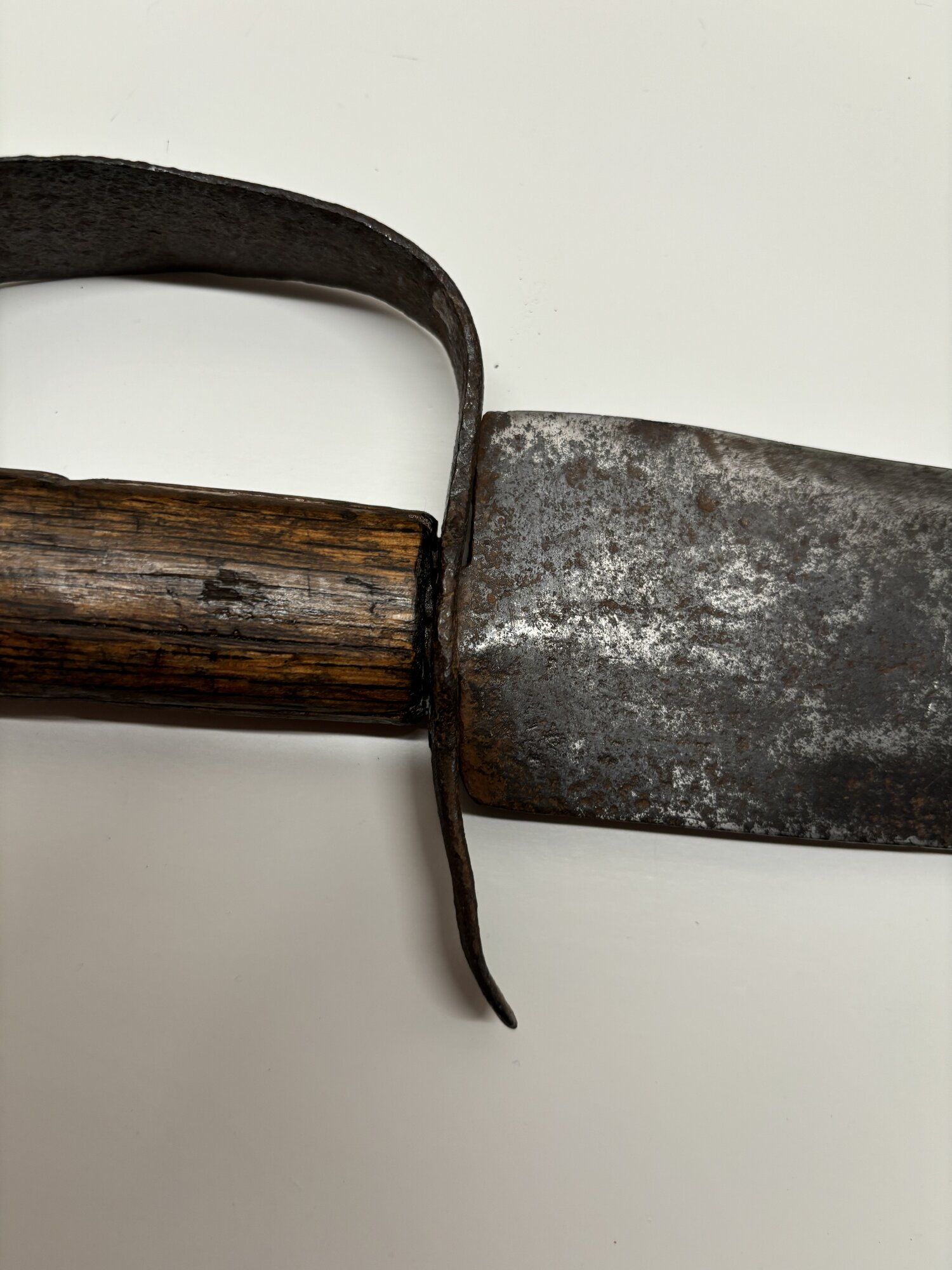
I acquired this D Guard around a year or so ago from an auction house, and I wanted to share it with experts who can give me their honest thoughts on it. It was supposedly found in a barn in North Carolina. There are no markings that I can see. I'm really interested in knowing if it appears to be authentic. Any and all feedback is much appreciated.
Jim

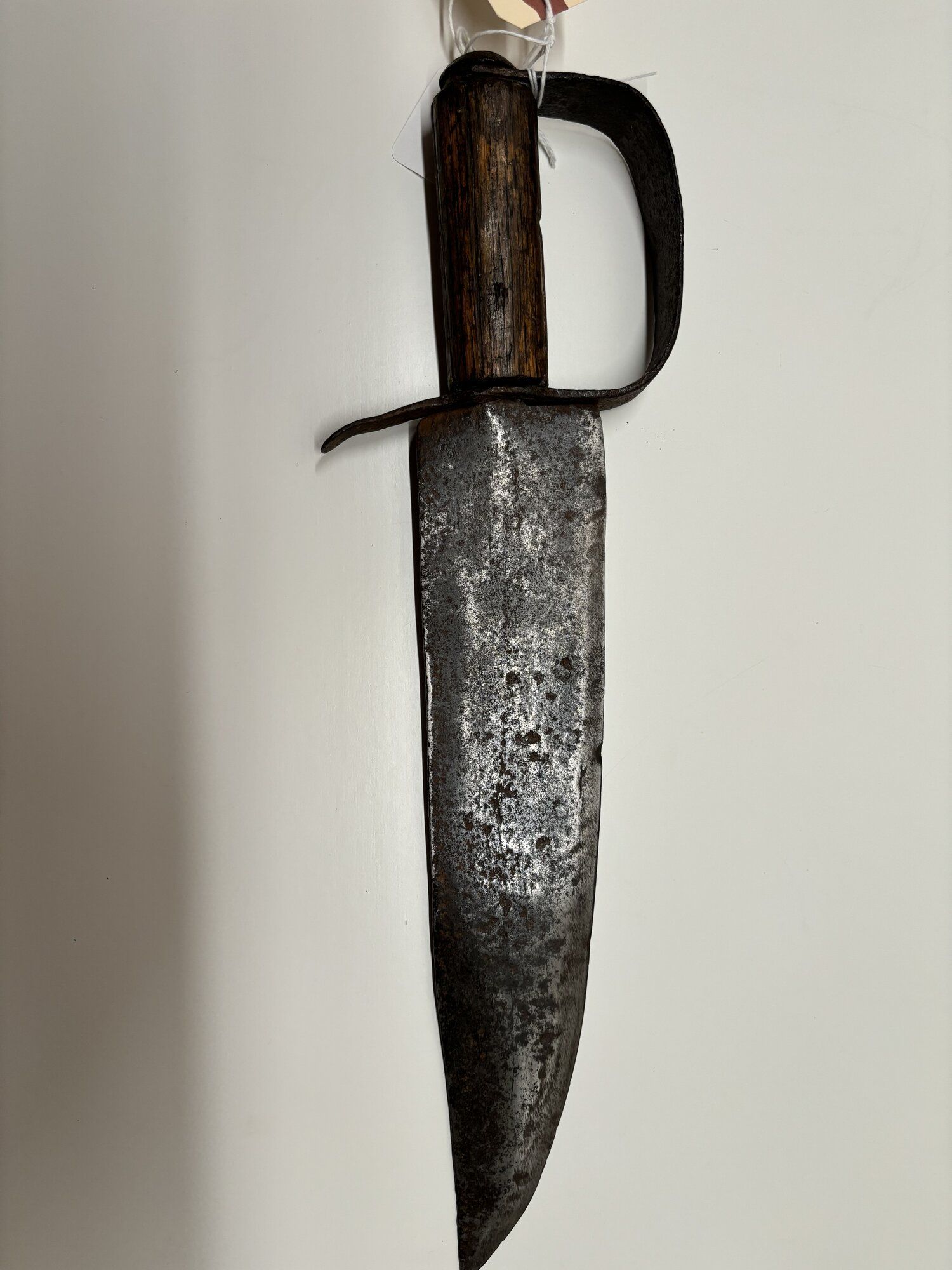
IMG_7057.jpeg


IMG_7058.jpeg


IMG_7059.jpeg


IMG_7060.jpeg


IMG_7061.jpeg


IMG_7062.jpeg


IMG_7063.jpeg


IMG_7064.jpeg


IMG_7065.jpeg


IMG_7066.jpeg


IMG_7067.jpeg


IMG_7068.jpeg
 
I´m not a knife expert, but overall, it looks like the construction is consistent with the mid-19th century. It does have a total lack of markings like ¨CS¨ or ¨CSA¨ which tend to tip you off to a forgery. It has no provenance, though, so you might have a mid-19th century D-guard knife, without any clue whether it is a Confederate D-guard knife.
 
Without holding the knife in my hands, I can only comment on what is in the photos.

The akward proportions & poor quality of the fit between the guard & other parts lead to a single conclusion. This is an example of an inexperienced blacksmith's knife.

Burying objects to create a false surface is a trick with a long pedigree. Nothing surprising there.
 
Last edited:
Without holding the knife 🍴 n my hands, I can only comment on what is in the photos.

The akward proportions & poor quality of the fit between the guard & other parts lead to a single conclusion. This is an example of an inexperienced blacksmith's knife.

Burying objects to create a false surface is a trick with a long pedigree. Nothing surprising there.
It looks like a uniform rust pattern from the photos to me. Is that consistent with that process?
 
IMG_2926.jpeg


This link from Blade Smith Forum will go a long way toward answering everyone's antique finishing questions.

Link:

 
Hello All,
I acquired this D Guard around a year or so ago from an auction house, and I wanted to share it with experts who can give me their honest thoughts on it. It was supposedly found in a barn in North Carolina. There are no markings that I can see. I'm really interested in knowing if it appears to be authentic. Any and all feedback is much appreciated.
Jim
View attachment 550757

View attachment 550758

View attachment 550759

View attachment 550760

View attachment 550761

View attachment 550762

View attachment 550763

View attachment 550764

View attachment 550765

View attachment 550766

View attachment 550767

View attachment 550768
It looks "antiquey" enough but it could have been made in the 1930s, 1960s, Yesterday? Looks good for a collection a long as you don't call it anything but a "Barn Knife". Maybe it sheared sheep? Who knows? Still looks cool.
Cheers!
 
I used to stock 18th century firearms as a hobby. Sold to reenactors or hunters. It's a popular thing to make the gun look 250 years old. I had a bunch of ways to deliberately age the gun, metal and wood. Never did a knife, but I could probably come close to what we see on the OPs knife. It's a tricky subject. The customer wanted that feel and look, the warmth of an original gun, but one they could shoot. Nobody was trying to pass them off as originals. I seem to see the negative side of the practice with Civil War items.
 
I used to stock 18th century firearms as a hobby. Sold to reenactors or hunters. It's a popular thing to make the gun look 250 years old. I had a bunch of ways to deliberately age the gun, metal and wood. Never did a knife, but I could probably come close to what we see on the OPs knife. It's a tricky subject. The customer wanted that feel and look, the warmth of an original gun, but one they could shoot. Nobody was trying to pass them off as originals. I seem to see the negative side of the practice with Civil War items.
That is funny since those old weapons were new at the time. It reminds me of the "serious" reenactors who soaked their brass buttons in urine to get that old time look in new buttons. If you button and unbutton your uniform every day those buttons will be bright. They were new back then but even tarnished buttons will become bright with use. Silly thing to want to age things too a period when back then the items were new.
Cheers!
 
It looks "antiquey" enough but it could have been made in the 1930s, 1960s, Yesterday? Looks good for a collection a long as you don't call it anything but a "Barn Knife". Maybe it sheared sheep? Who knows? Still looks cool.
Cheers!
This is a very good point - some reenacting gear and equipment has been around for over 60 years now. It´s dull, banged up and in some cases separated from original owners. That could be a knife made in the pattern of an antique... which is now itself and antique of a different kind.
 
It looks like a uniform rust pattern from the photos to me. Is that consistent with that process?
I refer you to the Bladesmith Forum link I posted up stream for a technical discussion on antiquing a knife blade. In this case, who knows what was done to it… the smithing is so crude that it would be logical to conclude that the rust pits were accomplished via a similarly rough process.
 

Learn About Us
About CivilWarTalk
Contact the Webmaster
Meet the Staff
Link to CivilWarTalk
Join Our Community
Register
Browse Forums
View Today's Discussions
Search the Forum
Get Help
FAQ
Student Guide
Forum Rules & Etiquette
Copyright / DMCA

     Contact Us CivilwarTalk on Facebook CivilWarTalk on YouTube CivilWarTalk on Twitter RSS Feed

Bringing the American Civil War and More to Life.
© 1999 - , CIVILWARTALK, LLC - Site Version 10.0

SlaveryTalk.com - SecessionTalk.com - CivilWarTalk.com - ReconstructionTalk.com
Back
Top