The longest shot

Comparing Civil War Sharpshooters to 20th Century/Modern Day Snipers is like comparing apples to oranges. You could fill volumes with Sniper stories which the Civilian populace never hear about.

The following article might be of interest.

https://www.quora.com/What-exactly-...confirmed-kill-How-are-sniper-kills-confirmed

What exactly is a confirmed kill and an unconfirmed kill? How are sniper kills confirmed?

What are the procedures to dictate a confirmed kill? Like do you need a body as evidence; or does a fellow solider have to witness the killing or is it some other reason?
 
There is always human nature and the psychology of war to consider, regardless of its horrors, war can provide a platform in which men can , if they have the courage, change their fortunes, one heroic deed can alter the way in which other men see them. Its no wonder that men will embellish their stories just to add a little more drama to their heroic deed. Perhaps this is the case with some of these long shots that we read about. Its a bit like the golfer that gets that elusive hole in one but there just aren't any witnesses to substantiate it or the fisherman with the story of the one that got away. Its just human nature.
 
Comparing Civil War Sharpshooters to 20th Century/Modern Day Snipers is like comparing apples to oranges. You could fill volumes with Sniper stories which the Civilian populace never hear about.

The following article might be of interest.

https://www.quora.com/What-exactly-...confirmed-kill-How-are-sniper-kills-confirmed

What exactly is a confirmed kill and an unconfirmed kill? How are sniper kills confirmed?

What are the procedures to dictate a confirmed kill? Like do you need a body as evidence; or does a fellow solider have to witness the killing or is it some other reason?
That is a good link, it seems the term 'Confirmed Kill' is more Hollywood than fact. I suppose that it depends mostly on witnesses and physical proof but there is also an element of taking the shooters word for it. In the case of Dixon, the army found blood in the target area.
 
Back to Billy Dixon... for whatever it's worth here he tells the story in his own words... this is taken from his book Billy Dixon, (chapt. 9) which was published in 1914:

On the third day a party of about fifteen Indians appeared on the side of the bluff, east of Adobe Walls Creek, and some of the boys suggested that I try my big "50" on them. The distance was not far from three-fourths of a mile. A number of exagerated accounts have been written about this incident. I took careful aim and pulled the trigger. We saw an Indian fall from his horse. The others dashed out of sight behind a clump of high timber. A few moments later two Indians ran quickly on foot to where the dead Indian lay, seized his body and scurried to cover. They had risked their lives as we had frequently observed, to rescue a comrade who might not only be wounded but dead. I was admittedly a good shot, yet this was what might be called a "scratch" shot.

And this is the photo shown on the opposite page:
20160306_115753.jpg
 
Back to Billy Dixon... for whatever it's worth here he tells the story in his own words... this is taken from his book Billy Dixon, (chapt. 9) which was published in 1914:

On the third day a party of about fifteen Indians appeared on the side of the bluff, east of Adobe Walls Creek, and some of the boys suggested that I try my big "50" on them. The distance was not far from three-fourths of a mile. A number of exagerated accounts have been written about this incident. I took careful aim and pulled the trigger. We saw an Indian fall from his horse. The others dashed out of sight behind a clump of high timber. A few moments later two Indians ran quickly on foot to where the dead Indian lay, seized his body and scurried to cover. They had risked their lives as we had frequently observed, to rescue a comrade who might not only be wounded but dead. I was admittedly a good shot, yet this was what might be called a "scratch" shot.

And this is the photo shown on the opposite page:
View attachment 94056
This picture and the one you posted earlier in this thread makes me realise that Billy Dixon would have had the advantage of shooting at a silhouette, even if he was firing at a group of men on a skyline he would have had the benefit of a clearly defined target. When I was in the army we were taught to remember the 6 S's the things that would keep you concealed and alive:
Shape, Shine, Shadow, Smell, Sound and Silhouette. Silhouette being the main one.
 
This picture and the one you posted earlier in this thread makes me realise that Billy Dixon would have had the advantage of shooting at a silhouette, even if he was firing at a group of men on a skyline he would have had the benefit of a clearly defined target. When I was in the army we were taught to remember the 6 S's the things that would keep you concealed and alive:
Shape, Shine, Shadow, Smell, Sound and Silhouette. Silhouette being the main one.
What Regt. were you in Waterloo50 ? The Rifles?
 
The entire Dixon book is well worth the read if you ever have the time... it's been called "The best book ever written on the Texas Panhandle and the first settlers..." and covers much more than the fight at Adobe Walls, including accounts of the masses of buffalo, Texas panhandle blizzards, the great solitude of the plains and the delight of a beautiful panhandle day, and one of the best first hand accounts of the Buffalo Wallow fight. I grew up in the area so am partial to this book, but I think others might enjoy it as well...
Life and Adventures of "Billy" Dixon of Adobe Walls, Texas Panhandle - A Narrative in Which is Described Many Things Relating to the Early Southwest, with an Account of the Fight Between Indians and Buffalo Hunters at Adobe Walls, and the Desperate Engagement at Buffalo Wallow, for which Congress voted the Medal of Honor to the Survivors
Compiled by Frederick S. Barde
Guthrie, Oklahoma
Copyright 1914 by Mrs. Olive Dixon
Frontispiece:
history-doc-01a.jpg

 
The entire Dixon book is well worth the read if you ever have the time... it's been called "The best book ever written on the Texas Panhandle and the first settlers..." and covers much more than the fight at Adobe Walls, including accounts of the masses of buffalo, Texas panhandle blizzards, the great solitude of the plains and the delight of a beautiful panhandle day, and one of the best first hand accounts of the Buffalo Wallow fight. I grew up in the area so am partial to this book, but I think others might enjoy it as well...
Life and Adventures of "Billy" Dixon of Adobe Walls, Texas Panhandle - A Narrative in Which is Described Many Things Relating to the Early Southwest, with an Account of the Fight Between Indians and Buffalo Hunters at Adobe Walls, and the Desperate Engagement at Buffalo Wallow, for which Congress voted the Medal of Honor to the Survivors
Compiled by Frederick S. Barde
Guthrie, Oklahoma
Copyright 1914 by Mrs. Olive Dixon
Frontispiece:
View attachment 94057
That is definitely the type of book I would enjoy, thanks for posting.
 
I used to enjoy shooting the L1A1 7.62mm SLR, I became quite a good shot with it, strangely I used to find that quite relaxing, the weapon that I loved using was an old Lee Enfield 303, I first fired that when I was 13 years old. Can't beat an old bolt action rifle.
I started shooting with a Lee Enfield .303 at the age of 13 as well ! I was in the Combined Cadet Force at School and got into the School Shooting 1st VIII at the age of 16 ! We shot at 200 yards & 500 yards, and the Big Competition was the Ashburton Shield at Bisley !
 
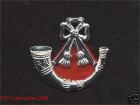
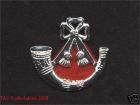
That is the badge of the Shropshire Light Infantry ( The King's) ?
It was the Light Infantry Cap badge, part of the Light Division. I still have mine. Sir John Moore Barracks was in Shropshire. The red felt behind the badge was the battle honour. Here is another picture of the LI cap badge, it was worn by:
2nd Battalion or 2LI in later years the LI and the Royal Green Jackets became amalgamated and the Rifles were formed.
th?&id=OIP.Md0704fc8db68c86726d580522015207eo0&w=300&h=294&c=0&pid=1.jpg
 
There was a Confederate sharpshooter at Port Hudson known as "old thousand yards" There was an oblique reference to him in the recent Civil War Monitor where he met a Union officer during a truce. I did some googling and found this gem http://www.brettschulte.net/CWBlog/2008/06/21/old-thousand-yards/
That's a great article, thanks for sharing it, and once again we see that dehumanization and moral exclusion are the prerequisites for war... as the author concludes:
I came back at last to our covert, took a drink of rebel water out of 'Old Thousand Yards' canteen, and found my hostility to these fellows much mitigated. I could see why commanders generally frown on this sort of communication. It is likely to establish relations altogether too brotherly for the purposes of war. The great principle involved is liable to sink out of sight before the personal friendship.
 

Learn About Us
About CivilWarTalk
Contact the Webmaster
Meet the Staff
Link to CivilWarTalk
Join Our Community
Register
Browse Forums
View Today's Discussions
Search the Forum
Get Help
FAQ
Student Guide
Forum Rules & Etiquette
Copyright / DMCA

     Contact Us CivilwarTalk on Facebook CivilWarTalk on YouTube CivilWarTalk on Twitter RSS Feed

Bringing the American Civil War and More to Life.
© 1999 - , CIVILWARTALK, LLC - Site Version 10.0

SlaveryTalk.com - SecessionTalk.com - CivilWarTalk.com - ReconstructionTalk.com
Back
Top