Old Fort Jackson

Buckeye Bill

Captain
Forum Host
Annual Winner
Joined
Jul 29, 2013
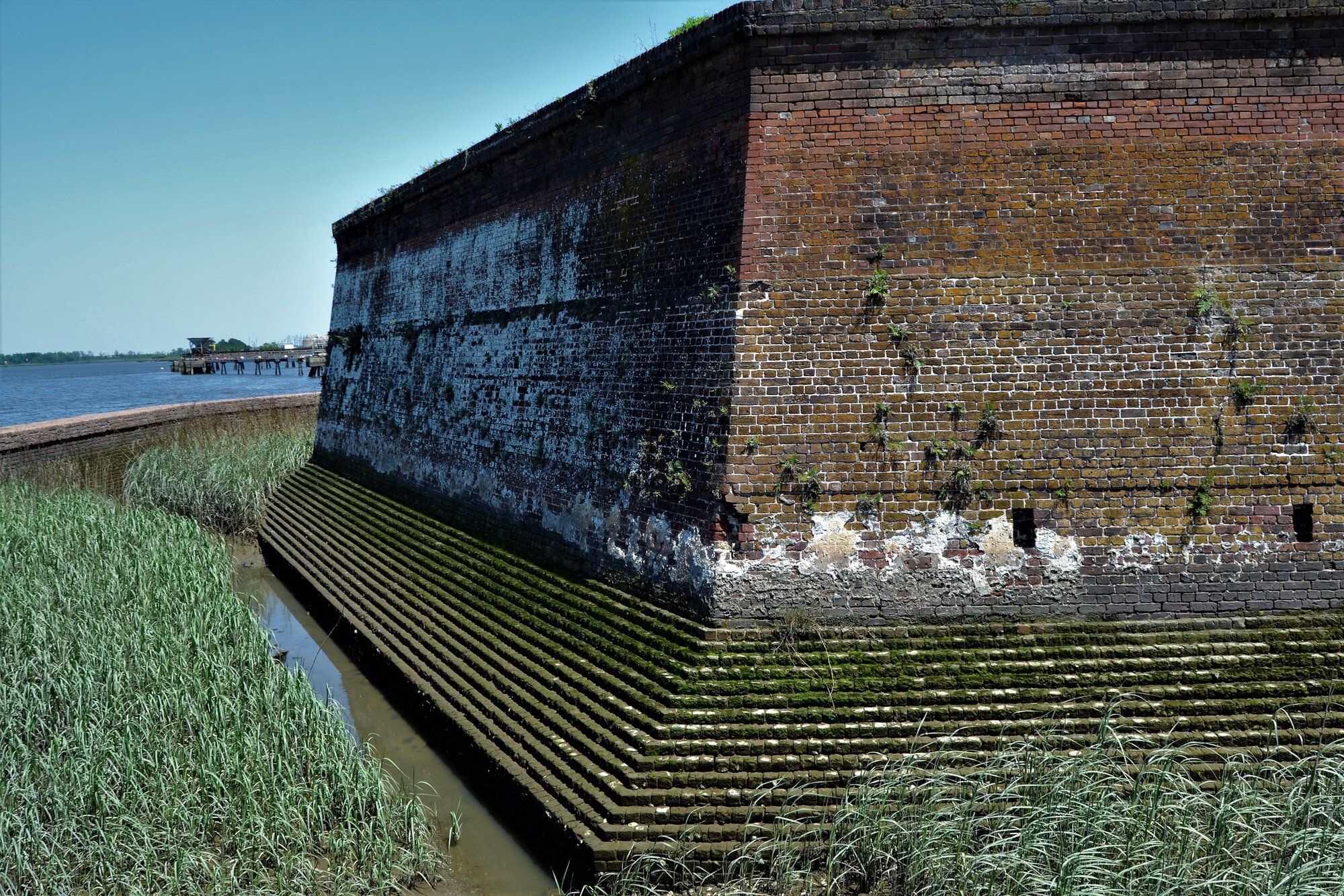
The Old Fort Jackson fortification is located on the Savannah River, just 3 miles east of the city. It was constructed in 1808 as part of President Thomas Jefferson's Second System coastal defense initiative and named after Revolutionary War patriot James Jackson. This brick fort was constructed over an old earthen battery from the Revolutionary War which had been called "Mud Fort." Soldiers were stationed at Fort James Jackson to guard Savannah during the War of 1812. Following the War of 1812, two periods of construction continued expansion of the fort from the 1840s-1850s, prior to the outbreak of the American Civil War.

Local Confederate militia units occupied the fort at the start of the Civil War in 1861. In 1862, it became the headquarters for Savannah's river defenses after the fall of Fort Pulaski. In 1864 the Confederate troops quickly evacuated Fort Jackson just prior to the arrival of federal troops under the leadership of General William Tecumseh Sherman after his infamous "March to the Sea," leaving Fort Jackson under control of federal troops. The last American soldiers to be stationed at Fort Jackson were members of the 55th Massachusetts, an African- American unit of the Federal Army.

The War Department abandoned the fort in 1905 and the state of Georgia reopened it in 1965 as a maritime museum. After the state decided to close the museum in 1975, the newly formed nonprofit Coastal Heritage Society approached the State in 1976 asking permission to re-open and operate the site, which was granted. The historic site was now referred to as Old Fort Jackson. In 1978, Fort Jackson and CHS came under the leadership of Scott W. Smith. Operation continued to grow with modest success as did development of educational programming for regular guests and student field trips.

Currently, Old Fort Jackson has a successful model of independent operation and a solid reputation of delivering high-quality, engaging educational programming for booked groups. This program offering has been expanded to regular operation for daily museum guests and includes cannon, musket firings and other interactive & hands-on activities.

* Old Fort Jackson Website : History.

DSC_0123 (2).JPG


DSC_0120 (2).JPG


OFJ Map (2).jpg


DSC_0064 (3).JPG


DSC_0117 (2).JPG


DSC_0070 (2).JPG


DSC_0071 (2).JPG


DSC_0072 (3).JPG


DSC_0073 (3).JPG


DSC_0083 (3).JPG


DSC_0081 (3).JPG


DSC_0094 (3).JPG


DSC_0075 (2).JPG


DSC_0096 (2).JPG


DSC_0111 (2).JPG


DSC_0100 (2).JPG


DSC_0102 (2).JPG


DSC_0119 (2).JPG


DSC_0116 (2).JPG
 
Coastal Heritage Society operates several historical sites and museums in and around Savannah. You can buy an individual ticket, or a ticket for admission to any three sites (you don't have to pick which ones when you buy).

When I visited a few years ago I went to their railroad museum and the Savannah history museum across the street before going to Fort Jackson. I enjoyed an American Revolution living history presentation about the Siege of Savannah so much I missed a short train ride at the railroad museum - both of which were included with admission.

At the fort I arrived just in time for a cannon firing demonstration. The living history cannoneer was a woman who seemed to know her stuff (I mention this because we've had some recent discussion about women doing reenacting in men's roles).

I was really impressed by the organization overall.
 
Superb pictures Bill. Sorry now we didn't fit Ft James Jackson in when we visited Ft Pulaski in 2019 before the Vicksburg Muster.
Another reason to go back.

Thanks!

We visited Fort Pulaski in 2014 but we arrived at Old Fort Jackson after it closed. Missing a visit to Old Fort Jackson was definitely another reason to visit Savannah, Georgia.

I am a big fan of visiting filming locations of my favorite movies. We visited the Chippewa Square Park during our visit to Savannah. The narrative scenes of the 1994 movie "Forrest Gump" were filmed at the Chippewa Square Park in Savannah. The statue in the rear of the movie still is the James Edward Oglethorpe statue with lions on the 4 corners. The last photo is the view of Forrest sitting on the bench waiting for bus #9 looking north towards the Savannah River.

FB_IMG_1652127866971.jpg


20220428_195841.jpg


20220428_170812.jpg


20220428_195526.jpg


20220428_195619.jpg


20220428_195748.jpg
 
Last edited:
This is great -- looks as if they've done a great job of caring for this site and making it interesting and accessible!

ARB

I agree 100%. This fort contains photos of how it looked after the U.S. Army picked up their tent spikes and left this area. Huge trees were growing throughout the parade deck. It was a hot mess before the restoration began by a private funded organization.

Bill
 
Fort Jackson featured in the filming of Glory (though not actually IN the film itself) as the location where we members of the reenactor core group first met the members of the background company and actor Morgan Freeman:

 
Fort Jackson featured in the filming of Glory (though not actually IN the film itself) as the location where we members of the reenactor core group first met the members of the background company and actor Morgan Freeman:


Thanks for sharing, James!

Bill
 
General History of Fort Jackson

The Union blockade was now being enforced and Savannah was rapidly being cut off. One of the ships in the Union fleet was a frigate named the U.S.S. Savannah. Few vessels were able to pass the Union warships. Port Royal, Beaufort and Hilton Head had all been captured. At Hilton Head the Union troops began to build a massive military installation and supply depot to stage their operations against Charleston to the north and Savannah to the south. Port Royal Sound became headquarters for the South Atlantic blockading squadron. Many citizens were terrified and began to evacuate Savannah. Confederate troops were ordered from the inland camps to the Savannah. The construction of earthwork defenses was intensified and quickly thrown up by slaves drafted as laborers. In response to the crisis, President Jefferson Davis ordered an experienced army officer to oversee the military operations between Charleston and Savannah. The officer was Robert E. Lee. Lee's first assignment out of West Point had been to assist in the construction of Fort Pulaski so he was quite familiar with the geography of the coastal area


Cheers,
USS ALASKA
 

Attachments

NATIONAL HISTORIC LANDMARK NOMINATION
FORT JAMES JACKSON
United States Department of the Interior
National Park Service National Register of Historic Places
Historic Name: FORT JAMES JACKSON
Other Name/Site Number: Fort Oglethorpe

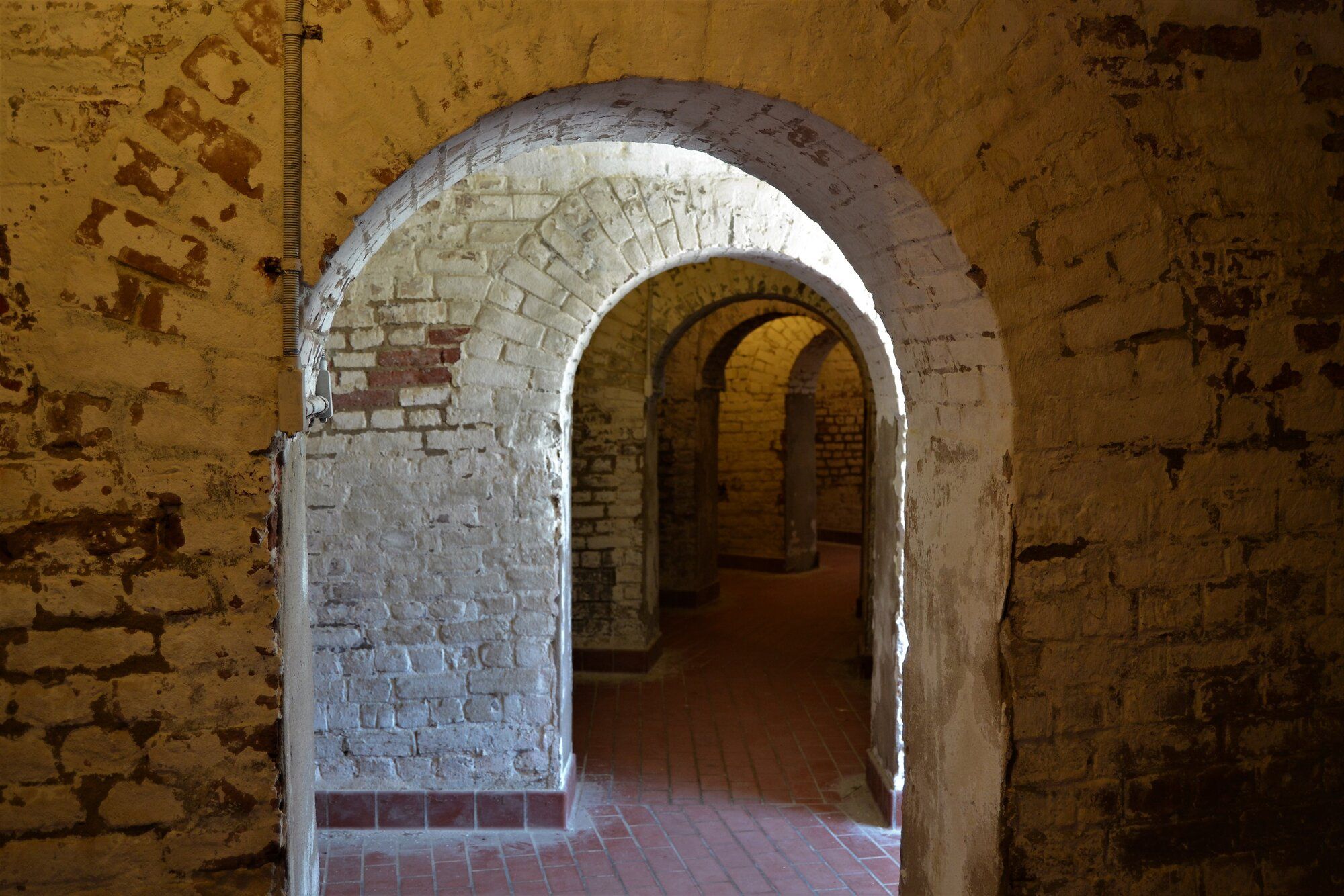
Fort James Jackson, one of the few preserved Second System Seacoast Fortifications in the United States, is located approximately three miles east and downstream of Savannah, Georgia, on the south bank of the Savannah River. The fort was built to protect the city of Savannah and harbor from foreign naval attack. The fort consists of an irregular shaped gun battery of earth and brick masonry and is enclosed at its rear by brick walls that include four demi bastions. The gun platform, facing the Savannah River, is supported by arched brick casemates, which served as storage rooms, offices, and cells. Located at the southwest side of the gun platform is a brick powder magazine with gabled roof. On the northeast angle of the barbette is an 1870s concrete and granite sod covered magazine, which was the only addition to this fort after the Civil War. Along the east and west angles of the parade ground are the foundations of two brick enlisted mens barracks. On the center rear of the parade ground is the foundation of a brick officers' barracks, which was not completed. Both battery and rear walls are fully enclosed by a brick lined wet moat, which is supplied by a tide tunnel on the northwest face of the counter scarp wall.


Cheers,
USS ALASKA
 

Attachments


Learn About Us
About CivilWarTalk
Contact the Webmaster
Meet the Staff
Link to CivilWarTalk
Join Our Community
Register
Browse Forums
View Today's Discussions
Search the Forum
Get Help
FAQ
Student Guide
Forum Rules & Etiquette
Copyright / DMCA

     Contact Us CivilwarTalk on Facebook CivilWarTalk on YouTube CivilWarTalk on Twitter RSS Feed

Bringing the American Civil War and More to Life.
© 1999 - , CIVILWARTALK, LLC - Site Version 10.0

SlaveryTalk.com - SecessionTalk.com - CivilWarTalk.com - ReconstructionTalk.com
Back
Top