Ohio Mark

James Brenner

First Sergeant
Joined
Nov 10, 2016
Location
North Canton, Ohio
Previous posts have discussed the appearance of the Ohio mark on small arms, where they were applied, and when they were applied.

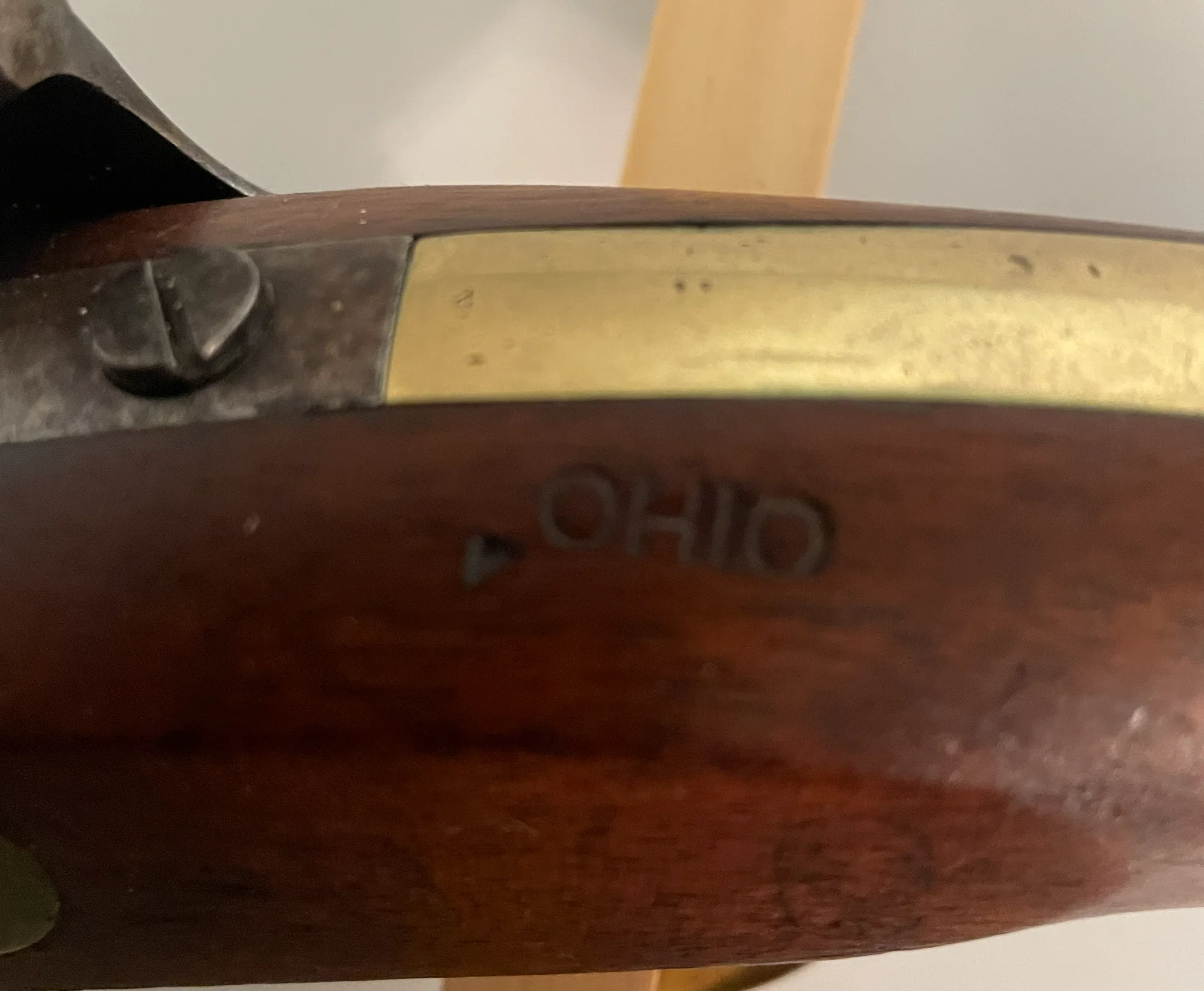
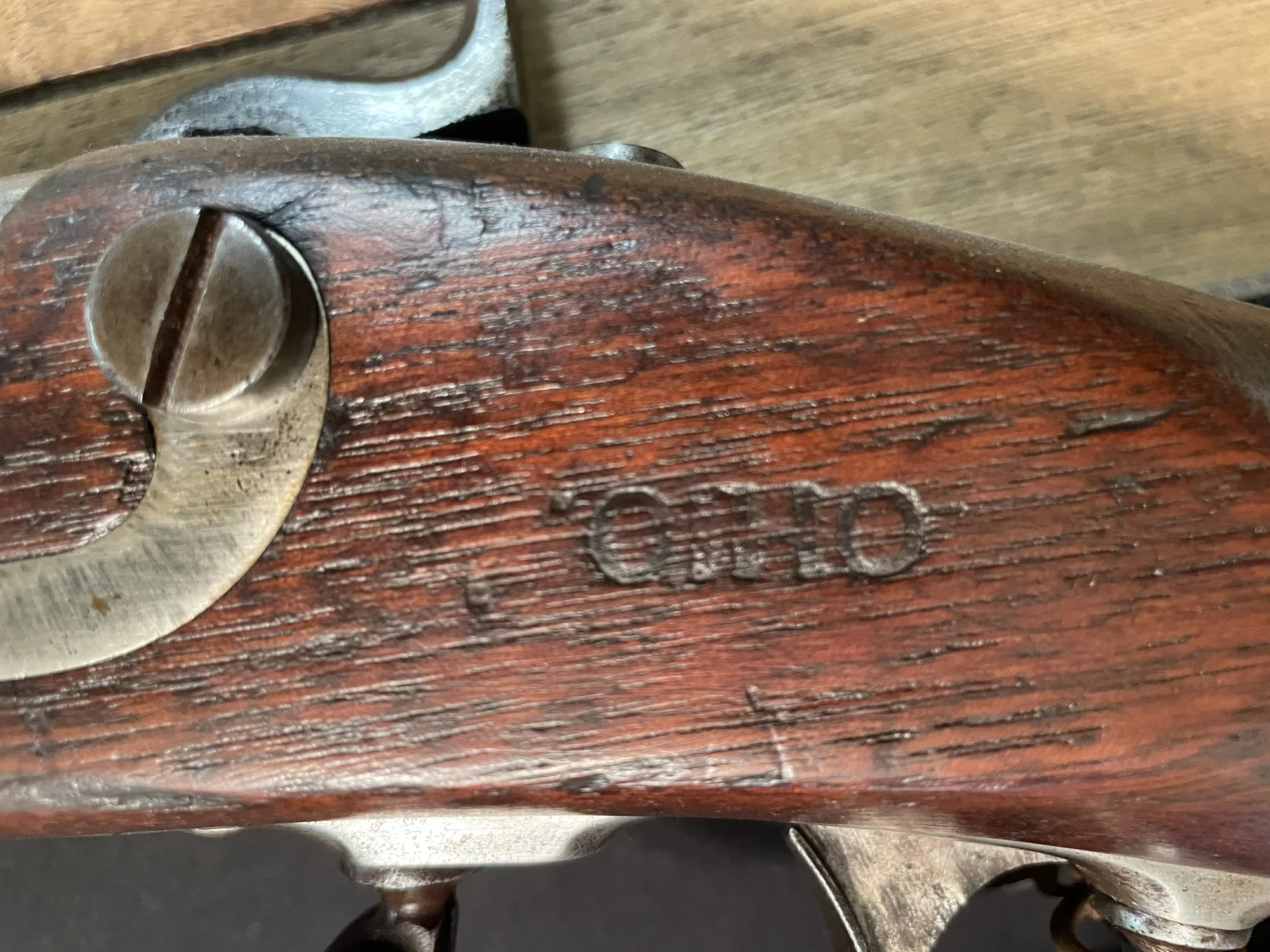
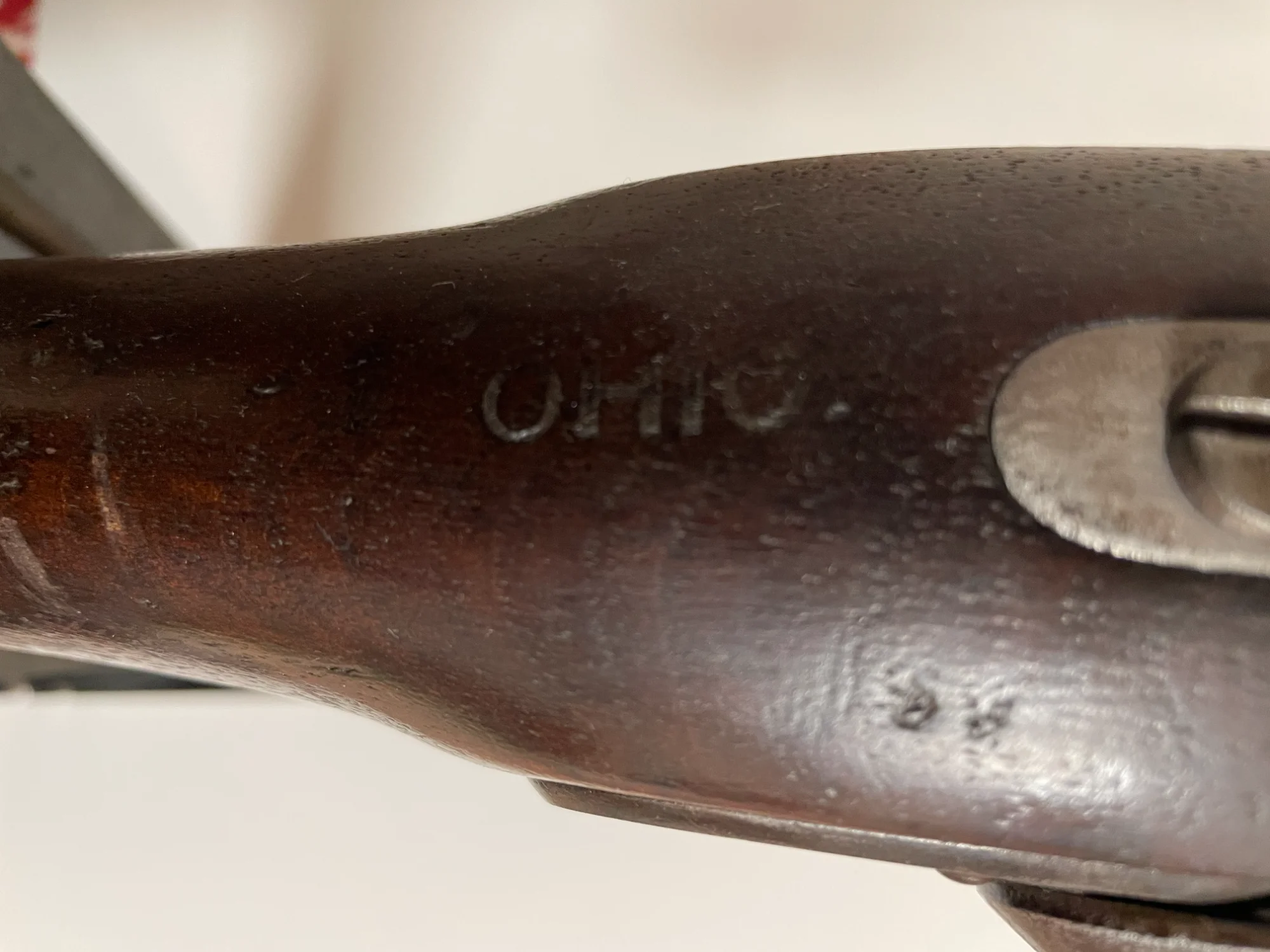
Attached are some pictures of the mark. The first two photos of the mark on a M1842 rifled musket (Greenwood alteration) on the comb and the flat. Notice that there is a period after Ohio - OHIO. The next picture shows a much smaller mark on a M1842 pistol. There is no period after OHIO. The final image is the Ohio mark on a saber bayonet scabbard. The size and font are the same as on the musket.

Apparently, there was little guidance on how or where to stamp the item. Sometimes OHIO. is upside down, sometimes it's on the flat, sometimes it's on the comb, and sometimes it's on both locations.

I can post other photos of the mark(s) on a M1841 Mississippi rifle, an arsenal rifled and converted M1842 rifled musket, a M1861 Springfield, a M1842 French musket, and a cap pouch, if interested.
Ohio1.webp


Ohio2.webp


Ohio3.webp


Ohio4.webp
 
The mark was to show state ownership. The 1792, 1797, and 1808 Militia Acts required the states to have militias and the federal government to provide weapons for 10% of the number that the state reported. Once Ohio received the muskets, the state issued them to the militia units (using the chain of command) because there was no state armory. The company commanders did not have any secure storage either, so they issued them to the soldiers. No bond was required and, because the militia laws were not enforced, there were no drills to make sure the weapons were accounted for and serviceable. I don't recall the number of weapons issued between 1808 and 1861, but only a fraction could be accounted for.

When the war began, Ohio had to scramble to find enough weapons to issue to the troops. Once the soldiers were mustered into federal service, the muskets went with them and became federal property. In Dennison's farewell address in 1862, he lamented the fact that Ohio was defenseless and had no weapons. In September 1863, after the Squirrel Hunters, Morgan's Raid, creation of the two prison camps, Vallandigham and the Copperhead threat, etc., the federal government issued about 28,000 second and third-class muskets, both foreign and domestic, to Ohio for home defense, valued at $200,000. To help with accountability, the ordnance and ordnance stores were marked with the OHIO stamp.

As for other states marking their small arms, I will defer to others to answer that. I believe New Jersy did, but I don't know any details.
 
The mark was to show state ownership. The 1792, 1797, and 1808 Militia Acts required the states to have militias and the federal government to provide weapons for 10% of the number that the state reported. Once Ohio received the muskets, the state issued them to the militia units (using the chain of command) because there was no state armory. The company commanders did not have any secure storage either, so they issued them to the soldiers. No bond was required and, because the militia laws were not enforced, there were no drills to make sure the weapons were accounted for and serviceable. I don't recall the number of weapons issued between 1808 and 1861, but only a fraction could be accounted for.

When the war began, Ohio had to scramble to find enough weapons to issue to the troops. Once the soldiers were mustered into federal service, the muskets went with them and became federal property. In Dennison's farewell address in 1862, he lamented the fact that Ohio was defenseless and had no weapons. In September 1863, after the Squirrel Hunters, Morgan's Raid, creation of the two prison camps, Vallandigham and the Copperhead threat, etc., the federal government issued about 28,000 second and third-class muskets, both foreign and domestic, to Ohio for home defense, valued at $200,000. To help with accountability, the ordnance and ordnance stores were marked with the OHIO stamp.

As for other states marking their small arms, I will defer to others to answer that. I believe New Jersy did, but I don't know any details.
Go back even further yet. George Washington ordered in 1777 the use of US stamping & branding to show ownership and prevent thievery. Here is my 2X surcharge 1763-66 Charleville musket with US(American Revolution) and S.N.Y (probable War of 1812 New York State)

Charleville 1763-66 1771 US & SNY #4.webp
 

Learn About Us
About CivilWarTalk
Contact the Webmaster
Meet the Staff
Link to CivilWarTalk
Join Our Community
Register
Browse Forums
View Today's Discussions
Search the Forum
Get Help
FAQ
Student Guide
Forum Rules & Etiquette
Copyright / DMCA

     Contact Us CivilwarTalk on Facebook CivilWarTalk on YouTube CivilWarTalk on Twitter RSS Feed

Bringing the American Civil War and More to Life.
© 1999 - , CIVILWARTALK, LLC - Site Version 10.0

SlaveryTalk.com - SecessionTalk.com - CivilWarTalk.com - ReconstructionTalk.com
Back
Top