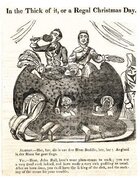
Oh Bring Me Some Figgy Pudding!!

JPK Huson 1863

Brev. Brig. Gen'l
Joined
Feb 14, 2012
Location
Central Pennsylvania
Donna being away for her Christmas, she asked her forum not be forgotten! Of course I have- only excuse being a houseful here. Have had this thread mostly completed for awhile, thought it would be a great time to finish it. Figgy pudding in our house would still be a major object of desire ( believe it or not ), my mother having produced enough for a battalion. It is possible the high-octane hard sauce was responsible for this run on the most popular desert in the house. Also possible is the requirement to set it ablaze by means of higher octane alcohol.
pudding8.jpg pudding10.jpg


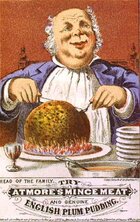
" Figgy Pudding " is only one of a variety of ' steamed puddings pretty commonly used as desert fare I the UK- or was when I lived there. It is by far the most densely populated with dried fruits. Others I've run into featured some, by no means 3 cups per chew as it were the ' Figgy ' seems to feature. Favorite? A pale, lighter ' pudding I kid-you-not called ' Spotted Dick ', meaning ' Richard ', raisins only. ' Pudding ' actually steaming flour, otheringredients and heavy amounts of suet. Honest. Suet. Try buying that in small town Pennsylvania. They sell it for bird feeders.
pudding3.jpg

pudding11.jpg

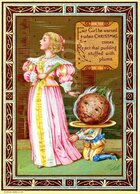
Christmas Pudding seems to have separate ancestors, weirdly two of them. Both date from the early 1400's, neither were initially sweet or eaten by anyone but the wealthy ( who could afford the ingredients ), both sound ghastly. I'll link to the long, long histories- you'll read of dried fish, preserving meats, tough flour paste, geese bits, " white porray, joutes, charlet, cawdel fery, bukkenade, mortrews or mawmeny " . Can't anyone wishes to have all those explained in a thread. They sound like trendy baby names for celebs, right?
puddin9.jpg
This is hysterical.

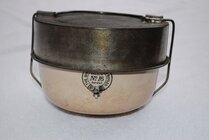
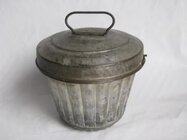
Fast forward to closer to our era. If anyone thinks ' Figgy Pudding ' to be a solely British example of Christmas cheer, well, no. I've inherited FOUR pudding steamers from THREE ancestors. They knew about it. Mom's hard sauce recipe could drop a horse. When Dickens included Christmas Pudding as the shining star moment in a Christmas family feast across The Pond, on our shores Dick's cluttered cousin was steaming in time for Christmas dinner, too. Besides, Prince Albert had a favorite recipe. If we Americans have held firm to anything over the past centuries it has been this; since rid of the British Monarchy we bafflingly have been homesick for them. From Queen Victoria and Prince Albert to today's poor, beleagured royals, if there's a favorite Christmas pudding recipe, better believe it's been served on American holiday tables.pudding4.jpg

pudding12.JPG

Prince Albert's " Plum Pudding "

For 8 helpings: 1 Ib prunes; 1 pt water; 1 lemon; 1 oz Barbados sugar; butter for greasing; 2 large eggs; 4 oz butter; 4 oz soft light brown sugar; pinch of salt; 4 oz soft wholemeal breadcrumbs; 1 oz semolina; brandy butter (Guard Sauce) made with 3 oz butter; 4 oz icing sugar and 1 oz ground almonds. Steep the prunes in the water overnight. Grate the rind of half the lemon and pare the rest. Squeeze the juice. Simmer the prunes with the water, pared rind, juice, and Barbados sugar until soft. Drain. Cut the fruit in half and remove the stones. Crease the inside of a 2 pint pudding basin thickly with butter. Press enough prunes into the fat, cut side down, to line the basin completely. Shred any prunes left over. Separate the eggs. Beat the 4 oz fat and soft brown sugar until creamy, and beat in the egg yolks and salt. Mix in the grated rind, breadcrumbs, semolina and any shredded prunes. Whisk the egg whites until they hold firm peaks and fold them into the mixture. Turn into the basin, cover tightly with greased foil and steam for 2 1/2-3 hours*. Firm in the basin for 6 minutes, then turn on to a warmed serving dish. Serve with chilled brandy butter and whipped cream
.
* Mom steamed hers for an awful lot longer.
pudding1.jpg

http://www.historytoday.com/maggie-black/englishmans-plum-pudding#sthash.ZSHwmWZW.dpuf
pudding2.jpg

pudding5.jpg

The Christmas ' pudding as we know it was transformed in the early to mid 1800's with several authors and cooks being given credit. Seriously- it is awfully, awfully hard to pick one from the plethora of horses in the race. The site listed above is the single site which offers actual names and sources reasons; others lists progressions, as in the ' evolution ' ( no offensive to those who believe they appeared one day at Walmart ) of the Figgy Pudding . REALLY hard to decide who-is-who in the world of Figgy Puddingdom. That they slowly evolved from one form, including meats, to another is fact, that only the wealthy could afford them also fact- that it wasn't until just before the Civil War they came to be associated so strongly with Christmas ( hence ' Christmas pudding )- maybe a 60% chance of fact. Hence also am making no such claims. Should anyone be interested enough, please check out a good search? Having undertaken the thread, did the best I could!

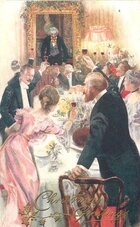
pudding6.jpg

pudding7.jpg
 
Before tin pudding steamers, that round shape came from boiling the pudding in a cloth. I've done it both successfully and unsuccessfully. The bag needs wetted and coated with flour to seal the pores and then when the pudding or dough is put in and it's tied, flour also needs used to seal where the cloth is tied--that little puckered hole. One has to leave room for the pudding to swell as it boils, which eventually produces that round effect. It needs boiled in a lot of water so the pudding can float, and some cookbooks say to put an upside down plate at the bottom of the outer kettle to prevent scorching of the bottom of the bag/pudding, and we did have that happen before the plate.

One can see why pudding steamers became so popular--no worrying about water getting in. I love making a boiled/steamed pudding as part of a period meal because you can't really overdo it. It doesn't burn or harden like a cake, yet turns out like a moist cake with a soft top rather than a crust whether just barely cooked till done or left to continually steam/boil another hour.

All sorts of puddings could be made this way, not just Christmas pudding. I can't get my copy-and-paste to work, but a search for boiled pudding in pre-1865 Google Books shows recipes for Indian pudding, apple dumplings each boiled in their own little cloth, etc. It was mostly a cooking method, but for some reason the tradition continued with Christmas pudding and faded for other things, and now we think of "pudding," in the US at least, as referring to a custard-like texture and would probably call a cake-like pudding a cake.
 
Before tin pudding steamers, that round shape came from boiling the pudding in a cloth. I've done it both successfully and unsuccessfully. The bag needs wetted and coated with flour to seal the pores and then when the pudding or dough is put in and it's tied, flour also needs used to seal where the cloth is tied--that little puckered hole. One has to leave room for the pudding to swell as it boils, which eventually produces that round effect. It needs boiled in a lot of water so the pudding can float, and some cookbooks say to put an upside down plate at the bottom of the outer kettle to prevent scorching of the bottom of the bag/pudding, and we did have that happen before the plate.

One can see why pudding steamers became so popular--no worrying about water getting in. I love making a boiled/steamed pudding as part of a period meal because you can't really overdo it. It doesn't burn or harden like a cake, yet turns out like a moist cake with a soft top rather than a crust whether just barely cooked till done or left to continually steam/boil another hour.

All sorts of puddings could be made this way, not just Christmas pudding. I can't get my copy-and-paste to work, but a search for boiled pudding in pre-1865 Google Books shows recipes for Indian pudding, apple dumplings each boiled in their own little cloth, etc. It was mostly a cooking method, but for some reason the tradition continued with Christmas pudding and faded for other things, and now we think of "pudding," in the US at least, as referring to a custard-like texture and would probably call a cake-like pudding a cake.
My Grandmother (Mother's Mother) used to make all her steamed puddings be they fruit or meat in muslin cloth, and they all came out perfectly shaped like cannon balls. She was born and raised on a farm and her first husband was a farmer so her recipes were natural and handed down the years . Nothing modern or mass produced can hold a candle to her produce !
 
My Grandmother (Mother's Mother) used to make all her steamed puddings be they fruit or meat in muslin cloth, and they all came out perfectly shaped like cannon balls. She was born and raised on a farm and her first husband was a farmer so her recipes were natural and handed down the years . Nothing modern or mass produced can hold a candle to her produce !

What are the mass produced puddings like? Admit to never having come across one, probably because they're not popular enough over here for stores to make it worthwhile, carrying them. Maybe larger chains in hugely populated areas? Also would have loved to try the muslin bags- only ever had those molds, with the locking lids?

There's something for historic interest- how many years a recipe like that in your family would go back. It's tough to wrap your head around how old some of the farms are in the UK, for an American. We get a kick out of 200 year old houses and things. Remember the first time the other students took me to the local pub ( Somerset ) stone set over a door said it was renovated in 1496, renovated. We were just a twinkle in Columbus's map-maker's eye, in 1496.
 
Interesting post! And for years I thought Figgy Pudding to be contrived just for a Christmas Song, who would have actually associated Figgy and Pudding....not me!

Yes, we Yanks, right? We knew as children but only because for some reason, no idea why, tradition remained. Funny how that happens. There was also a weird ' missing ' generation, both sides of Mom's family where a parent had died making grandparents the next link. Made the past closer, less offspring filtering away items, stories, ways of life- tough to describe.

Looking around on the web, I do see more Americans having a shot at these, kind of nice. They do get set ablaze before serving, also kind of cool- wonder how many fire departments are worried, thinking OH boy, used to be all we had to worry about were trees!
 
Before tin pudding steamers, that round shape came from boiling the pudding in a cloth. I've done it both successfully and unsuccessfully. The bag needs wetted and coated with flour to seal the pores and then when the pudding or dough is put in and it's tied, flour also needs used to seal where the cloth is tied--that little puckered hole. One has to leave room for the pudding to swell as it boils, which eventually produces that round effect. It needs boiled in a lot of water so the pudding can float, and some cookbooks say to put an upside down plate at the bottom of the outer kettle to prevent scorching of the bottom of the bag/pudding, and we did have that happen before the plate.

One can see why pudding steamers became so popular--no worrying about water getting in. I love making a boiled/steamed pudding as part of a period meal because you can't really overdo it. It doesn't burn or harden like a cake, yet turns out like a moist cake with a soft top rather than a crust whether just barely cooked till done or left to continually steam/boil another hour.

All sorts of puddings could be made this way, not just Christmas pudding. I can't get my copy-and-paste to work, but a search for boiled pudding in pre-1865 Google Books shows recipes for Indian pudding, apple dumplings each boiled in their own little cloth, etc. It was mostly a cooking method, but for some reason the tradition continued with Christmas pudding and faded for other things, and now we think of "pudding," in the US at least, as referring to a custard-like texture and would probably call a cake-like pudding a cake.


That's why it's round, thank you!! It's been 35 years, wish I could remember the round ones, rats. It does sound as if they're still made in cloth over there, too? Rebelatsea posted on his family's recipe, from a farm. So the entire bag is floated, in a pot, in water? Never had the slightest idea how that was achieved, gee whiz. It doesn't seem like it should work yet those puddings really are so moist ( and yes, deceptively called ' pudding ) it spoils you for ' cake '. Loved them! Of course, was clueless that the product cooked in a bag and what was made in a mold were the same, too- duh. For a long time- English cooking is supposed to be so ' boring ' but it isn't!

Yes, the school I went to used steamed ' puddings ' as deserts on a regular basis. They must not be considered out of the ordinary until this uber-special Christmas pudding? Really good, all of them we were given, you could get in a lot of trouble calorie-wise given the chance. I've never tried making any myself. Now I will, thanks to this post of yours although suspect it is not at all easy. Are most served with a sauce ( cannot remember ) or is the hard sauce an added ' bonus ' for Christmas?
 
What are the mass produced puddings like? Admit to never having come across one, probably because they're not popular enough over here for stores to make it worthwhile, carrying them. Maybe larger chains in hugely populated areas? Also would have loved to try the muslin bags- only ever had those molds, with the locking lids?

There's something for historic interest- how many years a recipe like that in your family would go back. It's tough to wrap your head around how old some of the farms are in the UK, for an American. We get a kick out of 200 year old houses and things. Remember the first time the other students took me to the local pub ( Somerset ) stone set over a door said it was renovated in 1496, renovated. We were just a twinkle in Columbus's map-maker's eye, in 1496.
All the big supermarkets carry Christmas puddings, but it's only the more up market ones who carry things like spotted dick and plum puddings. I haven't seen a meat pudding for years. The mass produced stuff is not a patch on Granny's!
Out in the country it's still possible to find local variants in the small shops and farm shops selling direct to the customer. but it largely depends on where you are.
We have traced Mother's family back to 1832 so far, with the men being farmers and the women in domestic service. My Grandmother's first husband owned Taylors Farm at Ickenham, which was sold up to become the Civil Service sports ground, and by coincidence I played cricket there for the Post Office before I knew it was part of my history. Sadly , like so many green spaces within London it has been built over.
I wonder if that village pub you were in was Norton St Phillip ? I visited many times, as I had friends over the county border in Wiltshire at Southwick. If you have ever seen the movie "Cromwell" it featured in a scene in that, myfriend is also in it playing an artillery man, he got the part as a member of the Sealed Knot re - enactment society.
 
All the big supermarkets carry Christmas puddings, but it's only the more up market ones who carry things like spotted dick and plum puddings. I haven't seen a meat pudding for years. The mass produced stuff is not a patch on Granny's!
Out in the country it's still possible to find local variants in the small shops and farm shops selling direct to the customer. but it largely depends on where you are.
We have traced Mother's family back to 1832 so far, with the men being farmers and the women in domestic service. My Grandmother's first husband owned Taylors Farm at Ickenham, which was sold up to become the Civil Service sports ground, and by coincidence I played cricket there for the Post Office before I knew it was part of my history. Sadly , like so many green spaces within London it has been built over.
I wonder if that village pub you were in was Norton St Phillip ? I visited many times, as I had friends over the county border in Wiltshire at Southwick. If you have ever seen the movie "Cromwell" it featured in a scene in that, myfriend is also in it playing an artillery man, he got the part as a member of the Sealed Knot re - enactment society.
You Poms have interesting food tastes. That's for sure
 
That's why it's round, thank you!! It's been 35 years, wish I could remember the round ones, rats. It does sound as if they're still made in cloth over there, too? Rebelatsea posted on his family's recipe, from a farm. So the entire bag is floated, in a pot, in water? Never had the slightest idea how that was achieved, gee whiz. It doesn't seem like it should work yet those puddings really are so moist ( and yes, deceptively called ' pudding ) it spoils you for ' cake '. Loved them! Of course, was clueless that the product cooked in a bag and what was made in a mold were the same, too- duh. For a long time- English cooking is supposed to be so ' boring ' but it isn't!

Yes, the school I went to used steamed ' puddings ' as deserts on a regular basis. They must not be considered out of the ordinary until this uber-special Christmas pudding? Really good, all of them we were given, you could get in a lot of trouble calorie-wise given the chance. I've never tried making any myself. Now I will, thanks to this post of yours although suspect it is not at all easy. Are most served with a sauce ( cannot remember ) or is the hard sauce an added ' bonus ' for Christmas?
This type of post explains why I love this column even though I can't cook worth a lick. I'm just a consumer!
 
All the big supermarkets carry Christmas puddings, but it's only the more up market ones who carry things like spotted dick and plum puddings. I haven't seen a meat pudding for years. The mass produced stuff is not a patch on Granny's!
Out in the country it's still possible to find local variants in the small shops and farm shops selling direct to the customer. but it largely depends on where you are.
We have traced Mother's family back to 1832 so far, with the men being farmers and the women in domestic service. My Grandmother's first husband owned Taylors Farm at Ickenham, which was sold up to become the Civil Service sports ground, and by coincidence I played cricket there for the Post Office before I knew it was part of my history. Sadly , like so many green spaces within London it has been built over.
I wonder if that village pub you were in was Norton St Phillip ? I visited many times, as I had friends over the county border in Wiltshire at Southwick. If you have ever seen the movie "Cromwell" it featured in a scene in that, myfriend is also in it playing an artillery man, he got the part as a member of the Sealed Knot re - enactment society.


This is terrible! Did not see this reply for an entire year, so sorry! Donna just bumped the thread!

Let's see, that pub, had a stone above a doorway announcing it had been renovated in the late 1400's was Somerset? Bristol Channel, a teeny place in Exmoor called Porlock Wier. I know 100% of my friends pulled my leg over the years so never did know if was true- they said it was a smuggling destination, unsure if that would have been the brandy/revenue days or even earlier, with wool? Boy were there a lot of sheep around there. Place called Ashton Combe, ruins of which were a hard climb behind the Wier, supposedly ( leg pulling again, who knows ) Byron frequented, in the drinking-wine-from-skulls days. Samuel Taylor Coleridge hysterically wrote " Person From Porlock ", about someone who interrupted him while in the throes of composition- and so immortalized the village in a scathing poem.

It seemed to me so sad, so many of the farms in England had been taken over, land developed and if the house attached was large it was demolished. Guessing if your family were farmers, some early history is gone. It is wonderful though, how many, many truly ancient homes are still in use- where I lived no one thought twice driving past thatched cottages. I never got used to it, never. Nothing is prettier.
 
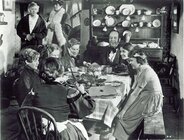
It's good to see this. I really enjoy the period illustrations.

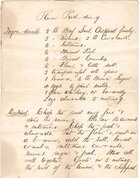
Coming back to ask a question about the recipe: What is a sultane? Did I read it correctly?
 

Learn About Us
About CivilWarTalk
Contact the Webmaster
Meet the Staff
Link to CivilWarTalk
Join Our Community
Register
Browse Forums
View Today's Discussions
Search the Forum
Get Help
FAQ
Student Guide
Forum Rules & Etiquette
Copyright / DMCA

     Contact Us CivilwarTalk on Facebook CivilWarTalk on YouTube CivilWarTalk on Twitter RSS Feed

Bringing the American Civil War and More to Life.
© 1999 - , CIVILWARTALK, LLC - Site Version 10.0

SlaveryTalk.com - SecessionTalk.com - CivilWarTalk.com - ReconstructionTalk.com
Back
Top