Klingenthal Cavalry Saber

bayonet

2nd Lieutenant
Joined
Nov 7, 2012
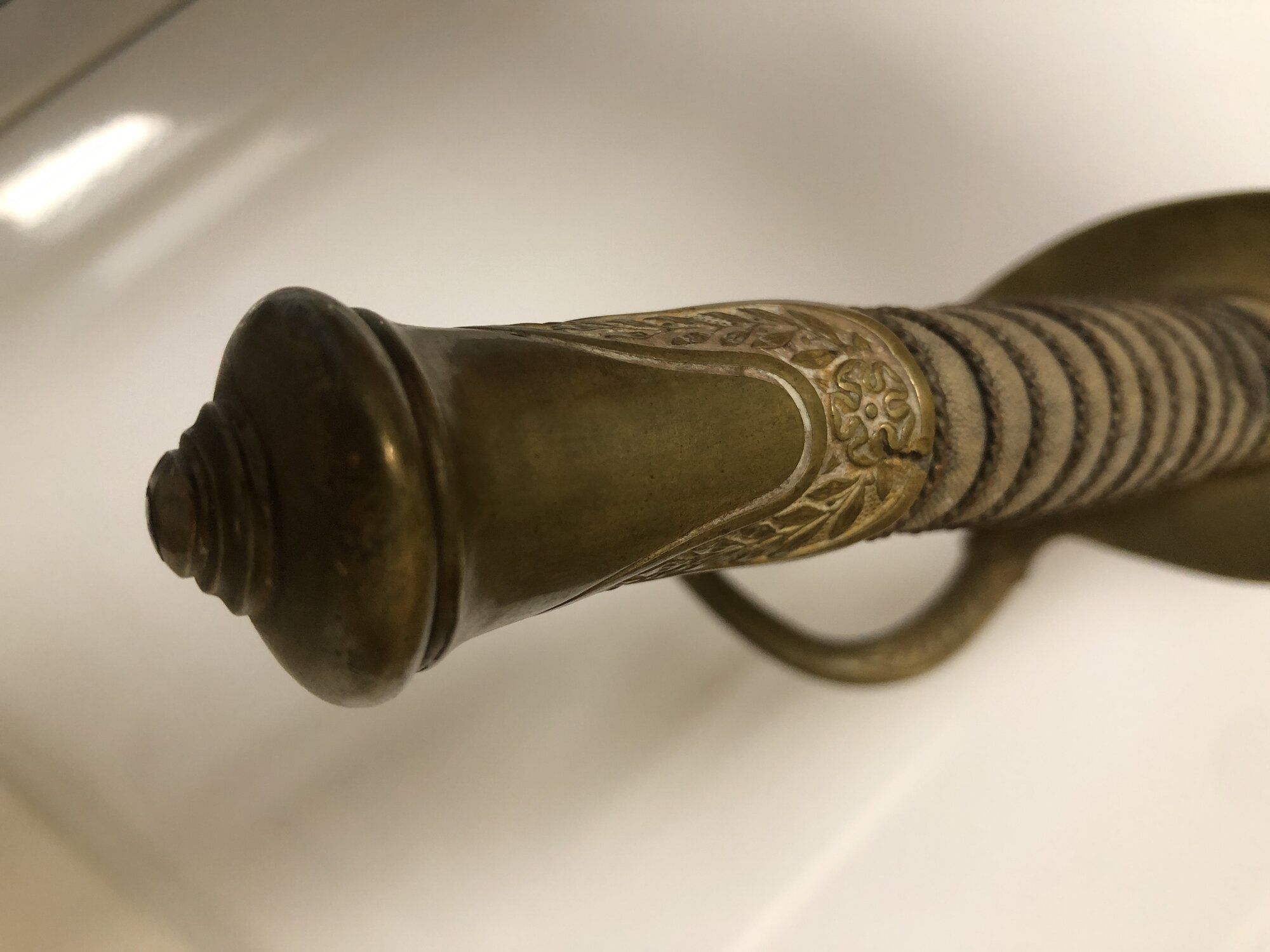
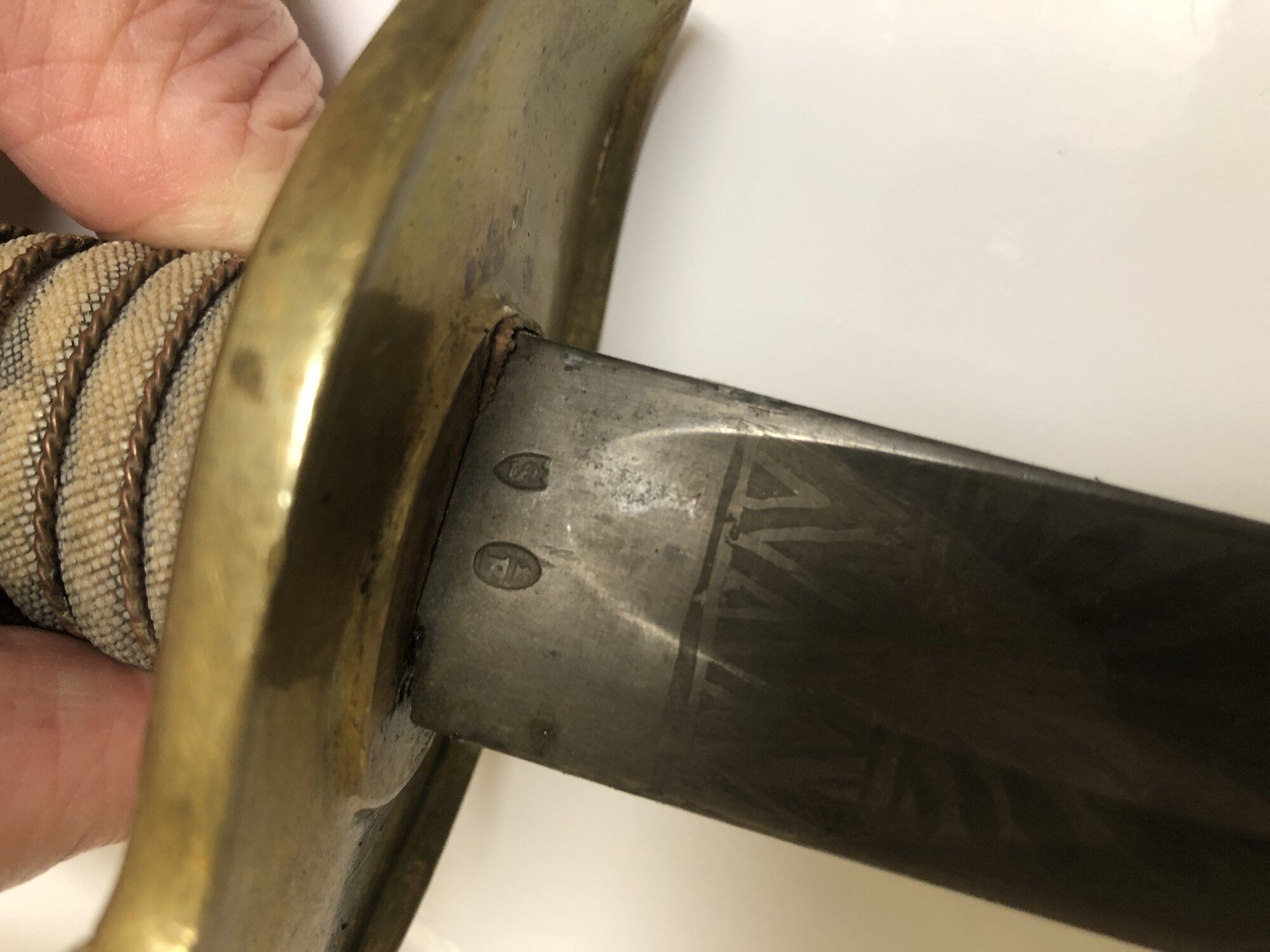
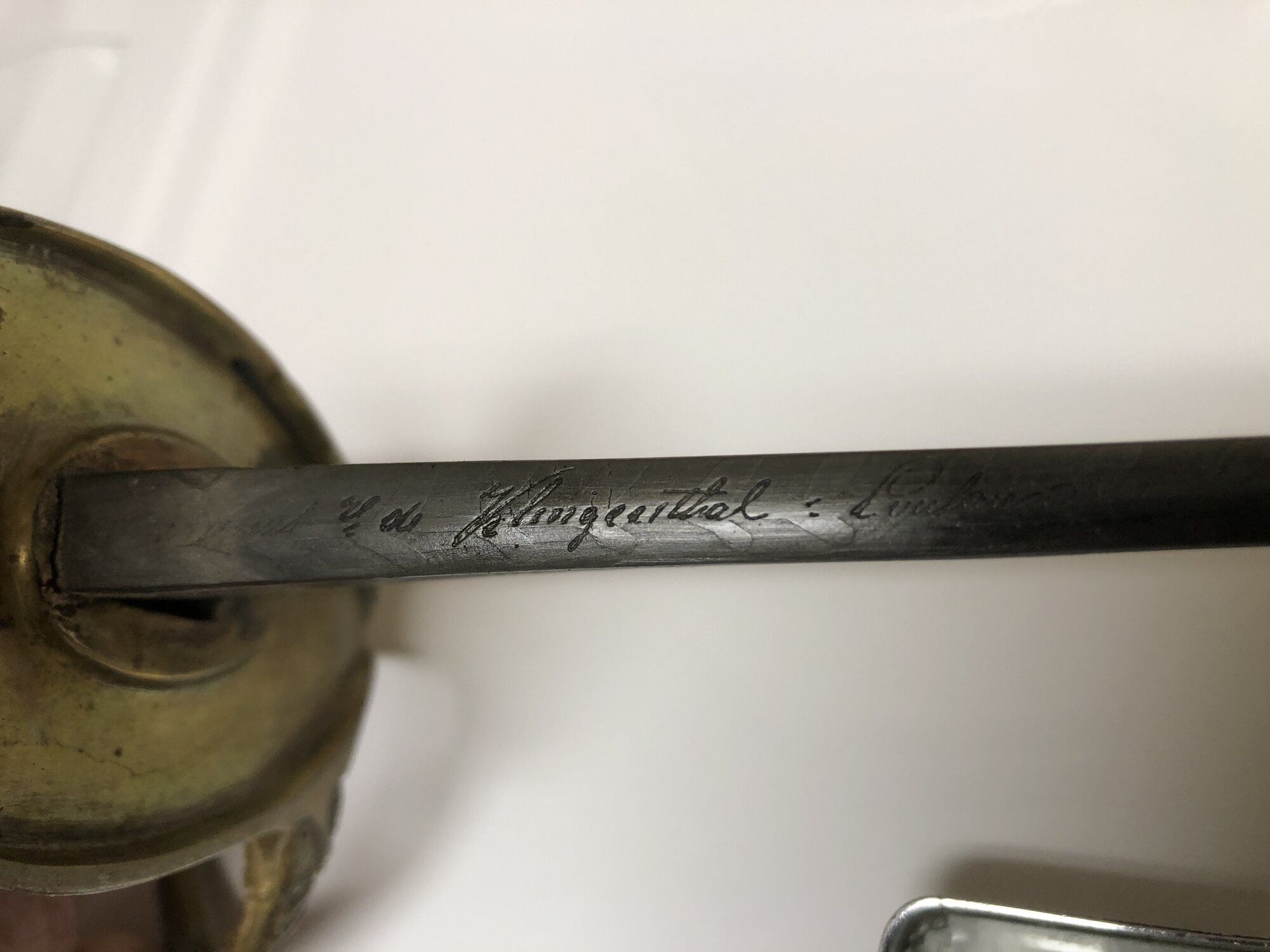
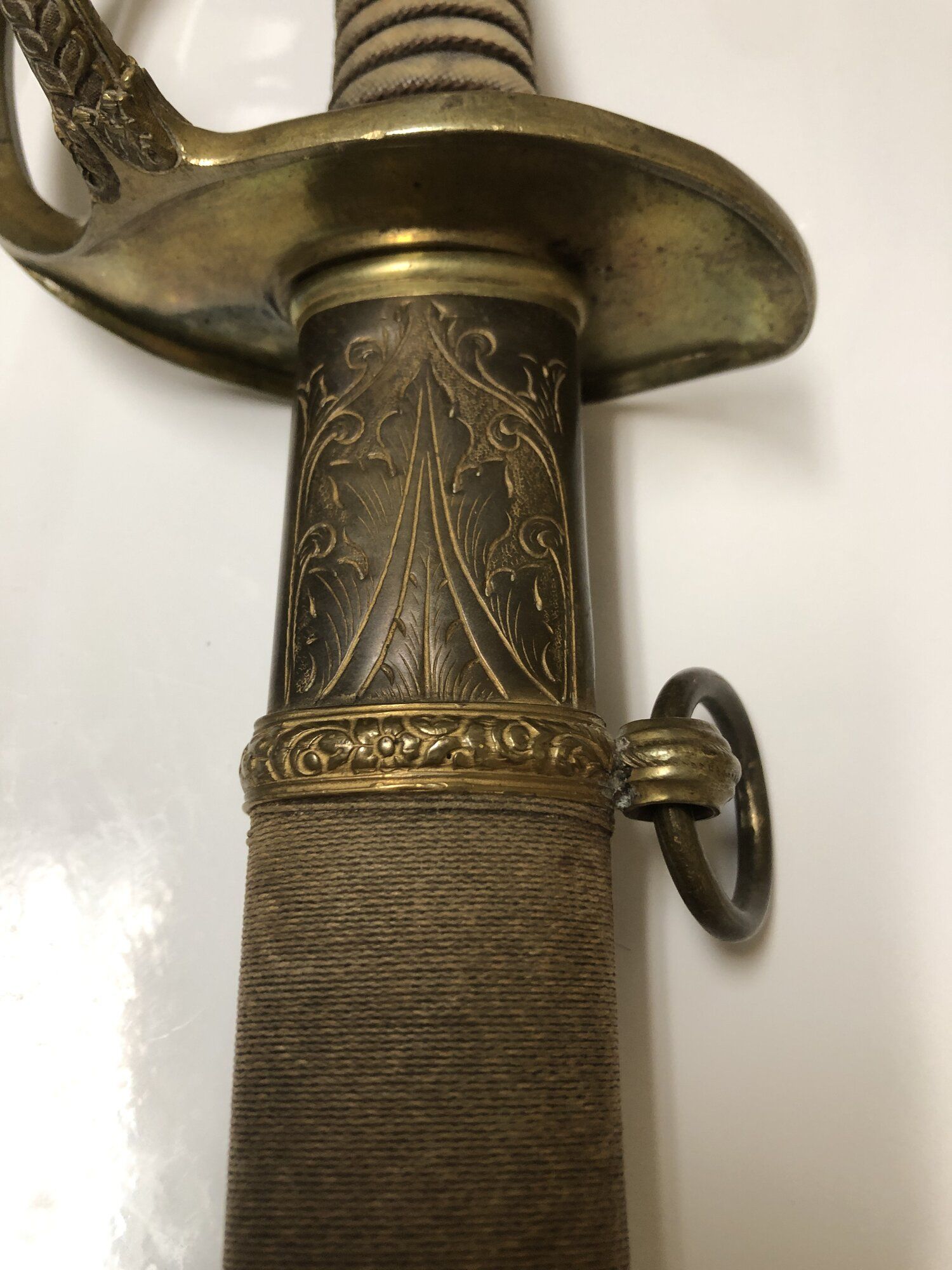
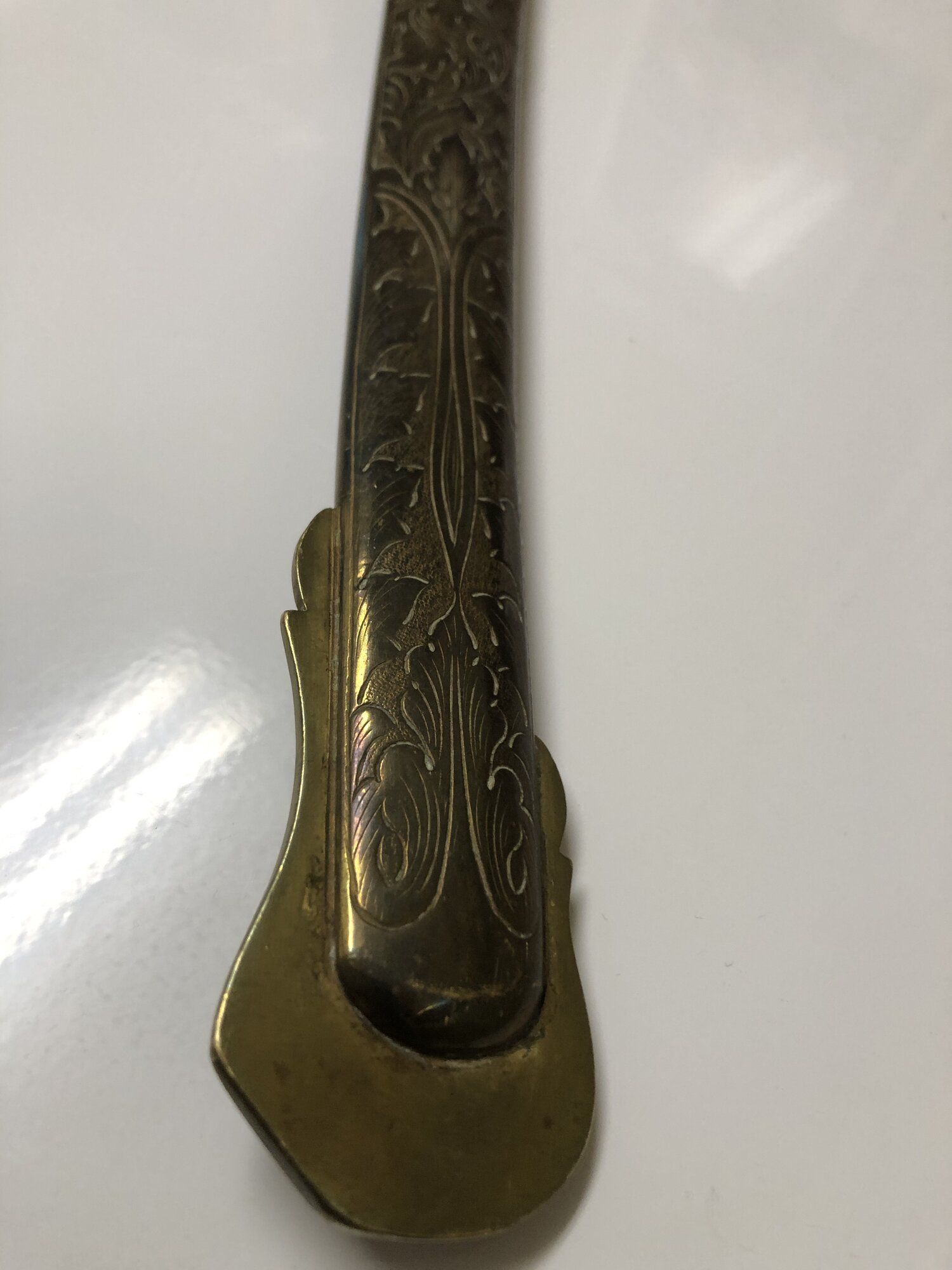
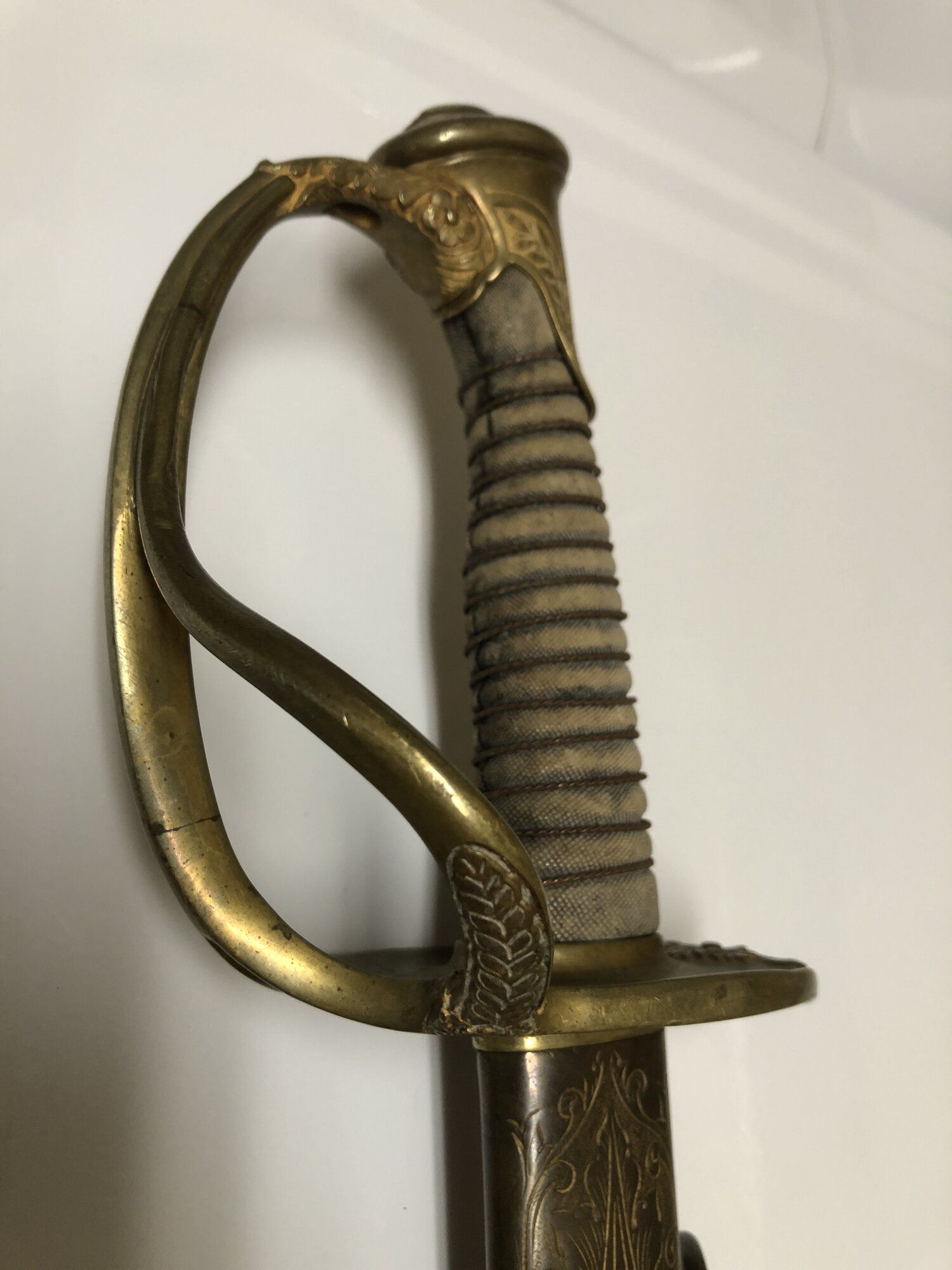
Well bidding the lowest amount possible strikes again in my favor (I think). Not the first time others past something by for possibly being unsure and my grabbing it. Looking in the Civil War Army Swords by Thillmann on page 28 graph shows the markings on Crown B in a circle to be 1845 onward which is stamped on the blade here. Klingenthal also clearly marked on top spine of the blade. I was worried there was no US or E Pluribus Unum etched in the blade but there are examples in the book of some blades not having those markings. So anyone with his book on Cavalry & Artillery Sabers can you see if this sword is in there? It's one thing to spend $400 on a Sword but over $400 on that book I'd be toast with the wife as in burnt toast. Company said they may do a reprint bringing the cost way down. It's interesting that the etching is only on one side of the scabbard and has that tight type fabric I have never seen before between the scabbard rings.
sword1.jpeg
Sword2.jpeg
Sword3.jpeg
Sword4.jpeg
Sword5.jpeg
Sword6.jpeg
Sword7.jpeg
Sword8.jpeg
Sword9.jpeg
 
Nice sword.

This is a pre 1836 Klingenthal blade, before Coulaux went from entrepreneur status to outright owner.

Note the signature on the spine. https://web.archive.org/web/20180121074103/http://users.skynet.be/euro-swords/klingenthal.htm The S in a shield belonged to F.C.Schimitt, inspector (revisier) with that poincon from 1830-1835.

Collectors had at times scrubbed the spines of Klingenthal swords, even truly ACW swords, as the spine writing does not belie manufacture in the 1860s, even when properly marked so. Surplus blades recycled as U.S. French pattern swords. My Chatellerault 1854 dragoon had the spine entirely erased, for whatever reason. It did surface in the U.S.

Fwiw, Thillman gets credit for many things but there are instances, where no one is reading Petard. I bought the Thillman army book expecting the worst but by and large, it was an impressive effort. A few hiccups though, the poincons one of the issues.

Here is a post 1836 spine, with the same (earlier) poincons. B for J.A. Bisch (ending use in 1834)

Old blades, etched to suit. Signed when made. A private cutler/mounter would have a mark on the blade side of the guard.

Cheers
GC
 
Last edited:
Very Nice Sword. Looks like a great addition to your collection.
 
That may be glued. Shine a bore light down the scabbard. It was probably bent and someone tried to straighten it, resulting in a crack. You can see the end of the twine next to the fitting. I've opened a crack in one myself :frantic: I thought I could, I thought I could.
1117b.jpg
 
It looks like a cavalry officer's sword missing a branch. How long is the blade and how many fullers? In general, I am more doubtful of French swords making it into the Civil War than other swords. This one is certainly early enough to have arrived in the U. S. in time for the war. Officers were required to purchase their own swords and this one is a well-made officer's sword, at least the hilt looks the part and the blade is decorated; but do they go together?

If the blade is infantry length then perhaps that is why the guard is missing a branch. There isn't a good view of the pommel so it's impossible to tell if it has been separated from the blade. The cord wrapped scabbard reminded me of another scabbard. I thought the cord suggested a naval association. The sword in the scabbard doesn't fit and I assumed it was put in the scabbard just for shipping or to keep it from cutting things up.
 
There are some tool marks but no signature. Since the scabbard doesn't go with the sword we can't make the mistake of thinking the fittings might date the sword or vice versa and give an idea of when macrame showed up on scabbards. I also don't know how old the Japanese sword is either. I can say the blade is scratched up and rusty, but still sharp as a razor.
 
It looks like a cavalry officer's sword missing a branch. How long is the blade and how many fullers? In general, I am more doubtful of French swords making it into the Civil War than other swords. This one is certainly early enough to have arrived in the U. S. in time for the war. Officers were required to purchase their own swords and this one is a well-made officer's sword, at least the hilt looks the part and the blade is decorated; but do they go together?

If the blade is infantry length then perhaps that is why the guard is missing a branch. There isn't a good view of the pommel so it's impossible to tell if it has been separated from the blade. The cord wrapped scabbard reminded me of another scabbard. I thought the cord suggested a naval association. The sword in the scabbard doesn't fit and I assumed it was put in the scabbard just for shipping or to keep it from cutting things up.
Blade is 35" long. Hilt/Guard go together (very tight) so no sign of rehilting at top of pommel. It's almost like a fabric and not a cord, it's aged for sure and not done recent. Looked inside the scabbard with a light and don't see anything unusual. Wonder if whoever owned it in the past did it because when you carry it by hand that's where you carry it between the 2 rings. So he added it himself professionally. 1 large fuller all the way down almost and 1 very smaller one at the top 1/3 way down ending 1/3 before the tip.
 

Learn About Us
About CivilWarTalk
Contact the Webmaster
Meet the Staff
Link to CivilWarTalk
Join Our Community
Register
Browse Forums
View Today's Discussions
Search the Forum
Get Help
FAQ
Student Guide
Forum Rules & Etiquette
Copyright / DMCA

     Contact Us CivilwarTalk on Facebook CivilWarTalk on YouTube CivilWarTalk on Twitter RSS Feed

Bringing the American Civil War and More to Life.
© 1999 - , CIVILWARTALK, LLC - Site Version 10.0

SlaveryTalk.com - SecessionTalk.com - CivilWarTalk.com - ReconstructionTalk.com
Back
Top