Well this arrived today!


I won it at auction a few weeks ago. It was listed as an unknown gun. I did a little research and thought, "this looks like a Pattern 1842 musket!" and bid on it. I won. Now that it has arrived, I'm noticing all sorts of things that don't match a Pattern 1842. Things that I don't see at all are stamps on the barrel or on the stock, except for the number 466 on the lower stock.
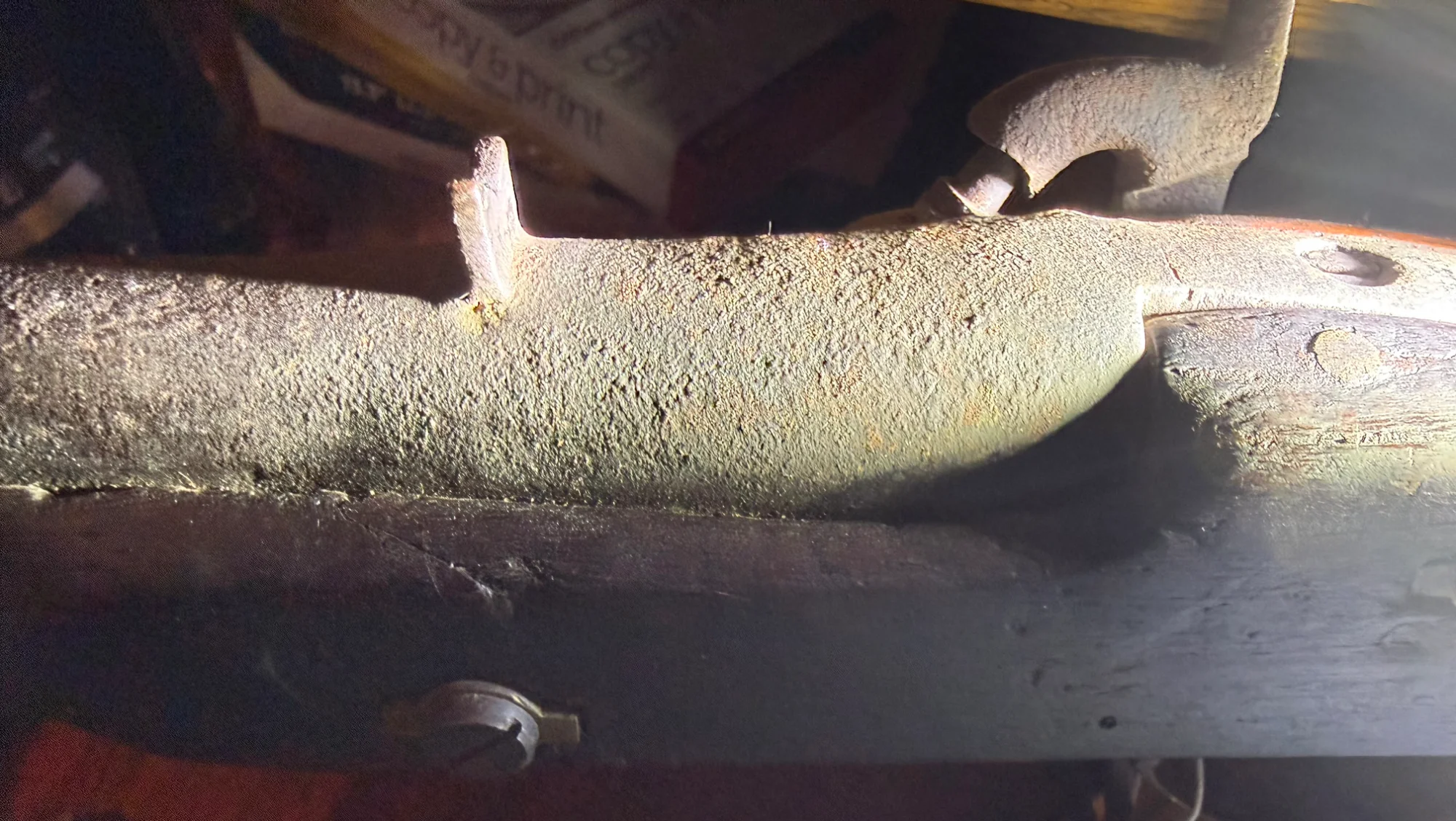

Unlike the 1842, this gun has the barrel held in by pins, not wedges. The barrel length looks like about 37.5 inches rather than over 39 inches. The butt plate looks a little different.


The ramrod looks wrong and it feels like it is in that channel to stay! The nose cap is not stepped. The barrel is thin-walled and looks like it could be .69 caliber rather than .74 caliber.

The ramrod pipes look wrong.

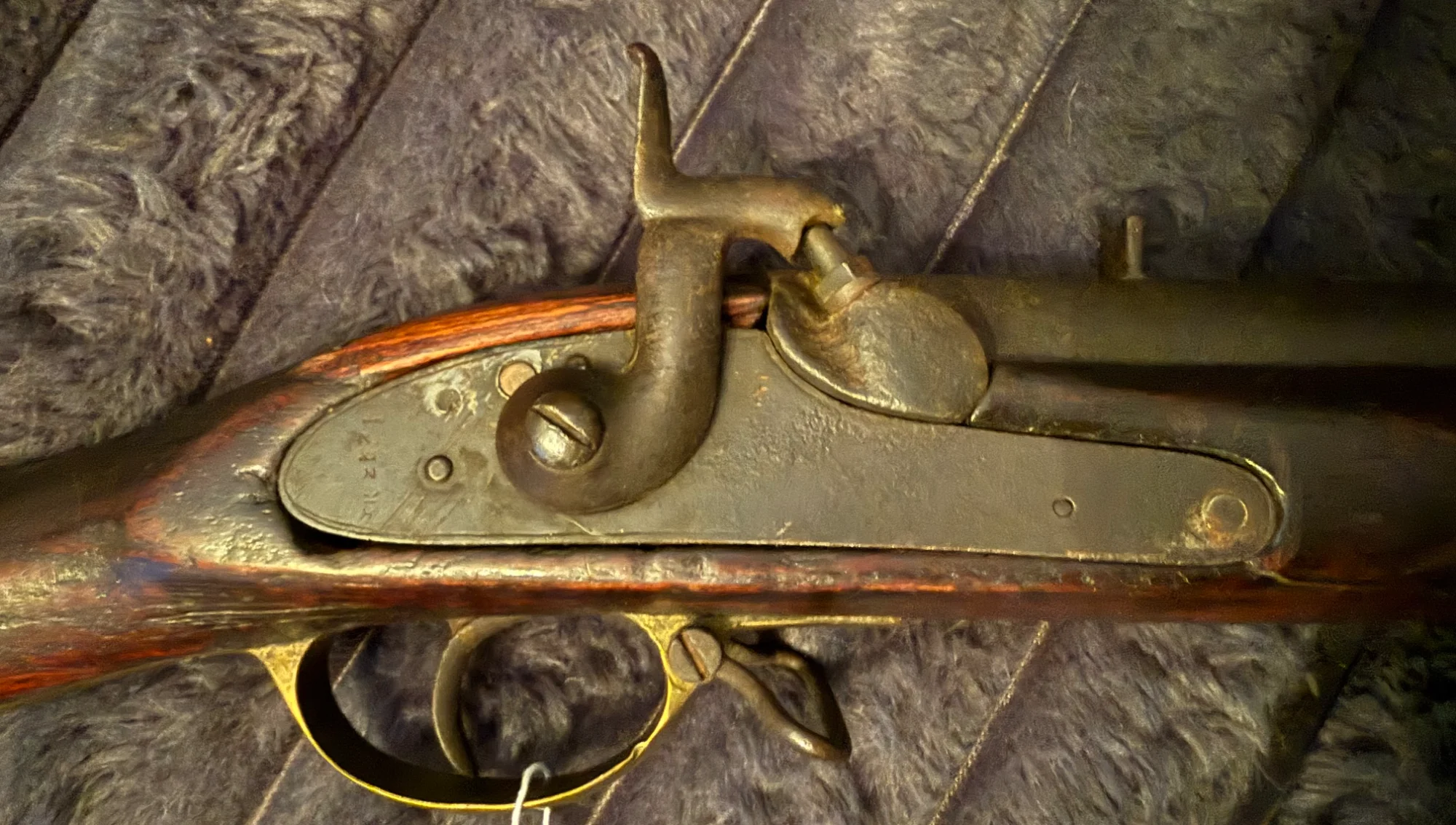
The lock plate and percussion bolster look a little different. The lock plate appears to have a single poorly drawn line around its perimeter and some numbers stamped behind the hammer.

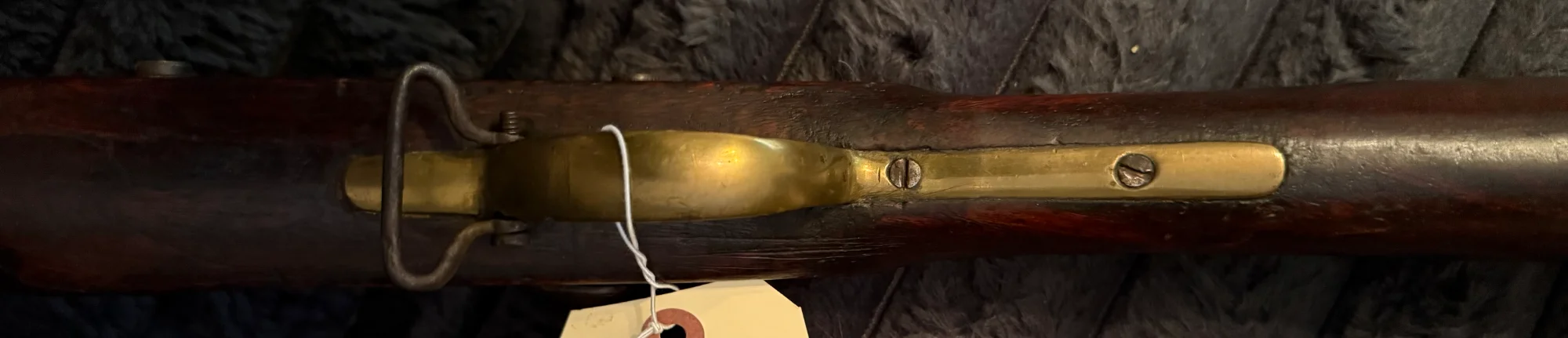
Here is a view of the side opposite the lock.
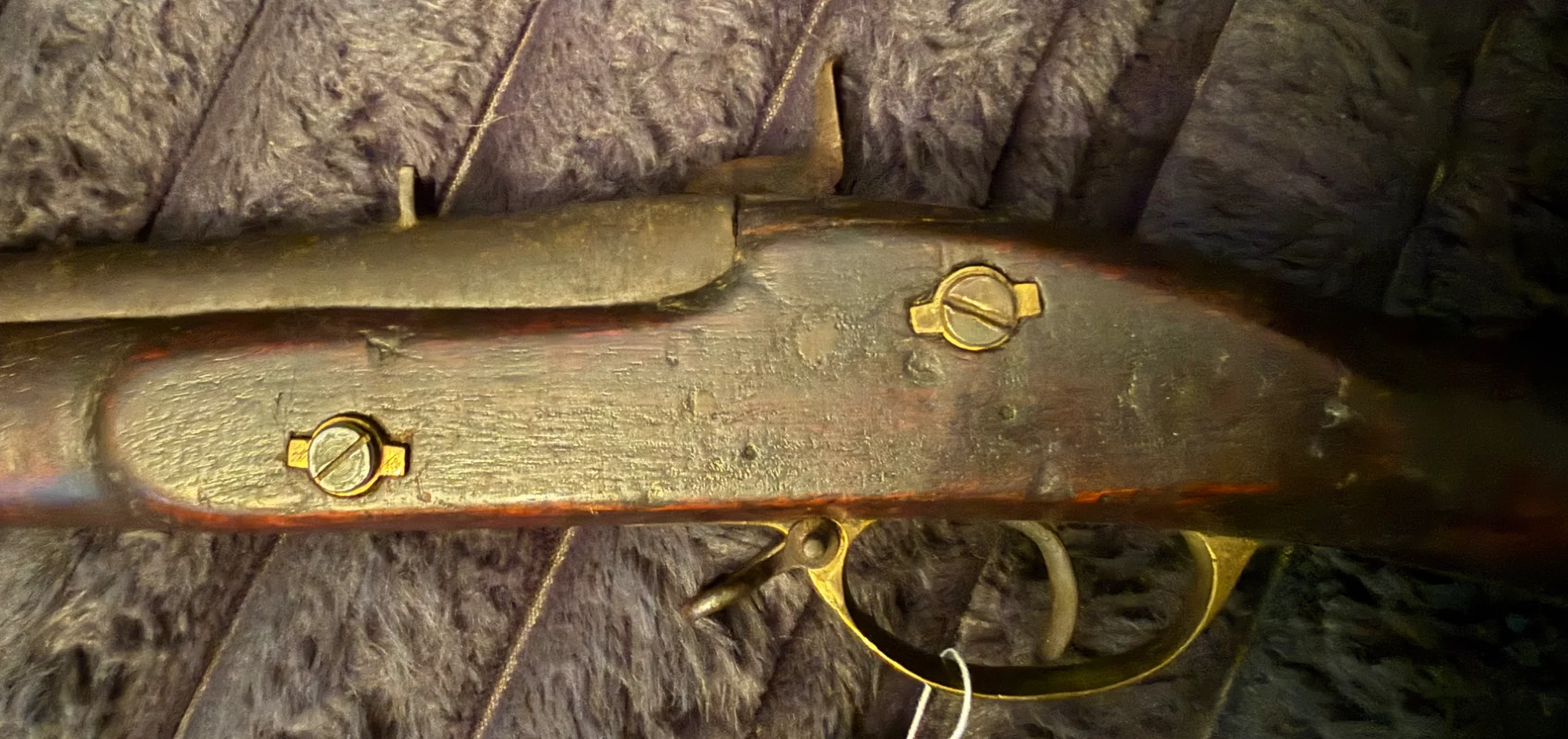
Here is a view of the trigger guard.
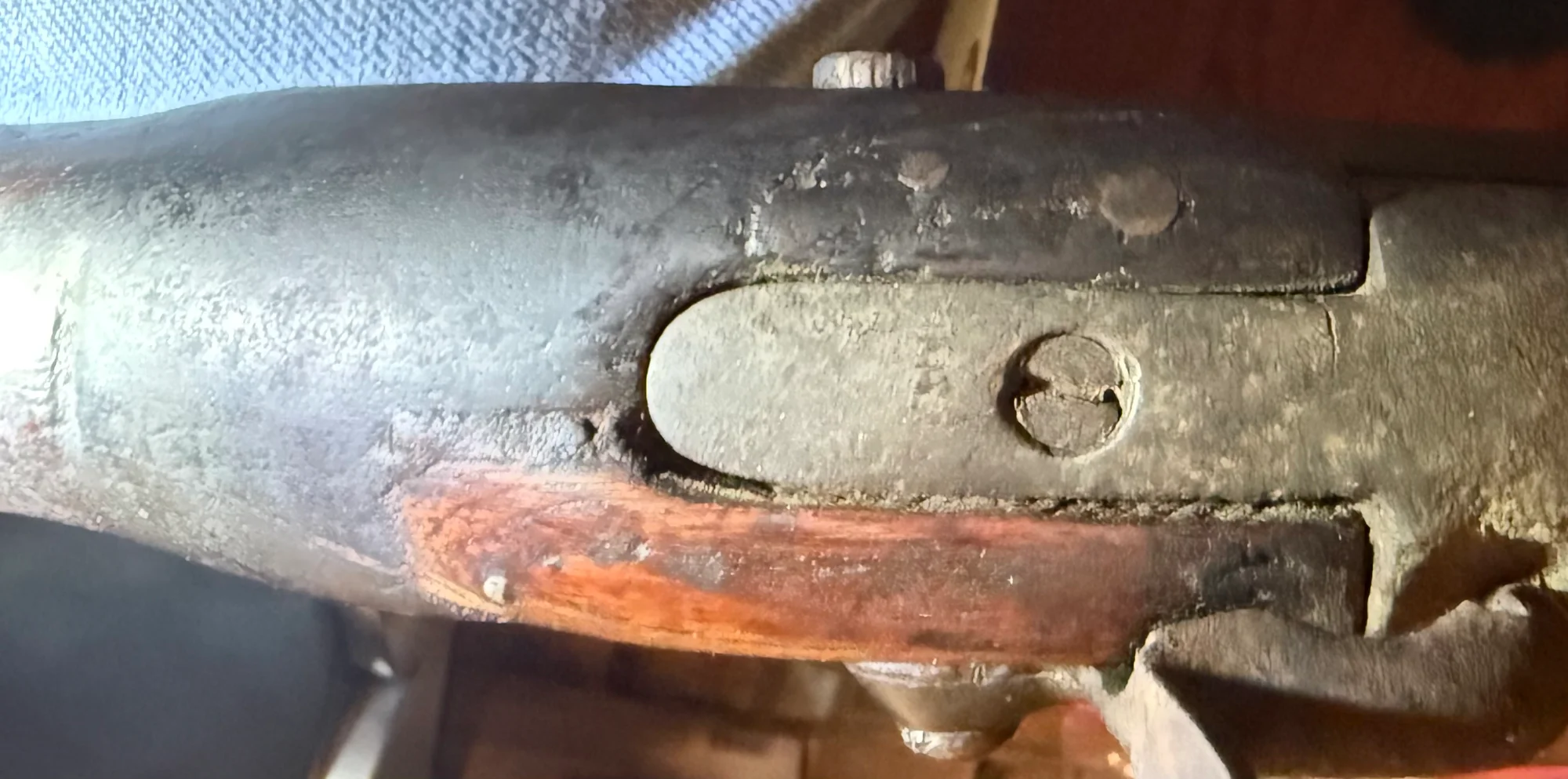
This shows repairs to the wood around the barrel tang.
So what do I have here? Is it a parts gun? Was it something made in a far flung corner of Britain's colonial empire? Is it something that might have been used in the American Civil War?
I won it at auction a few weeks ago. It was listed as an unknown gun. I did a little research and thought, "this looks like a Pattern 1842 musket!" and bid on it. I won. Now that it has arrived, I'm noticing all sorts of things that don't match a Pattern 1842. Things that I don't see at all are stamps on the barrel or on the stock, except for the number 466 on the lower stock.
Unlike the 1842, this gun has the barrel held in by pins, not wedges. The barrel length looks like about 37.5 inches rather than over 39 inches. The butt plate looks a little different.
The ramrod looks wrong and it feels like it is in that channel to stay! The nose cap is not stepped. The barrel is thin-walled and looks like it could be .69 caliber rather than .74 caliber.
The ramrod pipes look wrong.
The lock plate and percussion bolster look a little different. The lock plate appears to have a single poorly drawn line around its perimeter and some numbers stamped behind the hammer.
Here is a view of the side opposite the lock.
Here is a view of the trigger guard.
This shows repairs to the wood around the barrel tang.
So what do I have here? Is it a parts gun? Was it something made in a far flung corner of Britain's colonial empire? Is it something that might have been used in the American Civil War?


 Bringing the