Flintlock Reproduction?

R. Porter

Sergeant Major
Joined
Oct 6, 2020
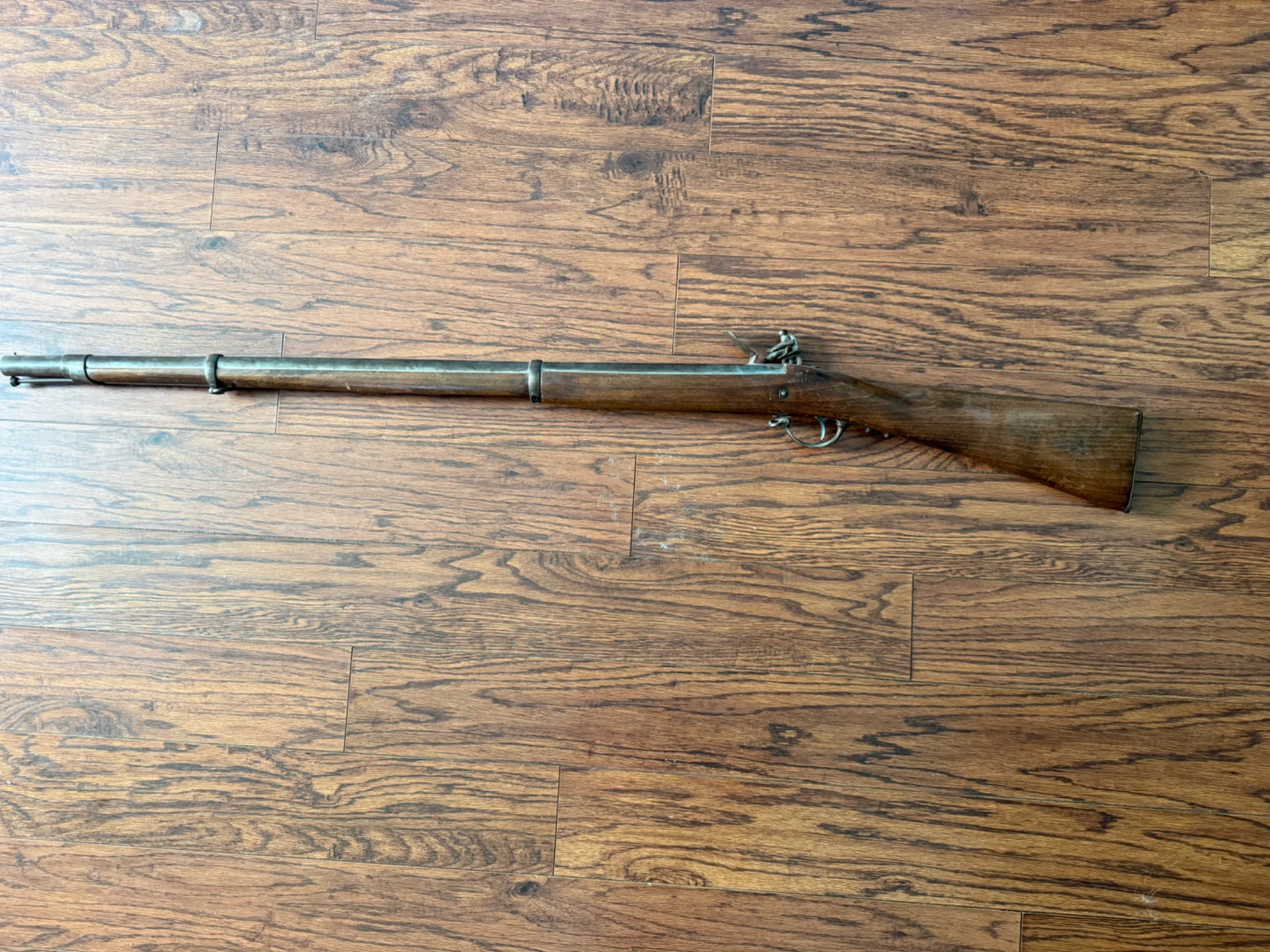
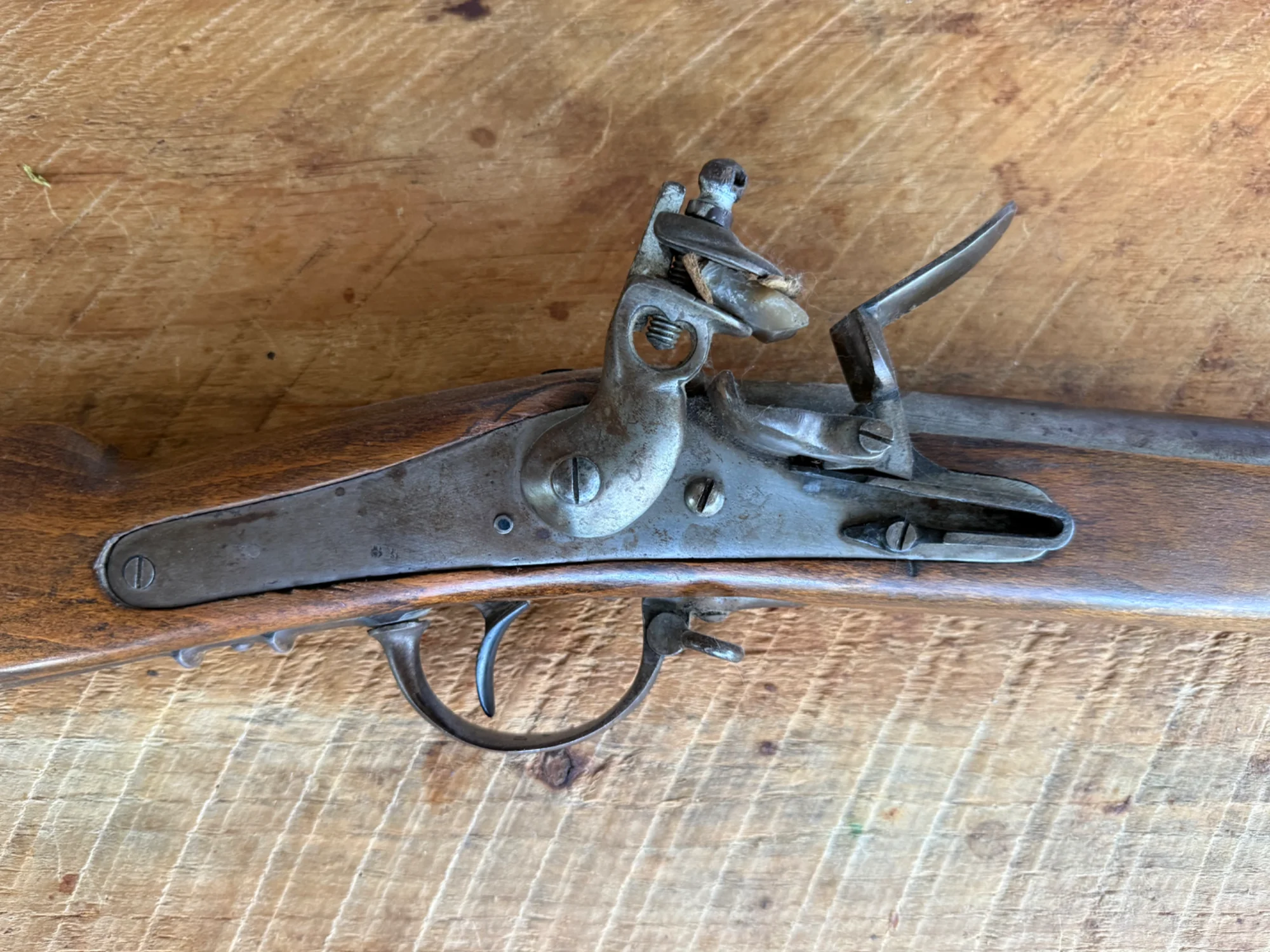
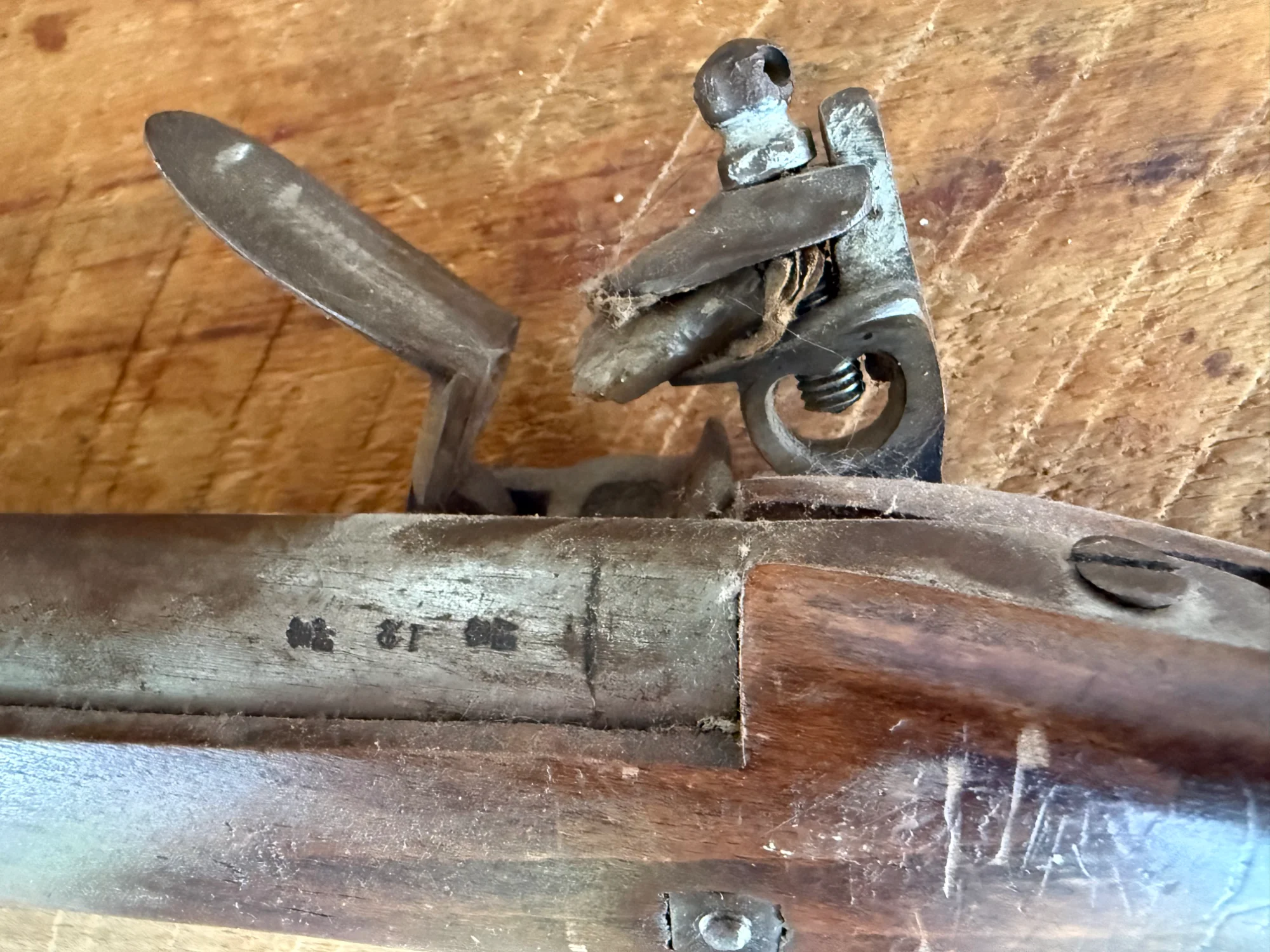
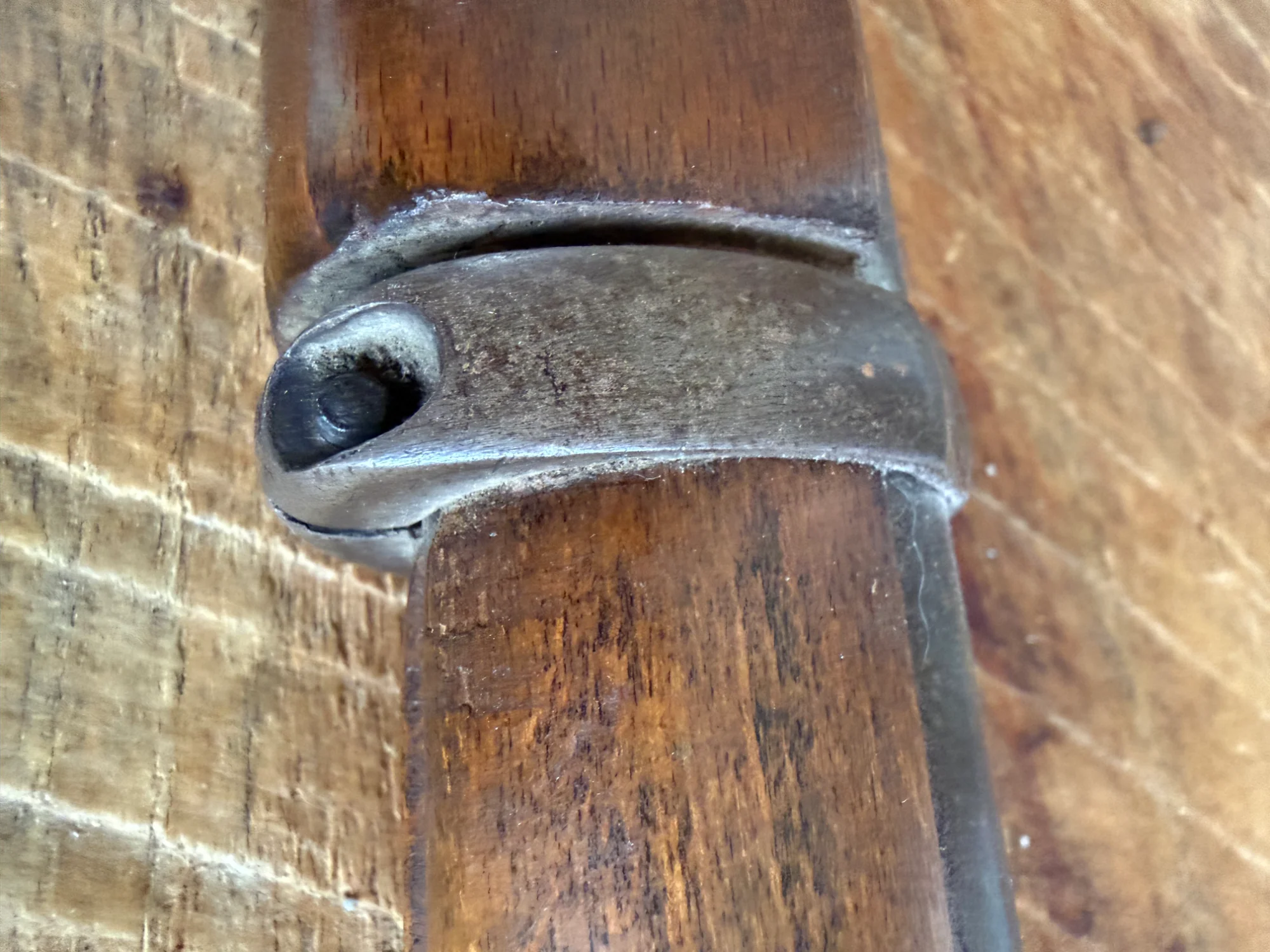
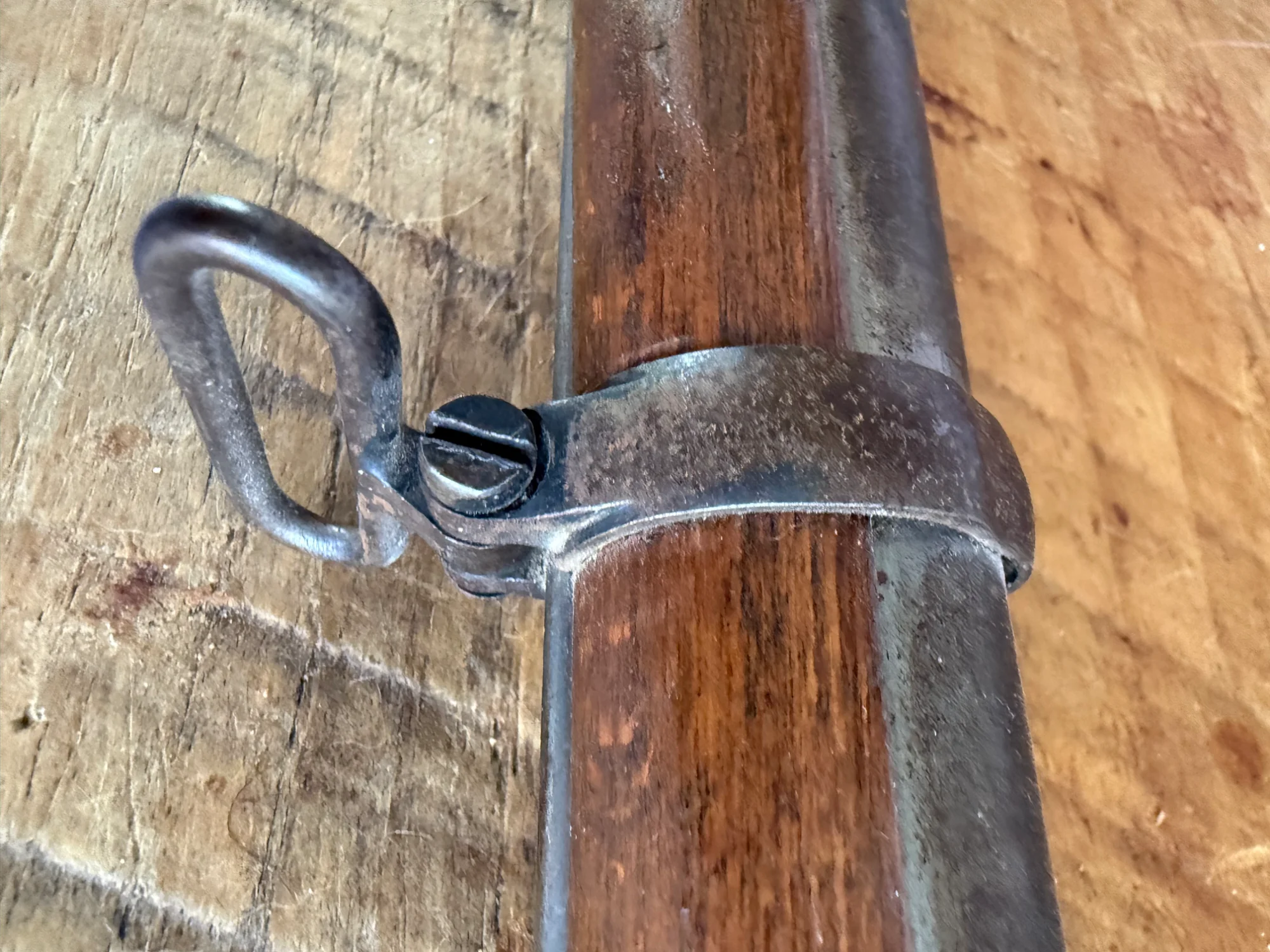
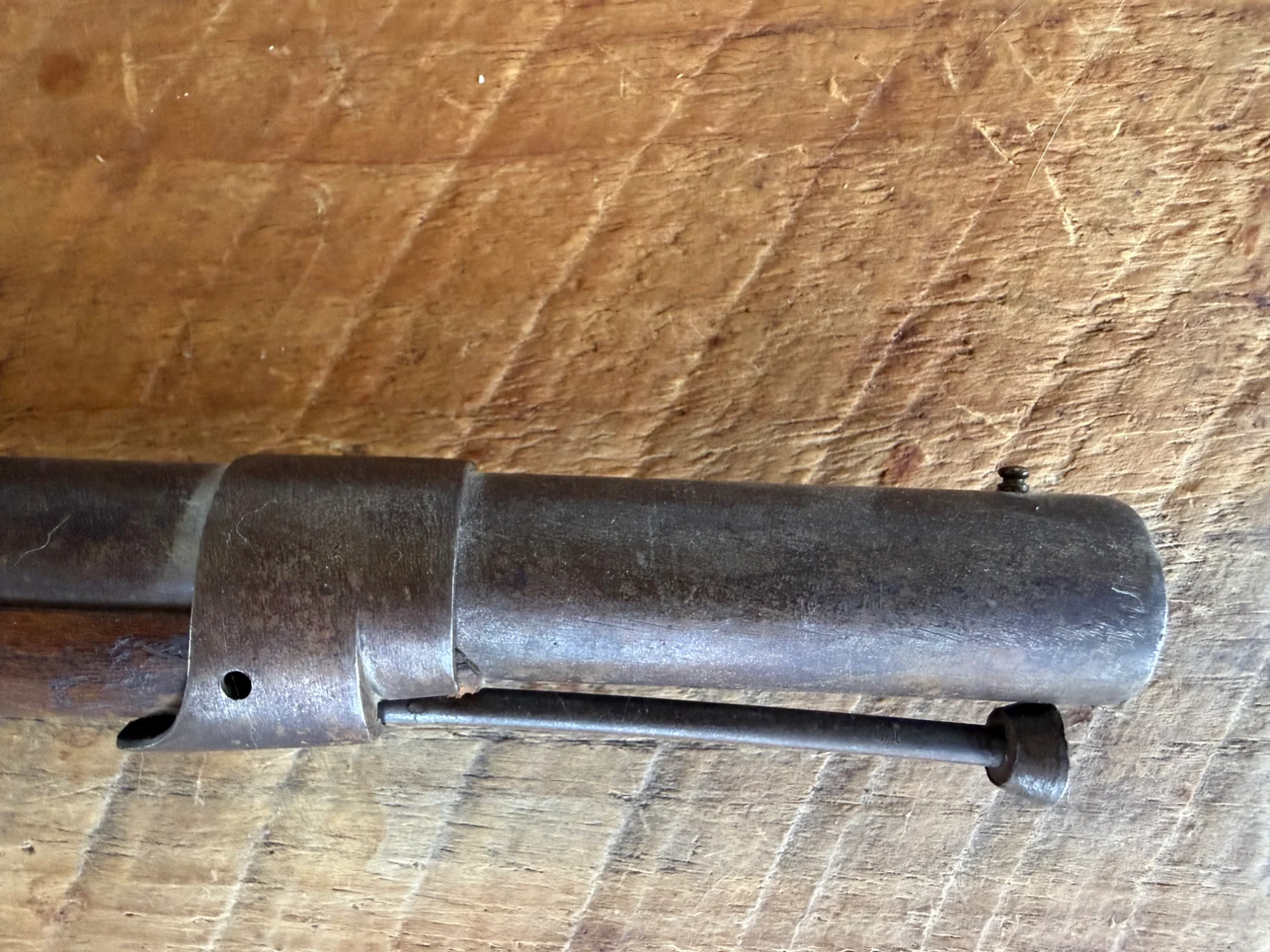
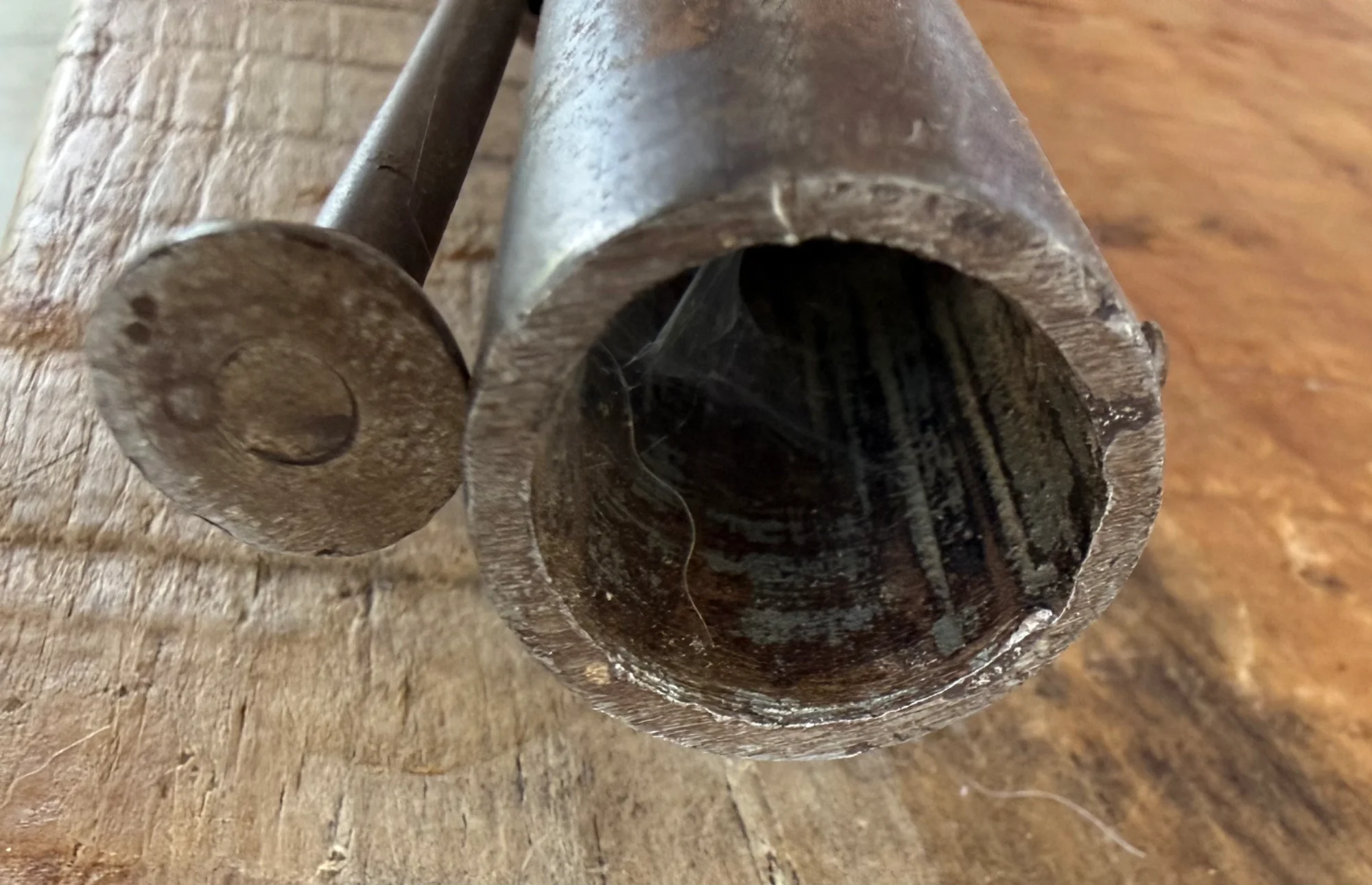
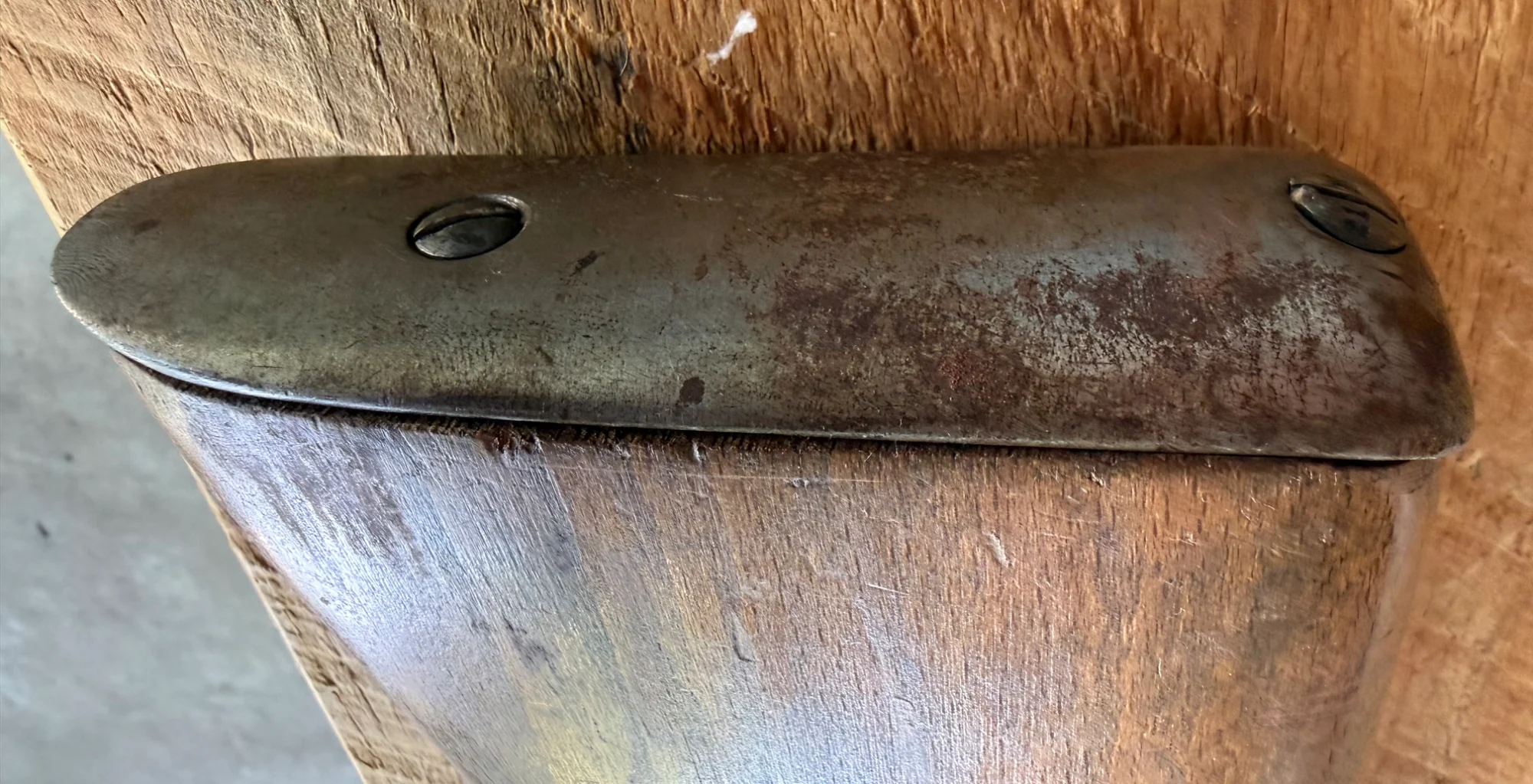
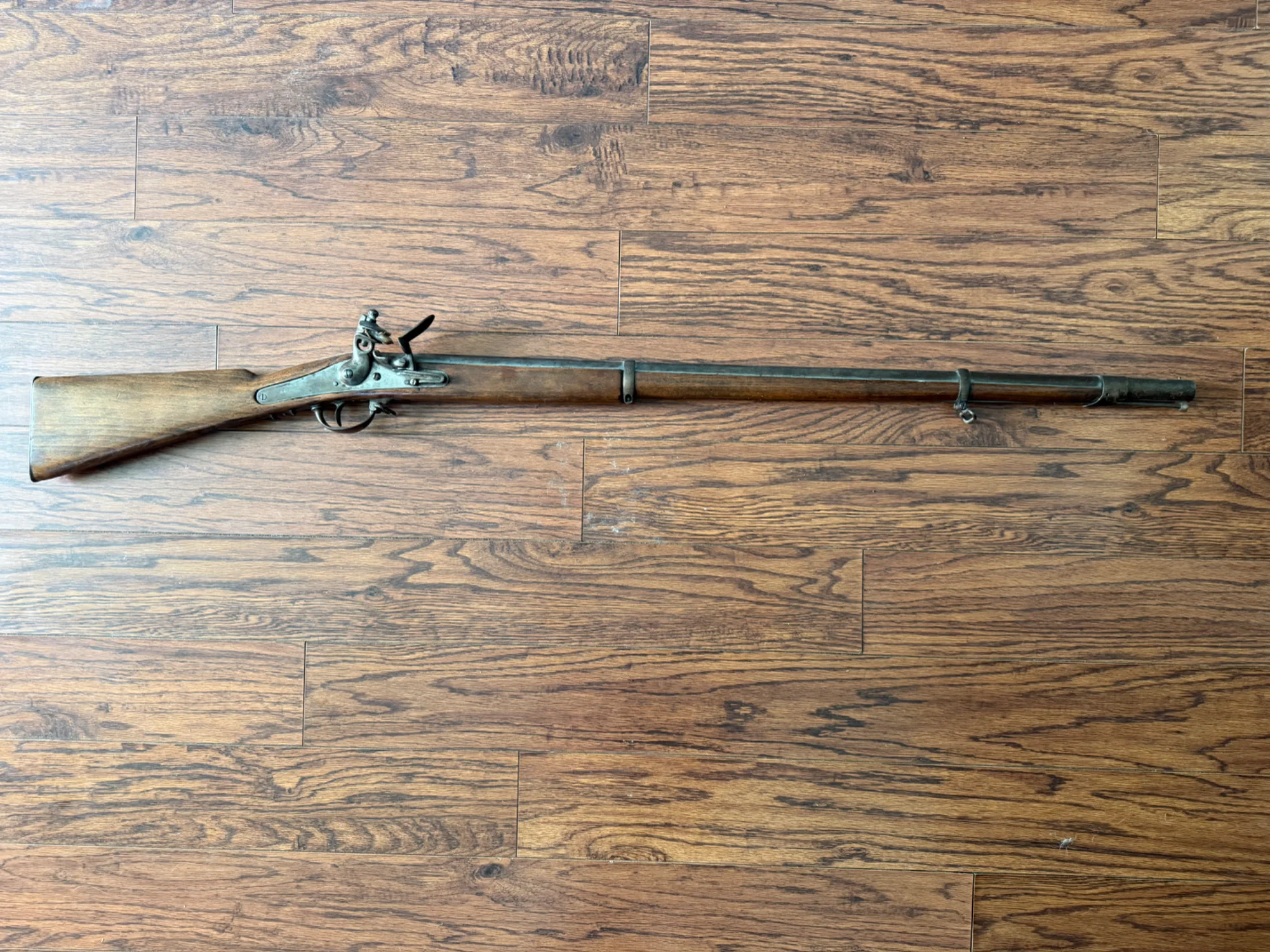
I have a flintlock rifle that is serving the purpose of room decor. It is an odd mixture of attributes which cause me to think it's of recent manufacture but its traits don't seem to match anything I have encountered, so maybe not an actual reproduction. It appears to be a flintlock with a back-action lock. If I recall correctly, flintlocks were going out of style by the 1840's when back-action locks were becoming popular. Back-action locks seem to have been common on military arms in Europe but not so much in North America. There is no stamp on the lock plate. The side plate is just a square nut. The two lower barrel bands screw together like on an Enfield. The band at the muzzle has a hole in it like it was made for a spring, but there is no spring. The bore diameter looks large and there appears to be rifling. It looks as if the barrel may have been cut down. There are some things stamped on the barrel near the breach, one of which appears to be a "12". The ramrod appears to be stuck so I haven't pulled it out to check for stamps or what may be stamped on the stock in the channel. The stock itself does not appear to have any stamps and seems to be in really good shape for something with any age, so maybe recent?

Does this gun look like something that actually existed or is it a wall-hanger made from parts? If parts, are they old parts or recent parts?
IMG_0566.webp
IMG_0567.webp
IMG_0569.webp
IMG_0568.webp
IMG_0570.webp
IMG_0571.webp
IMG_0574.webp
IMG_0572.webp
IMG_0573.webp
IMG_0577.webp
 
This looks like something that was sold here in the states in the late 60s. If I remember correctly, it was of European origin and had been used in the Belgian Congo. It's been so long ago, though, that I can't be certain that this is what it is. But that's what this reminds me of.
 
They are referred to African Trade muskets. Usually made by Belgian gunsmiths from the mid 19th century all the way up to the 1950s. Turner Kirkland imported them to America from what I've read. They used new and old musket parts and were sold to the colonies in Africa. So to me, yes it's a completely original musket, just one meant for the African market, not one that had a history here. You see them come up for auction fairly regularly. Most recommend not shooting them, but other have.
 
In the early 1970s these were sold with a lampstand that held the musket. I remember the ads in Americana magazine. They made a great deal of the Belgian origin of the musket and how the originals were sold to the American Army during the Revolution. I would not shoot this musket. Ever. As I understand it, it has no half cock - it's either rested or ready to go. Definitely a wall hanger.
 
The BP (black powder) proofmarks were introduced after the adoption of smokeless propellants around 1900. The '12' is 12-bore. However it is NOT a British proofmark. The mix of backspring lock and flintlock is rather anchronistic too. One thing to remember is that is in some parts of the workd, black powder was still used and available until after WW1. Percussion caps were not always available, hence the reliance on flintlocks. Belgian gunmakers produced Colt cap-and-ball revolvers for the Turkish market until 1914! In 1914, after the German invasion and occupation, the old Belgian gun trade was basically finished in it's form of independent family firms This may well be a Belgian weapon produced 1900 - 1914 for the African Market.
 
If it is a 20th century Belgian trade musket for the African or South American trade it should bear a Belgian proof mark. The Belgians were good gunmakers and cunning at reusing old parts in a new beech stock. They were still doing this sort of gun into the 1960s when the Belgian Congo became independent and the remaining shops sold off barrel loads of old stock to the USA.

As a back action flintlock it is most likely a percussion back lock which they converted to flintlock. If it looks sound and bears a Belgian Liege government proof mark it is probably sound to fire a modest load. That apparent crack where I presume the breech plug ends is rather worrying though. The pan is probably welded on to the ex percussion lock plate.

The rest of the metalwork is also probably re used 19th century French and Belgian military percussion parts. All set in a strong stable beech new stock. Have a look under the barrel and inside the lock. You might find some original maker or contractor marks. Pop in a couple of photographs if you find anything.

I find these recycled pieces of history fascinating. Some bits might have seen service in the Congo or with the French in Algeria, Syria, Vietnam, Italy or even Crimea. Not that ramrod though. Looks more like something my old granny might have used for washing clothes in the dolly tub or copper of a Monday morning in her 'back us'.

Looking at the misfit of the tang and woodwork I do wonder if the barrel was swapped in later on. Easy enough with a flintlock barrel. A collection of more history than you could shake a stick at.

Clean it up and tell tall tales of how parts might have routed the Russians in Crimea or liberated and unified Italy. A good partner would be one of the 'Zulu' breech loading shotguns (which never saw Africa) with which the Belgians flooded the US cheap shotgun market converted from rifles into shotguns after the 1870 War, which had already been converted from muzzle loaders. Fighting the Prussians across France in 1870. Saving Lebanese Christians with Emperor Louis Napoleon III in the 1860 Crisis in the Ottoman Empire causing the French National Anthem to be changed to "Departing for Syria". Or driving the Austro-Hungarian Empire of Emperor Franz Joseph out of Italy in 1859. There are some wonderful stories of their derring do to be entirely made up to impress your grand children and more gullible friends.

Thank you for showing us this composite historical item.
 
Belgians cobbled together guns from all sorts of left over parts. Somewhere I have a super ugly one with a hooked target style buttplate. It has a brass buffalo head that was cut out and nailed onto the forearm instetad of inletted. Strictly a trade gun.
 
If it is a 20th century Belgian trade musket for the African or South American trade it should bear a Belgian proof mark. The Belgians were good gunmakers and cunning at reusing old parts in a new beech stock. They were still doing this sort of gun into the 1960s when the Belgian Congo became independent and the remaining shops sold off barrel loads of old stock to the USA.

As a back action flintlock it is most likely a percussion back lock which they converted to flintlock. If it looks sound and bears a Belgian Liege government proof mark it is probably sound to fire a modest load. That apparent crack where I presume the breech plug ends is rather worrying though. The pan is probably welded on to the ex percussion lock plate.

The rest of the metalwork is also probably re used 19th century French and Belgian military percussion parts. All set in a strong stable beech new stock. Have a look under the barrel and inside the lock. You might find some original maker or contractor marks. Pop in a couple of photographs if you find anything.

I find these recycled pieces of history fascinating. Some bits might have seen service in the Congo or with the French in Algeria, Syria, Vietnam, Italy or even Crimea. Not that ramrod though. Looks more like something my old granny might have used for washing clothes in the dolly tub or copper of a Monday morning in her 'back us'.

Looking at the misfit of the tang and woodwork I do wonder if the barrel was swapped in later on. Easy enough with a flintlock barrel. A collection of more history than you could shake a stick at.

Clean it up and tell tall tales of how parts might have routed the Russians in Crimea or liberated and unified Italy. A good partner would be one of the 'Zulu' breech loading shotguns (which never saw Africa) with which the Belgians flooded the US cheap shotgun market converted from rifles into shotguns after the 1870 War, which had already been converted from muzzle loaders. Fighting the Prussians across France in 1870. Saving Lebanese Christians with Emperor Louis Napoleon III in the 1860 Crisis in the Ottoman Empire causing the French National Anthem to be changed to "Departing for Syria". Or driving the Austro-Hungarian Empire of Emperor Franz Joseph out of Italy in 1859. There are some wonderful stories of their derring do to be entirely made up to impress your grand children and more gullible friends.

Thank you for showing us this composite historical item.
I'm ahead of you on the Zulu shotguns. I posted a picture of three that I have somewhere on the forum.
 

Learn About Us
About CivilWarTalk
Contact the Webmaster
Meet the Staff
Link to CivilWarTalk
Join Our Community
Register
Browse Forums
View Today's Discussions
Search the Forum
Get Help
FAQ
Student Guide
Forum Rules & Etiquette
Copyright / DMCA

     Contact Us CivilwarTalk on Facebook CivilWarTalk on YouTube CivilWarTalk on Twitter RSS Feed

Bringing the American Civil War and More to Life.
© 1999 - , CIVILWARTALK, LLC - Site Version 10.0

SlaveryTalk.com - SecessionTalk.com - CivilWarTalk.com - ReconstructionTalk.com
Back
Top