Enfield 1862 Conundrum

I DESERVE AN IDIOT AWARD! Just to prove the pitfalls of jumping to conclusions ………. Last night I actually managed to get a proper sharp penlight beam down the barrel. Sure its filthy and rusty down and that and not realising how slow and gradual the rifling twist is led me to believe I had a smooth bore. Seems that what I have is in fact a rifled barrel with the majority rifling all worn off and the remainder full of dirt. Plus it seems to run out about 1.5" from the muzzle. Would this be typical of a well used bore? Maybe one regularly used with badly gauged Minie balls or buckshot such that the muzzle became widened. Maybe someone recognises this pattern of wear and neglect?
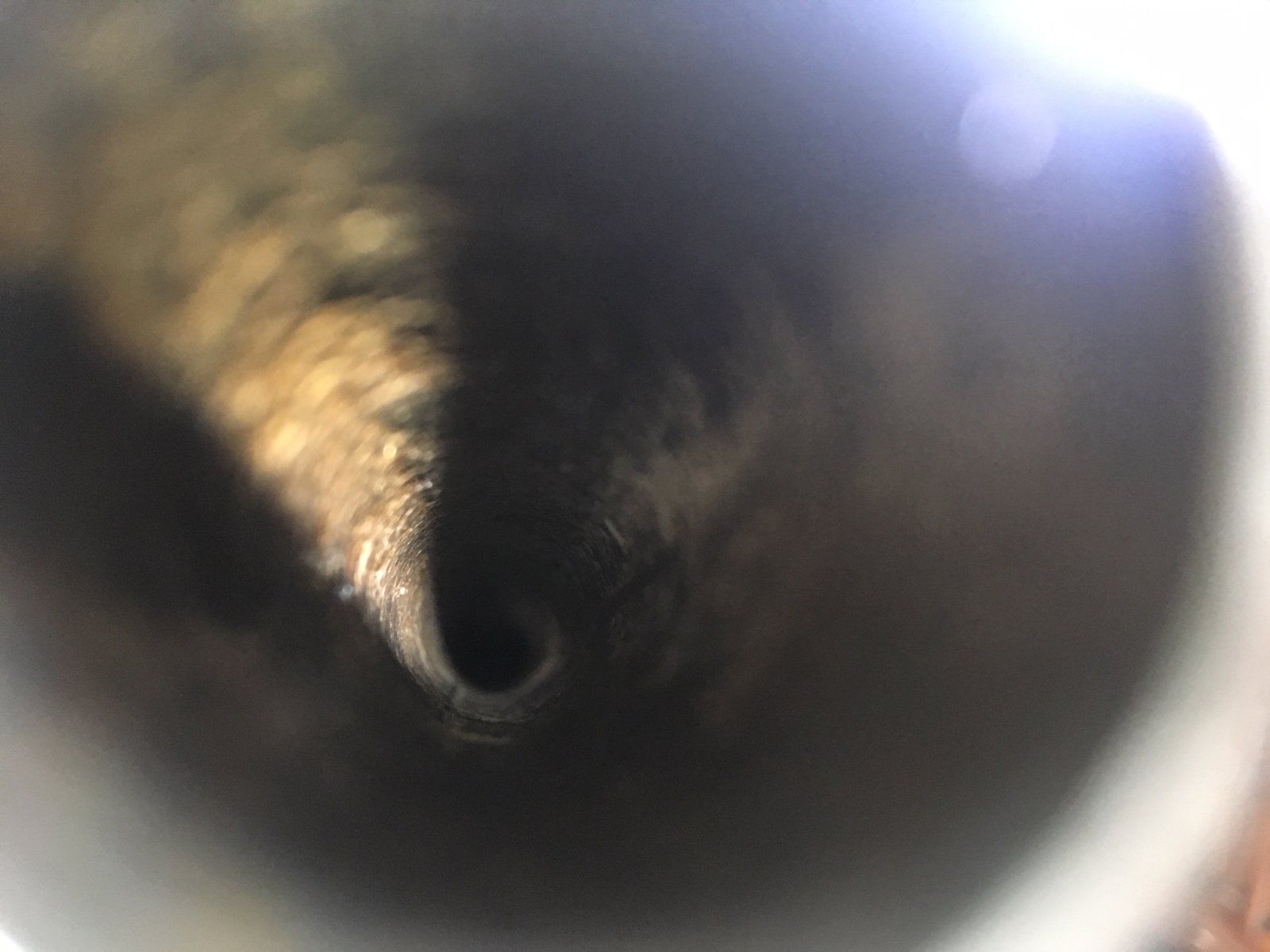
bore.JPG

What please would be the best way to treat the barrel at this stage? Im not going looking to shoot this but Id like to restore it as much as possible.
Cheers
Will
 
I DESERVE AN IDIOT AWARD! Just to prove the pitfalls of jumping to conclusions ………. Last night I actually managed to get a proper sharp penlight beam down the barrel. Sure its filthy and rusty down and that and not realising how slow and gradual the rifling twist is led me to believe I had a smooth bore. Seems that what I have is in fact a rifled barrel with the majority rifling all worn off and the remainder full of dirt. Plus it seems to run out about 1.5" from the muzzle. Would this be typical of a well used bore? Maybe one regularly used with badly gauged Minie balls or buckshot such that the muzzle became widened. Maybe someone recognises this pattern of wear and neglect?View attachment 307249
What please would be the best way to treat the barrel at this stage? Im not going looking to shoot this but Id like to restore it as much as possible.
Cheers
Will
As to cleaning the barrel.1st I use hot water poured right down the barrel. CAUTION!! THE BARREL WILL GET TOO HOT TO TOUCH(make a sling and hold on to that)
2nd, I run dry patches down the barrel after its cooled down a little to dry the barrel. next I run oiled patches through the barrel until they come out clean. than a clean oiled patch to protect the barrel from corrosion.
3rd now you should have a really clean barrel, however with this being an original, I might skip the hot water step since I don't know how the wood would react to the heat and hot water getting spilled on it.
 
Ok will do and thanks for the tips. What I've done so far is to run the patches through and already it's coming cleaner. I can now clearly see the full rifling twist right down the barrel! There's some evidence of pitting and the rifling seems to be worn close up by the muzzle but at least I can now celebrate owning a rifle and not a musket! The opening at the muzzle is around 16.5mm diameter so that doesn't seem to follow what I'd expect for .577 cal. Strange.
 
Last edited:
Could the rifling have been shot out? Or could it have been built this way? Was it common to have a worn bore reamed out eventually? Why? It's effectively a 4ft shotgun.
That was the weapon issued to less trusted Indian troops post-Mutiny.
It became policy to issue trusted Sepoy units weapons one step below the issue arm of the British army regulars (that meaning that when the regulars had the Enfield, trusted Sepoys would have the Brunswick) and less-trusted Sepoy units weapons two steps below the issue arm of the British army regulars (thus they were issued the .656 smoothbore).

That's what was going on here. (or would be if you still think it's a smoothbore)

It may have been made either by boring out an Enfield or by making it new, but either way it was intended to closely resemble an Enfield.

If it does have rifling traces, as you note on the second page of the thread, that may indicate it was reamed out.
 
Last edited:
The Indian Amy smooth bores were made as such not bored out rifled barrels.
My understanding is that both took place. The example I linked of the Pattern 1858 Indian .656 smoothbore musket held at the National Army Museum at London was bored out locally (in India).
 
Thanks for this help. I've cleaned and brushed the bore and there is full rifling down there. So I am pretty happy it's not a smoothbore. The muzzle is tapered comically down the last inch and a half which was causing me to think it had been bored out. I now suspect this was done for use with ( or caused by) a muzzle stopper which would have been standard British military equipment.
 
I recently saw the kind of damage that you describe at the end of the barrel of a rusty 61 Springfield. I also suspected that the rust pattern (1-1/2 to 2 inches at the end were more pitted than the rest) was somehow due to a tampion.
 

Learn About Us
About CivilWarTalk
Contact the Webmaster
Meet the Staff
Link to CivilWarTalk
Join Our Community
Register
Browse Forums
View Today's Discussions
Search the Forum
Get Help
FAQ
Student Guide
Forum Rules & Etiquette
Copyright / DMCA

     Contact Us CivilwarTalk on Facebook CivilWarTalk on YouTube CivilWarTalk on Twitter RSS Feed

Bringing the American Civil War and More to Life.
© 1999 - , CIVILWARTALK, LLC - Site Version 10.0

SlaveryTalk.com - SecessionTalk.com - CivilWarTalk.com - ReconstructionTalk.com
Back
Top