What is this? Confusing 1862 Enfield Rifle

PCW

Cadet
Joined
Nov 6, 2023
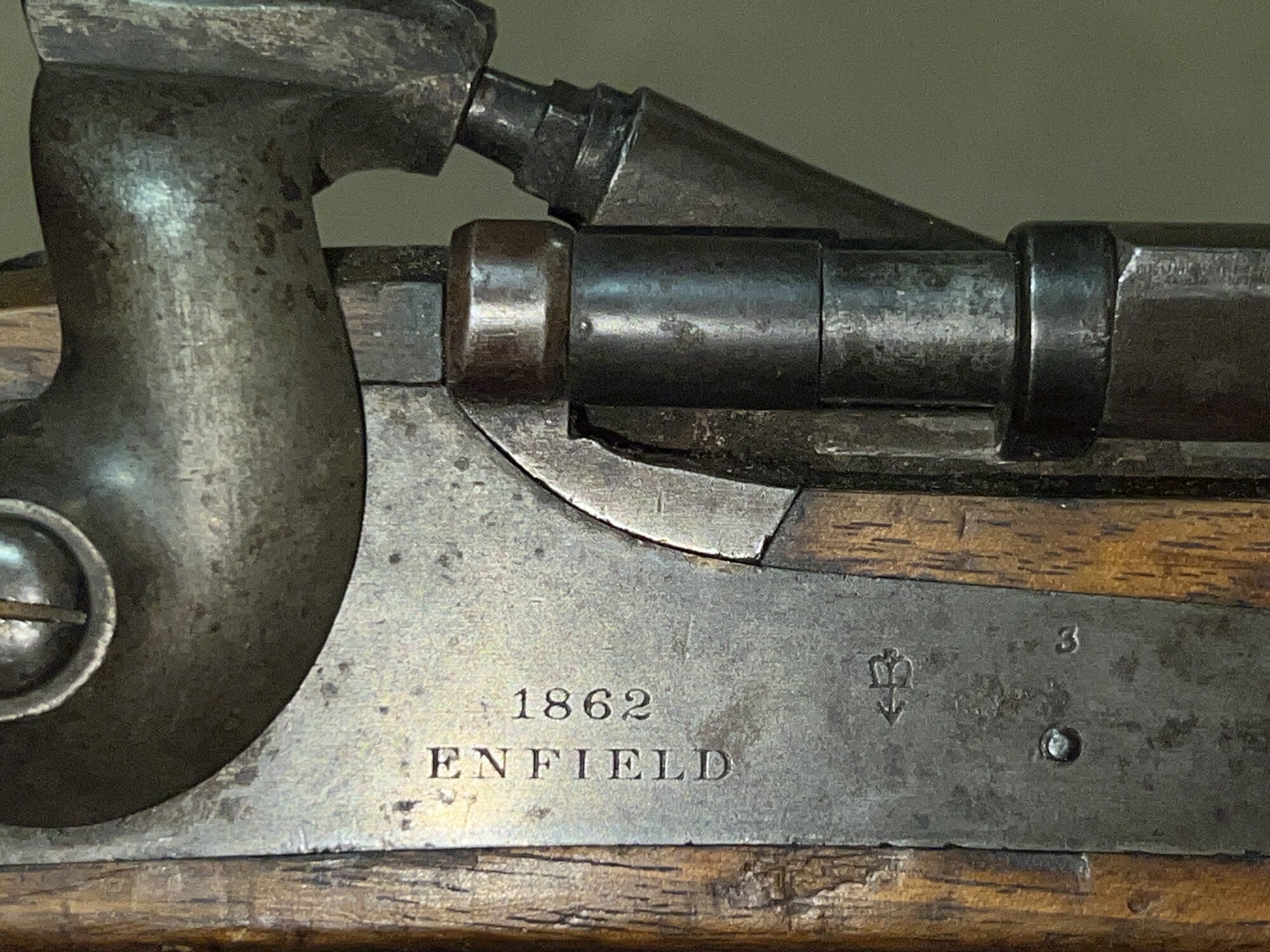
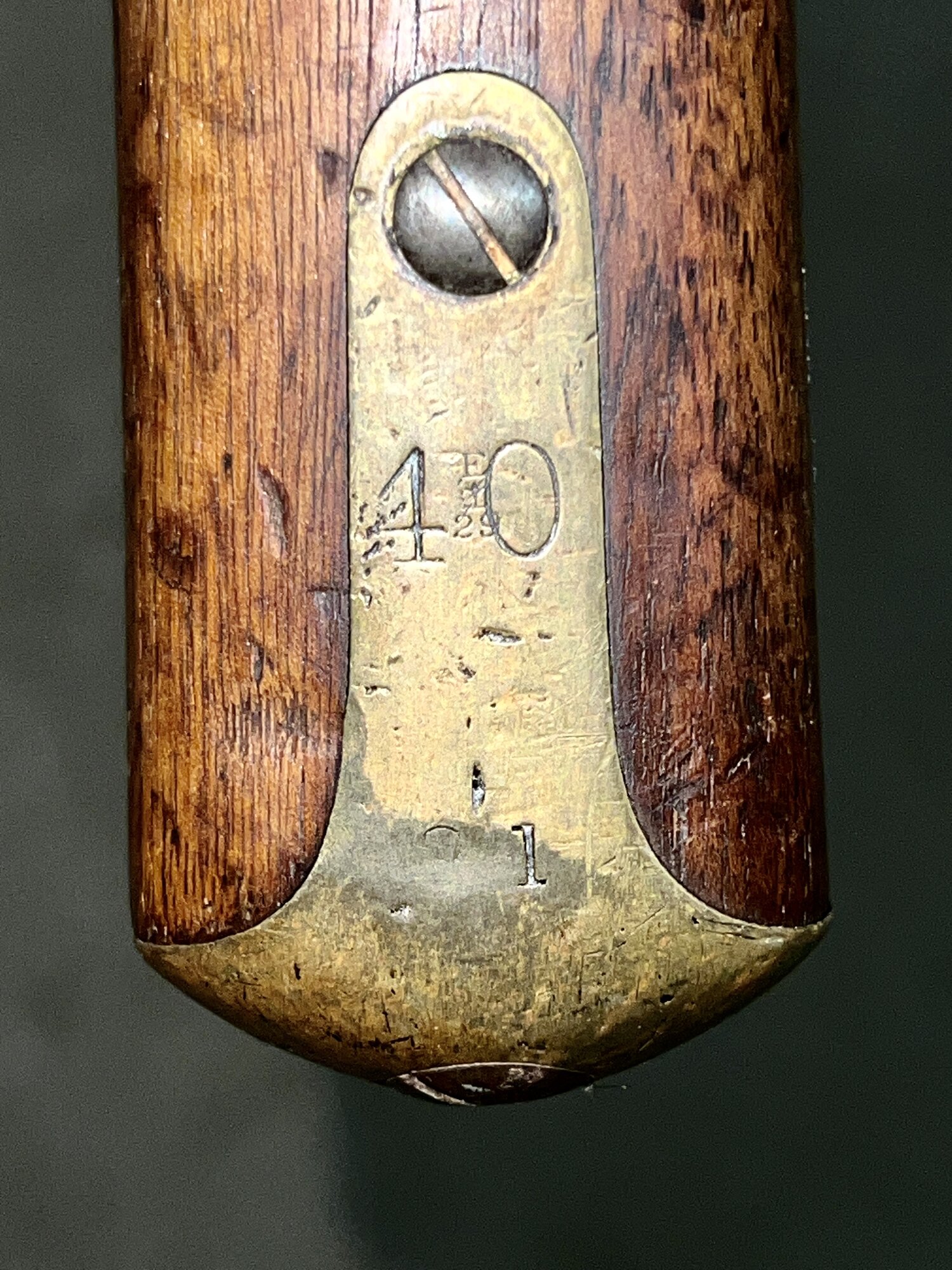
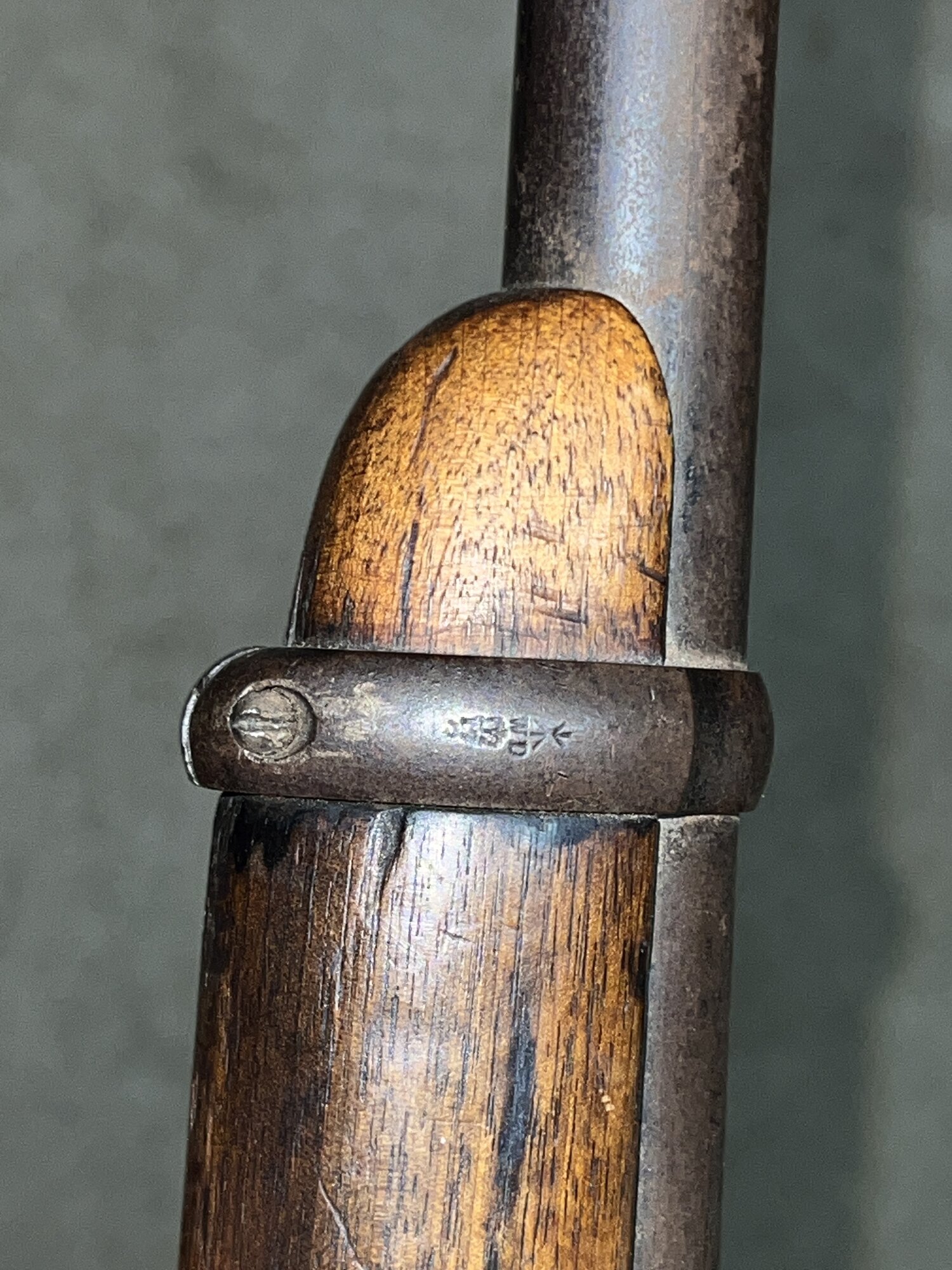
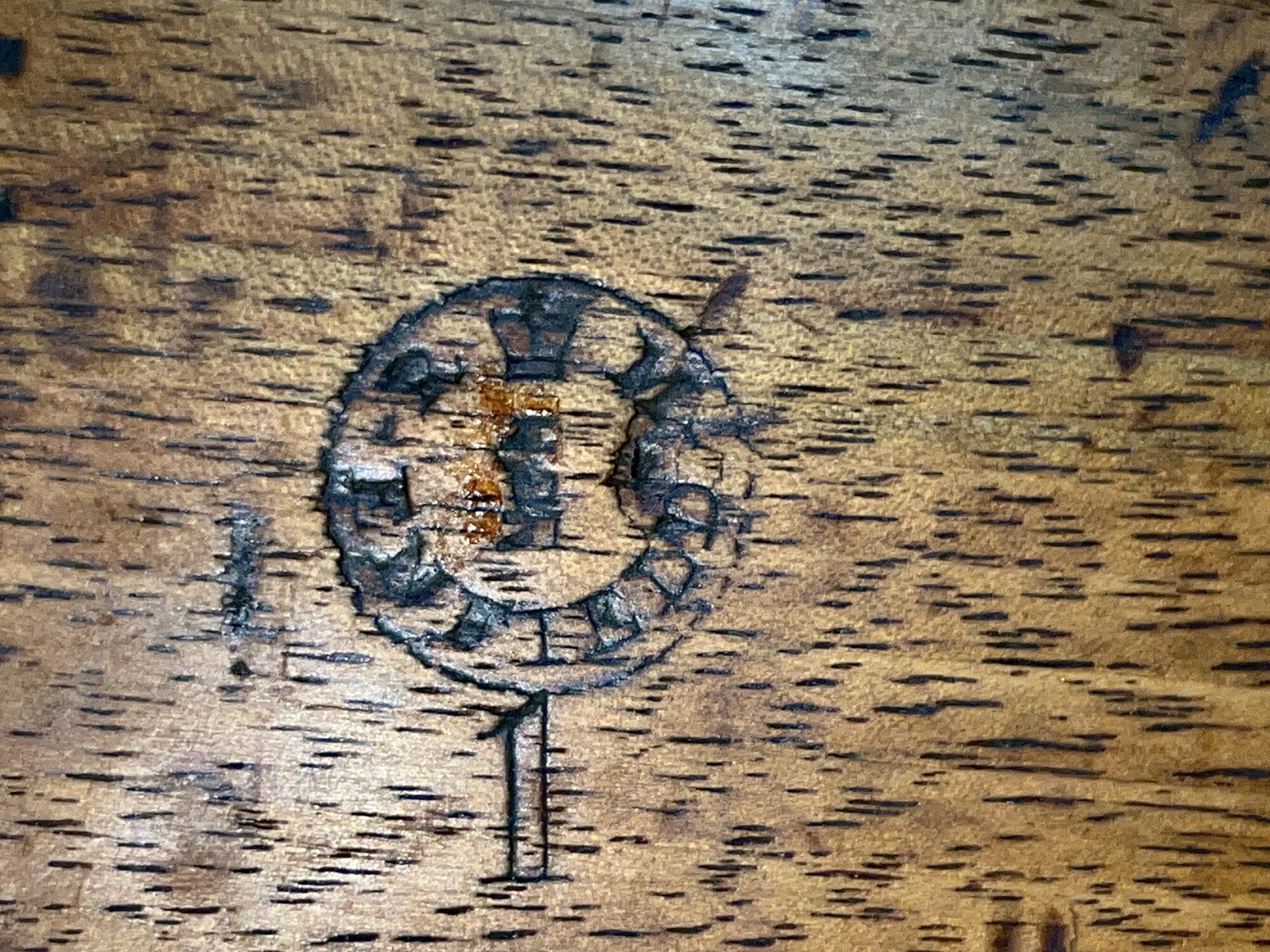
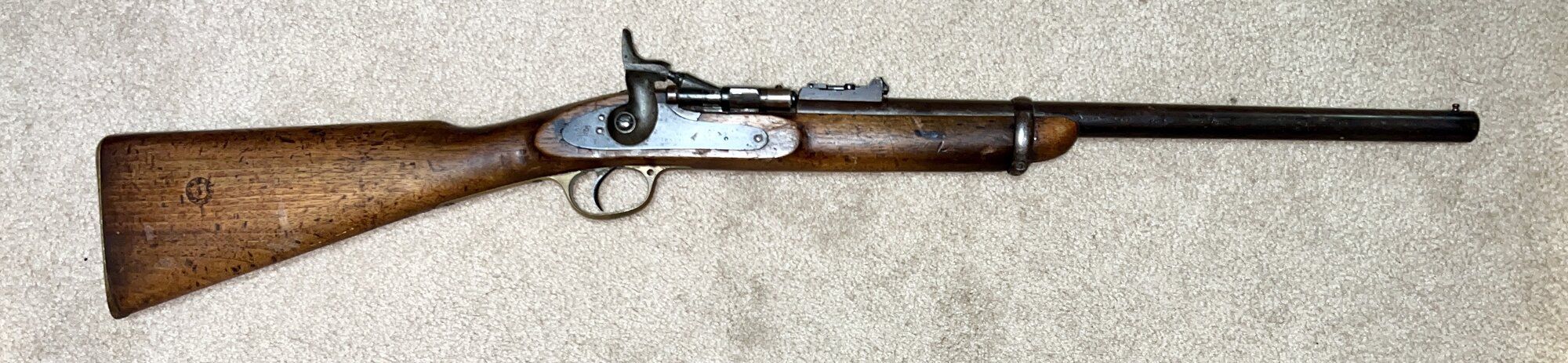
I inherited what appears to be an 1862 Enfield Rifle. However, after looking up and viewing numerous posts / photos of 1862 weapons - my gun is "different". Can anyone explain or help me identify the weapon?? Noted differences: The identification stamp reads Enfield, not Tower. The stock number is 40 horizontal and not a large number vertically. The barrel is short with only one bracket verse long with three - doesn't appear to be modified? The top of the gun barrel near the striker has additional hardware and isn't just simply the striker like other weapons of similar dates. The weapon resembles a shotgun verses a long rifle, although it has flip-up adjustable aiming. So-o confused. Is this modified or an experimental model with a serial number of 40??? Or just a really odd fake?
IMG_8942.jpeg
IMG_8934.jpeg
IMG_8936.jpeg
IMG_8937.jpeg
IMG_8938.jpeg
IMG_8933.jpeg
IMG_8939.jpeg
IMG_8935.jpeg
 
Johan Steele's comment that it was an "Enfield manufactured" arm means it was made in the British government owned "Royal Small Arms Factory" located at Enfield, England, in 1862. At some later point it was converted to a cartridge arm, and the WD stamps on the conversion parts suggests that it was converted by the government and accepted, as a converted arm, by the British "War Department" and so stamped WD
 
Thank you all for the enlightenment of my "British/Canadian" firearm.

From what I gather, the British supplied arms to both sides of the conflict… was that British profiteering, or was that a faint hope the civil war would weaken the US and allow the British an opportunity to reverse the 1776 Revolution from a little over 80 years earlier??
 
Yup. A REAL Enfield government gun, Class 1. It is an early conversion and probably from Canada. They got a lot of Snider II*s after the Fenian Raid - so well after the War. It was manufactured to take the modified Boxer round with a squared rim, IOW not converted from the earlier rounded rim (Mk1*). All the remaining MkII*s in Britain were modified to MkII** with a strengthened breechblock. if the underside of the breechblock is cylindrical (true circular form), it has the new breechblock.

However, this was issued as a standard 3-band long rifle. This has been cut down to regulation - not a backwoods job - retaining the original backsight. Although it looks like the cavalry carbine, the sight and the hole for a sling swivel in the forward trigger guard is the givaway. These cut-downs were used for constabulary (police) carbines or cadet carbines If it is smooth-bored, it may well have been used as a prison riot carbine, firing a shot cartridge. A Mk II* would have had a 'cupped' hammer originally, but this one has been ground down or replaced with a Mk III flat hammer, probably on conversion. It seems to have had two numbers, the lower one the original and partly erased
 
Thank you all for the enlightenment of my "British/Canadian" firearm.

From what I gather, the British supplied arms to both sides of the conflict… was that British profiteering, or was that a faint hope the civil war would weaken the US and allow the British an opportunity to reverse the 1776 Revolution from a little over 80 years earlier??
The "British" government sold no arms to either side. Various private manufactures and wholesalers did sell to anyone who had cash or credit.
The British government did not forbid or interfere with these private sales.
The British government allowed such private sales to countries around the world - the Model 1853 Enfield rifle-musket was the "AK-47" of it's time - manufactured in various countries and used by various countries.
but yours was made by the British Government.
 
Thank you all for the enlightenment of my "British/Canadian" firearm.

From what I gather, the British supplied arms to both sides of the conflict… was that British profiteering, or was that a faint hope the civil war would weaken the US and allow the British an opportunity to reverse the 1776 Revolution from a little over 80 years earlier??
The British government had no support for either side and sales to either side were commercial ones driven by company profit. Public opinion was firmly on the Union side if anything. The British government definitely did not want the 13 colonies back. If one looks at the 1814 War initiated by the USA the principal British war aim was basically for the USA to stop it and go away. A reversal of the American Rebellion was a purely USA issue.
 
The British government had no support for either side and sales to either side were commercial ones driven by company profit. Public opinion was firmly on the Union side if anything. The British government definitely did not want the 13 colonies back. If one looks at the 1814 War initiated by the USA the principal British war aim was basically for the USA to stop it and go away. A reversal of the American Rebellion was a purely USA issue.
Yulzari:

I am not a student of the War of 1812, but wanted to comment that your depiction of the US and Britain sounds like teenagers after they broke off a teenage romance:

Uncle Sam: "She must still love me and wants me back, that's why she is messing with me!"

Britannia: "I just want him to leave me alone - I don't want him back!"
 
  • Haha
Reactions: PCW
The Brits decided they were NEUTRAL, but, like France. missed the Southern cotton - forcing them to start plantations in East Africa and India. There was no love lost for the North. Civilian-made arms were supplied to both sides. Surplus arms did make it across the pond - 'sold out of service', but were mainly type 2 P1853s (spring retained bands), Brunswick rifles and older percussion and flintlock muskets sold on by civilian gunmakers.

BTW - The Royal Small Arms Factory Enfield was the main supplier of rifles to the government, with only occassional contracts to the London Armoury Company. 1858 saw the end of contract orders for 'consortiums' and sub-contracting gunmakers. Only the Volunteer movent and the Civil War kept them going. As a result, the end of the Civil War saw many British gunmakers going bust. RSAF Enfield was now the only supplier with the later addition of Birmingham Small Arms and London Small Arms (ex-London Armoury Company) who had 'American System' production lines to Enfield standard, but that was not until the 1870s.
 
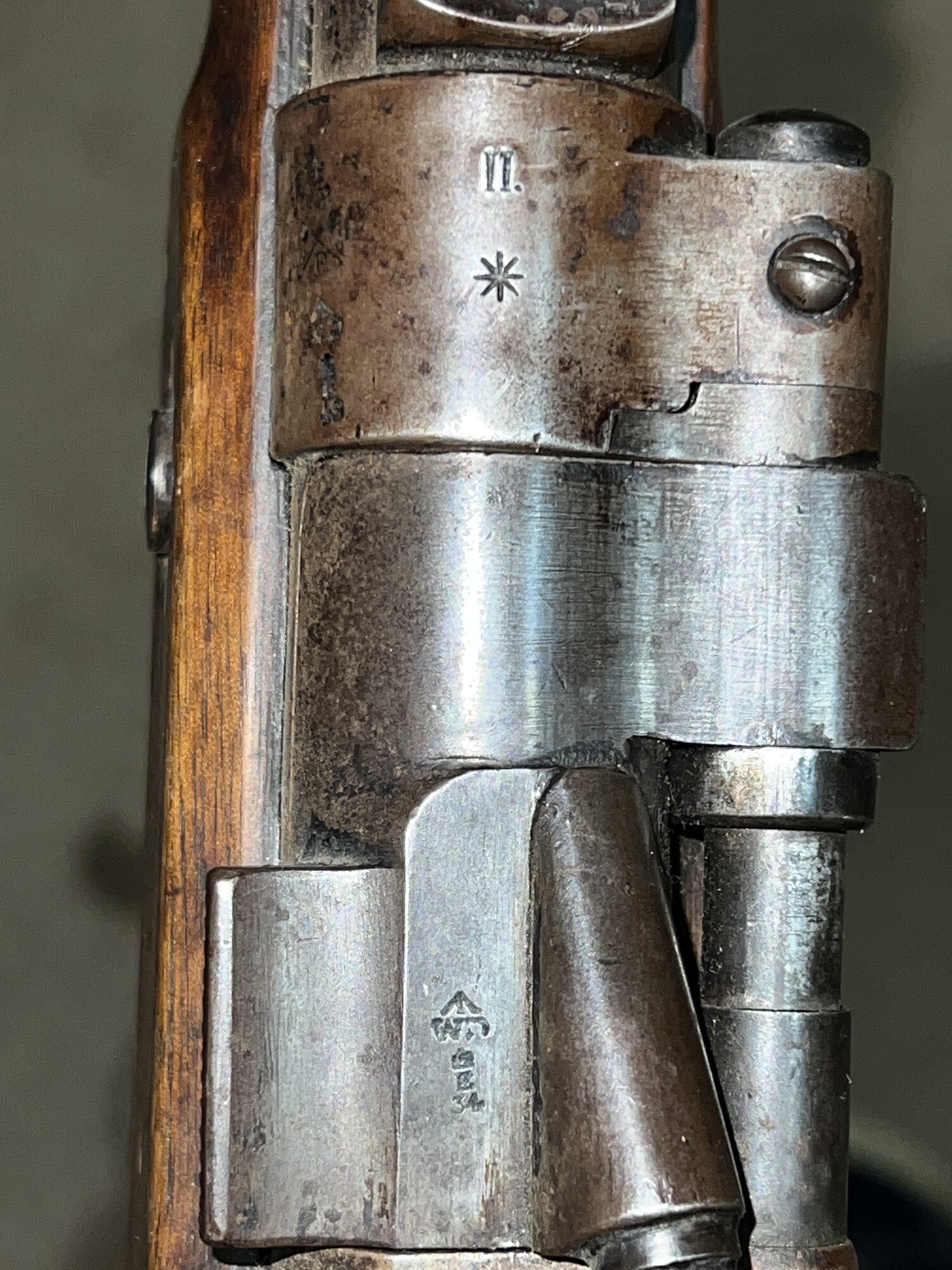
Yup. A REAL Enfield government gun, Class 1. It is an early conversion and probably from Canada. They got a lot of Snider II*s after the Fenian Raid - so well after the War. It was manufactured to take the modified Boxer round with a squared rim, IOW not converted from the earlier rounded rim (Mk1*). All the remaining MkII*s in Britain were modified to MkII** with a strengthened breechblock. if the underside of the breechblock is cylindrical (true circular form), it has the new breechblock.

However, this was issued as a standard 3-band long rifle. This has been cut down to regulation - not a backwoods job - retaining the original backsight. Although it looks like the cavalry carbine, the sight and the hole for a sling swivel in the forward trigger guard is the givaway. These cut-downs were used for constabulary (police) carbines or cadet carbines If it is smooth-bored, it may well have been used as a prison riot carbine, firing a shot cartridge. A Mk II* would have had a 'cupped' hammer originally, but this one has been ground down or replaced with a Mk III flat hammer, probably on conversion. It seems to have had two numbers, the lower one the original and partly erased
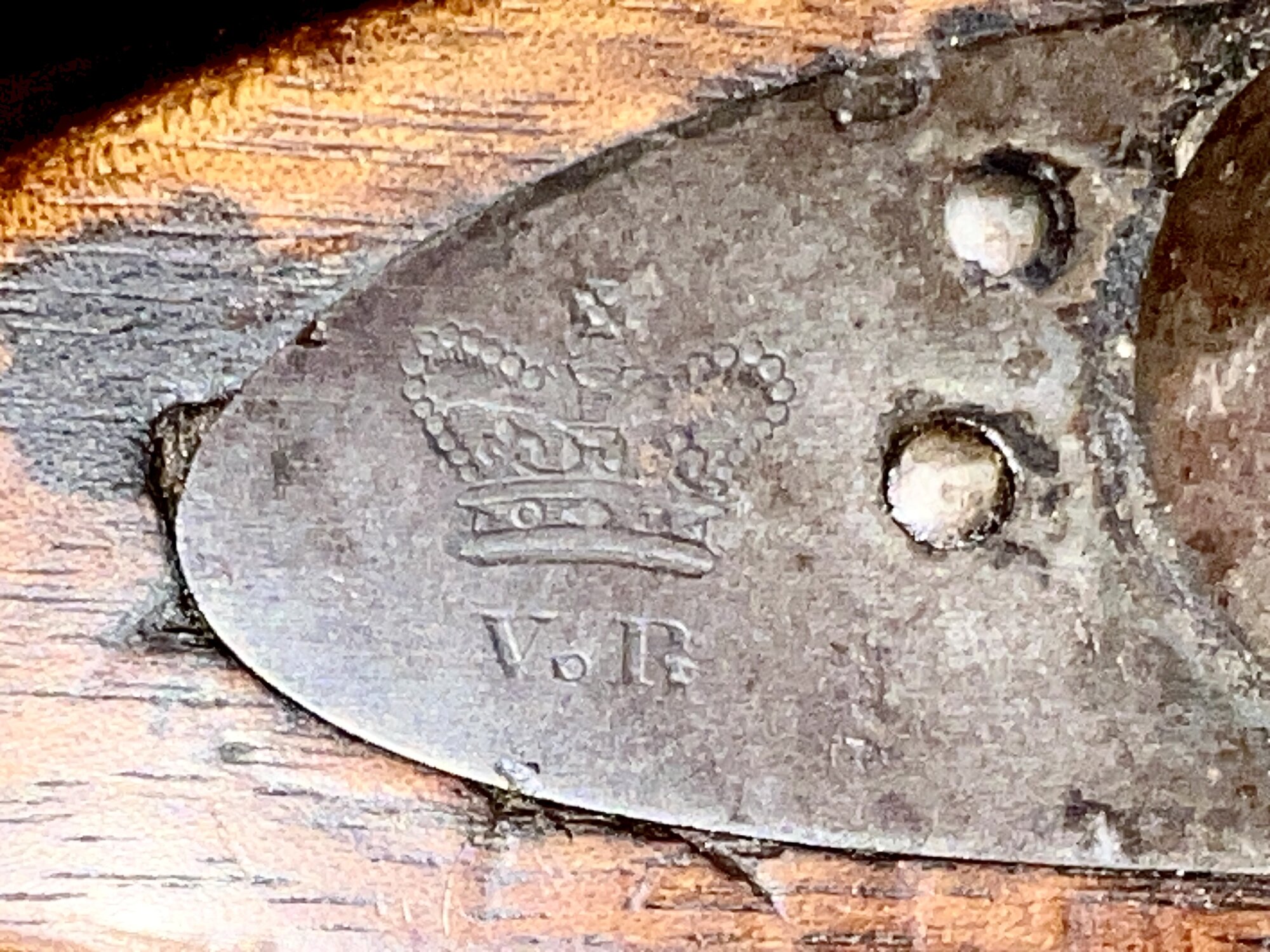
Thank you for confirmation… to add, it is not a smooth bore, has a flat hammer, and a snap locking cylindrical breechblock. The sight and the breechblock have identical "9917" stamped numbers. I scoured the wood stock with a magnifying glass and found a diamond boxed "DC" and a very tiny "RM" above the trigger. There is a tiny number 3 stamped into the metal plate near the Enfield 1862. What does the asterisk ( * ) stamped symbol mean located below the Mark ( II ) symbol (top between the sight and breechblock)? I've also noted numerous Crowns with Arrow markings stamped into many metal parts, and was surprised to find on the barrel just above the wood stock, below the sight, a 5-point star with "VR"below it and below the "VR" are two crossed flags/banners with a "P" between the crossed poles, and below that an arrow with a "WD" and below that a tiny crown above an "E" and below that two unreadable even tinier numbers or letters. This thing has tiny clues everywhere on it!!!

IMG_8945.jpeg


IMG_8946.jpeg


IMG_8948.jpeg


IMG_8949.jpeg
 
Diamond DC = Canada. Yes an old P53 - 3-groove x 78" rifling and an unusual fore-sight so may be a Cadet Carbine. Crown/VR/crossed lances/P are the Enfield proof marks. Arrow WD = acceptance stamp and the others (Crown /E/number) are inspectors marks.

The asterix are the British way of showing a minor change in specification. (Like M16A1)
For Sniders they are:
I = Mark 1 (VERY rare) - with the rounded rim recess for the first Pottet cartridge since all were converted into:
I* = Mark 1 altered to square rim recess for the Boxer cartridge
II* = Mark 2 manufactured with square rim recess and changes in the extractor (both together)
II** = Mark 2 with strengthened breech block (many II* altered with another * added undeneath the first one)
Those above are ALL conversions of P53 Rifles & derivatives with a cupped hammer.
III = Mark 3 - new manufacture with 5-groove x 48" rifling, steel barrel ('steel' stamped on the barrel!) and a positive hand-latch mechanism for the breechblock, flat hammer face.
 
Diamond DC = Canada. Yes an old P53 - 3-groove x 78" rifling and an unusual fore-sight so may be a Cadet Carbine. Crown/VR/crossed lances/P are the Enfield proof marks. Arrow WD = acceptance stamp and the others (Crown /E/number) are inspectors marks.

The asterix are the British way of showing a minor change in specification. (Like M16A1)
For Sniders they are:
I = Mark 1 (VERY rare) - with the rounded rim recess for the first Pottet cartridge since all were converted into:
I* = Mark 1 altered to square rim recess for the Boxer cartridge
II* = Mark 2 manufactured with square rim recess and changes in the extractor (both together)
II** = Mark 2 with strengthened breech block (many II* altered with another * added undeneath the first one)
Those above are ALL conversions of P53 Rifles & derivatives with a cupped hammer.
III = Mark 3 - new manufacture with 5-groove x 48" rifling, steel barrel ('steel' stamped on the barrel!) and a positive hand-latch mechanism for the breechblock, flat hammer face.
Thank you… very informative. This most certainly helps clarify to other individuals with P53's and modified P53's the differences between Civil War used and and non-Civil War used P-53's. I'm sure I'm not the only one that wasn't aware of all the minute details and timeline distinguishing the P53's significant importance in transitioning firearms from powder to cartridge/shell use. Thank you!
 
The foresight is a typical cadet carbine type added when the long rifle was cut down to a carbine. It was for drill so the foresight will cause the carbine to fire quite high if fired using it. If you look up photographs of British cavalry and Yeomanry carbines you will see the fore sight appropriate to a carbine for service use. You should be able to see the wood inserted in the remains of the old ram rod hole to fill it in.
IMG_0972.jpeg
 

Learn About Us
About CivilWarTalk
Contact the Webmaster
Meet the Staff
Link to CivilWarTalk
Join Our Community
Register
Browse Forums
View Today's Discussions
Search the Forum
Get Help
FAQ
Student Guide
Forum Rules & Etiquette
Copyright / DMCA

     Contact Us CivilwarTalk on Facebook CivilWarTalk on YouTube CivilWarTalk on Twitter RSS Feed

Bringing the American Civil War and More to Life.
© 1999 - , CIVILWARTALK, LLC - Site Version 10.0

SlaveryTalk.com - SecessionTalk.com - CivilWarTalk.com - ReconstructionTalk.com
Back
Top