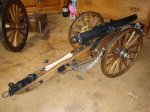
Black Powder Cannon Construction

Drame22

Retired User
Joined
Dec 7, 2015
Hello,


I'm here to garner a bit of advice for building a cannon, and to make sure my cannon design is sufficiently safe. It ought to be; I took notes from actual cannon schematics and simplified/over-engineered them.


Measurements:

Length: 4 feet
Diameter: 10 inches
Bore: 2.65 inches
Powder Pocket Bore: 2.15 inches
Bore Length: 3.75 feet
Touch Hole: 3/16 inches

Shot: Cement-filled soda can. Approximately 3 pounds.


I'd like to make this out of 4140 but that is terribly expensive. What is the best middle-ground when it comes to cannon-grade steel? It doesn't need to be the toughest thing on the market; as you can see by my measurements, the cannon is about 5% thicker than the standard safety recommendations already call for; furthermore the schematics I copied from were originally made with brass, so I'm confident that modern steel won't sneeze twice at anything I can pack into the cannon.


A side note; does plywood or MDF hold up better to outdoor weather and use? If I manage to get my hands on oak I will use that as the carriage but that's highly doubtful, right now I'm making a functional rather than pretty carriage.

And another side note: Does anyone know where to get cement rather than concrete? Concrete is the most common stuff available and has tons of big pebbles, which I have to sift out. Ideally I'd like just the rock dust and glue; the rocks do nothing for making filling cans easier.


More information will follow, I'm making this post in a hurry before leaving the office. I have done a few years in Civil War artillery, and have studied artillery since I was a child. I am plenty knowledgeable about the subject and I can verify my mathematics if you like, so if we may skip beyond the "cannons are dangerous kid!" phase and move straight into whether or not my design can be improved, I would greatly appreciate it. I don't claim to be an expert, but neither am I a fool.
 
A side note; does plywood or MDF hold up better to outdoor weather and use? If I manage to get my hands on oak I will use that as the carriage but that's highly doubtful, right now I'm making a functional rather than pretty carriage.
I know nothing about artillery, but if I were going to reproduce something wooden that would have to not fail under extreme stress, the last thing I'd do is substitute a modern composite with completely different properties than hardwood. Oak has a grain so it's stronger in one direction than the other, and it has some spring to absorb shock. Period wooden objects may have several different woods in different places, with different properties specifically chosen for those locations--hickory for maximum flex and strength, elm for hardness and cross-grain strength, etc. It was an art.

Step one would be to find out what kind(s) of wood was used originally, then figure out why, and then either use that wood or learn what hardwood substitutes might work if necessary, like ash for hickory. If you know that plywood or fiberboard has the same rigidity or flex, as well as strength and other properties, you could substitute it if accuracy didn't matter, but hardwood can be found from specialty places that sell to furniture makers and such. Hardwood isn't for pretty, it's for function.
 
don't bother with a soda can with concrete - all you will get is a puff of concrete dust. been there, done that. you will need a steel can. aluminum will just peel off and then the concrete comes apart.
as a reenactor that works with original guns, if you want a gun, buy one. our battery members have a couple of Trail Rock Ordnance guns, they are really nice. Most civil war artillery accidents are caused by either improper procedure or homemade guns. Homemade guns tend to be pipe bombs. The stress on a cannon can be high, and if something goes wrong, it is usually in a very big and bay way. Trust the manufacturers like Steen, Paulson, Trail Rock. they have experience and the equipment to make a safe gun.
Every time an accident happens, it makes things harder for all of us. Our battery was extended an open invitation by the head ranger at Gettysburg NMP to do living History - all we had to do is call and set up a time. however, just after that, someone blew up an original gun at a NPS Site, and now they have banned all original guns at NPS sites.
 
I'm not worried about the wood, I would worry about the Steel and its strength. Improper machining can result in annealing of the metal. I don't know if the process used then or now but I would think the barrel is tempered some after machining but not so much as to make it too brittle. Do you have a way to quench a 4-foot long piece of hot steel?
 
There are a couple of modern manufacturers of ACW era cannon. Below are a couple links, there are more out there though.

Don't even think of using plywood for the carriage, it will not survive the weather or the recoil. More often than not home made cannon scare the hell out of me. Cannon manufacture is not for the amateur. While I'm as guilty as many others of making a spud/spam gun or two I wouldn't even consider manufacturing a civil war cannon. The metallurgy requirements are well past my skill. But even a replica gun will cost upward of $2k on up.

http://www.pbocorp.biz/

http://www.cannonsmoke.com/

http://steencannons.com/
 
I'm not worried about the wood, I would worry about the Steel and its strength. Improper machining can result in annealing of the metal. I don't know if the process used then or now but I would think the barrel is tempered some after machining but not so much as to make it too brittle. Do you have a way to quench a 4-foot long piece of hot steel?
I'm not too worried about the wood, either.....But, I wanted to hear his answers to determine his knowledge, then find out his knowledge about the metals, size of charges, what type of powder he intends to use, etc.....

I agree 100% with your questions!
 
In reverse order gentlemen(more or less, since some responded in between):


-Drezac:


Thank you for the advice; the only reason I chose the 'soda can' ammo is low cost vs cast lead. I will re-design the cannon to fire smaller, tougher steel food tins. Does anyone know where to buy them new? As in, unused, no food to eat/waste, just empty cans?

Also, will the steel cans need strengthening? Since they have that lip on either side protruding about 1/15", which I have to account for in terms of the bore anyway, I can put a thin band of steel around it and weld it in place for added strength. It's already about 10 minutes per shot to create them, what's another 40 seconds of welding?

As to safety, trust me when I said I am very aware of the dangers of both black powder, and artillery. I have studied war and weapons since I was old enough to read, cannons in particular, and I've made it a point to find the most graphic results of failed cannon fire. My cannon design may be 'homemade' but do not think I will be creating some 'bubba gun' in my garage on my lonesome.

It is my plan to take the designs to a professional machinist, however I do not plan to go with a professional cannon-maker, as they charge thousands upon thousands, both because their skill is in great demand and because it takes a lot of work to reproduce a historical cannon. And while I have nothing but respect for these craftsmen, I do not believe this project requires an expert gunsmith's touch. A cannon is an artillery piece, yes, but it's also the simplest form of propellant-driven artillery ever made. It would actually be more dangerous to go about building/using a trebuchet. And remember! The designs I based mine off of were originally cast in brass. I changed brass to steel and added 1" thickness to the cannon walls. It'll be about 40 pounds over-weight, but I don't think even the cannon experts could tell me that this cannon is unsafe, provided it's built to my specifications. And we'll find out soon enough, as I just met a machinist whose uncle works with cannons (at Steen I think but I don't yet know). So we will have a professional overseeing the design and construction.

I should also note immediately that I am not going for historical accuracy, or indeed even historically-accurate-looking; I'm here to build a functional piece of black powder artillery, and I have my own thoughts and designs on how that should look. Hence the use of MDF/plywood in place of say, oak. It's also the reason the cannon plans do not mention turning or shaping the barrel at all; it's going to remain as a single cylinder of steel. I plan to paint the wood, so it makes no difference what it is so long as it's strong and inexpensive. I suppose if I use hardwood I'll just stain it.


-Albert:

First, let me clarify that this will not be a 'sewer pipe' gun. I plan to make it out of 4140/4130, or something similarly high-end. I also intend to use a single solid piece of steel round bar, so there are no weak weld points or plugs to shrink-fit.

One question I did have was; FFFFg for the entire charge? FFFFg was explained to me as a fast-burning primer. I was not in charge of creating powder charges for my re-enactments, before you ask, so I've never handled the powder other than in its final form. Also I found a company that makes friction primers, do I need to do anything special to the steel to make it spark in the touch hole?

As to charge/powder type/etc, that will have to come after the design is finalized. Once I know the end weight of the shot, the length of the gun and size of bore, I can run through the calculations to tell me precisely how much powder I need. I do not plan at any time to go over a single charge of powder. Cannons are dangerous unloaded; they are triply so loaded.

The plywood/MDF idea was mostly cost-saving. Since I planned to use multiple layers held together with the best wood glues I can find, and then cover the entire thing in protective coatings (3, to be precise), I feel confident it will hold up to the recoil and outdoors. That said, I have a weakness for real hardwoods. What is the cheapest hardwood in America that will fit my needs?

As to my knowledge, I'm learning more about this every day (dedicating about 2 hours after work to study this every night), but I'm primarily falling back on my experience with cannons, and my knowledge of physics. The group I was with, to answer your question, had a small 3lb cannon, a 6lb....Napoleon, I believe, and a 9lb, er... I can't remember her name now. Something fancy and British. It's been years since I stepped onto the field of battle, but I still remember my drills. We fired blanks, round ball, canister (THAT was fun!), etc.

So that also answers your question as to why I'm asking; because I'm not building a historical reproduction, just a very simple cannon. And no offense taken, I understand you guys are looking out for safety. Believe me when I say, if I think this is going to end up unsafe, I will simply cancel the entire project. Having a cannon is not worth putting my loved ones at risk. Almost, but not quite :wink:

But I should mention, again, that this is not 'home-made' by myself, or even by design. I am smart enough to know that I do not have the skill or experience to do this. If someone can recommend a cheaper cannon-maker I'm all ears, but at this point it's about half the cost to get a machine shop to do the same thing; bore into steel a specific distance at a specific diameter. It's not like I need a master gunsmith to type measurements into a lathe, so long as my math is correct, which it is :smile:

If I were going with a specific cannon, or a rifled cannon/breech-loader, I would go with the professionals in a heartbeat. But since it is a custom-designed smoothbore, dirt-simple, no decorations of any kind, etc, I feel confident that any competent machinist can do this project just fine. And as to safety I added a full inch of extra barrel thickness; even firing triple-charge (I WON'T! I like my fingers just where they are) and double-shot won't breach or even phase this monster.


Johan:

A sewer pipe cannon, or as I like to call them, "American Roulette Guns", is a terrifying prospect. Thank the maker that I'm familiar enough with steel to know that not all steel is made equally. I know 4140 is pretty much the best possible steel for this type of work; does anyone have a slightly cheaper, still-effective option? Since it's so over-built, I really don't need ordnance-grade steel, unless I decided to shave the weight down.

Duly noted, plywood and MDF are out, hardwood is in. Please note that neither the cannon nor the carriage will be anything like a Civil War cannon; my designs are stealing ideas and techniques from three centuries of cannon design from 50 different countries. This is not for re-enacting, just for fun in the hills.

And I do appreciate the link to the professionals, but again they charge way, way, way too much, especially for such a simple design like my own. I was quoted just under one of their Civil War cannons in terms of price (saving $100, ish, for the brutal simplicity of my design), so if I'm going specifically for cannon professionals, I might as well scrap my own designs and just buy a 6lb'er; at least that one is turned on the outside to look pretty.

That said, I was rather looking forward to creating my own cannon design, rather than getting yet another 6lb reproduction. Not that I have anything against the 6lb'er, but I'd prefer a cannon that I can say "yes, I designed it, oversaw construction, and even helped the machinist with the less complex tasks". That is a real story, and makes me feel a hell of a lot better than saying "oh, that's a 6lb Napoleon. Yup, just like the million other Napoleons across America. No, I didn't make it, or design it, just paid a bunch of money to let someone else have all the fun while I sat here on my butt, waiting for it to arrive"

Now these cannon manufacturers, do they all do custom work? I was only quoted at one, Steen I believe, but it's certainly worth the 10 minutes to contact the rest. Is there a full list of cannon makers somewhere?


-James:


I'm not going for historical accuracy; I designed my own barrel and I'm almost done with my own carriage. I even designed my own wheel (sorry folks, those Civil War spokes are just needlessly complex! But they do look pretty) to replace the traditional spoked wheel; can you believe the cheapest I could find wheels was $300 per?? Wow! Modern manufacturing capability apparently has done nothing for the re-enactor's wallet!

But I appreciate the advice. And hey, we all start knowing nothing. It's what you learn that counts.


Just to clarify again gentlemen, I do not take offense to anyone's concern for safety. That is why I made the post here in the first place, to get advice and see if there was anything I overlooked (like exploding soda can dust, for instance...). But I want to assure you all of the following:

-The final designs (and product) will be checked over by at the very least a gunsmith, but most likely a cannon-maker.

-If at any point, I feel dubious about the safety of the project or the weapon, I will mothball the entire project.

-This weapon will be test-fired by a ballistics lab to ensure complete safety.

-The cannon will be cleaned thoroughly after each use (somewhat obvious, this one).

-I have thought about storage. I have a humidity-controlled gun room where the cannon will be stored. It's small enough to fit through the door without complete dis-assembly. I even have some naval jelly for long-term storage of the barrel, and I have an old ammo crate that I'm re purposing for barrel storage.

-In addition to the cannon itself, I'm having a local carpenter make a lockbox for the powder, and another for the ammunition. Firing this without me is impossible, unless you manage to sneak into my room (where I sleep and work, so I'm here all day, 24/7, almost literally sitting on the keys), find the hidden safe, guess my combination, find the other hidden safe, guess the second combination, and finally use the key to open the various locks to get at the cannon and its supplies.


Apologies if something in there doesn't make sense, or looks out of place. It took over an hour to type this all out, edit and re-hash it so it made sense, etc. So a few things may still be out of place, despite my three-time-check over the entire post. That time frame alone should show you that I am dedicated, and I'm not here to build a quick cheap sewer-pipe gun. I want a real cannon, just one off my own designs. And more importantly, one that doesn't suck up $7,000 and leave me destitute.
 
Last edited:
sorry folks, those Civil War spokes are just needlessly complex! But they do lookpretty

That's the part I don't get. If one doesn't learn why period things were made the way they were, and just dismisses them as useless, what's the point of even asking about Civil War artillery? I'll just say, before leaving this thread, that a period wheelwright deserves far more respect than you're giving him, and you don't even know why.
 
James:

I have a love of history of all time periods, but that does preclude me from learning every detail about every time period. I may not know exactly what year the Visigoths trashed Rome (400 BC ish), or specifically what a wheelwright does, step-by-step, to create a spoked wheel, but I do know it takes time, skill and patience. My comment there was a joke about adding such complex, hand-crafted wheels to a small, simple, non-historical cannon; it was not a dismissal of anyone's skills, or the labor involved to create them. They certainly have more woodworking skill than my own hands do; I'd be laughed out of any 19th century workshop, in fact. Frankly Civil War cannons are a work of art, as were most cannon throughout history; one day I will be rich enough to afford to buy exact reproductions, but for now my cost has to be balanced against the basic living requirements.


The reason I chose Civil War artillery specifically is because 1) I know more about the American Civil War cannons than I do about any other period of cannon; though again I am learning more everyday, and 2) because this time period is the epitome of the muzzleloader; it's barely half a century after this that humankind is using machine guns and aircraft. If I'm going off of any original plans at all, rather than just making my own from scratch, I'd like it to be as close to already perfect as it can get; from there, I will over-design it for safety, which is what I did.


In any case, I have decided that costs prohibit a larger cannon to accommodate the larger shot, so I've decided to downgrade the cannon to the smaller 6oz can (things like tomato paste come in them), which is actually a bit more structurally sound anyway. I should note by 'can' I mean a steel, welded food can, not a soda can. The new measurements would be:


Length: 3 feet
Diameter: 9 inches
Bore: 2.25 inches (pocket 1.75 inches)
Bore Depth: 2 feet, 8 inches
 
Last edited:
In reverse order gentlemen(more or less, since some responded in between):


-Drezac:


Thank you for the advice; the only reason I chose the 'soda can' ammo is low cost vs cast lead. I will re-design the cannon to fire smaller, tougher steel food tins. Does anyone know where to buy them new? As in, unused, no food to eat/waste, just empty cans?

Also, will the steel cans need strengthening? Since they have that lip on either side protruding about 1/15", which I have to account for in terms of the bore anyway, I can put a thin band of steel around it and weld it in place for added strength. It's already about 10 minutes per shot to create them, what's another 40 seconds of welding?

As to safety, trust me when I said I am very aware of the dangers of both black powder, and artillery. I have studied war and weapons since I was old enough to read, cannons in particular, and I've made it a point to find the most graphic results of failed cannon fire. My cannon design may be 'homemade' but do not think I will be creating some 'bubba gun' in my garage on my lonesome.

It is my plan to take the designs to a professional machinist, however I do not plan to go with a professional cannon-maker, as they charge thousands upon thousands, both because their skill is in great demand and because it takes a lot of work to reproduce a historical cannon. And while I have nothing but respect for these craftsmen, I do not believe this project requires an expert gunsmith's touch. A cannon is an artillery piece, yes, but it's also the simplest form of propellant-driven artillery ever made. It would actually be more dangerous to go about building/using a trebuchet. And remember! The designs I based mine off of were originally cast in brass. I changed brass to steel and added 1" thickness to the cannon walls. It'll be about 40 pounds over-weight, but I don't think even the cannon experts could tell me that this cannon is unsafe, provided it's built to my specifications. And we'll find out soon enough, as I just met a machinist whose uncle works with cannons (at Steen I think but I don't yet know). So we will have a professional overseeing the design and construction.

I should also note immediately that I am not going for historical accuracy, or indeed even historically-accurate-looking; I'm here to build a functional piece of black powder artillery, and I have my own thoughts and designs on how that should look. Hence the use of MDF/plywood in place of say, oak. It's also the reason the cannon plans do not mention turning or shaping the barrel at all; it's going to remain as a single cylinder of steel. I plan to paint the wood, so it makes no difference what it is so long as it's strong and inexpensive. I suppose if I use hardwood I'll just stain it.


-Albert:

First, let me clarify that this will not be a 'sewer pipe' gun. I plan to make it out of 4140/4130, or something similarly high-end. I also intend to use a single solid piece of steel round bar, so there are no weak weld points or plugs to shrink-fit.

One question I did have was; FFFFg for the entire charge? FFFFg was explained to me as a fast-burning primer. I was not in charge of creating powder charges for my re-enactments, before you ask, so I've never handled the powder other than in its final form. Also I found a company that makes friction primers, do I need to do anything special to the steel to make it spark in the touch hole?

As to charge/powder type/etc, that will have to come after the design is finalized. Once I know the end weight of the shot, the length of the gun and size of bore, I can run through the calculations to tell me precisely how much powder I need. I do not plan at any time to go over a single charge of powder. Cannons are dangerous unloaded; they are triply so loaded.

The plywood/MDF idea was mostly cost-saving. Since I planned to use multiple layers held together with the best wood glues I can find, and then cover the entire thing in protective coatings (3, to be precise), I feel confident it will hold up to the recoil and outdoors. That said, I have a weakness for real hardwoods. What is the cheapest hardwood in America that will fit my needs?

As to my knowledge, I'm learning more about this every day (dedicating about 2 hours after work to study this every night), but I'm primarily falling back on my experience with cannons, and my knowledge of physics. The group I was with, to answer your question, had a small 3lb cannon, a 6lb....Napoleon, I believe, and a 9lb, er... I can't remember her name now. Something fancy and British. It's been years since I stepped onto the field of battle, but I still remember my drills. We fired blanks, round ball, canister (THAT was fun!), etc.

So that also answers your question as to why I'm asking; because I'm not building a historical reproduction, just a very simple cannon. And no offense taken, I understand you guys are looking out for safety. Believe me when I say, if I think this is going to end up unsafe, I will simply cancel the entire project. Having a cannon is not worth putting my loved ones at risk. Almost, but not quite :wink:

But I should mention, again, that this is not 'home-made' by myself, or even by design. I am smart enough to know that I do not have the skill or experience to do this. If someone can recommend a cheaper cannon-maker I'm all ears, but at this point it's about half the cost to get a machine shop to do the same thing; bore into steel a specific distance at a specific diameter. It's not like I need a master gunsmith to type measurements into a lathe, so long as my math is correct, which it is :smile:

If I were going with a specific cannon, or a rifled cannon/breech-loader, I would go with the professionals in a heartbeat. But since it is a custom-designed smoothbore, dirt-simple, no decorations of any kind, etc, I feel confident that any competent machinist can do this project just fine. And as to safety I added a full inch of extra barrel thickness; even firing triple-charge (I WON'T! I like my fingers just where they are) and double-shot won't breach or even phase this monster.


Johan:

A sewer pipe cannon, or as I like to call them, "American Roulette Guns", is a terrifying prospect. Thank the maker that I'm familiar enough with steel to know that not all steel is made equally. I know 4140 is pretty much the best possible steel for this type of work; does anyone have a slightly cheaper, still-effective option? Since it's so over-built, I really don't need ordnance-grade steel, unless I decided to shave the weight down.

Duly noted, plywood and MDF are out, hardwood is in. Please note that neither the cannon nor the carriage will be anything like a Civil War cannon; my designs are stealing ideas and techniques from three centuries of cannon design from 50 different countries. This is not for re-enacting, just for fun in the hills.

And I do appreciate the link to the professionals, but again they charge way, way, way too much, especially for such a simple design like my own. I was quoted just under one of their Civil War cannons in terms of price (saving $100, ish, for the brutal simplicity of my design), so if I'm going specifically for cannon professionals, I might as well scrap my own designs and just buy a 6lb'er; at least that one is turned on the outside to look pretty.

That said, I was rather looking forward to creating my own cannon design, rather than getting yet another 6lb reproduction. Not that I have anything against the 6lb'er, but I'd prefer a cannon that I can say "yes, I designed it, oversaw construction, and even helped the machinist with the less complex tasks". That is a real story, and makes me feel a hell of a lot better than saying "oh, that's a 6lb Napoleon. Yup, just like the million other Napoleons across America. No, I didn't make it, or design it, just paid a bunch of money to let someone else have all the fun while I sat here on my butt, waiting for it to arrive"

Now these cannon manufacturers, do they all do custom work? I was only quoted at one, Steen I believe, but it's certainly worth the 10 minutes to contact the rest. Is there a full list of cannon makers somewhere?


-James:


I'm not going for historical accuracy; I designed my own barrel and I'm almost done with my own carriage. I even designed my own wheel (sorry folks, those Civil War spokes are just needlessly complex! But they do look pretty) to replace the traditional spoked wheel; can you believe the cheapest I could find wheels was $300 per?? Wow! Modern manufacturing capability apparently has done nothing for the re-enactor's wallet!

But I appreciate the advice. And hey, we all start knowing nothing. It's what you learn that counts.


Just to clarify again gentlemen, I do not take offense to anyone's concern for safety. That is why I made the post here in the first place, to get advice and see if there was anything I overlooked (like exploding soda can dust, for instance...). But I want to assure you all of the following:

-The final designs (and product) will be checked over by at the very least a gunsmith, but most likely a cannon-maker.

-If at any point, I feel dubious about the safety of the project or the weapon, I will mothball the entire project.

-This weapon will be test-fired by a ballistics lab to ensure complete safety.

-The cannon will be cleaned thoroughly after each use (somewhat obvious, this one).

-I have thought about storage. I have a humidity-controlled gun room where the cannon will be stored. It's small enough to fit through the door without complete dis-assembly. I even have some naval jelly for long-term storage of the barrel, and I have an old ammo crate that I'm re purposing for barrel storage.

-In addition to the cannon itself, I'm having a local carpenter make a lockbox for the powder, and another for the ammunition. Firing this without me is impossible, unless you manage to sneak into my room (where I sleep and work, so I'm here all day, 24/7, almost literally sitting on the keys), find the hidden safe, guess my combination, find the other hidden safe, guess the second combination, and finally use the key to open the various locks to get at the cannon and its supplies.


Apologies if something in there doesn't make sense, or looks out of place. It took over an hour to type this all out, edit and re-hash it so it made sense, etc. So a few things may still be out of place, despite my three-time-check over the entire post. That time frame alone should show you that I am dedicated, and I'm not here to build a quick cheap sewer-pipe gun. I want a real cannon, just one off my own designs. And more importantly, one that doesn't suck up $7,000 and leave me destitute.

I wish you well and hope you post pics of it's construction progress and finished product! :)
 
Let me start out by saying that I did not read every single word on this thread. It started getting redundant after a bit.

That said, I have been in and around steel fabrication and welding all my life. 4140 grade steel is not made for this purpose, and you are gambling with your life on the chance that it might work.
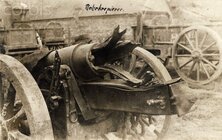
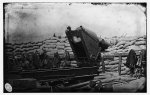
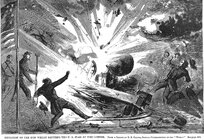
Too many canons exploded during the war that were manufactured by highly skilled craftsmen for me to think that your mythbusters gun will be safe. Do yourself a favor and have this thing X rayed by a welding inspector, not once, but before and after every use.
You're gonna shoot your eye out, kid.
 
Last edited:
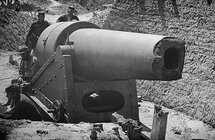
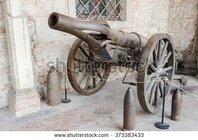
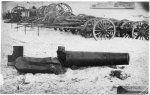
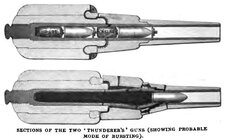
tmp_14523-eplw1qr1821731392.jpg tmp_14523-04740v1772203567.jpg tmp_14523-explosion835747930.jpg tmp_14523-heavyartillery-1823960884.jpg tmp_14523-stock-photo-transport-of-world-war-i-krupp-cannon-barrel-burst-373383433-1519562210.jpg tmp_14523-burst_100-pound-parrott2070560393.jpg tmp_14523-HMS_Thunderer_burst_RML_12_inch_gun_diagram-14102662.jpg Don't try this at home...
tmp_14523-heavyartillery-1823960884.jpg
 
I'm closing this thread as this is a moot point; I will be buying a local cannon that was a steal of a deal.

Thank you all for your information and replies.
 

Attachments

  • 2601ec8d-11f0-4b65-94b5-a9438c48af8b.jpg
    2601ec8d-11f0-4b65-94b5-a9438c48af8b.jpg
    94 KB · Views: 2,460
Last edited:

Learn About Us
About CivilWarTalk
Contact the Webmaster
Meet the Staff
Link to CivilWarTalk
Join Our Community
Register
Browse Forums
View Today's Discussions
Search the Forum
Get Help
FAQ
Student Guide
Forum Rules & Etiquette
Copyright / DMCA

     Contact Us CivilwarTalk on Facebook CivilWarTalk on YouTube CivilWarTalk on Twitter RSS Feed

Bringing the American Civil War and More to Life.
© 1999 - , CIVILWARTALK, LLC - Site Version 10.0

SlaveryTalk.com - SecessionTalk.com - CivilWarTalk.com - ReconstructionTalk.com
Back
Top