Aot - 1865

New Year's Day 1865

January 1, 1865

From the History of the 33rd Mississippi:

On New Year's Day, 1865 the regiment had a holiday and rested in camp. The next day the regiment was on the march again and went to Burnsville, Mississippi. From there they went to Tupelo, Mississippi, where they camped 3 miles west of town.

This day the 5th Division, 1st Brigade [US] camped on the east side of the Elk River under orders to march to Huntsville, AL. They marched 19 miles, the order was revoked and they moved back to the Elk River and camped 2 days. From there they marched for Eastport and camped three days at Waterloo on the 10th of January.

[Waterloo, Alabama and Eastport, Mississippi are on opposite sides of the Tennessee river just a few miles west of Florence. Not much sign of the huge occupying army of 1865 there today. Because of the Pickwick dam, the two places are separated by perhaps half a mile of water. Must have been a far different look in 1865.]

Oops! This is a duplicate of post #10. I'll try to be more careful about this and only replace the ones with additional information. I have learned quite a bit more about the travels of the AOT since this thread was completed in the first round, though there is still much more to uncover. I can use some help any time you get the urge.
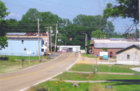
 
Downtown Reinzi, Mississippi

This is a photo taken earlier this year. Not much excitement in Rienzi. I suspect the excitement level went downhill in a hurry when the AOT left town in January 1865. They caught the train for Tupelo. The tracks are still there. You are looking north. The railroad is just to the right of the photo, half a block away.
 

Attachments

  • Reinzi MS.jpg
    Reinzi MS.jpg
    77 KB · Views: 220
Dear Larry_Cockerham;

When are you going to write it up, publish and copyright for public consumption? ;)

Its a wonderful read sir -- please do continue on sir.

Respectfully submitted for consideration,
M. E. Wolf
 
Folks, I doubt this will ever be published in hardback (or soft either). I still have a bit of work to do in the period after January 1865 to war's end. Also some photography is greatly lacking. If anything, after a little more proofing and massaging, I'll probably committ this thing to a large pdf file and self-publish to cds. We can use the money for long term maintenance of Winstead Hill in Franklin, TN which our SCV camp happens to own, or at least about 11 acres of it. The CBF flies there proudly 24/7 just as a reminder of those who have gone before. I often tell my folks that Gen. Scovill was there on November 28, 1864, but no one seems to care. Franklin is doing their best to get in stride with battlefield preservation. There is much more that can be accomplished. I greatly appreciate the kinds words and the views that this stuff has generated. Most of this is public record. I'm just trying to focus on a rather challenging time for some frostbitten soldiers.
 
Larry's manuscript is getting really close to finishing. I got a copy about four years ago and a lot of water has passed under the bridge since then.

His tome will be one of those "it's not a masterpiece until it's ripped from my dead hands."

"Two roads travelled" is a subject that really hasn't been given much attention. It will be a worthy book when Larry gets off the crapper and gives it over to an editor, preferably at LSUP or UNCP. It's raw and scattered and filled to the overflowing with little known facts and factoids.

It has "important" written all over it. What makes it personal is that two ggfathers travelled those roads. One, a Union farrier; another, a Confederate artillerist. Fortunately neither were killed or we wouldn't have a Larry to kvetch at.

At the risk of embarrassing our Confederate cousin, James Patterson Cockerham was the Union ancestor.

Just a thought.

Ole
 
Larry's manuscript is getting really close to finishing. I got a copy about four years ago and a lot of water has passed under the bridge since then.

His tome will be one of those "it's not a masterpiece until it's ripped from my dead hands."

"Two roads travelled" is a subject that really hasn't been given much attention. It will be a worthy book when Larry gets off the crapper and gives it over to an editor, preferably at LSUP or UNCP. It's raw and scattered and filled to the overflowing with little known facts and factoids.

It has "important" written all over it. What makes it personal is that two ggfathers travelled those roads. One, a Union farrier; another, a Confederate artillerist. Fortunately neither were killed or we wouldn't have a Larry to kvetch at.

At the risk of embarrassing our Confederate cousin, James Patterson Cockerham was the Union ancestor.

Just a thought.

Ole

Great great Grandpa Whit Parker was an "artillerist" only in the sense that he was hit in the butt by an exploding shell in Atlanta Aug 9, 1864. Little James Patterson Cockerham got me into the SUVCW as well as this world.
 
January 2, 1865 AOT at Reinzi

Lee's Corps moved to Reinzi, Mississippi, probably including the 63rd Virginia Infantry Regiment. On this day Gen. P.G.T. Beauregard left his perch in Charleston, South Carolina for *******n, Mississippi. [The little censor loves the word M e r i d i a n. Seems harmless enough to me?]

Today, the little town is located east of US Highway 45 on Mississippi highway 356 maybe 15 minutes south from Corinth by car. This would have been a full day's march in 1865, unless rail cars were available. The place looks and feels much like a ghost town in 2008, though folks have been mowing the grass.. No Confederate are flags flying or much of anything else, though one lady had her laundry flying from a rope across the front porch of her mobile home. Bombed-out or mostly abandoned former storefronts populate 'downtown'. The town hall, a small modern structure, proudly sported a sign "CLOSED". That seemed to pretty much sum up the place. January 1865 may well have been it's most active month in history. The ever-present railroad is still there, linking Corinth to Mobile and the Gulf coast. Highway 356 runs east from Rienzi over to highway 365, which, in turn, leads to Burnsville at the intersection with US 72, the main highway from Memphis to Huntsville. As far as the AOT at Reinzi, they apparently left no trace and did no noticeable harm.
 
AOT at Burnsville

Burnsville, Mississippi is on the map, though there is not too much more evidence. Today it's a Corinth 'suburb' along the very busy US 72. A couple of bombed out former stores are evident facing the railroad about a half mile off the highway. Obviously urban planning and the new road doomed the former business district. There is a local power plant on the nearby Tennessee River that doubtless supplies several jobs, but no other signs of life aside from scattered shops and small businesses along the highway. As in Rienzi, no Confederate flags fly and only a couple of US flags, small ones at that. Three small churches occupy the center of the populated area, just as in most small southern towns. There is no apparent sign the AOT ever graced this town and I rather suspect I was one of the few folks there this Saturday who cared. By the way, no restaurants or other food are available, except for small markets. Closest motels are near Corinth. I do suspect one could find a restroom with a diligent search. Reinzi would have had to offer a shared pine.
 
January 17, 1865

The following should be "inserted" back about post #40. Prior to that from post #10 forward to this point hasn't changed much. A few new facts and documents have been discovered. For instance:

January 17,1865 (Tuesday)

General Beauregard arrives in Tupelo with instructions, from Secretary Seddon, to grant General Hood's request to be relieved of command and to send as many troops "as may be spared" to Augusta, Georgia. Beauregard immediately approved a "judicious system of furloughs" for the men in Hood's army "to prevent disorder and desertion in [the] Army of Tennessee." John Bell Hood sends two dispatches to President Davis, one offering "to command a corps or division," and the second requesting that he be assigned "west of the Mississippi River." According to Hood, "I think I can be of more service there than east of the river."

Although Beauregard is satisfied that the army "requires immediate reorganization and consolidation" and believes that "to divide this small army at this juncture to re-enforce General Hardee would expose to capture Mobile, Demopolis, Selma, Montgomery, and all the rich valley of the Alabama River," he organizes the "first shipment of about 8,000 troops" for the long and arduous train ride to Georgia.
 
January 17, 1865

General Beauregard then wrote the following response: TUPELO, January 17, 1865. (Received 3 o'clock 24th.) - Hon. J. A. SEDDON, Secretary of War: Telegram of the 15th instant received. I will leave for Georgia and South Carolina soon as practicable after having placed General Taylor in command of the Army of Tennessee, and take, after conference with him, as many troops as can be spared from here.

G. T. BEAUREGARD.

Where were the 63rd and 54th Virginia in this logistical nightmare attempting to move 18,000 soldiers east at short notice? Calvin Livesay's diary describes a train ride south. Apparently he and his immediate comrades had been separated from the main body of the regiment. If Whitfield Parker were an ineffective at that time, he would have stayed with the main wagon train and would have perhaps have required assistance in moving about. Placing these men on trains would have been the logical move. I suspect the 54th and 63rd Regiments went with the main body. More study will hopefully reveal the order the Corps were transported.

Meanwhile the Union Army is on the move in Georgia:

"Cump" Sherman gives instructions to General Howard regarding the next phase of their campaign. "As soon as possible we will cast off, and then for another cruise that will, in my judgment, do more to bring matters to a crisis than the last. Choose the best points you can find to land stores for Pocotaligo. Don't cross the Salkehatchie [River], but hold all the ground up to it, as though we intended to break across. The next movement I want the enemy to feel is from the left flank."

General Hardee informs President Davis of the latest movements of Sherman's army. "Enemy seems to be concentrating at Pocotaligo. A force reported to be moving up the Coosawhatchie." Hardee continues, "Deserters from the enemy concur in stating that the force which crossed at Port Royal Ferry, and which is now [in] vicinity of Pocotaligo, consists of Fifteenth and Seventeenth Army Corps; also that their destination is Charleston."
 
More January 17

HEADQUARTERS CAVALRY CORPS, Near Steep Bottom Church, January 17, 1865--9.15 a.m. - General L. McLAWS, Commanding, near Salkehatchie Station: - GENERAL: There were captured..., near Station No. O, three Yankee prisoners who belong to the Eighteenth Missouri Regiment, Sheldon's brigade, Mower's [division], Seventeenth Corps. They state that the Seventeenth Corps was near Station No. 6, and that the Fifteenth...is at Beaufort....They do not know the amount of artillery or number of wagons with them, but say their wagon train is small; say the talk in camp is that Charleston is their destination....They say the Fourth [Fourteenth] and Twentieth Corps were to march from Savannah to Charleston by the line of the railroad. A scouting party of about fifty men came up a short distance this side of Gillisonville yesterday, and was driven back toward Grahamville....Respectfully, general, your obedient servant, J. WHEELER, Major-General.

After finding Joe Wheeler, we'll rest until nearer to January 18 to continue. For now, my wishes for the best of the new year to you all.
 
January 18, 1865

January 18, 1865

On this day Gen. Sherman turned over the city of Savannah to Gen. John G. Foster who had been in command on the coast and issued orders for the movement of his whole army, at this time numbering about 65,000 men. The right wing was at Pocotaglio about 45 miles north of Savannah and the left wing at Robertsville, twenty miles west of Pocotaglio. The weather and the complexity of the move caused some delay.

The last quote in Sherman's memoirs that were published as Marching Through Georgia is as follows: [He is writing about his exit from Savannah.]

"On January 19 [1865], I made the first general orders for the move. It was to me manifest that the soldiers and people of the South entertained an undue fear of our Western men, and, like children, they had invented such ghostlike stories of our prowess in Georgia, that they were scared by their own inventions. Still, this was a power, and I intended to utilize it. Having accomplished all that seemed necessary, on the 21st of January, with my entire headquarters, officers, clerks, orderlies, etc., with wagons and horses, I embarked in a steamer for Beaufort, South Carolina."
 
After the apointment of Johnston to regain command of the AOT, the re-organized army looked like this. At this time Taylor and Forrest have been assigned to defend Mississippi and Alabama while the remainder of the army moves toward Sherman and South Carolina.

This should be read (inserted) about post #43:

ORGANIZATION OF THE CONFEDERATE FORCES,
The Campaign of the Carolinas
Jan –Apr 1865


Commander / LTG P. G. T. Beauregard/ LTG Joseph E. Johnston

HARDEE'S CORPS Lieut. Gen. William J. Hardee

Bown's Division / Maj. Gen. John C. Brown
Smith's Brigade / Brig. Gen. James A. Smith
Govan's Brigade/.Brig. Gen. Daniel C. Govan
Hoke's Division / Maj. Gen. Robert F. Hoke
Clingman's Brigade / Brig. Gen. Thomas L. Clingman
Colquitt's Brigade / Brig. Gen. Alfred H. Colquitt.
Hagood' s Brigade / Brig. Gen. Johnson Hagood
Kirkland' s Brigade / Brig. Gen. William W. Kirkland
First Brigade Junior Reserves / Brig. Gen. Lawrence S. Baker.
Cheatham's Division / Maj. Gen. Benjamin F. Cheatham
Palmer's Brigade. / Brig. Gen. Joseph B. Palmer
Gist' s Brigade / Col. William G. Foster
Artillery Battalion / Maj. Basil C. Manly

STEWART'S CORPS / Lieut. Gen. Alexander P. Stewart
Loring's Division / Maj. Gen. William W. Loring
Featherston's Brigade / Brig. Gen. Winfield S. Featherston
Lowry's Brigade / Brig. Gen. Robert Lowry
Shelley's Brigade. / Brig. Gen. Charles M. Shelley
Anderson's Division / Maj. Gen. Patton Anderson
Elliott's Brigade / Brig. Gen. Stephen Elliott, Jr.
Rhett's Brigade / Col. William Butler
Walthall's Division / Maj. Gen. Edward C. Walthall.
Harrison's Brigade /Ccol. George P. Harrison, Jr.
Conner' s Brigade / Brig. Gen. John D. Kennedy
Artillery / Maj. A. Burnet Rhett

LEE'S CORPS / Lieut. Gen. Stephen D. Lee
Hill's Division / Maj. Gen. Daniel H. Hill
Sharp's Brigade./Brig. Gen. Jacob H. Sharp
Brantly's Brigade / Brig. Gen. William F. Brantly
Stevenson's Division / Maj. Gen. Carter L. Stevenson
Henderson's Brigade/ Brig. Gen. Robert J. Henderson
Pettus' Brigade / Brig. Gen. Edmund W. Pettus
Artillery / South Carolina Battery, Capt. J. T. Kanapaux

CAVALRY CORPS / Lieut. Gen. Wade Hampton
Cavalry Corps/ Maj. Gen. Joseph Wheeler's Corps
Cavalry Division / Maj. Gen. M. C. Butler
 
Note in the following that Grant continues to bash Thomas even after his smashing victory at Nashville.

January 21, 1865 (Saturday) More Union communication:

General Grant informs "Cump" Sherman that, instead of having General Thomas "make a campaign into the heart of Alabama," as Sherman has suggested, he has transferred Schofield's corps to Virginia. "The advance, 6,000, will reach seaboard by the 23d, the remainder following as rapidly as railroad transportation can be procured from Cincinnati. The corps numbers over 21,000 men." Grant explains he reasons; "I was induced to do this because I did not believe Thomas could possibly be got off before spring. His pursuit of Hood indicated a sluggishness that satisfied me that he would never do to conduct one of your campaigns."

WASHINGTON, D. C., January 21, 1865. (Received 29th.) - Maj. Gen. W. T. SHERMAN, Commanding Military Division of the Mississippi: When Hood had crossed the Tennessee, and those in pursuit had reached it, Thomas had not much more than half crossed the State, from whence he returned to Nashville to take steamer for Eastport. He is possessed of excellent judgment, great coolness, and honesty, but he is not good on a pursuit. He also reported his troops fagged, and that it was necessary to equip up....Canby has been ordered to act offensively from the sea coast to the interior toward Montgomery and Selma....In the meantime should you be brought to a halt anywhere, I can send two corps of 30,000 effective men to your support from the troops about Richmond. To résumé: Canby is ordered to operate to the interior from the gulf. A. J. Smith may go from the north, but I think it doubtful. A force of 28,000 or 30,000 men will co-operate with you from New Berne or Wilmington, or both. You can call for re-enforcements. This will be handed to you by Captain Hudson of my staff, who will return with any message you may have for me. If there is anything I can do for you in the way of having supplies on shipboard at any point on the sea coast ready for you let me know it. U.S. GRANT, Lieutenant-General.

The recent rainy weather in South Carolina and Georgia has slowed Sherman's preparations for embarking on his new campaign. He writes to Admiral Porter, "The weather has been villainous, and all the country is under water, and retards me much. It may be some days yet before I can cast off, as the roads are under water, and my men are not exactly amphibious yet, nor the mules either." However, Sherman remains optimistic. "I shall spare no efforts to be off, and the foul weather of January may be a guarantee for better in February and March." Sherman also gives Porter his opinion of Benjamin Butler. "The best part of the taking of Fort Fisher was the killing of Butler. He has no blood on his skirts, and, judging from the past, it will be long before his blood stains anything. His solicitude for the blood of his men is a moonshine." In addition, Sherman sends a letter to General Grant promising to meet him in Virginia in "April or May." Sherman writes, "I have turned over everything to General Foster, so that nothing now hinders me but water....When I am at Goldsborough and move against Raleigh, Lee will be forced to divide his command or give up Richmond."
 
Shifting of duty of the 10th TN US Cav

HDQRS. MILITARY DIVISION OF THE MISSISSIPPI, In the Field, Savannah, January 21, 1865. - Lieut. Gen. U.S. GRANT, City-Point, Va. - GENERAL: I have been told that Congress meditates a bill to make another lieutenant-general for me. I have written to John Sherman to stop it, if it is designed for me. It would be mischievous, for there are enough rascals who would try to sow differences between us whereas you and I now are in perfect understanding. I would rather have you in command than anybody else for you are fair, honest, and have at heart the same purpose that should animate all. I should emphatically decline any commission calculated to bring us into rivalry....I doubt if men in Congress fully realize that you and I are honest in our professions of want of ambition. I know I feel none, and to-day will gladly surrender my position and influence to any other who is better able to wield the power. The flurry attending my recent success will soon blow over, and give place to new developments....I am, truly, yours, W. T. SHERMAN, Major-General

It was about this date that Generals Hatch, Croxton and Hammond arrived shortly after Wilson at Gravelly Springs, Alabama. Watkins and La Grange arrived the next day. This was the beginning of the almost two-month training period for Wilson's forming Cavalry that was to battle Forrest at Selma, Alabama on April 2. As the 13,000 plus newly armed and outfitted cavalry was being assembled, log cantonments (cabins) were crafted from the surrounding Alabama woods. Intensive training was to follow prior to the movement south. James Patterson Cockerham and the 10th Tennessee remained in western Tennessee. The war, for him at least, was over.
Some 27,000 men assembled under Wilson between Waterloo and Gravelly Springs. There were mounts available for 17,000 men, leaving 10,000 still dismounted.

According to Donn Piatt and Henry Van Boynton in their General George Thomas, A Critical Biography,

"Hatch's entire Division composed of veterans of the highest quality from Illinois, Indiana, Iowa, Missouri and Tennessee [at least two of these men, John Q.A. Bryant and James Patterson Cockerham were from North Carolina, serving in the 10th Tennessee] voluntarily gave up their horses and arms in order that they might be used to eke out the supply of other divisions." [The 10th Tennessee had participated heavily in the pursuit of the AOT from Nashville and after several months prior service, were well overdue a rest period.] Arrangements were made to remount and rearm their splendid Division, but their was no chance of getting this done in time to enable it to participate in the earlier stages of the final campaign, but orders were left for it to take the field and join the corps at the earliest possible day wherever it might be. Meanwhile, it was to continue to camp at Chickasaw and keep watch and ward as best it might over Northern Mississippi and West Tennessee." James Patterson Cockerham served out the remainder of the war in West Tennessee, largely on guard duty.
 
January 23, 1865

John Bell Hood was relieved this day of command of the Army of Tennessee while in headquarters at Tupelo. He left for Richmond where he was to arrive on February 8. His replacement was Lt. General Richard Taylor. See later. (Yes, for what it's worth Richard was Zachary's son.) Gen. P.G.T. Beauregard, however, was the 'official' link from the Confederate presidency and remained in factual command of the AOT until Lee was to re-appoint Johnston on February 22,1865. Taylor, as it happened, remained in Alabama with Forrest while the AOT moved on to Georgia and South Carolina to meet Sherman.
 
January 24, 1865

Lt. Gen. Nathan Bedford Forrest wrote his official report of the Tennessee Campaign, preserved in the Official Record. On this day Forrest assumed command of all mounted troops in east Louisiana, Mississippi and Alabama. While arguably the most successful of the commanders in the western theatre. Forrest at this point was a man completely surrounded by the fatigue of four years in the saddle who was still gamely fighting for the continued existence of the Confederacy. While no officer had more affinity for or logistical knowledge of northern Mississippi, Alabama and Tennessee, Forrest knew the war was drawing to a conclusion. He had done more than his part to assist the effort. Faced with a lack of new manpower, adequate supplies and enthusiasm, all he could do was organize to meet Wilson in one last-ditch effort to defend his homeland and those he loved.
 
Beautiful! Keep going....this is better than the Stephen King I've been reading by a long shot (even if I know what happens)

It's like your high school athletic experience, the older you get, the better the story. Thanks for the kind words.
 

Learn About Us
About CivilWarTalk
Contact the Webmaster
Meet the Staff
Link to CivilWarTalk
Join Our Community
Register
Browse Forums
View Today's Discussions
Search the Forum
Get Help
FAQ
Student Guide
Forum Rules & Etiquette
Copyright / DMCA

     Contact Us CivilwarTalk on Facebook CivilWarTalk on YouTube CivilWarTalk on Twitter RSS Feed

Bringing the American Civil War and More to Life.
© 1999 - , CIVILWARTALK, LLC - Site Version 10.0

SlaveryTalk.com - SecessionTalk.com - CivilWarTalk.com - ReconstructionTalk.com
Back
Top