
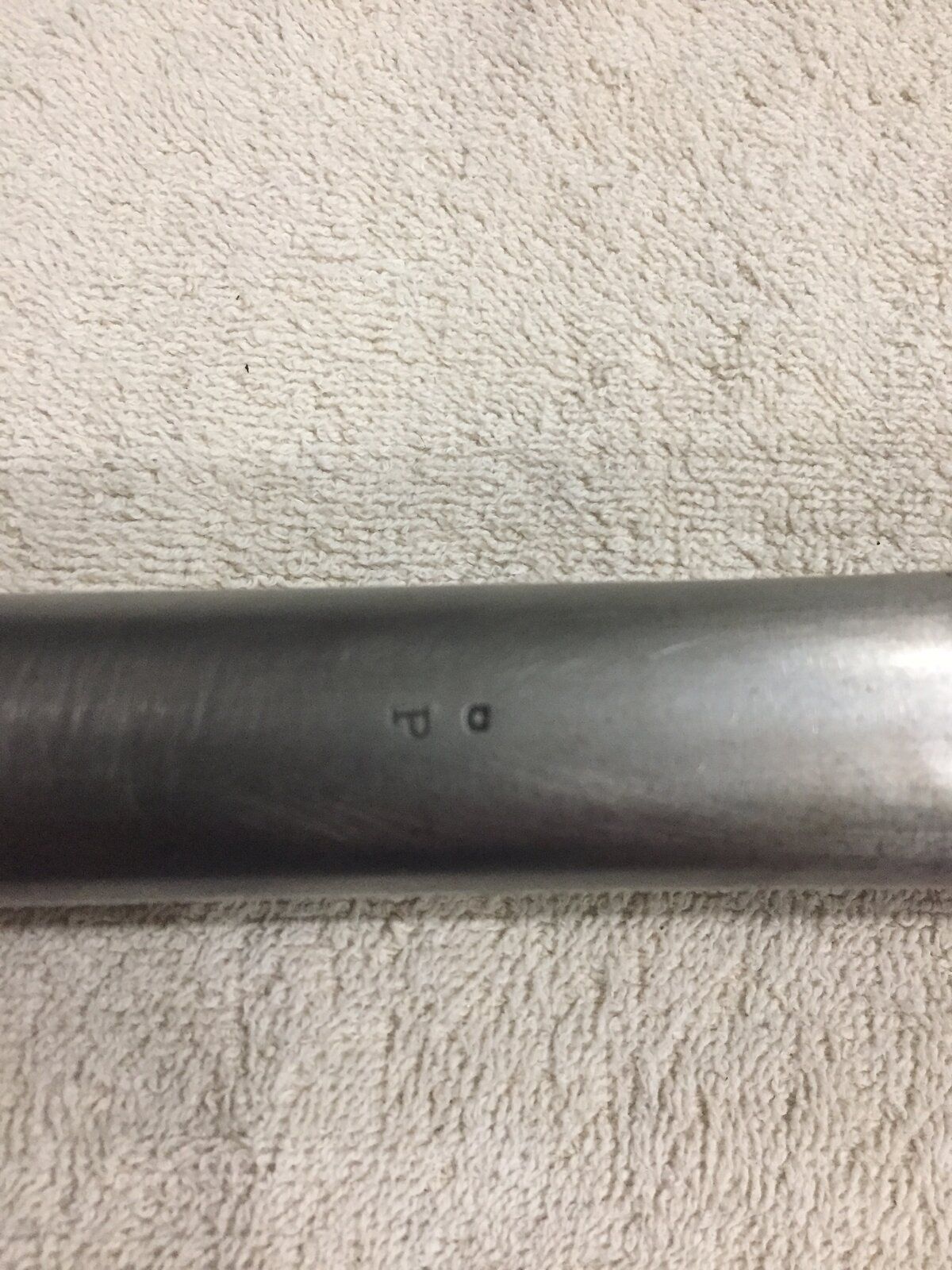
Last year I was able to pick up an unmarked musket, lock plate date 1864, utilizing a lot of condemned parts, ie: barrel, tang, stock, lockplate, etc. 2 weeks ago I procured a second from an astute dealer friend. This same pattern '61 with a stamped date was identical to the one I purchased earlier with exceptions of a Whitney '55 style open sight, no proofs on barrel. Last weekend, a major dealer had one for sale at the Richmond show in the same condition. The story on it matched the others, coming out of New England area, NY, Mass, Connecticut. My thoughts are that these were purchased by the states since they didn't gauge correctly as per Federal guidelines for contracts. I'm also thinking these were crated up and sold at one point after the Govt or state cleared their arsenals of muzzleloaders and they quickly went into private collections never to be seen again (or at least sparsely). Because of the old time collectors passing away, these are seeing daylight again. Any opinions from the fellas here on hypothesis?



-
Welcome to CivilWarTalk, a forum about the American Civil War! - Join today! It's fast, simple, and FREE!
You are using an out of date browser. It may not display this or other websites correctly.
You should upgrade or use an alternative browser.
You should upgrade or use an alternative browser.
Unmarked Whitneys
- Thread starter BBurkett
- Start date
Jeff in Ohio
Sergeant Major
- Joined
- Oct 17, 2015
You must have the market cornered on these, whatever they are.
Here are the clues that I think lead to the theory that these are post-war put-togethers from condemned and spare parts:
My Theory:
I suspect that Larry, his brother Darryl and his other brother Darryl came down from the Vermont woods one autumn to New Haven, loaded up their wagon with surplus condemned parts bought at scrap iron prices, and spent the Vermont winter putting these together as they waited for the spring maple sap rising.
Here are the clues that I think lead to the theory that these are post-war put-togethers from condemned and spare parts:
- The hand filed crosshatching on the hammer shown is crude and amateurish.
- shockingly poor work installing that buttplate shown
- The US was producing all the first quality Model 1861 rifle-muskets needed for federal and state troops by 1864, the date on the lock.
- As you say, the parts show they are condemned
- the rear sights vary, one of the hammers looks nicely checkered, in other words, the parts used do not match
- That crude cross hatching on the hammer is the worst possible place to have such crappy work, so noticeable to any potential buyer (sort of like a facial mole with black hair growing out of it - just the wrong place to have an ugly blemish), and even Whitney wouldn't expect to this to be accepted by even the most lackadaisical state buyer.
My Theory:
I suspect that Larry, his brother Darryl and his other brother Darryl came down from the Vermont woods one autumn to New Haven, loaded up their wagon with surplus condemned parts bought at scrap iron prices, and spent the Vermont winter putting these together as they waited for the spring maple sap rising.
Last edited:
Well, Tim Prince, Brendan Synamon and others authenticated them as being Whitney produced after his failed "Manton" produced muskets which Whitney totally distanced himself from. The question wasn't IF they were Whitney produced, the question is now that older collections are being parted out, are these still uncommon. Seeing three in same condition (2 of them mine) at a major show is kind of unusual.
Jeff in Ohio
Sergeant Major
- Joined
- Oct 17, 2015
Well, Tim Prince, Brendan Synamon and others authenticated them as being Whitney produced after his failed "Manton" produced muskets which Whitney totally distanced himself from. The question wasn't IF they were Whitney produced, the question is now that older collections are being parted out, are these still uncommon. Seeing three in same condition (2 of them mine) at a major show is kind of unusual.
I've had dealings with Tim Prince for many, many years, and recognize Brendan in connection with the Union Drummer shop, but don't know him.
I would stand with my belief that even Whitney could not sell these to any state buyer in 1864 or later. In the early 1860s, folks were desperate and would buy anything on the market. I don't think this was the case in 1864.
I too am interested in how we are seeing older collections are being parted out.
I am also interested in the market for non-standard guns changed as the War progressed. I have the idea that three years into the War, 1864, states might have been accepting and paying for good quality guns contracted for earlier in the War, but would not be buying poorly made arms.
Last edited:

BillWright
Private
- Joined
- Jul 15, 2021
I agree with you Jeff.I've had dealing with Tim Prince for many, many years, and recognize Brendan in connection with the Union Drummer shop, but don't know him.
I would stand with my belief that even Whitney could not sell these to any state buyer in 1864 or later. In the early 1860s, folks were desperate and would buy anything on the market. I don't think this was the case in 1864.
I too am interested in how we are seeing older collections are being parted out.
I am also interested in the market for non-standard guns changed as the War progressed. I have the idea that three years into the War, 1864, states might have been accepting and paying for good quality guns contracted for earlier in the War, but would not be buying poorly made arms.
Jeff, there is a documented "Unmarked Whitney" that came out of NY and family lore was that it was used by a family member as a prison camp guard rifle. This would fit Whitney selling them to select states as "good and serviceable" as second class Arms for such duties because of their $3.00 less price than a rifle musket manufactured by an "accepted" Federal contractor.
Regarding your belief these were Bannerman assembled pieces, since none of these rifles "gauge" properly and are essentially hand build like the BSAT P53's, I seriously doubt Bannerman would take the time or effort to make them fit when there were so many interchangeable muskets available. That was reiterated by Tim in a recent conversation. I believe the Horse Soldier has a good write up on these and I included a pic above of the listing on his site of the exact same piece but in much worse condition.
Regarding your belief these were Bannerman assembled pieces, since none of these rifles "gauge" properly and are essentially hand build like the BSAT P53's, I seriously doubt Bannerman would take the time or effort to make them fit when there were so many interchangeable muskets available. That was reiterated by Tim in a recent conversation. I believe the Horse Soldier has a good write up on these and I included a pic above of the listing on his site of the exact same piece but in much worse condition.
Jeff in Ohio
Sergeant Major
- Joined
- Oct 17, 2015
I'm sure Tim Prince knows more about Whitney arms than I do - in the Good and Serviceable category, I've had two of the high hump rifle muskets, but no others.
These look like standard M1861 parts, and even M1861 parts that were rejected should not require hand fitting, correct?
These look like standard M1861 parts, and even M1861 parts that were rejected should not require hand fitting, correct?
From what I gather from Tim and John Holland, every part from barrel to stock to metal parts had a gauge that Federal inspectors used to ensure interchangeability. With all these condemned parts, extra hand fitting was required to assemble said rifles. Granted, some pieces fit ok, but the finish or casting was substandard causing the part to be condemned (see the butt plate casting flaws). Tim noticed on one of mine that it appeared that the barrel was initially began rifling in Whitney's 7 groove rifling but stopped and completed the 3 Land, 3 groove pattern.I'm sure Tim Prince knows more about Whitney arms than I do - in the Good and Serviceable category, I've had two of the high hump rifle muskets, but no others.
These look like standard M1861 parts, and even M1861 parts that were rejected should not require hand fitting, correct?
Jeff in Ohio
Sergeant Major
- Joined
- Oct 17, 2015
Please share whatever else you find about your trio of unmarked muskets. I very much appreciate a puzzle, and I like to learn.
I still can't believe even anyone, during the War or after the War, would expect to install a buttplate so poorly and have the arm accepted by any state - even if Larry and his brother Daryll and his other brother Daryll did that job sitting cross-legged under a shade tree with only one screwdriver, one file, and a pocket knife as tools, they would not have done such a terrible job:

It would have been salable for a few dollars (anything is saleable at a low enough price) but I can't imagine any state buying these - if they did, that could be proof of a pay-off procurement scandal!
I do think there is a lot of information that is getting lost as older collectors disperse their accumulations (my wife tells me I don't have a collection, but an accumulation) and I do appreciate you raising this topic.
Jeff in Ohio
I still can't believe even anyone, during the War or after the War, would expect to install a buttplate so poorly and have the arm accepted by any state - even if Larry and his brother Daryll and his other brother Daryll did that job sitting cross-legged under a shade tree with only one screwdriver, one file, and a pocket knife as tools, they would not have done such a terrible job:
It would have been salable for a few dollars (anything is saleable at a low enough price) but I can't imagine any state buying these - if they did, that could be proof of a pay-off procurement scandal!
I do think there is a lot of information that is getting lost as older collectors disperse their accumulations (my wife tells me I don't have a collection, but an accumulation) and I do appreciate you raising this topic.
Jeff in Ohio

- Joined
- Jul 28, 2015
Fewer than 10% of Union soldiers actually retained their muskets and accouterments as they came out of their pay. They turned them in, particularly a guard who would have zero attachment to his arm. Later many of these muskets were purchased by veterans from Bannerman's, who bought the surplus from the government for pennies on the dollar. These arms then become the old musket that grandpop carried in the war. I would venture that Bannerman is responsible for putting together your Whitney.Jeff, there is a documented "Unmarked Whitney" that came out of NY and family lore was that it was used by a family member as a prison camp guard rifle. This would fit Whitney selling them to select states as "good and serviceable" as second class Arms for such duties because of their $3.00 less price than a rifle musket manufactured by an "accepted" Federal contractor.
Regarding your belief these were Bannerman assembled pieces, since none of these rifles "gauge" properly and are essentially hand build like the BSAT P53's, I seriously doubt Bannerman would take the time or effort to make them fit when there were so many interchangeable muskets available. That was reiterated by Tim in a recent conversation. I believe the Horse Soldier has a good write up on these and I included a pic above of the listing on his site of the exact same piece but in much worse condition.
10% is 10%, not .01%. This was a STATE issued rifle, not Federal so a buyback would probably have different circumstances. In regards to your "Bannerman" assembled comment, that was a belief at one time to less astute collectors. The belief among the top scholars now (currently) is they are "good and serviceable" contract muskets.Fewer than 10% of Union soldiers actually retained their muskets and accouterments as they came out of their pay. They turned them in, particularly a guard who would have zero attachment to his arm. Later many of these muskets were purchased by veterans from Bannerman's, who bought the surplus from the government for pennies on the dollar. These arms then become the old musket that grandpop carried in the war. I would venture that Bannerman is responsible for putting together your Whitney.
- Joined
- Jul 28, 2015
Unfortunately there is absolutely zero evidence that these were issued to anyone, in 1864 there was a phenomenal surplus of contract guns that met federal and state specifications. There is evidence that Bannerman purchased Whitney surplus and sold same.
- Joined
- Jul 28, 2015
Well here's a little info for you, "good and serviceable" means a condemned parts arm that does not meet specification. Whitney would sell these variants to general merchandisers, who in turn sold them to foreign countries, in fact, Mexico bought quite a few. These were never issued to either state or federal agencies. Yale U has the Whitney records complete with state purchases, none in 1864. All state purchases are lock identified with the Whitney name and meet gauge specification and had mostly interchangeable parts.10% is 10%, not .01%. This was a STATE issued rifle, not Federal so a buyback would probably have different circumstances. In regards to your "Bannerman" assembled comment, that was a belief at one time to less astute collectors. The belief among the top scholars now (currently) is they are "good and serviceable" contract muskets.
Last edited:
- Joined
- Jul 28, 2015
Actually, when I look at this piece again, it would appear to be one of the failed or rejected Manton pieces originally sold to Fitch & Waldo. 109 pieces failed inspection and were returned to Whitney, who later put one of his Plymouth 1864 locks on without the identifying nomenclature, no doubt these were sold as GAR parade guns, or Bannerman surplus.10% is 10%, not .01%. This was a STATE issued rifle, not Federal so a buyback would probably have different circumstances. In regards to your "Bannerman" assembled comment, that was a belief at one time to less astute collectors. The belief among the top scholars now (currently) is they are "good and serviceable" contract muskets.
Since the Whitney papers do not show state contracts in 1864, it could easily be surmised that a NE GAR chapter either purchased directly from Whitney or from Bannerman for their hall.
The evidence is readily apparent, by late 1863, Whitney was employing "direct vent" barrels procured from Colt and English made as well as some English made direct vent barrels. The piece in the OP has an indirect vent as is evidenced by the clean out screw.
Though I do not consider myself "astute" or even an advanced firearms collector, I am very interested in Whitney, as the firm supplied the Whitney Enfield and M1855 to Marylanders, those I have collected.
I found this pic while researching. Note the Plymouth Navy style breech sans cleanout, no lockplate name and 1864 date.Actually, when I look at this piece again, it would appear to be one of the failed or rejected Manton pieces originally sold to Fitch & Waldo. 109 pieces failed inspection and were returned to Whitney, who later put one of his Plymouth 1864 locks on without the identifying nomenclature, no doubt these were sold as GAR parade guns, or Bannerman surplus.
Since the Whitney papers do not show state contracts in 1864, it could easily be surmised that a NE GAR chapter either purchased directly from Whitney or from Bannerman for their hall.
The evidence is readily apparent, by late 1863, Whitney was employing "direct vent" barrels procured from Colt and English made as well as some English made direct vent barrels. The piece in the OP has an indirect vent as is evidenced by the clean out screw.
Though I do not consider myself "astute" or even an advanced firearms collector, I am very interested in Whitney, as the firm supplied the Whitney Enfield and M1855 to Marylanders, those I have collected.
- Joined
- Jul 28, 2015
Be careful, that piece appears to have been enhanced, the hammer does not appear to be original to the piece and severely cleaned. Hard to tell, but the pitting on the hammer does not match that of the breech.I found this pic while researching. Note the Plymouth Navy style breech sans cleanout, no lockplate name and 1864 date.
View attachment 411045

- Joined
- Apr 8, 2018
- Location
- Coffeeville, TX
Very interesting thread.

My Theory:
I suspect that Larry, his brother Darryl and his other brother Darryl came down from the Vermont woods one autumn to New Haven, loaded up their wagon with surplus condemned parts bought at scrap iron prices, and spent the Vermont winter putting these together as they waited for the spring maple sap rising.
I regret that I have only one LIKE to give to each of these posts, as more are needed to properly acknowledge the characterizations from the 10-X ring.I still can't believe even anyone, during the War or after the War, would expect to install a buttplate so poorly and have the arm accepted by any state - even if Larry and his brother Daryll and his other brother Daryll did that job sitting cross-legged under a shade tree with only one screwdriver, one file, and a pocket knife as tools, they would not have done such a terrible job:
BANNERMAN'S EMPLOYEES OF THE YEAR 1869
Similar threads


- Replies
- 8
- Views
- 3K

- Replies
- 4
- Views
- 503
- Replies
- 17
- Views
- 3K
- Replies
- 10
- Views
- 2K
- Learn About Us
- ►About CivilWarTalk
- ►Contact the Webmaster
- ►Meet the Staff
- ►Link to CivilWarTalk
- Join Our Community
- ►Register
- ►Browse Forums
- ►View Today's Discussions
- ►Search the Forum
- Get Help
- ►FAQ
- ►Student Guide
- ►Forum Rules & Etiquette
- ►Copyright / DMCA
 Bringing the