Longstreet General Longstreet's opinion

I think the issue with Cedar Mountain is Stonewall was nearly defeated by Banks. The battle only became a Confederate victory because of the timely arrival of Hill. Jackson won in the end, but came close to disaster.

Victory does not automatically mean a general performed well, nor does defeat automatically mean a poor performance.
 
I think the issue with Cedar Mountain is Stonewall was nearly defeated by Banks. The battle only became a Confederate victory because of the timely arrival of Hill. Jackson won in the end, but came close to disaster.

Victory does not automatically mean a general performed well, nor does defeat automatically mean a poor performance.
So much stuff over looked. First of, Banks attacked FIRST when Stonewall didn't have all his Army up. Naturally he would have to give ground. General Early had more to do with saving his basket, so to speak, because he saw what was happening and moved his army to cover more of the fight. After this move and close to the breakthrough, Hill's men did arrive and did as you say. When that happened, it took some of the pressure off Early and he swung his army to the left to cover some cannons (Pelham?)that was knocking the socks off Banks men.
 
So much stuff over looked. First of, Banks attacked FIRST when Stonewall didn't have all his Army up. Naturally he would have to give ground. General Early had more to do with saving his basket, so to speak, because he saw what was happening and moved his army to cover more of the fight. After this move and close to the breakthrough, Hill's men did arrive and did as you say. When that happened, it took some of the pressure off Early and he swung his army to the left to cover some cannons (Pelham?)that was knocking the socks off Banks men.

Not Pelham - he was with Jeb Stuart at the time and remained so until his death. For more about Cedar Mountain:

http://civilwartalk.com/threads/stonewall-jackson-at-the-battle-of-cedar-mountain.116559/
 
It's interesting how some insist only the period opinion and views of those who were there count... unless they don't fall in line with their own.

Longstreet was called Lee's Warhorse by Lee... yet he is despised by the modern Lost Cause/pro slaveocracy crowd because he followed the advice of Forrest and went home and became an American.

I happen to agree with Longstreet on the loss of Stuart. Jackson died at the end of a battle, a won battle and could be replaced by a competent commander. Stuart fell at the worst possible time for Lee; and while Hampton was good, very good, he was no Stuart.
 
I don't know about that analysis but I think that it was E. Porter Alexander's opinion that Jeb Stuart should have been given Jackson's corps after Chancellorsville. He had handled it well during the battle and Alexander thought he deserved it. Of course this leads to two interesting speculations affecting the coming battle of Gettysburg. Lee's cavalry, under somebody else, does its proper job and Stuart aggressively occupies Culps Hill.

Cedar Mountain debate aside, this possibility intrigues me more. After reading Porter Alexander's book, I have a lot of respect for him and his opinion so the idea of Jeb Stuart taking over for Jackson long term would have been interesting. We will never know how that might have turned out, but interesting to think about nonetheless.
 
It's interesting how some insist only the period opinion and views of those who were there count... unless they don't fall in line with their own.

Longstreet was called Lee's Warhorse by Lee... yet he is despised by the modern Lost Cause/pro slaveocracy crowd because he followed the advice of Forrest and went home and became an American.

I happen to agree with Longstreet on the loss of Stuart. Jackson died at the end of a battle, a won battle and could be replaced by a competent commander. Stuart fell at the worst possible time for Lee; and while Hampton was good, very good, he was no Stuart.
Music to my eyes!
 
Cedar Mountain debate aside, this possibility intrigues me more. After reading Porter Alexander's book, I have a lot of respect for him and his opinion so the idea of Jeb Stuart taking over for Jackson long term would have been interesting. We will never know how that might have turned out, but interesting to think about nonetheless.
One of the must reads. IMHO
 
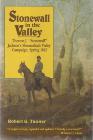
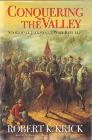
I enjoyed Krick's work. Another good read is his book on Jackson in the valley.

Actually, Stonewall in the Valley is by Robert G. Tanner; Krick's Shenandoah Valley book is about the dual battles of Cross Keys and Port Republic called Conquering the Valley; and you are quite right, both are very good.

stonewall-books-001-jpg.jpg
stonewall-books-004-jpg.jpg
 

Attachments

  • stonewall-books-001-jpg.jpg
    stonewall-books-001-jpg.jpg
    37 KB · Views: 58
  • stonewall-books-004-jpg.jpg
    stonewall-books-004-jpg.jpg
    68.8 KB · Views: 59
Expressing my opinions on Lieutenant-General James Longstreet's opinions that General J.E.B. Stuart's death had a greater impact than that of Lieutenant-General T. J. "Stonewall" Jackson's is perhaps seen as choosing the war performance alone without the personal relationships he had with these two fine generals.

I briefly mention, that these gentlemen were not at first--under General Robert E. Lee. These generals were under General "Joe" Johnston until March 1862, when he was wounded. General Johnston, a veteran and Brigadier-General in the "Old Army," did a fantastic job in raising all these officers, such as the late Major James Longstreet, into command position and recommended Longstreet and Jackson to the rank of Brigadier-General (Provisional CSA) army. It was the wisdom of General Johnston, as to which should be senior to the other. Longstreet became senior by one day over "Stonewall" Jackson. Development of command style was important as to create a cohesive military organization. As a 'side bar' -- both the Union and Confederate Armies, comprised of Volunteer State troops and "citizen soldiers," -- this assessment I must assume by General Johnston was that General Longstreet was active military when he resigned as to take commission as an officer in the CSA. Late Major "Stonewall" Jackson was not active yet, was instructor with VMI. There would have been changes within that military as with the modern military today--any who separate from service and rejoins, has some catch up to do. Has zero to do with abilities--just upgrades and changes in tactics and administration.

General Johnston's mentorship balanced one another out extremely well, as to take advantage of both Stonewall's and Longstreet's strengths. From the Army of the Shenandoah, the swift movement from Harper's Ferry, Virginia (Now West Virginia); into Manassas Junction as to join into the fight with General Beauregard and his forces holding the field. Johnston couldn't have done it without Longstreet, Jackson and J.E.B. Stuart; as to be known as the First Battle of Bull Run/Manassas. This battle may have been totally different had General Johnston didn't do immediate destruction to Union forces in Harper's Ferry as to do what I like to think in a modern analogy-- a "Patton's withdraw from fight--march 100 miles and engage into another massive fight;" thus in my opinion come in time to support Beauregard's struggle to hold the field.

It must be refreshed, a visit to history; as then Colonel J.E.B. Stuart riding with General "Joe" Johnston and was Johnston's "eyes and ears" to General Longstreet more than for General Johnston. Remember, there was a command style difference from General Lee. Yet, I feel that General Johnston wasn't given the credit due, mentoring and teaching the new inexperienced Generals Longstreet and Jackson. By time General Johnston was wounded and his Army taken over by General Lee. Further refreshment is that it was General Longstreet that recommended to then his commanding officer of the Army of the Shenandoah (Johnston), that Colonel J.E.B. Stuart be promoted to Brigadier-General and put in charge of that Army's Cavalry. General Wade Hampton had been operating in the Northern Virginia previously.

The question of impact/importance of either General -- Jackson and/or Stuart. I believe Longstreet to have been correct in the importance of the loss. It has been stated by other CWT members. All military operates on intelligence. Intelligence influences the General Commanding all the way through to the very lowest level -- a Captain and his command. Refreshing Gettysburg's assessments by General Lee, without Stuart--he was blind, as Stuart to Lee was his "eyes and ears." As demonstrated by various amputees of limbs serving as generals, e.g. Kearney, O. O. Howard, Hood, etc., the "eyes and ears" were much more important.

Generals Longstreet and Jackson had their own impacts on the overall running of the Army with their commanding officers. As far as I could read from Longstreet's "Manassas to Appomattox,"; E. P. Alexander, General Moxley Sorrel, etc., Longstreet and Jackson got on very well together, as did Stuart with Longstreet and Jackson. Yet, I am of the opinion that Longstreet and Stuart have much more of a personal relationship as both of them were active when they resigned from the "Old Army." I also believe that it might not have been as deep as Longstreet's relationship with Pickett. From the Mexican War, when Longstreet was wounded in the thigh to which he had to relinquish command--he gave it to Pickett. Pickett's family supported the first Mrs. General Longstreet and the death of their children, it was Pickett who took care of Longstreet's family as Longstreet was pressed to return back to the Army. But, from what I can read on Longstreet, chatting with several impersonators of General Longstreet-- these gentlemen and officers were very close to one another for various reasons and read each other like a book and did things together to accomplish a goal....win battles.

For me, with having 150+ hindsight and so much to draw from, such as documents, reports, memoirs, etc., stepping back for my own opinion on the matter -- Jackson was well replaced by J.E.B. Stuart, though it wasn't his favorite position of leading Infantry --yet, he did it well but, doubt if he could have held that position for any length of time but, it shows the seniority process of the CSA military officers extremely well -- With Stuart having been chastised by Lee in regard to Gettysburg, Stuart stepped up his performance and was never galloping around as carefree as he was. Lee got his intelligence very timely. Stuart changed -- that was a fact. Loosing your eyes, dependency on the unfamiliar scouts and spies would effect Lee and the other generals. So, in this regard--I agree with General Longstreet's opinions.

M. E. Wolf
 
M.E. Wolf has been here a long time and always has good answers on the positive side of Longstreet.
I, too, have the same books he reads and find Longstreet wanting in various places.
I will say he may be considered a middle of the road general but I just don't see that in today's books.
He is exploited as being a great general with military greatness when with General Lee, but a poor subject on his own.

He failed to follow instructions as a number one corp commander on many occasions without the Gettysburg failures.
He questioned Lee on every move Lee wanted to make and move according to what HE felt was necessary thus not carrying
out orders.

McLaws at Knoxville attempted to talk Longstreet out of his attack and was chewed out and charges were brought against him for the failure. McLaws was senior General and in that position he was the same to Longstreet as Longstreet to Lee but anyone can see the difference.

I just don't hold for that kind of activity. I know there are lots of folks have a softer view of Longstreet and that is OK too.
 
M.E. Wolf has been here a long time and always has good answers on the positive side of Longstreet.
I, too, have the same books he reads and find Longstreet wanting in various places.
I will say he may be considered a middle of the road general but I just don't see that in today's books.
He is exploited as being a great general with military greatness when with General Lee, but a poor subject on his own.

He failed to follow instructions as a number one corp commander on many occasions without the Gettysburg failures.
He questioned Lee on every move Lee wanted to make and move according to what HE felt was necessary thus not carrying
out orders.


McLaws at Knoxville attempted to talk Longstreet out of his attack and was chewed out and charges were brought against him for the failure. McLaws was senior General and in that position he was the same to Longstreet as Longstreet to Lee but anyone can see the difference.

I just don't hold for that kind of activity. I know there are lots of folks have a softer view of Longstreet and that is OK too.

Rebforever, sir:

I have zero knowledge if you have had any military background and even so, if in a command position in combat. Yet, to have been a good First Corps commander, one does question the Commanding General. Saying that -- before the heckles are raised; the importance is in how the questioning is presented. It does little good for either General as to sound off onto another General(s). The tactics of Cavalry, to which General Lee was last in command of, verses Infantry were different. It also provides a means of learning from the "teacher" and/or the commanding general--how he sees/what he sees --how does a potential replacement for Lee to learn, if he is not to question his teacher? As teacher "Stonewall" Jackson just repeated until it was memorized. Lee was an engineer and problem solved, frequently a quick calculation. Longstreet was many things, mainly Administrative and held every venue in the "Old Army" save artillery. Longstreet's alleged disobedience to Lee's orders cannot be fully proven as total rebellon or else the many reports would have reflected such, to include (as in this again narrow vision upon Gettysburg); Longstreet's failures in Lee's report to President Davis. Lee took, like a man -- like an officer, the blame and mentioned the loss of Stuart's services had a major impact on the overall battle. Again, only after Lee's death did the fangs show towards Longstreet and using him as a scape goat. President Davis did not believe such allegations and rode with Longstreet in parades as he was so villified by "the Lost Causers." Those who pointed fingers at Longstreet for the loss at Gettysburg, I found to have done much more damage to Lee than Longstreet. Why Early left his post which he was ordered to stay and be there for Stuart to meet up with; the moving of the ammunition train by General Pendleton without informing Col. E. P. Alexander, chief of artillery in charge of the "Pickett-Pettigrew" charge and so much more, which should remain in the Battle of Gettysburg Forum. General Lee could have at any time removed Longstreet from the Number 1 position as his replacement if he was killed or died. Recall please that Lee suffered health wise so, Lee had to have been investing in General Longstreet all the wisdom and judgment possible so he could take over and not have a repeat of when Jackson died, his commanders had no mentorship or inclusion as to force Lee to split command of "Jackson's Corps."

Further, General Lee often reversed and or rescind his orders on the battlefield. The famous phrase "If practical" was permission to use a on the spot judgment. Rarely, did Lee countermand those orders and or over-rode those orders. Again--Lee was teaching--even through other's errors. One learns more from mistakes than perfection at every task. Like Pickett said "...the enemy had something to do with it."

I prefer taking General R. E. Lee's stance with Longstreet--even through the trials of "Appomattox." Longstreet wouldn't abandon Lee. Lee wouldn't abandon Longstreet. These two men trusted each other in my opinion. Longstreet to Lee was as reliable as Traveller.

Since these long lost originals have been gone to us over 100 years now, I prefer to assume from what is documented between Davis, Lee and Longstreet, as proof that had Longstreet been so awful as claimed by the various sub-level generals of the CSA, et.al., some never having served in the ANV; let alone in Longstreet's Corps--the proof Longstreet was not cashiered, suspended, arrested, censored, chastised, court-martial and or charges applied during the war; there was no substance to the claims of others that Longstreet was disobedient and or rebelled against Lee and or Davis.

Question remains -- if a General does disobey an order and saves the army from destruction and win the battle verses, a General obeys an order, the army is totally destroyed and looses the battle -- which one would have been applauded by President Davis, the citizens of the Confederacy and the soldiers to whom lived/died through that battle?

Just my thoughts and opinions.

M. E. Wolf
 
Rebforever, sir:

I have zero knowledge if you have had any military background and even so, if in a command position in combat. Yet, to have been a good First Corps commander, one does question the Commanding General. Saying that -- before the heckles are raised; the importance is in how the questioning is presented. It does little good for either General as to sound off onto another General(s). The tactics of Cavalry, to which General Lee was last in command of, verses Infantry were different. It also provides a means of learning from the "teacher" and/or the commanding general--how he sees/what he sees --how does a potential replacement for Lee to learn, if he is not to question his teacher? As teacher "Stonewall" Jackson just repeated until it was memorized. Lee was an engineer and problem solved, frequently a quick calculation. Longstreet was many things, mainly Administrative and held every venue in the "Old Army" save artillery. Longstreet's alleged disobedience to Lee's orders cannot be fully proven as total rebellon or else the many reports would have reflected such, to include (as in this again narrow vision upon Gettysburg); Longstreet's failures in Lee's report to President Davis. Lee took, like a man -- like an officer, the blame and mentioned the loss of Stuart's services had a major impact on the overall battle. Again, only after Lee's death did the fangs show towards Longstreet and using him as a scape goat. President Davis did not believe such allegations and rode with Longstreet in parades as he was so villified by "the Lost Causers." Those who pointed fingers at Longstreet for the loss at Gettysburg, I found to have done much more damage to Lee than Longstreet. Why Early left his post which he was ordered to stay and be there for Stuart to meet up with; the moving of the ammunition train by General Pendleton without informing Col. E. P. Alexander, chief of artillery in charge of the "Pickett-Pettigrew" charge and so much more, which should remain in the Battle of Gettysburg Forum. General Lee could have at any time removed Longstreet from the Number 1 position as his replacement if he was killed or died. Recall please that Lee suffered health wise so, Lee had to have been investing in General Longstreet all the wisdom and judgment possible so he could take over and not have a repeat of when Jackson died, his commanders had no mentorship or inclusion as to force Lee to split command of "Jackson's Corps."

Further, General Lee often reversed and or rescind his orders on the battlefield. The famous phrase "If practical" was permission to use a on the spot judgment. Rarely, did Lee countermand those orders and or over-rode those orders. Again--Lee was teaching--even through other's errors. One learns more from mistakes than perfection at every task. Like Pickett said "...the enemy had something to do with it."

I prefer taking General R. E. Lee's stance with Longstreet--even through the trials of "Appomattox." Longstreet wouldn't abandon Lee. Lee wouldn't abandon Longstreet. These two men trusted each other in my opinion. Longstreet to Lee was as reliable as Traveller.

Since these long lost originals have been gone to us over 100 years now, I prefer to assume from what is documented between Davis, Lee and Longstreet, as proof that had Longstreet been so awful as claimed by the various sub-level generals of the CSA, et.al., some never having served in the ANV; let alone in Longstreet's Corps--the proof Longstreet was not cashiered, suspended, arrested, censored, chastised, court-martial and or charges applied during the war; there was no substance to the claims of others that Longstreet was disobedient and or rebelled against Lee and or Davis.

Question remains -- if a General does disobey an order and saves the army from destruction and win the battle verses, a General obeys an order, the army is totally destroyed and looses the battle -- which one would have been applauded by President Davis, the citizens of the Confederacy and the soldiers to whom lived/died through that battle?

Just my thoughts and opinions.

M. E. Wolf
Very Well put M. E. Wolf!

I completely agree with all you have said. There is one thing the scapegoat wasn't. Longstreet wasn't a Virginian! A fact that I'm sure frosted Old Jubal's beard. He was the highest ranking officer in the Eastern Theater next to Lee. Every battle fought in the war was full of all the things Longstreet (The non Virginian) was so attacked over. Many an account of disagreements, screw ups etc are present in virtually all the history books. The lost causers singled one individual out. The one they were most jealous of during the war and the one that would fit the bill. Why who would complain about attacking Longstreet now that Lee is dead. No one. He isn't even a Virginian. We could go on and on about this and get absolutely nowhere. We are all entitled to our opinions.
 

Learn About Us
About CivilWarTalk
Contact the Webmaster
Meet the Staff
Link to CivilWarTalk
Join Our Community
Register
Browse Forums
View Today's Discussions
Search the Forum
Get Help
FAQ
Student Guide
Forum Rules & Etiquette
Copyright / DMCA

     Contact Us CivilwarTalk on Facebook CivilWarTalk on YouTube CivilWarTalk on Twitter RSS Feed

Bringing the American Civil War and More to Life.
© 1999 - , CIVILWARTALK, LLC - Site Version 10.0

SlaveryTalk.com - SecessionTalk.com - CivilWarTalk.com - ReconstructionTalk.com
Back
Top