
 Forum Host
- Joined
- Aug 26, 2021
- Location
- North Carolina
A quick pop in & out of my favorite little gun store today with only enough time to do a quick walk-through (had to get to a meeting). I ran across this old musket way in the back. It's got some unusual stamps on it which leads me ask the title question.
The lock plate is marked Springfield 1838 and a very faint US can be seen forward of the hammer on the lock plate. It looks to be converted from flintlock to percussion but I've not seen a cutout like the one for the conversion before (however I'm still a novice so it might be very common).
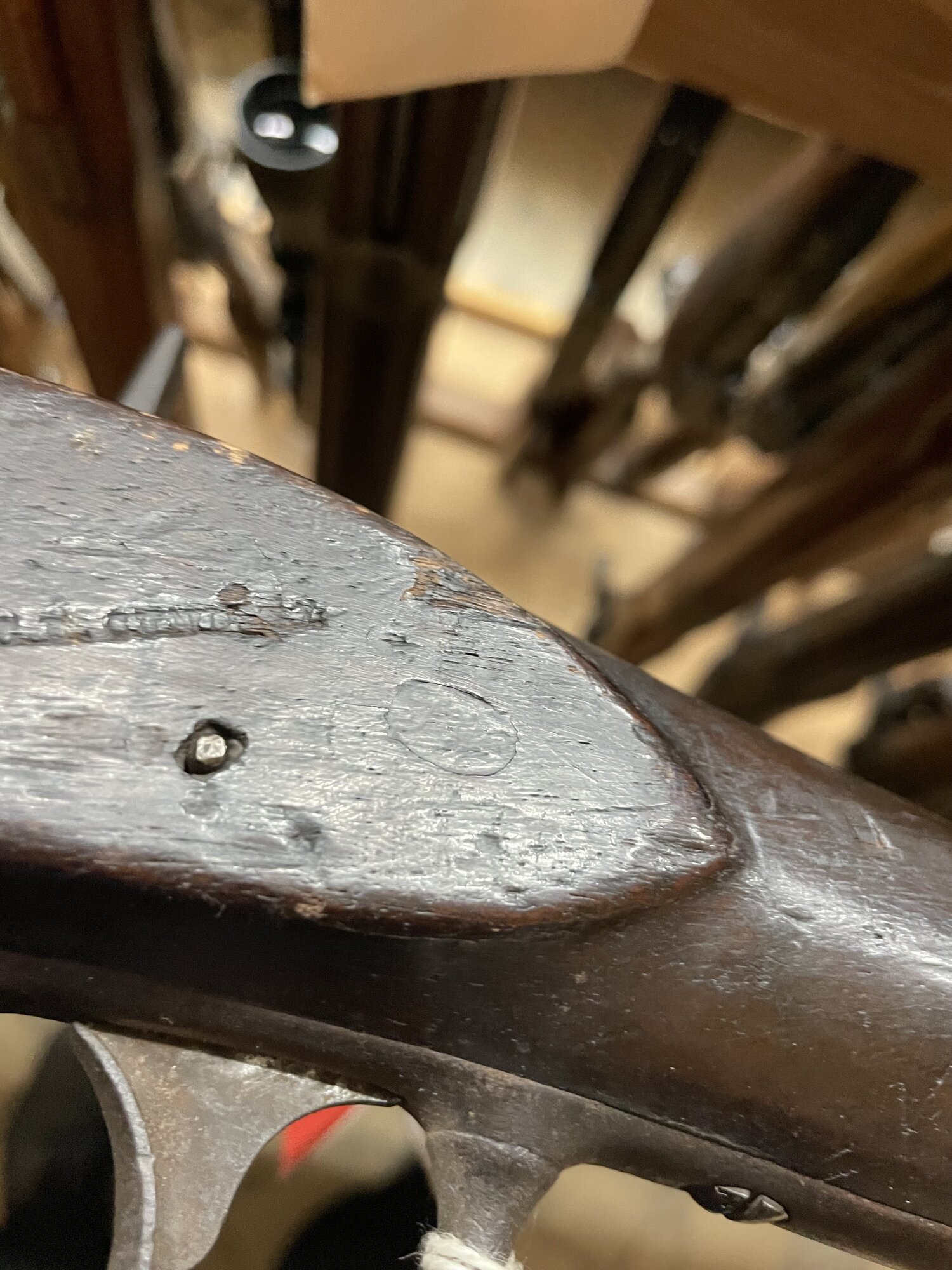
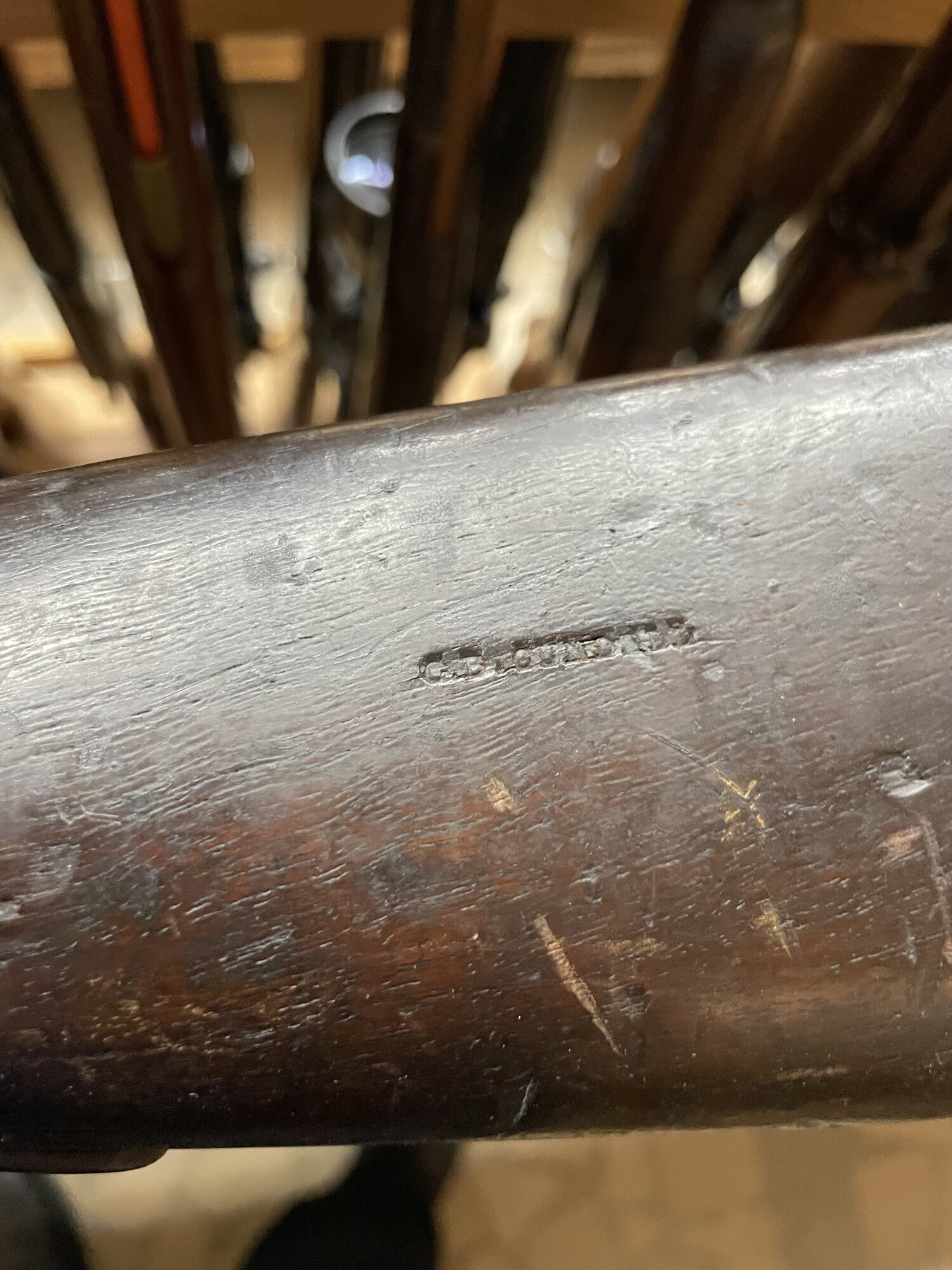
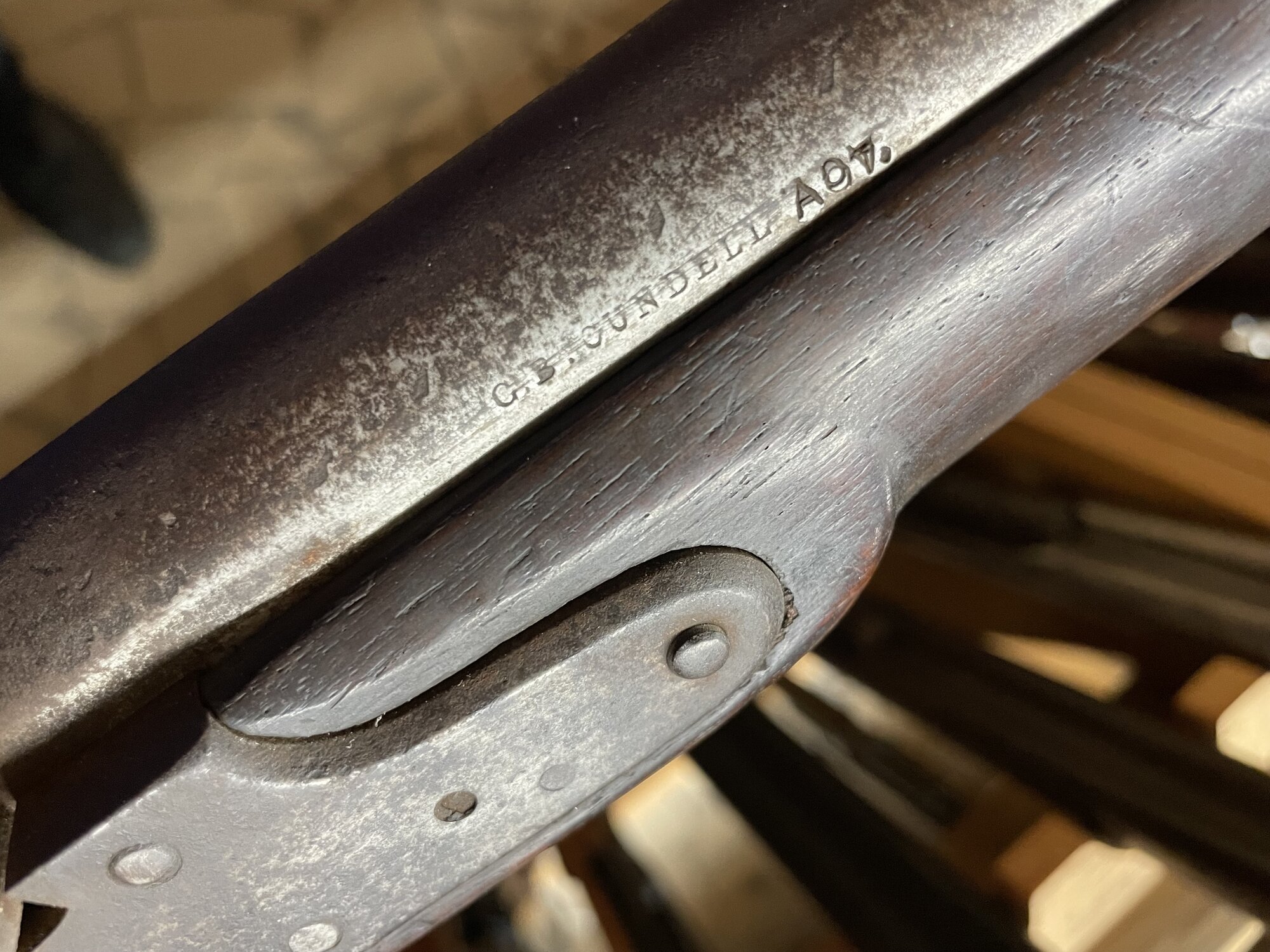
I can't make out the inspectors cartouche in the left side of the stock (SW? JW?) but in several places on the stock and on the side of the barrel there is stamped C.B. CUNDELL. On the barrel, after this stamping, are 3 letters which may be AOT or AOV (they look to be overstamped so I can't make it out exactly).
The gun is in very rough condition with a lot of surface rust. I could not make out any proof or inspection/acceptance marking on the barrel nor anything on the tang.
My question are:
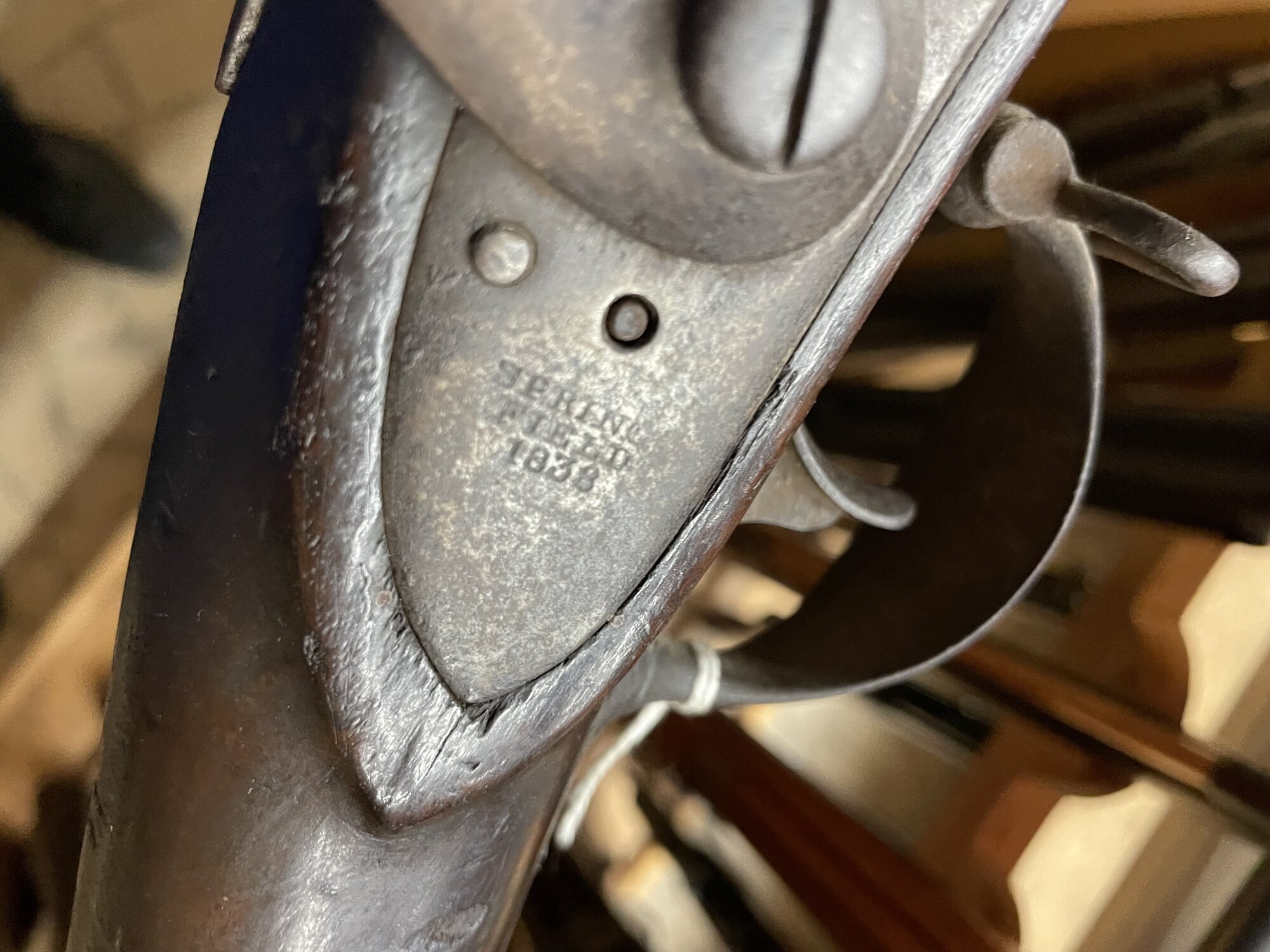

The lock plate is marked Springfield 1838 and a very faint US can be seen forward of the hammer on the lock plate. It looks to be converted from flintlock to percussion but I've not seen a cutout like the one for the conversion before (however I'm still a novice so it might be very common).
I can't make out the inspectors cartouche in the left side of the stock (SW? JW?) but in several places on the stock and on the side of the barrel there is stamped C.B. CUNDELL. On the barrel, after this stamping, are 3 letters which may be AOT or AOV (they look to be overstamped so I can't make it out exactly).
The gun is in very rough condition with a lot of surface rust. I could not make out any proof or inspection/acceptance marking on the barrel nor anything on the tang.
My question are:
- What is it? A Springfield 1838?
- Is this a common musket?
- Comments on the conversion are appreciated
- And the big one - who is/was C.B. CUNDELL?





 Bringing the