History Victorian "Bride Cake"

Joined
Nov 26, 2016
Location
central NC
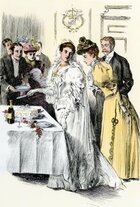
bride-cutting-the-wedding-cake-1800s-5882423.jpg
In Wedding Cakes and Cultural History, one of the few book-length histories on the subject, the author, Simon R. Charsley prefaces his research with a story of one contemporary couple who refused to have a wedding cake because they'd heard or read that the cake was meant to represent the bride. Yikes! This theory is a new one on me! It seems like an example of taking things a little too literally.

Per Simon R. Charsley:
"It's a plausible theory: the cake has three tiers, anthropomorphic-like; it's white and embellished like the gown; it is often decorated to match the bride and sometimes even shares her favors (she sets her bouquet on top, or uses charms from her own gown for the ribbon pull). The couple was sickened by the implications of the shared cutting-of-the-cake ceremony, which they read as a hymen allusion."

During the 19th century, technology made the cake-baker's life much easier. The chemical raising agent bicarbonate of soda was introduced in the 1840s, followed by baking powder which provided a greater leavening power with less effort. Another technology breakthrough was more accurate temperature controlled ovens.

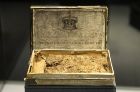
Apparently, it was common in the late 19th century to mail pieces of wedding cake all over the States and across the ocean to absent relatives. Of course the cake was usually dense, dairy less and soaked in brandy. However, there have been reported instances of wedding cake related deaths before the age of refrigeration.


Source: Scenes of Eating, Highlights from Wedding Cake History, Sara Davis, June 21, 2013.
Source: The Penguin Companion to Food by Alan Davidson
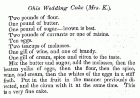
 
In the early Victorian days, the "Bride Cake" evolved to become known as the Wedding Cake. This cake was originally called "Bride Cake" as a way of paying homage to the bride. The traditional color of wedding cakes has been white since the late 19th century. However, throughout Victorian times, only very affluent families could afford the finely refined sugars needed to create a pure white icing for the wedding cake. As a result of this, many wedding cakes were finished with an icing that varied in the shade of cream to white. This indicated the quality of sugar used in the icing mix. Colorings to create special colors and effects for icing were almost non-existent in Victorian times. Pure white icing on wedding cakes was reflective of the wealth of the family organizing the wedding rather than a symbol of the bride's purity or the theme for a traditional wedding.

Source: AVictorian.com
 
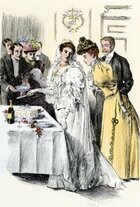
bride-cutting-the-wedding-cake-1800s-5882423.jpg
In Wedding Cakes and Cultural History, one of the few book-length histories on the subject, the author, Simon R. Charsley prefaces his research with a story of one contemporary couple who refused to have a wedding cake because they'd heard or read that the cake was meant to represent the bride. Yikes! This theory is a new one on me! It seems like an example of taking things a little too literally.

Per Simon R. Charsley:
"It's a plausible theory: the cake has three tiers, anthropomorphic-like; it's white and embellished like the gown; it is often decorated to match the bride and sometimes even shares her favors (she sets her bouquet on top, or uses charms from her own gown for the ribbon pull). The couple was sickened by the implications of the shared cutting-of-the-cake ceremony, which they read as a hymen allusion."

During the 19th century, technology made the cake-baker's life much easier. The chemical raising agent bicarbonate of soda was introduced in the 1840s, followed by baking powder which provided a greater leavening power with less effort. Another technology breakthrough was more accurate temperature controlled ovens.

Apparently, it was common in the late 19th century to mail pieces of wedding cake all over the States and across the ocean to absent relatives. Of course the cake was usually dense, dairy less and soaked in brandy. However, there have been reported instances of wedding cake related deaths before the age of refrigeration.


Source: Scenes of Eating, Highlights from Wedding Cake History, Sara Davis, June 21, 2013.
Source: The Penguin Companion to Food by Alan Davidson
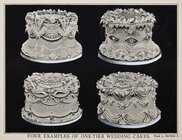
Interesting thread, Eleanor Rose.
If that offended them, then the rest of the wedding ceremony should have offended them as well, because it is all about all kinds of rituals that have their roots in archaic ideas of gender roles, for which discussion this is not the place.
 
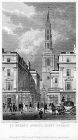
From Wikipedia: In 1703, Thomas Rich, a baker's apprentice from Ludgate Hill, fell in love with his employer's daughter and asked her to marry him. He wanted to make an extravagant cake, so he drew on St Bride's Church, on Fleet Street in London for inspiration.
200px-Bride_fleet14.jpg
This story was also told to me by a tour guide in London, as we passed the church. Interestingly, this church has a connection to the United States.

In the late 1580s, one Eleanor White, daughter to the gentleman artist and explorer John White, was married in St Bride's, to the tiler and bricklayer Ananias Dare. Their daughter Virginia Dare was to be the first English child born in North America. She was born on Roanoke Island on 18 August 1587: "Elenora, daughter to the governour and wife to Ananias Dare, one of the assistants, was delivered of a daughter in Roanoke".[5] The child was healthy and "was christened there the Sunday following, and because this childe was the first Christian borne in Virginia, she was named Virginia".[5] A modern bust of Virginia Dare stands near the font, replacing an earlier monument which was stolen and has not been recovered.[6]
 
Even though June is usually month of brides, great information on these beautiful cakes.

My timing may have been off with this thread Donna. Truth is I got interested in the topic after reading the thread you bumped, Spun Sugar, Fondant Lace and Cake; Victorians Played With Food. As you said, Annie did an "excellent thread on Victorian and other fancy cakes."

Surprisingly, more and more brides are picking other months these days because they want to avoid the heat of summer.

So true. I was a March bride and I've had more than one friend tie the knot at Christmastime.
 
Last edited:
true. I was a March bride and I've had more than one friend tie the knot at Christmastime.
Early May bride here. And truthfully, if I could do it again, I would seriously consider a December wedding. Imagine all the Christmas decorations I could have purchased!!! :skip:

I would have had that cool bridal cape with the fur lined hood too. The whole nine yards.
 
Early May bride here. And truthfully, if I could do it again, I would seriously consider a December wedding. Imagine all the Christmas decorations I could have purchased!!! :skip:

I would have had that cool bridal cape with the fur lined hood too. The whole nine yards.
One of the prettiest weddings I ever attended was in December. The bride carried red roses with evergreen sprigs and had a white velvet cape with fur trim on the hood. The wedding was in the evening, and the little old country church was decorated for Christmas and lit with candles. It was so beautiful and romantic!
 
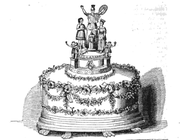
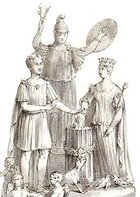
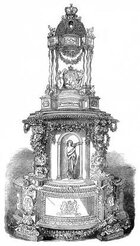
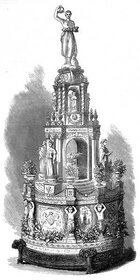
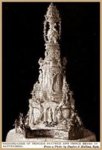
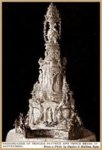
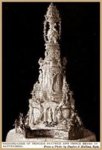
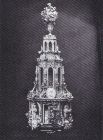
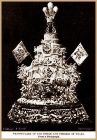
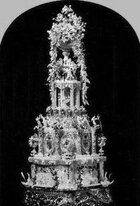
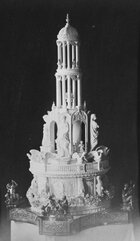
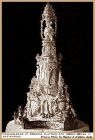
Although Victoria's cake was relatively small and simple, the cake made for her children became more and more elaborate.

When her eldest daughter, Victoria, married the Crown Prince of Prussia in 1858, she had this doozie:
f13d227a8879d57337915ea412975fc2--royal-wedding-cakes-modern-wedding-cakes.jpg


Princess Louise's 1871 extravaganza:
ff0ae5f5e21df43457baafa3f3955b1c--royal-wedding-cakes-royal-cakes.jpg
 

Attachments

  • upload_2018-1-7_23-8-51.jpeg
    upload_2018-1-7_23-8-51.jpeg
    9.6 KB · Views: 102
  • upload_2018-1-7_23-9-9.jpeg
    upload_2018-1-7_23-9-9.jpeg
    9.6 KB · Views: 77
  • upload_2018-1-7_23-9-28.jpeg
    upload_2018-1-7_23-9-28.jpeg
    9.6 KB · Views: 87
Last edited:
Has anyone noticed how eager the one gentleman is to have a piece of cake in the OP pic? He has his plate ready! I think it's interesting that the bride used to cut the cake all by herself. The tradition of the groom assisting with the cutting of the first slice came along much later.

I think this is interesting too. In Medieval England, there are stories of a custom involving stacking small buns in a large pile in front of the newlyweds. Stacked as high as possible the idea was to make it difficult for the newlyweds to kiss one another over the top. If the bride and groom were able to kiss over the tall stack, it was thought to symbolize a lifetime of prosperity. Knowing my luck, that would have been a disaster for Douglas and me. I have major klutz tendencies. :giggle:

Source: Maisie Fantaisie
 

Learn About Us
About CivilWarTalk
Contact the Webmaster
Meet the Staff
Link to CivilWarTalk
Join Our Community
Register
Browse Forums
View Today's Discussions
Search the Forum
Get Help
FAQ
Student Guide
Forum Rules & Etiquette
Copyright / DMCA

     Contact Us CivilwarTalk on Facebook CivilWarTalk on YouTube CivilWarTalk on Twitter RSS Feed

Bringing the American Civil War and More to Life.
© 1999 - , CIVILWARTALK, LLC - Site Version 10.0

SlaveryTalk.com - SecessionTalk.com - CivilWarTalk.com - ReconstructionTalk.com
Back
Top