
- Joined
- Jul 12, 2015
Christopher Daley's article on the Veteran Reserve Corps Jacket is a must read for anyone seriously interested in Civil War uniforms.
http://www.cjdaley.com/vrc.htm
A study of Enlisted Invalid Corps jackets 1863-1866
by Christopher J. Daley
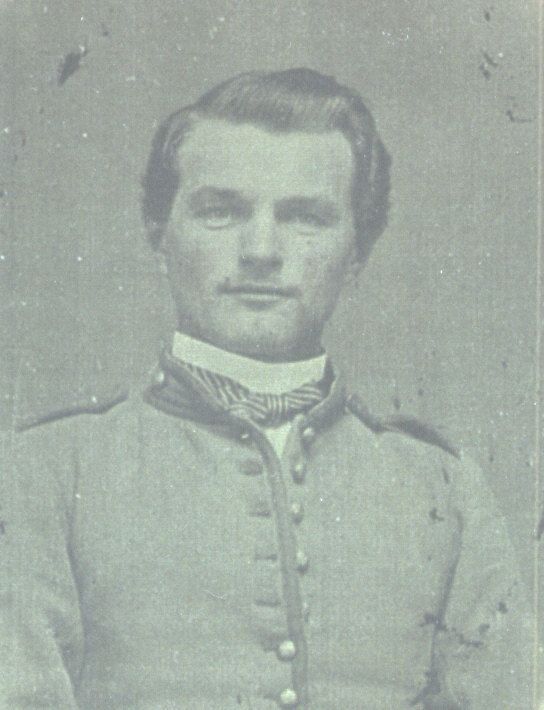 This page is broken into two parts: The History of the Invalid Corps Jacket and an Examination of a Schuylkill Arsenals Invalid Corps Jackets. This is all a work in progress so if you have any additional information on Invalid Corps Jackets, please let me know.
(Note: As explained in this article, the unit designation of "Invalid Corps" was changed to "Veteran Reserve Corps (VRC)" in 1864. For the sake of continuity, I have chosen to use the designation of "Invalid Corps" throughout the text.)
Part I: The History of the Invalid Corps Jacket
As early as 22 April 1777 the War of Board of the Continental Congress established a "Corps of Invalids" whose main purpose was not as active combatants, but rather a supportive unit. Under the command of Colonel Lewis Nicolas these men were charged with guarding magazines, arsenals and to serve as drill instructors for new recruits. The only requirement was that the invalid not have more than a single amputation.1
In the War Between the States a similar numbers shortage in November of 1862 forced the War Department to issue General Orders 36. This order authorized secure medical officers to use convalescents as nurses, cooks and attendants in a hospital to aid the growing number of wounded in the wake of the Maryland Campaign. The formal creation of The Invalid Corps (renamed the "Veteran Reserve Corps" on 18, March 1864 for morale reasons) came on 22 March 1863 with General Orders 63:
At every U.S. General Hospital, the feeble and wounded men, unfit for field duty, but not entirely disabled, instead of being discharged, will be organized into detachments, under the charge of the officers acting as military commanders, who will assign men to them from time to time, in the reports of the surgeons in charge of the hospitals. From these invalid detachments the military commanders will make details for provost, hospital and other necessary guards: for clerks, hospital attendants, nurses, cooks and other extra duty men.
The new Invalid Corps was to be organized into three battalions: Recruits of the battalion should be capable of using a musket; those of the Battalion are to have the use of one of the upper extremities ; those of the battalion are to have the use of at least one of their lower extremities. No third battalion was ever formed, but over 60,000 officers and men served in the corps throughout the remained of the conflict. 1,664 died while a member of the service, 24 in actions, the remained of disease and wounds suffered in regular service.
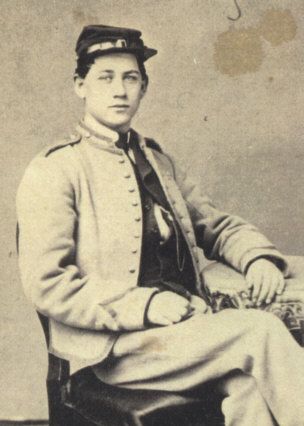
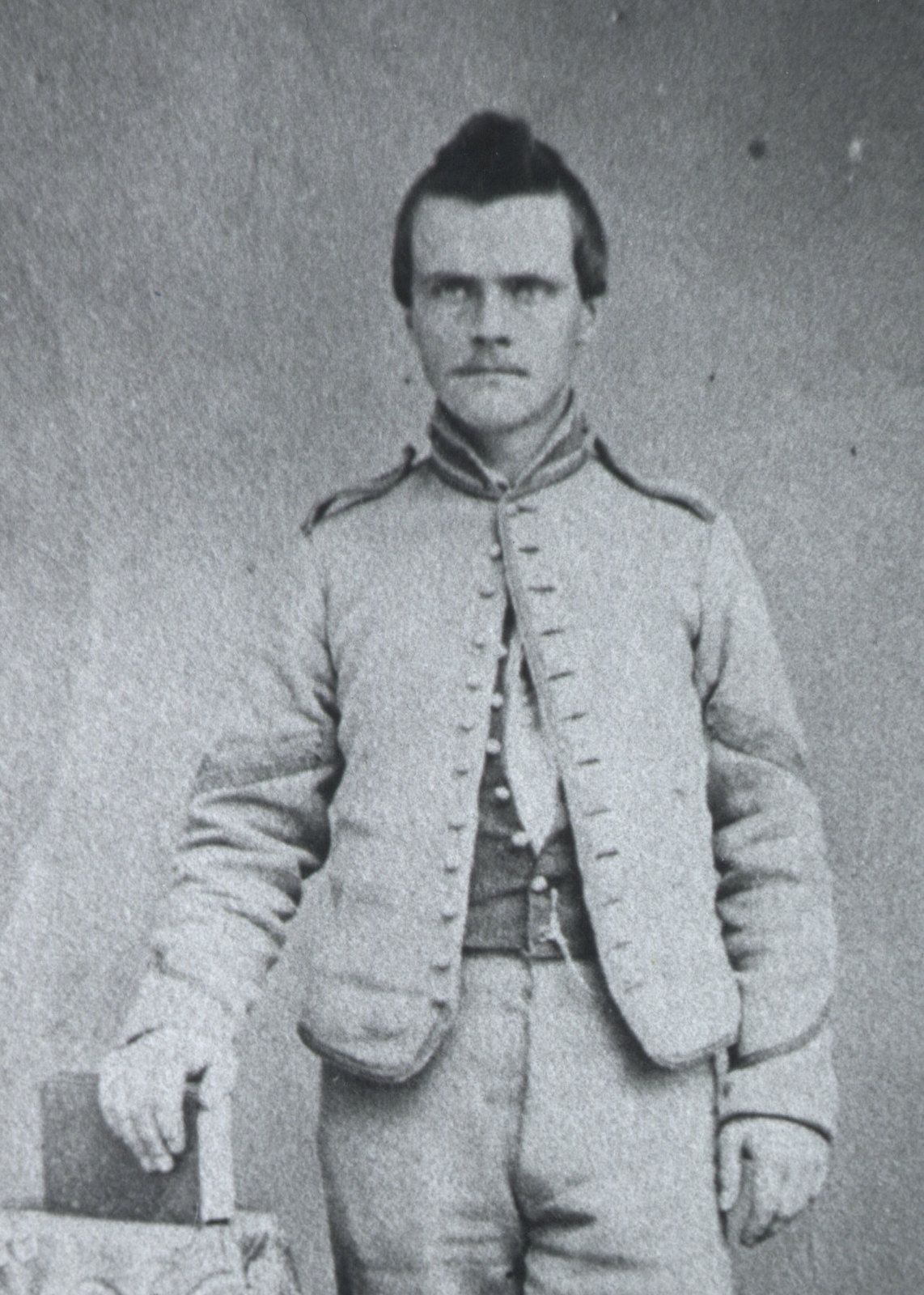
This Invalid Corps Private is wearing one of the many variations that can bee seen in Invalid Corps Jackets. This Jacket has a lower collar with no 'false buttonhole" and the shoulder strap is rounded.
(courtesy of Guy Smith)
This unique corps also adopted a unique uniform. General Orders 124 on 15 May 1863 outlined the uniform as follows: The following uniform has been adopted for the Invalid Corps: Jacket: Of Sky-blue kersey, with dark-blue trimmings, cut like the jacket of the U.S. Cavalry, to come well down on the loins and abdomen; Trousers: Present regulation, sky-blue; Forage Cap: present regulation
 The jacket was to be designed and fashioned in such a way as to give the members of this new organization a sense of heightened pride and esprit-de-corps. In fact this uniform marked the members as cripples and shirkers. As the regulations for most state, volunteer and U.S. Regular infantry regiments called for a dark blue coat, this new garment precluded the wearer from being confused for regular soldier.
Soldiers North and South marked the veteran soldiers and called them "Condemned Yanks"2 or "Inspected-Condemned". The later was a term used by the quartermaster inspectors who rejected inferior equipage or worn out goods. The "I.C." stamp used by the inspectors was unfortunately the same initials for the Invalid Corps.
Captain J.W. DeForest, the last commander of the corps would write in a final report, his observation regarding the adoptions of the Invalid Corps Jacket.
 The Uniform was becoming, but has never been popular. The men did not like to be distinguished from their comrades of the active service by a particular costume; they wanted to keep the dark blue blouse and dress coat in which they had learned their profession and received their honorable disabilities. This feeling was aggravated by the inevitable jealousy between field and garrison regiments, which ripened into something like bitterness between the soldiers of the Invalid Corps and the ranks in which they had so lately marched and fought.3
To add to the stigma of the uniform it self, some Invalid Corps officers forced the regulations upon the enlisted men to the point of punishment. Pvt. Alfred Bellard, noted one senior officer who seemed to delight in the discomfort of his troops even when off duty.
We were now under strict military rule not being allowed to wear anything that was not issued by the government, even our shoes. When out on pass, we must have out jackets buttoned up to our chin, waist belt on and also white gloves. Our major, who was an officer of the regular army, and had but one eye, tried to make himself very conspicuous. While I was walking along Penn. Ave. one day out on pass I had my corps badge and shield on my jacket, and that was unbuttoned, when who should come along but the major, who ordered me to take off my badges and button my jacket. I did neither, only while I was in his sight. He ordered me back on one occasion, when I was going out on pass, he being at the gate, to take off my fancy cap and store bought boots, and put on the gov't pontoons before I could pass the guard. At the next parade, I had no army cap and the one the Lieut. Got for me was some two sizes too large and came down over my ears, I made it answer by pinning it up.4
Bellard kept an accurate account of his days with the Invalid Corps and made several observations about his uniform, along with color sketches of the same. The New Jersey native was assigned to the 97th Company of the 1st Battalion of Invalids.5 Soon after being assigned to that unit, on the 15th of October he was issued his uniform: We received our arms and equipment, an extra pair of pants and the blue jacket of the Invalid Corps. The jacket was made of light blue cloth with black braid for trimming and nine small brass buttons down the front.6
 Pvt. Alfred Bellard's Sketch of
The Invalid Corps Uniform
Bellard's description of his newly issued suit bears little resemblances to the regulations prescribed by the War Department. As the U.S. Cavalry jackets were to be made with 12 buttons instead of the nine Bellard's had His jacket also had "black trimming", not dark blue trim.
As you will see in this study Bellard's jacket is not the only variation of the Invalid Corps Enlisted Jacket issued to the soldiers. In fact the jacket was quite different to the specification called for in General Order 124. The extant Invalid Corps jackets vary greatly as to the prescribed "U.S. Cavalry Jacket" or Mounted Services pattern.
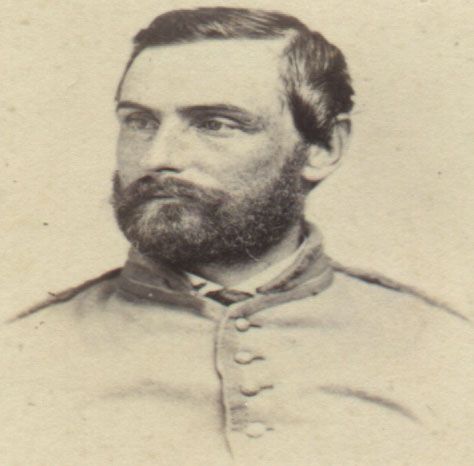 The mounted services pattern called for a 12 button front, a survey of extant examples, diary accounts and images shows 9, 11 and 12 button Invalid Corps jackets. The tape surveyed in extant examples was 1/2 worsted twill, double-chevron weave trim. According to pattern, the mounted services jackets were to be made with 3/8" trim, extant examples support this. While the mounted services jackets are trimmed with two "false-button" holes on the collar, the Invalid Corps only has one. The Invalid Corps jacket is also missing the trim along the back seams which is prescribed for and found on extant mounted services jackets.
The Invalid Corps jackets were cut longer and have more of a chasseur look to them, as with most chasseur jackets, the Invalid Corps jacket has a vent at the base of the side seam to allow the garment to break over the hips naturally. This feature, along with trimmed epaulets, are also missing on mounted service jackets.
 This corporal is in the 172d Company,
2d Battalion, and was photographed by
P. Olmsted & Co., Davenport, Iowa
(courtesy of Philip Katcher)
Several other features prescribed by regulations to be included in the mounted services jacket are missing from the Invalid Corps jackets, including a functional cuff and bolsters. The bolsters were two small rectangle pieces of cloth sewn into the rear seams of the mounted services jackets. These trimmed "pillow-shape" devices were used to hold up or 'bolster' the issue saber belt.
A final difference in pattern to the mounted services coat is the height of collar which seams to be slightly lower on most Invalid Corps Jackets. By 1864 the regulations were:
Jacket for Veteran Reserve Corps: 1 1/4 yards of 6-4 sky blue kersey; 1 yard of 7/8 white or grey flannel or linsey lining; 1 1/8 yards of 4-4 unbleached muslin; I inch of 4-4 brown holland; 6 yards of I/2 inch dark blue worsted lace; 16 vest buttons; 7 skeins of dark blue linen thread, No. 35; 1 black hook and eye. For musicians, add 5 yards of lace and 2 skeins of thread.
To view the regulations for the mounted services jacket, please visit: Uniform Study: St. Louis Depot Mounted Services Artillery Jacket
There were two patterns developed for the Invalid Corps Jacket. The first pattern was the "Prototype Invalid Corps Jacket". There is one sealed sample piece in the collection of the Smithsonian Institute which was produced as a prototype. This jacket is longer, has separate skirt pieces and was never produced and issued to the Invalid Corps.
The second pattern Invalid Corps Jacket didn't have a separate skirt piece, but exhibited many of the same features as the prototype. Only one pattern was used by the Schuylkill Arsenal, the Cincinnati Depot and contractors. The variations that occur among Invalid Corps jackets are "style" differences and are not pattern changes. Among the variations seen in jackets are the amount of buttonholes, anywhere from the prescribed 12, to as few as 9. The trim on the collar is also a style variation. Most of the Invalid Corps jackets, and all the ones surveyed from the Schuylkill Arsenal, have a one-double row of lace on the collar to emulate a false buttonhole. Some photos exhibit one-single row of lace and some jackets lack this feature all together.
Research is still being done on the Invalid Corps Jacket and please visit this site frequently for, new photos and finds on this unique military garment.
http://www.cjdaley.com/vrc.htm
A study of Enlisted Invalid Corps jackets 1863-1866
by Christopher J. Daley
(Note: As explained in this article, the unit designation of "Invalid Corps" was changed to "Veteran Reserve Corps (VRC)" in 1864. For the sake of continuity, I have chosen to use the designation of "Invalid Corps" throughout the text.)
Part I: The History of the Invalid Corps Jacket
As early as 22 April 1777 the War of Board of the Continental Congress established a "Corps of Invalids" whose main purpose was not as active combatants, but rather a supportive unit. Under the command of Colonel Lewis Nicolas these men were charged with guarding magazines, arsenals and to serve as drill instructors for new recruits. The only requirement was that the invalid not have more than a single amputation.1
In the War Between the States a similar numbers shortage in November of 1862 forced the War Department to issue General Orders 36. This order authorized secure medical officers to use convalescents as nurses, cooks and attendants in a hospital to aid the growing number of wounded in the wake of the Maryland Campaign. The formal creation of The Invalid Corps (renamed the "Veteran Reserve Corps" on 18, March 1864 for morale reasons) came on 22 March 1863 with General Orders 63:
At every U.S. General Hospital, the feeble and wounded men, unfit for field duty, but not entirely disabled, instead of being discharged, will be organized into detachments, under the charge of the officers acting as military commanders, who will assign men to them from time to time, in the reports of the surgeons in charge of the hospitals. From these invalid detachments the military commanders will make details for provost, hospital and other necessary guards: for clerks, hospital attendants, nurses, cooks and other extra duty men.
The new Invalid Corps was to be organized into three battalions: Recruits of the battalion should be capable of using a musket; those of the Battalion are to have the use of one of the upper extremities ; those of the battalion are to have the use of at least one of their lower extremities. No third battalion was ever formed, but over 60,000 officers and men served in the corps throughout the remained of the conflict. 1,664 died while a member of the service, 24 in actions, the remained of disease and wounds suffered in regular service.
This Invalid Corps Private is wearing one of the many variations that can bee seen in Invalid Corps Jackets. This Jacket has a lower collar with no 'false buttonhole" and the shoulder strap is rounded.
(courtesy of Guy Smith)
This unique corps also adopted a unique uniform. General Orders 124 on 15 May 1863 outlined the uniform as follows: The following uniform has been adopted for the Invalid Corps: Jacket: Of Sky-blue kersey, with dark-blue trimmings, cut like the jacket of the U.S. Cavalry, to come well down on the loins and abdomen; Trousers: Present regulation, sky-blue; Forage Cap: present regulation
Soldiers North and South marked the veteran soldiers and called them "Condemned Yanks"2 or "Inspected-Condemned". The later was a term used by the quartermaster inspectors who rejected inferior equipage or worn out goods. The "I.C." stamp used by the inspectors was unfortunately the same initials for the Invalid Corps.
Captain J.W. DeForest, the last commander of the corps would write in a final report, his observation regarding the adoptions of the Invalid Corps Jacket.
To add to the stigma of the uniform it self, some Invalid Corps officers forced the regulations upon the enlisted men to the point of punishment. Pvt. Alfred Bellard, noted one senior officer who seemed to delight in the discomfort of his troops even when off duty.
We were now under strict military rule not being allowed to wear anything that was not issued by the government, even our shoes. When out on pass, we must have out jackets buttoned up to our chin, waist belt on and also white gloves. Our major, who was an officer of the regular army, and had but one eye, tried to make himself very conspicuous. While I was walking along Penn. Ave. one day out on pass I had my corps badge and shield on my jacket, and that was unbuttoned, when who should come along but the major, who ordered me to take off my badges and button my jacket. I did neither, only while I was in his sight. He ordered me back on one occasion, when I was going out on pass, he being at the gate, to take off my fancy cap and store bought boots, and put on the gov't pontoons before I could pass the guard. At the next parade, I had no army cap and the one the Lieut. Got for me was some two sizes too large and came down over my ears, I made it answer by pinning it up.4
Bellard kept an accurate account of his days with the Invalid Corps and made several observations about his uniform, along with color sketches of the same. The New Jersey native was assigned to the 97th Company of the 1st Battalion of Invalids.5 Soon after being assigned to that unit, on the 15th of October he was issued his uniform: We received our arms and equipment, an extra pair of pants and the blue jacket of the Invalid Corps. The jacket was made of light blue cloth with black braid for trimming and nine small brass buttons down the front.6
The Invalid Corps Uniform
Bellard's description of his newly issued suit bears little resemblances to the regulations prescribed by the War Department. As the U.S. Cavalry jackets were to be made with 12 buttons instead of the nine Bellard's had His jacket also had "black trimming", not dark blue trim.
As you will see in this study Bellard's jacket is not the only variation of the Invalid Corps Enlisted Jacket issued to the soldiers. In fact the jacket was quite different to the specification called for in General Order 124. The extant Invalid Corps jackets vary greatly as to the prescribed "U.S. Cavalry Jacket" or Mounted Services pattern.
The Invalid Corps jackets were cut longer and have more of a chasseur look to them, as with most chasseur jackets, the Invalid Corps jacket has a vent at the base of the side seam to allow the garment to break over the hips naturally. This feature, along with trimmed epaulets, are also missing on mounted service jackets.
2d Battalion, and was photographed by
P. Olmsted & Co., Davenport, Iowa
(courtesy of Philip Katcher)
Several other features prescribed by regulations to be included in the mounted services jacket are missing from the Invalid Corps jackets, including a functional cuff and bolsters. The bolsters were two small rectangle pieces of cloth sewn into the rear seams of the mounted services jackets. These trimmed "pillow-shape" devices were used to hold up or 'bolster' the issue saber belt.
A final difference in pattern to the mounted services coat is the height of collar which seams to be slightly lower on most Invalid Corps Jackets. By 1864 the regulations were:
Jacket for Veteran Reserve Corps: 1 1/4 yards of 6-4 sky blue kersey; 1 yard of 7/8 white or grey flannel or linsey lining; 1 1/8 yards of 4-4 unbleached muslin; I inch of 4-4 brown holland; 6 yards of I/2 inch dark blue worsted lace; 16 vest buttons; 7 skeins of dark blue linen thread, No. 35; 1 black hook and eye. For musicians, add 5 yards of lace and 2 skeins of thread.
To view the regulations for the mounted services jacket, please visit: Uniform Study: St. Louis Depot Mounted Services Artillery Jacket
There were two patterns developed for the Invalid Corps Jacket. The first pattern was the "Prototype Invalid Corps Jacket". There is one sealed sample piece in the collection of the Smithsonian Institute which was produced as a prototype. This jacket is longer, has separate skirt pieces and was never produced and issued to the Invalid Corps.
The second pattern Invalid Corps Jacket didn't have a separate skirt piece, but exhibited many of the same features as the prototype. Only one pattern was used by the Schuylkill Arsenal, the Cincinnati Depot and contractors. The variations that occur among Invalid Corps jackets are "style" differences and are not pattern changes. Among the variations seen in jackets are the amount of buttonholes, anywhere from the prescribed 12, to as few as 9. The trim on the collar is also a style variation. Most of the Invalid Corps jackets, and all the ones surveyed from the Schuylkill Arsenal, have a one-double row of lace on the collar to emulate a false buttonhole. Some photos exhibit one-single row of lace and some jackets lack this feature all together.
Research is still being done on the Invalid Corps Jacket and please visit this site frequently for, new photos and finds on this unique military garment.
 Forum Host


 Bringing the