Underwater Guns and Rocket Torpedos

USS ALASKA

Major
Joined
Mar 16, 2016
Chuck Veit: The U.S. Navy's Secret Torpedo Program of 1862

usnavalwarcollege
Published on Feb 10, 2016

Chuck Veit, "Sea Miner: The U.S. Navy's Secret Torpedo Program of 1862," Eight Bells Book Lecture, Naval War College Museum, Jan. 28, 2016.

Based on research on NWC Archives, our first-ever program to develop an automobile torpedo was not at Goat Island in 1869, but in the waters off the Brooklyn Navy Yard in 1862-3, and the weapon that almost came out of that project would have immediately made us the most powerful navy in the world. It was actually completed, approved and the orders to get it into production cut; that it was never deployed was a function of the security that surrounded every aspect of the work.


Very interesting program well worth the time. Less than 50 minutes...barely...

Cheers,
USS ALASKA
 
@USS ALASKA, you must have read my mind. I had always wondered as advanced as the Ironclads were if someone during the Civil war was working on a torpedo but had never seen any historical documentation for it. Until now....very informative talk and thanks for the posting! So the US developed one which seems to be the first from my understanding. Would like to have his power point presentation.
 
My thoughts were the same sir - "If only the presentation could be a little clearer in the video..."

Watched this with great interest - I kept backing it up to re-view parts.

The presentation is the companion piece to Mr. Veit's book 'Sea Miner'...

1221.gif


'Sea Miner is the long-lost story of the U.S. Navy's first torpedo development program of 1862-63. The weapon developed by soldier-scientist Major Edward B. Hunt was so advanced that nothing remotely similar would be seen for another eighty years; in fact, Sea Miner achieved results that we have yet to match even today.

Winner of the 2016 Award in Narrative Non-fiction from the Independent Publishers of New England.'


https://www.amazon.com/dp/1329736389/?tag=civilwartalkc-20

Can be had Used on Amazon for $1.50

This can be considered the great-granddaddy of the current-day
supercavitating torpedoes like the VA-111 Shkval

Cheers,
USS ALASKA


Based on research on NWC Archives, our first-ever program to develop an automobile torpedo was not at Goat Island in 1869, but in the waters off the Brooklyn Navy Yard in 1862-3, and the weapon that almost came out of that project would have immediately made us the most powerful navy in the world. It was actually completed, approved and the orders to get it into production cut; that it was never deployed was a function of the security that surrounded every aspect of the work.

Quite interesting! Thakn you for the data!

This can be considered the great-granddaddy of the current-day supercavitating torpedoes like the VA-111 Shkval

Well, I doubt that this weapon was supercavitating, neither that it was water-reacting ramjet... ;)
 
As can be heard in the video, the one thing that I was unable to explain is why this weapon was pulled from production. The hard part was finished--it had been invented, perfected, and proven as far as its role as a horizontal-launch torpedo was concerned, and multiple rockets built at the Washington Navy Yard (where the schematic I stumbled across had been drawn).

Another mystery relating to rockets concerns, not a new weapon, but an old one that could have (should have) been repurposed, namely, the whalerman's rocket. These had been around since the early 1850s and, if you thought harpooning was a gruesome way to kill a whale, it was humane compared to these things. Picture a WWII German Panzerschreck: a straight tube with a fixed vertical plate to protect the face of the fellow firing it as the rocket leaves the tube. In the 1850s, the plate was supposed to flip up as the rocket passed along the barrel, and I guess it did reliably, as I have not read of any scorched-faced whalers. I assume (need to do some more research) that these were reasonably accurate; at least, a whale is a big target, which they seemed to hit most always. Of course, an advancing regiment is a big target, too. Imagine Pickett's Charge if 200 Yankee Rocketeers had sprung up from behind the wall and fired simultaneously. These would have answered the need for light and very mobile artillery to accompany advancing infantry--for that matter, cavalry. Yet this known and proven weapon never crossed from the civilian into the military world. This is less a "What if?" than a "Why not?"
 
I haven't watched the video yet, but as I recall, the problem was with accuracy... getting the torpedo to stay on course. I also seem to remember several iterations of propelled torpedoes having the same issue.
It was finally resolved in the 1880s with the invention of the gyroscopic balancing system (again, as I recall from dissertation research several years ago, so my memory may be flawed).
 
Chuck%20Veit.jpg


October 10, 2016

"Sea Miner: The U. S. Navy's Top-secret Rocket Torpedo Program of 1863"

From what I heard of it, he is very organized in his research. More on any civil war naval history is always welcome. There is still a lot to learn from my point of view. I will be interested in seeing his work in more detail, given my interest in the contemporary naval mine torpedoes.

Hope to see more of you folks. - Stephen Edwin Lundgren

Rarely have I been so mesmerized and intrigued by a subject as I was by Chuck Veit's presentation about the "Sea Miner", a super-secret project to create a "locomotive torpedo" (basically what we would call a torpedo today) for the Union Navy. What started out as a newspaper article about a "What's it" turned into a massive research project for Veit. Union Engineer Major Edward B. Hunt was the brainchild of the weapon. Unfortunately, he kept most of the details to himself, so when he died an untimely death, the project died with him.

Mr. Veit had to completely rely on original sources since no one had ever told this story before. In his presentation, Veit explains step by step what Hunt made and shows how it would likely have changed naval warfare had there been more time to perfect it. Before the presentation I was honored to have dinner with Mr. Veit and two other Round Table members at a nearby restaurant. I thoroughly enjoyed the evening and am excited that the PSCWRT is finding new ways to present Civil War history to the public. About half of the audience were non-members, so hopefully this can be the first of many such presentations working in conjunction with the Seattle Public Library and other groups. - Mark Terry
It was great. He covered a subject entirely new to me. He made the art of designing and firing torpedo understandable to a laymen. - Jorgen Bader

My dad and I really enjoyed Chuck's lecture. On the way home, I told my dad that I was prepared for everything from a guy mumbling as he read his lecture out loud, all the way up to a high quality college lecture. Chuck exceeded my expectations in every way - it was fascinating information, well-presented, and I was so glad I went!

On the way out to the car, my dad mentioned something that I wanted to pass along to Chuck. My dad trained in college to repair airplanes, and then switched to working with modern submarines. With a background in both fields, my dad felt that the Civil War data on how fast the rocket-powered torpedoes were traveling is probably off kilter. He said that because water is so much thicker than air that it's highly unlikely the torpedoes were traveling as fast as claimed (compared to those modern Russian torpedoes that have a gas pocket around them). We speculated that the Civil War folks probably didn't have instruments set up to measure high speeds accurately. - Sarah Silvia

I thought the torpedo presentation was fascinating. My daughter invited me because of my technical background. I'm thrilled that she did because this presentation did not seem to be advertised very well. There was so much information passed along in such a short time, I wish I was able to hear it again. It's sad that this particular torpedo program only lasted for a few years before the engineer was killed and took all the details with him to his grave. This was compounded by the documentation being archived away where no one knew it existed.

Thank you for hosting this remarkable speaker. - Walt Beardsley

Knowing he would be in the Puget Sound region to visit his daughter and her family, Chuck contacted PSCWRT and offered to make a presentation about the 1863 rocket torpedo. And, he followed up to make sure that everything was in place as we got closer to the date. The evening of the event, he met with three board members for dinner at Ray's Boathouse, and was perfectly delightful.

Although there were some tense moments concerning the projector before the event began, they were resolved to everyone's satisfaction by Ballard Library staff. When the presentation began, it was obvious that Chuck is a first-rate researcher and storyteller. We even had people "drop in" who had no previous knowledge that we were putting on an event.

If you are thinking about inviting Chuck to speak, you cannot go wrong. He is simply top-notch! - Mike Movius

http://www.pscwrt.org/meetings/review-archive/chuck-veit.html

Cheers,
USS ALASKA
 
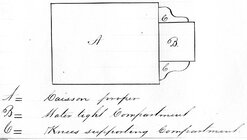
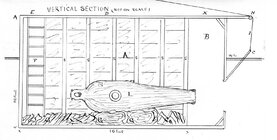
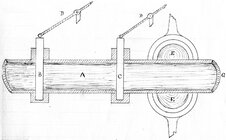
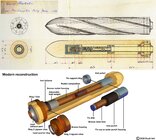
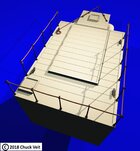
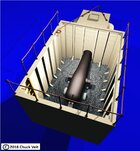
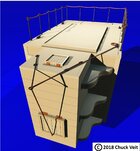
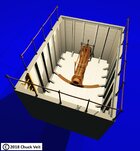
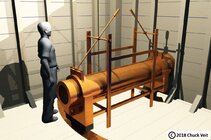
I was very fortunate to have contacted Mr. Veit for more information on this torpedo design. Me and my model ambitions wanted some quality images of his 3D graphics for help in producing a actual model of the system. He was gracefully accommodating and also gave permission to post these for CWT members to enjoy. The 3D images are copyrighted from Mr. Veit, please don't duplicate in any publication without his permission.

The link to his authors book page which has been posted before:
http://www.chuckveitbooks.com/

The public domain images:
Mr. Veits copyrighted 3D images:


upload_2018-3-4_7-53-40.jpeg upload_2018-3-4_7-54-3.jpeg upload_2018-3-4_7-54-30.jpeg upload_2018-3-4_8-15-16.jpeg

upload_2018-3-4_8-21-59.jpeg upload_2018-3-4_8-23-7.jpeg upload_2018-3-4_8-23-38.jpeg upload_2018-3-4_8-24-4.jpeg

upload_2018-3-4_8-24-29.jpeg upload_2018-3-4_8-24-58.jpeg

I hope to have the model complete in a few months. :thumbsup:
 
I was very fortunate to have contacted Mr. Veit for more information on this torpedo design. Me and my model ambitions wanted some quality images of his 3D graphics for help in producing a actual model of the system. He was gracefully accommodating and also gave permission to post these for CWT members to enjoy. The 3D images are copyrighted from Mr. Veit, please don't duplicate in any publication without his permission.

The link to his authors book page which has been posted before:
http://www.chuckveitbooks.com/
The public domain images:
Mr. Veits copyrighted 3D images:


View attachment 179171 View attachment 179172 View attachment 179173 View attachment 179179

View attachment 179180 View attachment 179181 View attachment 179182 View attachment 179183

View attachment 179184 View attachment 179185

I hope to have the model complete in a few months. :thumbsup:

Interesting is this a 3d software application? I was wanting to do a model of the Town of Cassville, Georgia. If I do it with this software then I can go to a 3d printer to scale later.
 
@USS ALASKA, you must have read my mind. I had always wondered as advanced as the Ironclads were if someone during the Civil war was working on a torpedo but had never seen any historical documentation for it. Until now....very informative talk and thanks for the posting! So the US developed one which seems to be the first from my understanding. Would like to have his power point presentation.
The case of the Angamar project at Mobile comes to mind. It allegedly was a rocket powered torpedo boat launched from a catamaran mother ship. This sounds wrong to me. I might believe a rocket powered torpedo launched from a catamaran delivery ship. Angamar was apparently funded and construction began. The powder for the rocket was apparently ordered, but I haven't seen any subsequent mention other than the claim that "Col." Angamar deserted to Union forces and sold them maps of the defenses of Mobile. Prewar he patented a system for reinforcing levees, then sold misc hardware to the Confederate Army. His prewar home base was New Orleans. You wonder if his design was similar in concept to an ancient Islamic steerable rocket torpedo. The history channel or PBS ran a show on a modern recreation. The device built and tested looked like a deep bellied manta ray with a single, central rocket. Steering while under power was provided by a pair of trailing lines running off reels from the launch point. In calm water (riverine, enclosed bays) something like this might have worked, but the operators would have needed a lot of protection. A similar device launched from a shore site would have been another workable possibility, but with limited range. Might have been useful at sites like head of passes where the depth of the channel kept large warships advancing along a predictable track.
 
Interesting is this a 3d software application? I was wanting to do a model of the Town of Cassville, Georgia. If I do it with this software then I can go to a 3d printer to scale later.

Yes, my understanding from the author is it was done with 3D rendering software. That would be a wonderful model of the town, if you get some work done on it please post your renderings.
 
The case of the Angamar project at Mobile comes to mind. It allegedly was a rocket powered torpedo boat launched from a catamaran mother ship. This sounds wrong to me. I might believe a rocket powered torpedo launched from a catamaran delivery ship. Angamar was apparently funded and construction began. The powder for the rocket was apparently ordered, but I haven't seen any subsequent mention other than the claim that "Col." Angamar deserted to Union forces and sold them maps of the defenses of Mobile. Prewar he patented a system for reinforcing levees, then sold misc hardware to the Confederate Army. His prewar home base was New Orleans. You wonder if his design was similar in concept to an ancient Islamic steerable rocket torpedo. The history channel or PBS ran a show on a modern recreation. The device built and tested looked like a deep bellied manta ray with a single, central rocket. Steering while under power was provided by a pair of trailing lines running off reels from the launch point. In calm water (riverine, enclosed bays) something like this might have worked, but the operators would have needed a lot of protection. A similar device launched from a shore site would have been another workable possibility, but with limited range. Might have been useful at sites like head of passes where the depth of the channel kept large warships advancing along a predictable track.

Interesting, does anyone have any images of this?
 

Learn About Us
About CivilWarTalk
Contact the Webmaster
Meet the Staff
Link to CivilWarTalk
Join Our Community
Register
Browse Forums
View Today's Discussions
Search the Forum
Get Help
FAQ
Student Guide
Forum Rules & Etiquette
Copyright / DMCA

     Contact Us CivilwarTalk on Facebook CivilWarTalk on YouTube CivilWarTalk on Twitter RSS Feed

Bringing the American Civil War and More to Life.
© 1999 - , CIVILWARTALK, LLC - Site Version 10.0

SlaveryTalk.com - SecessionTalk.com - CivilWarTalk.com - ReconstructionTalk.com
Back
Top