The West Point Foundry

SandiD

Private
Joined
Aug 18, 2021
Location
Somewhere in the Hudson Valley
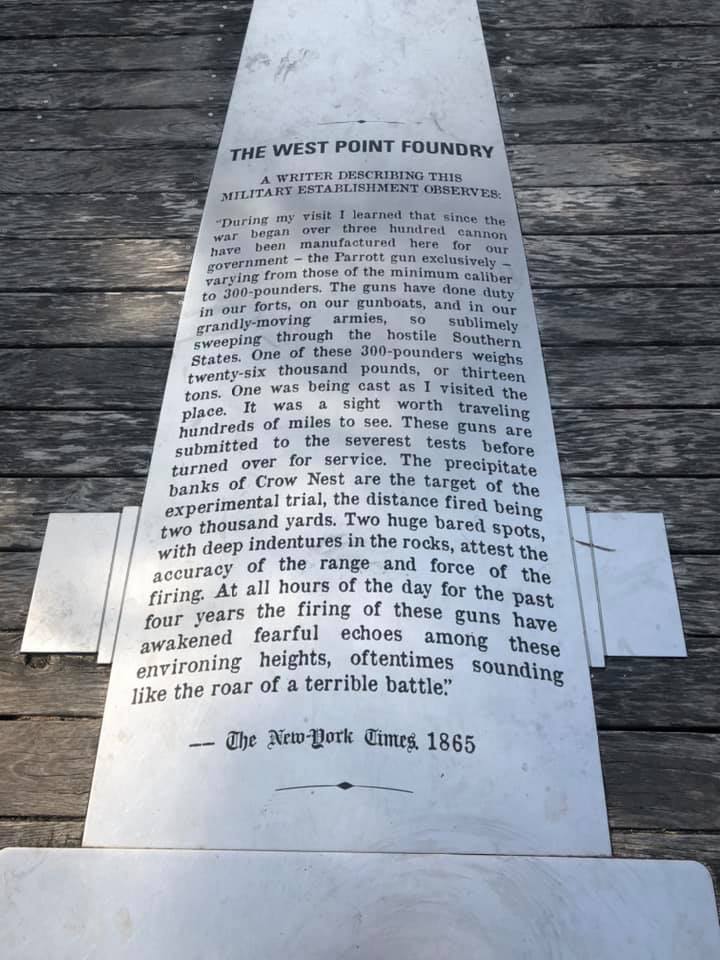
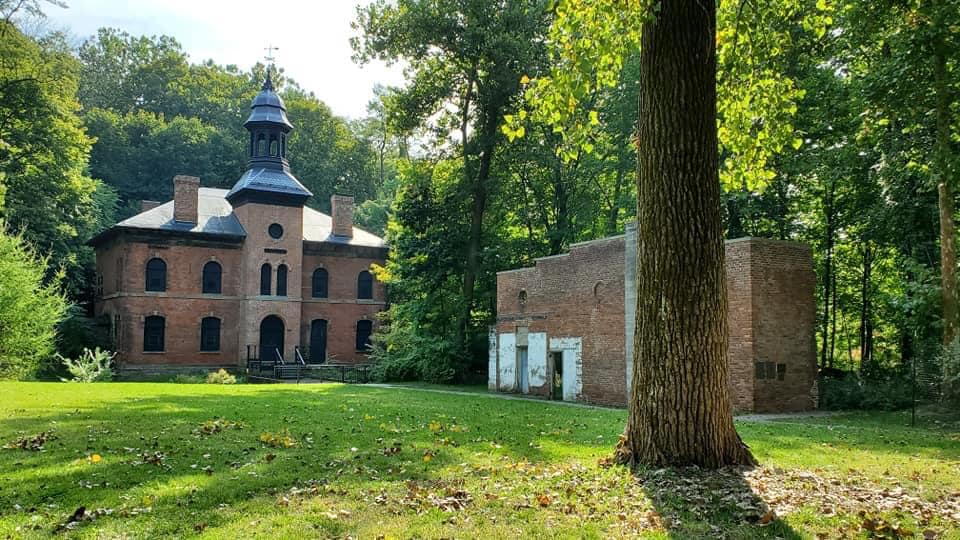
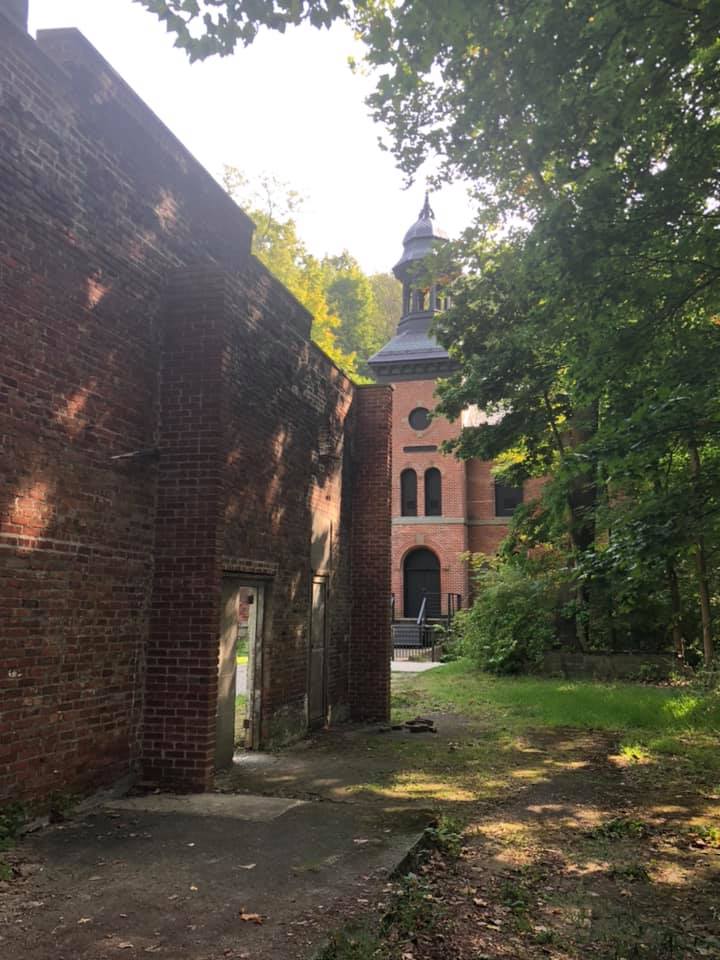
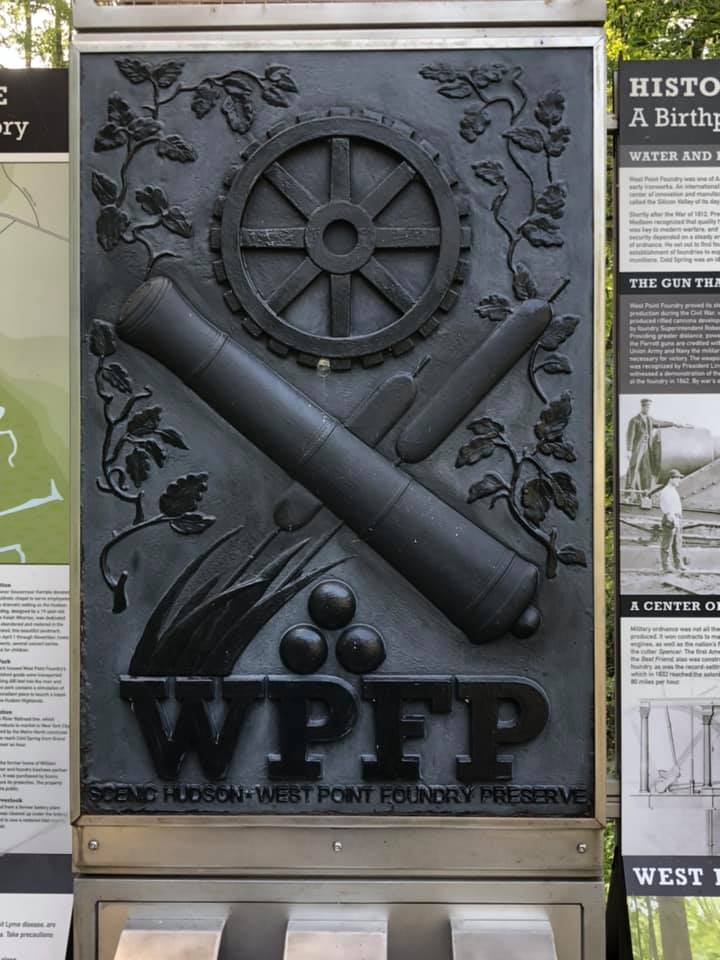
The West Point Foundry, in Cold Spring, NY on the Hudson River operated from 1818 to 1911. Establishment of the foundry was encouraged by President James Madison after the War of 1812. While the foundry manufactured a variety of projects for both civilian and military use, it is most noted for the Parrott Gun and other artillery and munitions during the Civil War.

Capt. Robert Parker Parrott (USMA Class of 1824) was appointed the ordnance inspector in 1835. He resigned his commission on 1836 and was appointed superintendent of the foundry. Over the course of his tenure, the foundry prospered with the Parrott gun, which may or may not have been his invention. Writings and information from the foundry suggest it may have been based in part on a British cannon whose design was obtained through industrial espionage and given to Parrott by a captain of the Imperial Russian Navy. During the Civil War, the Foundry engaged in round-the-clock production of several sizes of the Parrott gun-from battlefield cannon to enormous siege guns. By war's end it had manufactured more than 2,500 cannons and three million projectiles. While the distance from the platform to Crow's Nest (a site across the Hudson River from the Foundry) is a little over a mile, the Parrott gun could hit targets up to five miles away with great precision and an armor-piercing velocity of 1,200 feet per second-rendering wooden ships, brick fortifications and cities defenseless. During the Civil War, the foundry employed a workforce of 1,400 people. Parrott resigned in 1867 and the Foundry went into decline due to decreasing need for cast iron and improved manufacturing techniques in other competing foundries.

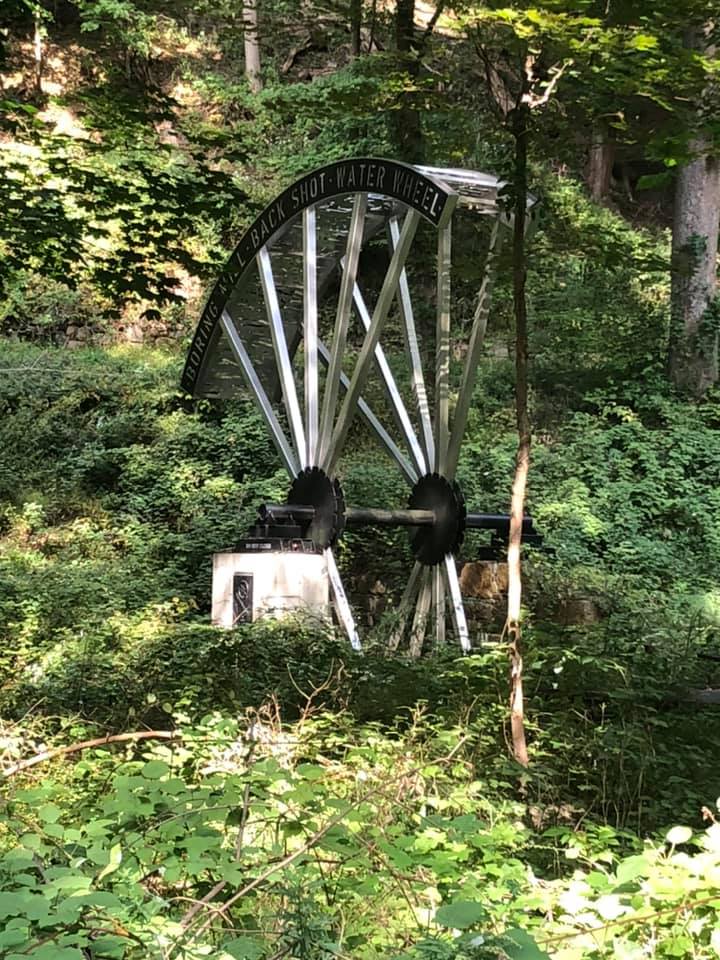
Across the river in Orange County, NY there were several open pit iron mines and "furnaces" which coincidentally were owned by the Parrott brothers, Robert and Peter. Ore from their mines, as well as other mines in the region was used in the manufacture of the Parrott Gun.
wpf1.jpg


wpf3.jpg


mechandadmin2.jpg


120126504_10157061704306626_2688035913010376036_n.jpg


reprowaterwheel.jpg


foundrycreek.jpg


mechandadmin.jpg


wpfmechbldg.jpg
 
Last edited:
Thanks for this posting:cannon:
You're welcome. The Foundry is a great easy hike, my first hike after breaking my shoulder on a fall in the woods on a Rev War trail used by Anthony Wayne when he attacked Stony Point.

Across the river from the Foundry is part of a state park with hiking trails. They had to have EOD in there before opening it to the public in order to remove unexploded ordnance from the Parrott Gun and other artillery testing.
 
These are two of the mines that provided iron to the West Point Foundry. Both are about a 10 minute drive from my house. Although not owned by the Parrott brothers, they were in the same area as mines owned by the Parrott family. The iron ore (magnetite) would first go to the Arden Furnace for processing and then the iron would be shipped across the river to the Foundry. The first two photos are the Forshee Mine and the second is the O'Neil Mine, now filled with water.

E3CA6C75-A806-4FB9-A99E-9DA4B6988C15.JPG


6093BAC3-F975-4026-B3F5-9479841CE8EC.JPG


A4096089-BEEC-4EDD-A42E-9E2A47C28796.JPG
 
Last edited:
I grew up over on the east side of Putnam County and the foundry was closed as a superfund chemical pollution site in the 70s and 80s. It's nice to see that it has finally been cleaned up.

Also near where I grew up was the Tilly Foster iron ore mine. I never made the connection of Tilly Foster to the foundry.
 
... During the Civil War, the Foundry engaged in round-the-clock production of several sizes of the Parrott gun-from battlefield cannon to enormous siege guns. By war's end it had manufactured more than 2,500 cannons and three million projectiles. While the distance from the platform to Crow's Nest (a site across the Hudson River from the Foundry) is a little over a mile, the Parrott gun could hit targets up to five miles away with great precision and an armor-piercing velocity of 1,200 feet per second-rendering wooden ships, brick fortifications and cities defenseless. During the Civil War, the foundry employed a workforce of 1,400 people...
According to one story I read (and have now forgotten where), the foundry was visited by President Lincoln while also visiting West Point just across the Hudson. While there he was shown the latest large-caliber Parrott rifle which was set up for a demonstration or test firing at the target on Storm King (also called Rattlesnake!) Mountain. Lincoln supposedly said something like "I have no doubt that Mr. Parrott can hit that mountain from here - let's go have lunch."
 
You're welcome. The Foundry is a great easy hike, my first hike after breaking my shoulder on a fall in the woods on a Rev War trail used by Anthony Wayne when he attacked Stony Point...
Hope you and your shoulder are recovering! I've driven past the foundry site and remember seeing one of those blue-and-yellow New York State roadside historical markers indicating its location but either didn't have time to stop or more likely didn't think there was anything left to see. Personally, I was on my way to the site of Benedict Arnold's headquarters which were also on the east side of the Hudson although his command was the West Point defenses. That was during one of my Revolutionary War explorations during which I visited all the other sites involved in the Arnold-Andre treason affair.
 
As many times as I've heard about Storm King I've never heard it was called rattlesnake.
I seem to remember THAT detail from Joseph Plumb Martin's very interesting memoir published in the 1950's as Private Yankee Doodle. The seemingly ubiquitous Martin was for a time stationed at West Point during the Revolution and relates several tales, including one about climbing the mountain so high he couldn't figure how to get back down! (Of course he finally did.)
 
Clove Furnace. This is one of the 19th century furnaces used to produce pig iron from magnetite ore mined locally in Orange County. Pig iron that was produced was sent to the West Point Foundry in Cold Spring for use in the production of arms such as the Parrott Gun. The furnace was owned by the Parrott Brothers. The furnace is visible from the NY State Thruway, just before exit 16 for Harriman/Woodbury Commons.

IMG_9399.jpg


IMG_9400.jpg


IMG_9398.jpg
 
I grew up over on the east side of Putnam County and the foundry was closed as a superfund chemical pollution site in the 70s and 80s. It's nice to see that it has finally been cleaned up.

Also near where I grew up was the Tilly Foster iron ore mine. I never made the connection of Tilly Foster to the foundry.
The Orange County Historical Association is the current owner of the property. I know the county historian so I am going to get a hold of her and see what is going on with that property
According to one story I read (and have now forgotten where), the foundry was visited by President Lincoln while also visiting West Point just across the Hudson. While there he was shown the latest large-caliber Parrott rifle which was set up for a demonstration or test firing at the target on Storm King (also called Rattlesnake!) Mountain. Lincoln supposedly said something like "I have no doubt that Mr. Parrott can hit that mountain from here - let's go have lunch."
Lincoln visited on 24 June 1862.
From Hudson Valley Magazine. David Levine, 24 Dec 2013
https://hvmag.com/life-style/histor...ion-of-the-west-point-foundry-in-cold-spring/

"One U.S. congressman later wrote that the president's trip upriver "startled the country and quite as much startled the Cabinet, as not a single member of it had any intimation of his intended journey." Speculation was that Lincoln was considering changes to Union Army leadership and wanted Scott's advice, but to this day no one knows exactly what Lincoln was here for; in his own inimitable words, he said in a speech on the way back to Washington, "Now, I can only remark that it had nothing whatever to do with making or unmaking any General in the country."

What is known, however, is that the president not only conferred with generals, he also toured West Point and attended a dinner party during which he "charmed all the ladies with his conversational powers and affability." And he took a side trip to Cold Spring, where he inspected the most important munitions factory in the nation — and one of the first representations of the burgeoning Industrial Revolution."
 
Last edited:
The West Point Foundry, in Cold Spring, NY on the Hudson River operated from 1818 to 1911. Establishment of the foundry was encouraged by President James Madison after the War of 1812. While the foundry manufactured a variety of projects for both civilian and military use, it is most noted for the Parrott Gun and other artillery and munitions during the Civil War.

Capt. Robert Parker Parrott (USMA Class of 1824) was appointed the ordnance inspector in 1835. He resigned his commission on 1836 and was appointed superintendent of the foundry. Over the course of his tenure, the foundry prospered with the Parrott gun, which may or may not have been his invention. Writings and information from the foundry suggest it may have been based in part on a British cannon whose design was obtained through industrial espionage and given to Parrott by a captain of the Imperial Russian Navy. During the Civil War, the Foundry engaged in round-the-clock production of several sizes of the Parrott gun-from battlefield cannon to enormous siege guns. By war's end it had manufactured more than 2,500 cannons and three million projectiles. While the distance from the platform to Crow's Nest (a site across the Hudson River from the Foundry) is a little over a mile, the Parrott gun could hit targets up to five miles away with great precision and an armor-piercing velocity of 1,200 feet per second-rendering wooden ships, brick fortifications and cities defenseless. During the Civil War, the foundry employed a workforce of 1,400 people. Parrott resigned in 1867 and the Foundry went into decline due to decreasing need for cast iron and improved manufacturing techniques in other competing foundries.

Across the river in Orange County, NY there were several open pit iron mines and "furnaces" which coincidentally were owned by the Parrott brothers, Robert and Peter. Ore from their mines, as well as other mines in the region was used in the manufacture of the Parrott Gun.View attachment 411508

View attachment 411509

View attachment 411510

View attachment 411511

View attachment 411512

View attachment 411513

View attachment 411514

View attachment 411515
HI Sandi, It's Peter L. from East Coast Doughboys :-) Nice pix ! Didn't realize there was any of the foundry left.
 
I grew up over on the east side of Putnam County and the foundry was closed as a superfund chemical pollution site in the 70s and 80s. It's nice to see that it has finally been cleaned up.

Also near where I grew up was the Tilly Foster iron ore mine. I never made the connection of Tilly Foster to the foundry.
The Orange County Historical Association is the current owner of the property. I know the county historian so I am going to get a hold of her and see what is going on with that property
According to one story I read (and have now forgotten where), the foundry was visited by President Lincoln while also visiting West Point just across the Hudson. While there he was shown the latest large-caliber Parrott rifle which was set up for a demonstration or test firing at the target on Storm King (also called Rattlesnake!) Mountain. Lincoln supposedly said something like "I have no doubt that Mr. Parrott can hit that mountain from here - let's go have lunch."
Lincoln visited on 24 June 1862.
From Hudson Valley Magazine. David Levine, 24 Dec 2013

"One U.S. congressman later wrote that the president's trip upriver "startled the country and quite as much startled the Cabinet, as not a single member of it had any intimation of his intended journey." Speculation was that Lincoln was considering changes to Union Army leadership and wanted Scott's advice, but to this day no one knows exactly what Lincoln was here for; in his own inimitable words, he said in a speech on the way back to Washington, "Now, I can only remark that it had nothing whatever to do with making or unmaking any General in the country."

What is known, however, is that the president not only conferred with generals, he also toured West Point and attended a dinner party during which he "charmed all the ladies with his conversational powers and affability." And he took a side trip to Cold Spring, where he inspected the most important munitions factory in the nation — and one of the first representations of the burgeoning Industrial Revolution."
HI Sandi, It's Peter L. from East Coast Doughboys :smile: Nice pix ! Didn't realize there was any of the foundry left.
Oh Hey Peter! Fancy meeting you here! The foundry is great. Nice hike. Let me know if you want to go take a look see at it. I could meet you at the Cold Spring Metro North station!
 
Last edited:
The Orange County Historical Association are the current owners of the property. I know the county historian so I am going to get a hold of her and see what is going on with that property

Lincoln visited on 24 June 1862.
From Hudson Valley Magazine. David Levine, 24 Dec 2013

"One U.S. congressman later wrote that the president's trip upriver "startled the country and quite as much startled the Cabinet, as not a single member of it had any intimation of his intended journey." Speculation was that Lincoln was considering changes to Union Army leadership and wanted Scott's advice, but to this day no one knows exactly what Lincoln was here for; in his own inimitable words, he said in a speech on the way back to Washington, "Now, I can only remark that it had nothing whatever to do with making or unmaking any General in the country."

What is known, however, is that the president not only conferred with generals, he also toured West Point and attended a dinner party during which he "charmed all the ladies with his conversational powers and affability." And he took a side trip to Cold Spring, where he inspected the most important munitions factory in the nation — and one of the first representations of the burgeoning Industrial Revolution."

Oh Hey Peter! Fancy meeting you here! The foundry is great. Nice hike. Let me know if you want to go take a look see at it. I could meet you at the Cold Spring Metro North station!
Might be a nice fall foliage type of thing to do ! There are a few nice pubs in Cold Spring Too :smile:
 
i'
Great post! The learning opportunities at CWT seem endless. Sitting around on a Sunday afternoon and I just took a short vacation to Cold Springs on the cheap courtesy SandiD. Very nice photos that promote the need to linger. THANKS!
I'm planning a return visit for the fall foliage and do a bit more of the town as well.
 
Last edited:

Learn About Us
About CivilWarTalk
Contact the Webmaster
Meet the Staff
Link to CivilWarTalk
Join Our Community
Register
Browse Forums
View Today's Discussions
Search the Forum
Get Help
FAQ
Student Guide
Forum Rules & Etiquette
Copyright / DMCA

     Contact Us CivilwarTalk on Facebook CivilWarTalk on YouTube CivilWarTalk on Twitter RSS Feed

Bringing the American Civil War and More to Life.
© 1999 - , CIVILWARTALK, LLC - Site Version 10.0

SlaveryTalk.com - SecessionTalk.com - CivilWarTalk.com - ReconstructionTalk.com
Back
Top