
Lazy Bayou
1st Lieutenant
- Joined
- Apr 17, 2011
- Location
- Mississippi
[FONT=Verdana, Arial, Helvetica, sans-serif]Dissent was strongest in the German counties of the Texas Hill Country, particularly Gillespie, Kerr, Kendall, Medina, and Bexar. These counties had been settled by some of Texas' most unlikely pioneers. In 1848, German intellectuals—professors, scientists, clergymen, and philosophers—had staged a revolution against that country's repressive government. When the revolution failed, the intellectuals and their families wanted to emigrate rather than face imprisonment, but where? Texas, which was already home to several thriving communities of German immigrants, was one place that welcomed these utopian freethinkers. [/FONT]
[FONT=Verdana, Arial, Helvetica, sans-serif]The "Forty-Eighters" stood out from the crowd in a number of ways, not least in their opposition to the slavery practiced by their American neighbors. But for the most part, the Germans stayed out of Texas politics until secession forced them to take a public stand. Not only did they abhor the Confederacy and the reasons behind it, but they and their families lived on the raw edge of the Indian frontier, an area that became prey to renewed attacks after the withdrawal of the U.S. Army. Both out of principle and for self-defense of their communities, they were determined to stay out of the conflict and to resist conscription into the Confederate army. [/FONT]
[FONT=Verdana, Arial, Helvetica, sans-serif]The rapid organization of state militia troops in Texas spawned a number of bands of outlaws, who claimed allegiance to the Confederacy as a cloak for robbery and terror on the roads and remote ranches and farms of the state. To resist the group they called "Die Hangerbande" (The Hanging Bandits), the Germans organized a militia they called the Union Loyal League. [/FONT]
[FONT=Verdana, Arial, Helvetica, sans-serif]In April 1862, Confederate troops under James Duff were sent into the Texas Hill Country to enforce conscription laws and disband the Union Loyal League. Duff, a disreputable character who had earlier been dishonorably discharged from the U.S. Army, announced that Unionists would take an oath of allegiance to the Confederacy or be declared traitors. When few stepped forward, Duff declared the Hill Country in open rebellion. Dozens of men were arrested and their homes burned, and at least 20 were shot to death. [/FONT]
[FONT=Verdana, Arial, Helvetica, sans-serif]In August, 68 German dissenters under Fritz Tegener, a language scholar, decided to head for Mexico, where they hoped to get a ship for Union-held New Orleans. Tegener's men lacked military discipline, and Duff's rangers got wind of the plan and set off in hot pursuit. On August 10, Duff's men caught the Germans in camp by the Nueces River. [/FONT]
[FONT=Verdana, Arial, Helvetica, sans-serif]In the battle that ensued, 19 of the Germans were killed and 15 were wounded. Under heavy fire, the Germans retreated into the surrounding hills. Nine of the wounded had to be left behind. [/FONT]
[FONT=Verdana, Arial, Helvetica, sans-serif]The battle was also a disaster for the Confederates, who lost 12 killed and 18 wounded. The Confederates set up camp to care for their own wounded. At first, they also cared for the Germans. However, late in the afternoon, some of the Confederates rounded up the nine Germans, took them outside the camp, and shot them. [/FONT]
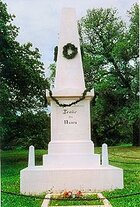
[FONT=Verdana, Arial, Helvetica, sans-serif]News of the so-called "Battle of the Nueces" crushed the organized German resistance in the Texas Hill Country. The rest of the war was spent simply trying to endure; lynchings and murders continued until the end of the war.[/FONT]
More information can be found at this link: http://www.tsl.state.tx.us/exhibits/civilwar/dissent.html
[FONT=Verdana, Arial, Helvetica, sans-serif]The "Forty-Eighters" stood out from the crowd in a number of ways, not least in their opposition to the slavery practiced by their American neighbors. But for the most part, the Germans stayed out of Texas politics until secession forced them to take a public stand. Not only did they abhor the Confederacy and the reasons behind it, but they and their families lived on the raw edge of the Indian frontier, an area that became prey to renewed attacks after the withdrawal of the U.S. Army. Both out of principle and for self-defense of their communities, they were determined to stay out of the conflict and to resist conscription into the Confederate army. [/FONT]
[FONT=Verdana, Arial, Helvetica, sans-serif]The rapid organization of state militia troops in Texas spawned a number of bands of outlaws, who claimed allegiance to the Confederacy as a cloak for robbery and terror on the roads and remote ranches and farms of the state. To resist the group they called "Die Hangerbande" (The Hanging Bandits), the Germans organized a militia they called the Union Loyal League. [/FONT]
[FONT=Verdana, Arial, Helvetica, sans-serif]In April 1862, Confederate troops under James Duff were sent into the Texas Hill Country to enforce conscription laws and disband the Union Loyal League. Duff, a disreputable character who had earlier been dishonorably discharged from the U.S. Army, announced that Unionists would take an oath of allegiance to the Confederacy or be declared traitors. When few stepped forward, Duff declared the Hill Country in open rebellion. Dozens of men were arrested and their homes burned, and at least 20 were shot to death. [/FONT]
[FONT=Verdana, Arial, Helvetica, sans-serif]In August, 68 German dissenters under Fritz Tegener, a language scholar, decided to head for Mexico, where they hoped to get a ship for Union-held New Orleans. Tegener's men lacked military discipline, and Duff's rangers got wind of the plan and set off in hot pursuit. On August 10, Duff's men caught the Germans in camp by the Nueces River. [/FONT]
[FONT=Verdana, Arial, Helvetica, sans-serif]In the battle that ensued, 19 of the Germans were killed and 15 were wounded. Under heavy fire, the Germans retreated into the surrounding hills. Nine of the wounded had to be left behind. [/FONT]
[FONT=Verdana, Arial, Helvetica, sans-serif]The battle was also a disaster for the Confederates, who lost 12 killed and 18 wounded. The Confederates set up camp to care for their own wounded. At first, they also cared for the Germans. However, late in the afternoon, some of the Confederates rounded up the nine Germans, took them outside the camp, and shot them. [/FONT]
[FONT=Verdana, Arial, Helvetica, sans-serif]News of the so-called "Battle of the Nueces" crushed the organized German resistance in the Texas Hill Country. The rest of the war was spent simply trying to endure; lynchings and murders continued until the end of the war.[/FONT]
More information can be found at this link: http://www.tsl.state.tx.us/exhibits/civilwar/dissent.html




 Bringing the