
David Ireland
Corporal
- Joined
- Nov 29, 2017
Other than to concentrate fire, why did troops line up in such vulnerable formations?


Napoleonic linear tactics were still the basis for Civil War formations. It was considered critical that the line not be broken nor flanked (as an aside, breaking the center of a line was in reality just creating two new flanks) in order to maintain unit cohesion and to concentrate firepower and, when the opponent's line (hopefully) began to waver, to deliver the final blow with a bayonet charge.
This obviously did not always work so well in practice with the advent of the rifle musket and Minie'
ball


...in general the rifled musket cap n ball was barely better than the weaponry used 90 years earlier...

Tactics were behind the weapons technology of the time...

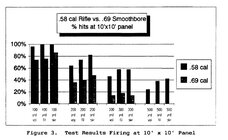
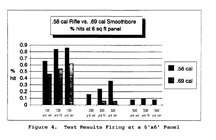
Just my opinion, but while valid arguments can be made that sometimes commanders didn't give firing commands until considerably closer than the effective range of a rifle musket, or the terrain or environmental conditions might dictate a firefight at closer ranges where a smoothbore using ball or "buck and ball" could perform as effectively or even at greater effectiveness than a rifle musket, does not negate the fact that the rifle musket was a game-changer in our Civil War.
 ) that the rifle-musket still being a single-shot, muzzle-loading, black powder weapon was significant. Aiming at anything wreathed in smoke 500 yards away, with the "target" shooting back at you, would likely result in many less actual 'hits' than in the experiments. Commanders no doubt had something like this in mind when not ordering men to fire much beyond 150 yards.
No argument there. Wreathed in smoke or not, being shot back at would significantly reduce my accuracy over shooting at a stationary "unarmed" 6 square foot target!Aiming at anything wreathed in smoke 500 yards away, with the "target" shooting back at you, would likely result in many less actual 'hits' than in the experiments.
As to the typical combat range, I would say 125 yards was about the average for two lines of battle (not counting skirmishing or trench warfare), although many accounts mention fighting at ranges much closer than that.Have read that the vets started calling about 125 yards as close range. This is up from 75 yards being max range with the smoothbore.


 Forum Host


 Bringing the