Sling leather preservation

Maverick84

Cadet
Joined
Jan 20, 2021
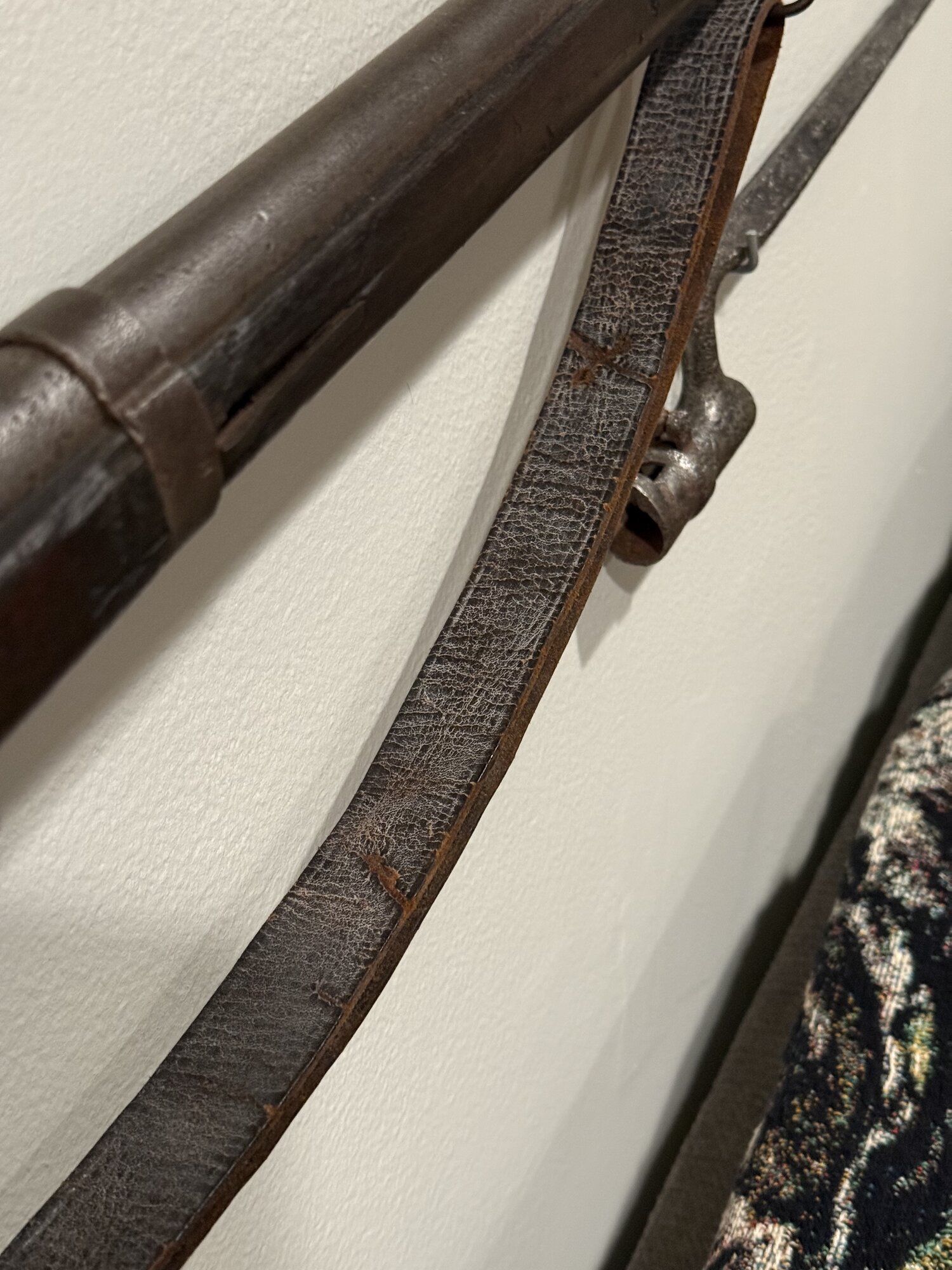
Hello everyone, I have an original sling for my model 1863 and it looks to be in desperate need of conditioning but I don't want to ruin it or do something to diminish its value. Does anyone have advice on a gentle product to use on it? Thank you!
IMG_4675.jpeg


IMG_4674.jpeg
 
I've used their "Antique Leather Dressing" on WW1 and WW2 leather with good results. After 20 years in the sun the tool bag on my Harley was pretty stiff and this stuff made it supple again.
 
I use mineral oil for my metal items but I think mink oil may be the way to go for leather.....
 
Old leather was tanned in various ways and so responds variously. You don't know how your leather was processed.
Formulations of a named treatment may have changed over the years, too
Don't take casually given advice when it comes to old leather because you don't know and the person giving advice does not know how that leather was made and how it will respond.
And that's not considering the effect of treatment on stitching.
A collector I knew learned that neatsfoot oil treatment looked good and THE LEATHER still looked good several years later but the stitching thread had been destroyed.
 
Old leather was tanned in various ways and so responds variously. You don't know how your leather was processed.
Formulations of a named treatment may have changed over the years, too
Don't take casually given advice when it comes to old leather because you don't know and the person giving advice does not know how that leather was made and how it will respond.
And that's not considering the effect of treatment on stitching.
A collector I knew learned that neatsfoot oil treatment looked good and THE LEATHER still looked good several years later but the stitching thread had been destroyed.
Thank you yes I was reading that it's acidic and will break down the stitching so I'm going to avoid that option. It's gonna be difficult to decide what to do knowing I don't have all the facts like you were saying
 
It appears it's already been treated in the past. Being that it's a wall hanger and not for use (my assumption) I'd wipe it down with a soft rag and leave as is. Great looking rig!
 
It appears it's already been treated in the past. Being that it's a wall hanger and not for use (my assumption) I'd wipe it down with a soft rag and leave as is. Great looking rig!
Thank you! I probably will just leave it as that's what I've been reading, seems a little too risky to apply any of the options out there
 
The best thing for leather is neatsfoot oil or mink oil together with some wax.
Absolutely not, that mixture is wonderful for new leather, but not 160 y/o leather. Best thing is to do nothing, but if you are bound and determined the process is rather laborious. There are quite a few different thoughts on this, but the NPS and Texas A&M processes seem to be the accepted museum treatments for antique leather.

Quite a bit of damage has been done with the above "remedy" as the natural oils have dried the thirsty antique leather will soak up the oil and you will end up with an oil logged relic. I have a confederate cartridge box that was treated this way and when I hung it on the wall by the shoulder strap, supported of course, the oil stain left on the wall was almost impossible to eradicate, even with Kilz.

The idea is to re-introduce the oils that were lost, but do so in a very gentle manner, I will PM the docs from both NPS and Texas A&M when I can access them on another computer. I have posted this previously, there is also the British leather dressing method, but I am not sure that is currently accepted.

A lot has been learned in the last 20 years in terms of preserving antique leather and a lot of damage has occurred in previous years, with product such as Pecards and other wax like dressings. Leather needs to breathe, these wax dressings do not allow that and will ultimately seal in contaminates.
 
Last edited:
Absolutely not, that mixture is wonderful for new leather, but not 160 y/o leather. Best thing is to do nothing, but if you are bound and determined the process is rather laborious. There are quite a few different thoughts on this, but the NPS and Texas A&M processes seem to be the accepted museum treatments for antique leather.

Quite a bit of damage has been done with the above "remedy" as the natural oils have dried the thirsty antique leather will soak up the oil and you will end up with an oil logged relic. I have a confederate cartridge box that was treated this way and when I hung it on the wall by the shoulder strap, supported of course, the oil stain left on the wall was almost impossible to eradicate, even with Kilz.

The idea is to re-introduce the oils that were lost, but do so in a very gentle manner, I will PM the docs from both NPS and Texas A&M when I can access them on another computer. I have posted this previously, there is also the British leather dressing method, but I am not sure that is currently accepted.

A lot has been learned in the last 20 years in terms of preserving antique leather and a lot of damage has occurred in previous years, with product such as Pecards and other wax like dressings. Leather needs to breathe, these wax dressings do not allow that and will ultimately seal in contaminates.
Thank you for this very well thought out and detailed response, I truly appreciate it. The last thing I want to do is destroy this so if that means just leaving it alone then so be it. I want to do whatever's best to preserve it as long as possible. I'm definitely curious on the processes you were describing though, if you end up having access to them I'd love to take a look.
 
I use what was mentioned above… Pecards Antique leather conditioner. I've used it on all my leather goods for years. It's good stuff and feels mostly like Vaseline… it probably mostly is
 
Absolutely not, that mixture is wonderful for new leather, but not 160 y/o leather. Best thing is to do nothing, but if you are bound and determined the process is rather laborious. There are quite a few different thoughts on this, but the NPS and Texas A&M processes seem to be the accepted museum treatments for antique leather.

Quite a bit of damage has been done with the above "remedy" as the natural oils have dried the thirsty antique leather will soak up the oil and you will end up with an oil logged relic. I have a confederate cartridge box that was treated this way and when I hung it on the wall by the shoulder strap, supported of course, the oil stain left on the wall was almost impossible to eradicate, even with Kilz.

The idea is to re-introduce the oils that were lost, but do so in a very gentle manner, I will PM the docs from both NPS and Texas A&M when I can access them on another computer. I have posted this previously, there is also the British leather dressing method, but I am not sure that is currently accepted.

A lot has been learned in the last 20 years in terms of preserving antique leather and a lot of damage has occurred in previous years, with product such as Pecards and other wax like dressings. Leather needs to breathe, these wax dressings do not allow that and will ultimately seal in contaminates.
No. You do not go out and soak them in oil! It does depend on HOW those oils are applied and YES it is a long and complicated process, but it works. It is also why a soft wax is used - so the leather does not absorb a large amount of oil. The main problem is caused by the fibers parting and so, at some point in the restoration, there will have to be something to enhance the binding IF NECESSARY. The major problem is cracking and the effect on the prepared surface. Like restoring an old firearm, it needs a lot of knowledge and practice. if you haven't got it, dont' try it! Talking to a saddler is a good place to start or anyone who has done leather restoration work.

BTW - "the British leather dressing method" is a product called the British MUSEUM Leather Dressing, but is aimed at leather book covers rather than field equipment.
 
I use what was mentioned above… Pecards Antique leather conditioner. I've used it on all my leather goods for years. It's good stuff and feels mostly like Vaseline… it probably mostly is
Pecards was all the rage quite a while ago, but then museums and collectors found how it actually did more damage than good.
 
No. You do not go out and soak them in oil! It does depend on HOW those oils are applied and YES it is a long and complicated process, but it works. It is also why a soft wax is used - so the leather does not absorb a large amount of oil. The main problem is caused by the fibers parting and so, at some point in the restoration, there will have to be something to enhance the binding IF NECESSARY. The major problem is cracking and the effect on the prepared surface. Like restoring an old firearm, it needs a lot of knowledge and practice. if you haven't got it, dont' try it! Talking to a saddler is a good place to start or anyone who has done leather restoration work.

BTW - "the British leather dressing method" is a product called the British MUSEUM Leather Dressing, but is aimed at leather book covers rather than field equipment.
There is no museum in the world, that I am aware, that recommends mink or neatsfoot, in fact they go out of their way to discourage their use on antique leather.
 

Learn About Us
About CivilWarTalk
Contact the Webmaster
Meet the Staff
Link to CivilWarTalk
Join Our Community
Register
Browse Forums
View Today's Discussions
Search the Forum
Get Help
FAQ
Student Guide
Forum Rules & Etiquette
Copyright / DMCA

     Contact Us CivilwarTalk on Facebook CivilWarTalk on YouTube CivilWarTalk on Twitter RSS Feed

Bringing the American Civil War and More to Life.
© 1999 - , CIVILWARTALK, LLC - Site Version 10.0

SlaveryTalk.com - SecessionTalk.com - CivilWarTalk.com - ReconstructionTalk.com
Back
Top