Shotgun ID help

Wraith_3

Private
Joined
Mar 24, 2021
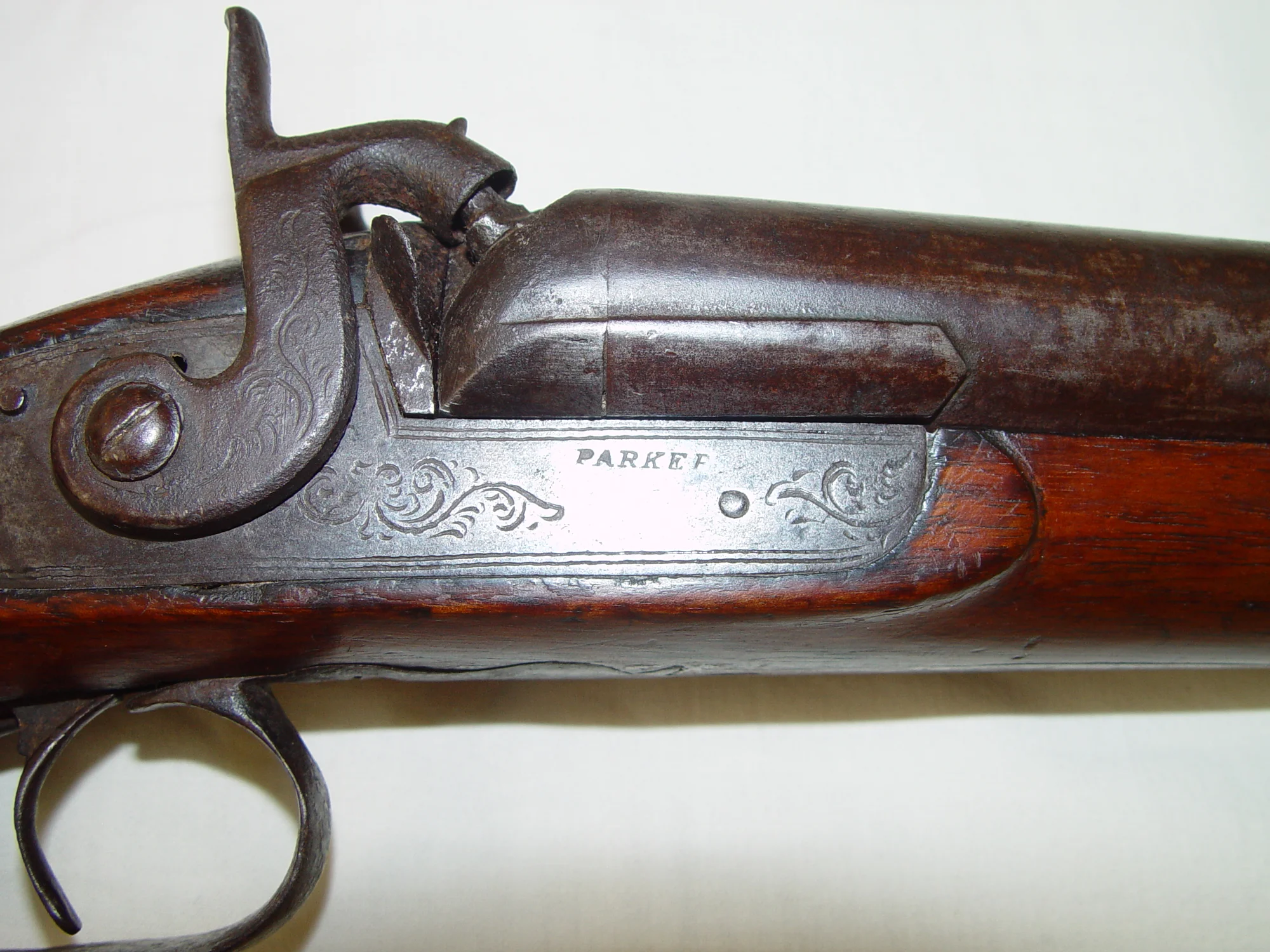
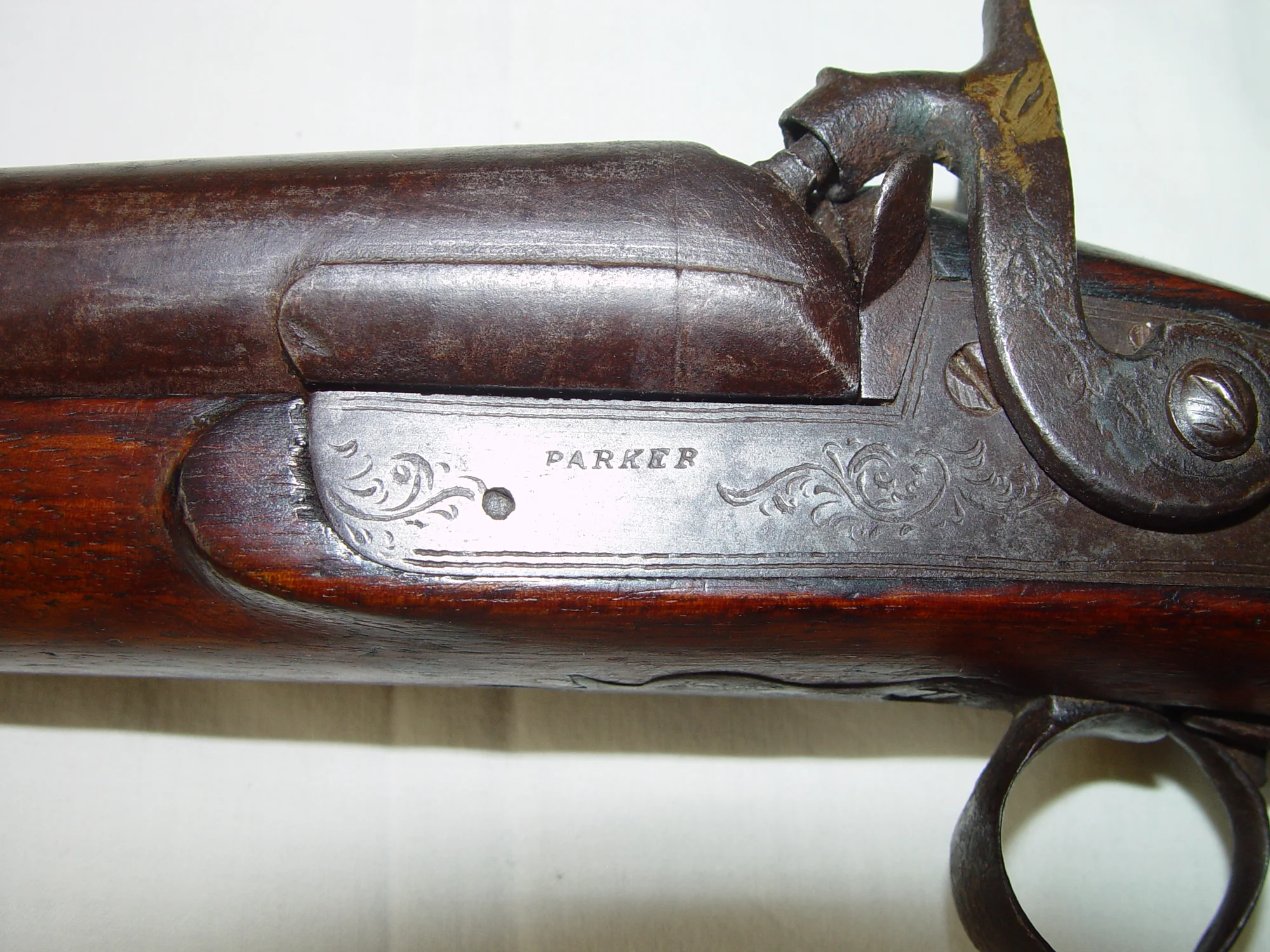
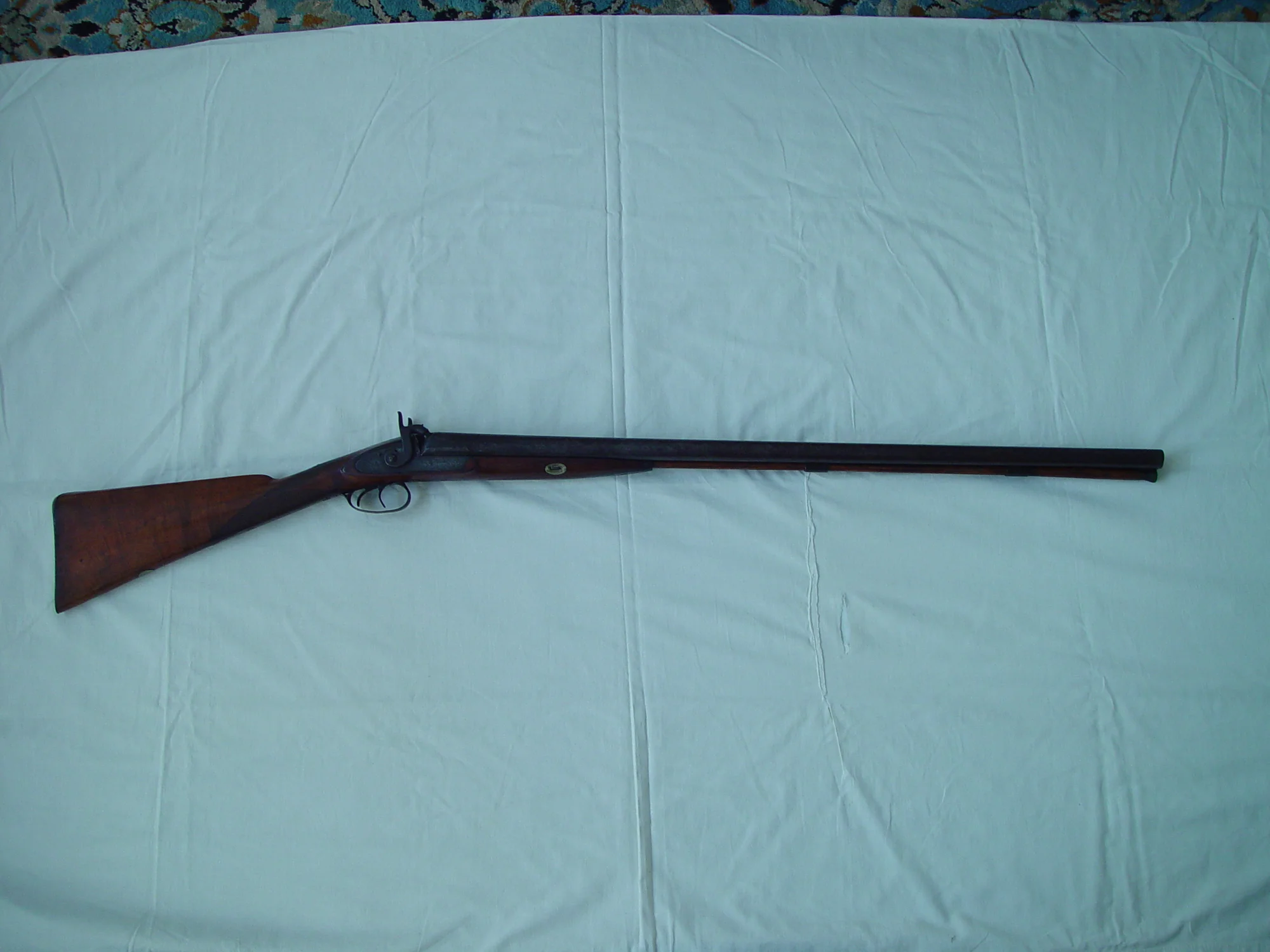
I think this might be a British Parker, Fields & Sons 11 gauge shotgun. My dad had this in his CW collection so I assume it was possibly used in the CW. I don't know anything about it, but was trying to research it before I list it. I just don't know much about it other than some British small arms were used by both sides.

DSC06417.webp

DSC06427.webp

DSC06440.webp

DSC06447.webp

DSC06562.webp
 
Maybe it's a Remington Parker. When Remington Arms acquired the company in 1934 and moved production to Ilion, New York, some of the late-production transition models were stamped with just Parker. But by that point they were not making exposed hammer shotguns. Is there a serial number. I believe they a database.
 
I think this might be a British Parker, Fields & Sons 11 gauge shotgun. My dad had this in his CW collection so I assume it was possibly used in the CW. I don't know anything about it, but was trying to research it before I list it. I just don't know much about it other than some British small arms were used by both sides.

View attachment 590469
View attachment 590470
View attachment 590471
View attachment 590472
View attachment 590473
It is a Parker, Field & Sons located at 233 Holborn in London and they made double barrel percussion shotguns from 1850-1886. Now on ACW use who knows!
 
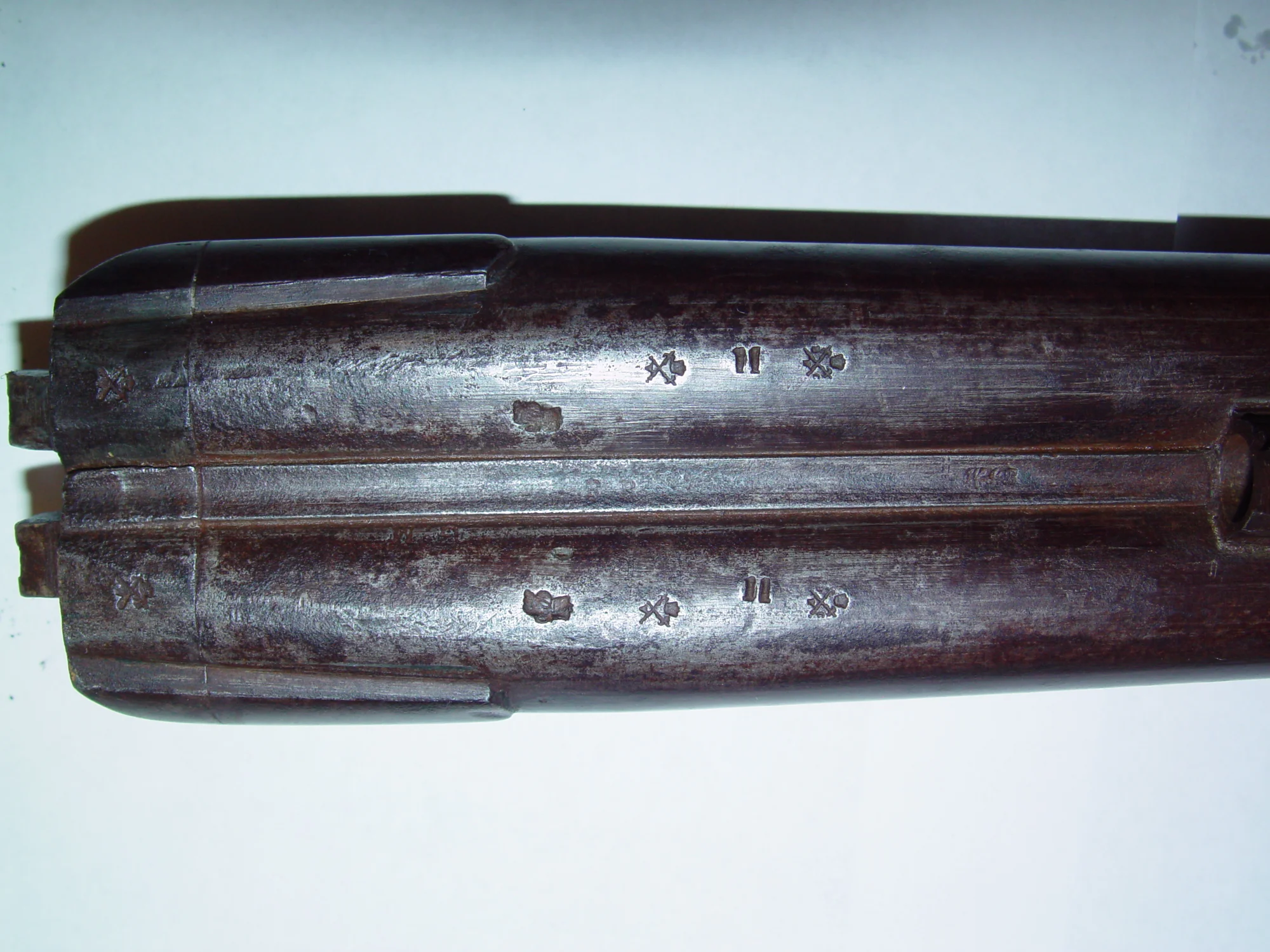
But those are Birmingham proof marks and not London proof marks.

The engraving doesn't look like 19th Century British engraving (they were smaller and tighter).

That's why I suspected Belgian. Dunno.
 
But those are Birmingham proof marks and not London proof marks.

The engraving doesn't look like 19th Century British engraving (they were smaller and tighter).

That's why I suspected Belgian. Dunno.
Could of contracted out for the barrel. Not 19th century you say, well I would think in the 20th century they would be getting away from percussion and wooden ramrods. Plus yes those are British markings on the barrel 2 with a crown and crossed swords under them. @oldsoldier would know. In the US a Parker family made these type shotguns from 1868-1890 but this ain't it.
 
11-gauge (.751") and Birmingham Proof. including precheck and breech plug testing. The barrel is 100% British. (Belgian barrels are marked with bore in mm. The lock MAY be Belgian, but we would have to see the inside of the locks for makers and inspector's marks.

The Parker may be Parker, Field & Sons: London/Birmingham-associated maker dating back to the 19th century known for percussion and flintlock arms howe ver, they were noted for 'fine foliate scroll engraving'. This isn't. They will also have put a name and address on the top rib.

It may even be the American Parker Brothers of Meriden, Connecticut as many US gunmakers bought in British barrels and built guns around those barrels.
The center rib bears what looks like a RR and a cartouch which I can't make out
1790028052900.webp


Have a good look over for any other marks or names stamped on metal and wood.
 
Last edited:
So far I've only found the under barrel marks and the Parker on the sides. I haven't tried to take the back of the stock off though. I haven't seen any serial numbers of any kind. I have heard of the American Parker Brothers, but didn't know they might import barrels. I'll have to check that out to see if any of them look like this one.
 
Given the age of the gun, c 1840, there will probably be no serial numbers. There may well be assembler's marks, made with a flat blade or occasionally a point, stamped into wood or metal that will not be seen from the outside. These are typical for British and Belgian components. The appear in the barrel channel, under the barrel and the edges of the lock. These identify the assembler and also act as a serial identifying parts of the same gun.
1790064338099.webp

(These are from an old East India flintlock pistol made and proofed in London.)
 
Ok, when I have time I'm going to try to take off whatever I can to look for additional marks. I'll post anything I find if anyone is interested.
 
Be careful with the screwdriver.
Thank you for reminding ALL readers to be careful with screw drivers. It is so rare to see an old firearm with good screw slots. Apart from that I was just going to say that I enjoyed your comments and photos. I had the barrels off an old front loading hammer gun a few years ago and was surprised to see that it was a 14 gauge. I suppose I should not have been surprised, but this 11 gauge put me in the mind of that. Also, I enjoyed your comments about assembler's marks. I have seen those on numerous guns, including a breech loading Parker Brothers 10 gauge some years ago.
 
The old trick is to use a parallel- sided screwdriver - like most multi-screwdrivers - BUT MAKE SURE IT FITS - both width-wise and length wise and push straight down, not at an angle. If it comes out it will scratch surrounding metal and wood. Promise!. If it does not move, spray or drip some penetrant on it and LEAVE IT. Try again tomorrow. repeat until it moves. Then turn it back and spray/drip again and begin to work it until it will turn 360. It took me three days to get an old (1855) British revolver screw out. Don't try too hard to force it.

There, I have said it again!! Apologies to those who know what they are doing, but for those who don't ...
 
Be careful with the screwdriver.

Will do. Not an expert with old guns, but very experienced with cars, electronics, anything mechanical. First lesson was a teen and my dad overseeing a project and I broke a bolt off in an engine block. Very careful after that (and hours of learning how to remove a broken bolt with no head...). lol
 
Will do. Not an expert with old guns, but very experienced with cars, electronics, anything mechanical. First lesson was a teen and my dad overseeing a project and I broke a bolt off in an engine block. Very careful after that (and hours of learning how to remove a broken bolt with no head...). lol
Side question- Turbo 6 guy?
 
Yeah I have an 87 Grand National. I originally used a Corvette logo because I signed up a few months after my dad passed and he had that logo already. He was into Corvettes and the Civil War.
 
The old trick is to use a parallel- sided screwdriver - like most multi-screwdrivers - BUT MAKE SURE IT FITS - both width-wise and length wise and push straight down, not at an angle. If it comes out it will scratch surrounding metal and wood. Promise!. If it does not move, spray or drip some penetrant on it and LEAVE IT. Try again tomorrow. repeat until it moves. Then turn it back and spray/drip again and begin to work it until it will turn 360. It took me three days to get an old (1855) British revolver screw out. Don't try too hard to force it.

There, I have said it again!! Apologies to those who know what they are doing, but for those who don't ...
At Trinidad Gonne-smything School we were told to hollow grind conventional screwdrivers (or file them if you don't have a grinder) such that it perfectly fits the screw you're working on. If you're working on an expensive gun, you'd better make sure that screwdriver fits. Like Old Soldier said, push straight down to avoid slippage. We were also told (Gunsmithing Repair 1) to buy used screwdrivers at pawn shops or garage sales for the specific purpose of specializing them for guns.

All comes to worse, put a few drops of Kroil (that's the penetrant we used at Trinidad) down the screw (and give it time to work its magic), mount the screwdriver in a drill press and the workpiece in a padded vise. Lower the chuck until the screwdriver falls into the slot. Lock the chuck in place and then manually rotate the chuck.

If it's still stubborn, you may need to apply heat from a propane torch.
 
At Trinidad Gonne-smything School we were told to hollow grind conventional screwdrivers (or file them if you don't have a grinder) such that it perfectly fits the screw you're working on. If you're working on an expensive gun, you'd better make sure that screwdriver fits. Like Old Soldier said, push straight down to avoid slippage. We were also told (Gunsmithing Repair 1) to buy used screwdrivers at pawn shops or garage sales for the specific purpose of specializing them for guns.

All comes to worse, put a few drops of Kroil (that's the penetrant we used at Trinidad) down the screw (and give it time to work its magic), mount the screwdriver in a drill press and the workpiece in a padded vise. Lower the chuck until the screwdriver falls into the slot. Lock the chuck in place and then manually rotate the chuck.

If it's still stubborn, you may need to apply heat from a propane torch.
The old addage for the hand-made guns of old was one set of screwdrivers/turnscrews per gun. Many old armorers and gunsmiths had a huge selection of them - just in case.
 
The old addage for the hand-made guns of old was one set of screwdrivers/turnscrews per gun. Many old armorers and gunsmiths had a huge selection of them - just in case.
I used to watch an old Birmingham gun maker who recorded videos for MidwayUSA. He showed how to do countless tasks on side lock and box lock guns (usually side-by-side shotguns) and he made a lot of turnscrews as he worked along. The idea was to always have a perfect match of blade to screw slot. If he didn't have the perfect fit, he took a few minutes to make the perfect size. It was very fascinating and edifying.
 

Learn About Us
►About CivilWarTalk
►Contact the Webmaster
►Meet the Staff
►Link to CivilWarTalk
Join Our Community
►Register
►Browse Forums
►View Today's Discussions
►Search the Forum
Get Help
►FAQ
►Student Guide
►Forum Rules & Etiquette
►Copyright / DMCA

     Contact Us CivilwarTalk on Facebook CivilWarTalk on YouTube CivilWarTalk on Twitter RSS Feed

Bringing the American Civil War and More to Life.
© 1999 - , CIVILWARTALK, LLC - Site Version 10.0

SlaveryTalk.com - SecessionTalk.com - CivilWarTalk.com - ReconstructionTalk.com
Back
Top