Regular Army Frontier Outposts.

Manassas 1861

Sergeant
Joined
Dec 30, 2023
Location
Somewhere on Henry Hudson's river.
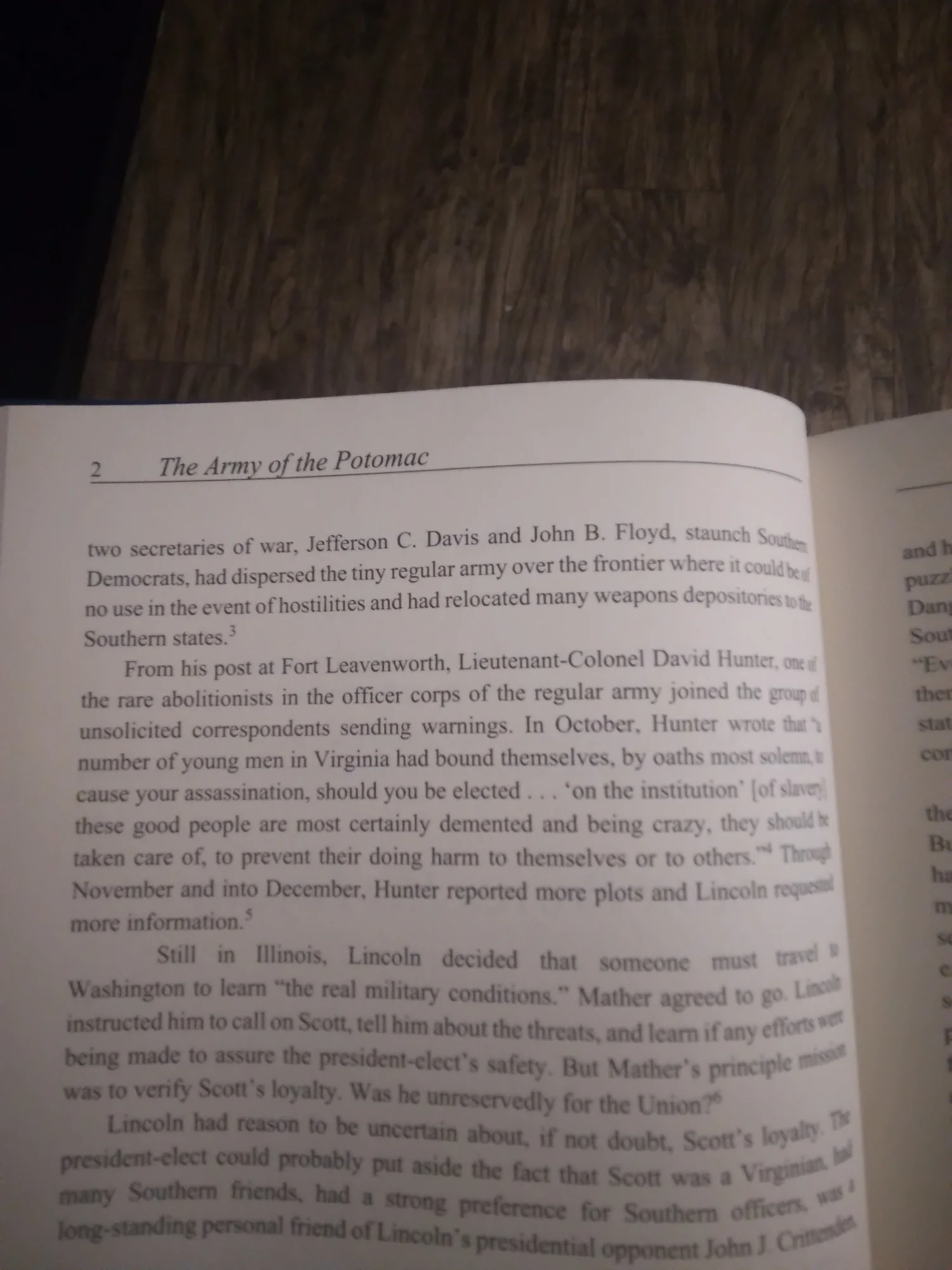
I was reading through Russell Beatie's book on the creation of the Army if the Potomac and found a very interesting claim. Beatie claims that the Regulars were stationed out west, so if violence finally erupted in the east, the Regulars couldn't easily stop it. Is there any historical evidence for this claim? Do you guys agree with it?
20260302_191837.webp
 
Before the war, the regular army had two important missions (not counting engineering projects): seacoast defense and protection of caravans heading west over the overland Santa Fe, Oregon, Morman Trails, etc. Unit size at each fort/outpost was small, often less than a company-sized element and typically consisted of cavalry or dragoon units. These troops not only guarded wagon trains, but also responded to Indian raids. Artillery served at the seacoast forts.

In 1860, there were 65 forts just in the west. The regular army consisted of about 16,000 officers and men throughout the US, garrisoning seacoast fortifications, conducting river and harbor improvements, experimenting with new technologies, and so on.

Once the war began, none of those missions went away, meaning that a military presence on the frontier remained, although to a lesser extent.

In short, Beatty is correct. The regular army was too small and too scattered to "easily stop" a war in the east.

A good book on the subject is Robert Utley's, Frontiersmen in Blue, (New York: Macmillan, 1967). It's a bit dated, but is very readable and comprehensive.

I hope this helps a bit.
 
It is, apparently, not easy to find a pre-war map of army posts. However, this Emerging Civil War map gives clear idea of where the pre-war army was posted. See more here.

Link:


The John Ford / John Wayne stockaded frontier fort did exist, but the majority of posts were much more prosaic. Imagine a cluster of buildings all alone surrounded by featureless prairie.

A remarkably preserved frontier post is Fort Hartsuff in Nebraska. It was positioned to protect the settlers & Pawnee from each other. Regular officers who fought at Stones River were posted there.

The Nebraska State Park is blessed with a cohort of dedicated living history volunteers. Hartsuff is out of the way, but will reward your visit.

Food for thought, there were about as many cells in the brig as bunks in the barracks. Read more here.

Link:


Link:

 
Here's a list of forts in 1860 from Utley's book:

Department of the West: Forts Ripley, Abercrombie, Ridgely, Snelling, Randall, Kearny, Laramie, Wise, Larned, Riley, Leavenworth, Smith.

Department of Texas: Forts Cobb, Arbuckle, Washita, Belknap, Cooper, Colorado, Chadbourne, Mason, Inge, Brown, Ringgold, McIntosh, Duncan, Clark, Hudson, Lancaster, Stockton, Davis, Quitman.

Department of New Mexico: Forts Bliss, Fillmore, Buchanan, Breckinridge, Craig, Stanton, Defiance, Marcy, Union, Cantonment Burgwin, Fort Garland.

Department of Utah: Forts Floyd, Bridger.

Department of California: Forts Mojave, Yuma, Tejon, Presidio of San Francisco, Fort Churchill, Bragg, Humboldt, Crook, Gaston, Ter-Waw, Umpqua.

Department of Oregon: Forts Hoskins, Yamhill, Vancouver, Cascades, Dalles, Walla Walla, Townsend, Colville, Camp San Juan Island.
 
I doubt that the Army in 1861 had been intentionally deployed to the frontier so as to unavailable to the federal government in the event of a secession crisis. The frontier was where the troops were needed so that's where they were deployed.
That's why I posted I posted this question. I seriously doubt that claim as well.
 
Here's a list of forts in 1860 from Utley's book:

Department of the West: Forts Ripley, Abercrombie, Ridgely, Snelling, Randall, Kearny, Laramie, Wise, Larned, Riley, Leavenworth, Smith.

Department of Texas: Forts Cobb, Arbuckle, Washita, Belknap, Cooper, Colorado, Chadbourne, Mason, Inge, Brown, Ringgold, McIntosh, Duncan, Clark, Hudson, Lancaster, Stockton, Davis, Quitman.

Department of New Mexico: Forts Bliss, Fillmore, Buchanan, Breckinridge, Craig, Stanton, Defiance, Marcy, Union, Cantonment Burgwin, Fort Garland.

Department of Utah: Forts Floyd, Bridger.

Department of California: Forts Mojave, Yuma, Tejon, Presidio of San Francisco, Fort Churchill, Bragg, Humboldt, Crook, Gaston, Ter-Waw, Umpqua.

Department of Oregon: Forts Hoskins, Yamhill, Vancouver, Cascades, Dalles, Walla Walla, Townsend, Colville, Camp San Juan Island.
There was also Fort Jones in Siskiyou County, California. That is where my 3G-Grandfather Henry Charles Staser enlisted in the 2nd California Volunteer Cavalry in September 1861. He was trained as a Bugler at Camp Alert outside San Francisco & was discharged at Fort Churchill (now in Churchill County, Nevada near Fallon) due to Measles.

The 2nd California Cavalry was instituted to protect pioneers as they were to replace the Federal Cavalry units being called East to fight in the War.
 
Last edited:
Would make for an interesting study to see what facilities were abandoned (other than southern posts obviously) and which ones were manned by volunteer regiments.
I think many turned into little towns even after the military left. Many of the places the 2nd California Cavalry were during their time of service are towns or are near towns now.

Fort Churchill still exists to an extent and is a State Historic Park. I went there as a kid not knowing my 3G-Grandfather had been a Cavalryman there in the 1860's.
Weblink: https://maps.app.goo.gl/534ze5krvpn3XzGZ8

On the other side of Fallon is the remnants of a Pony Express Station near Sand Mountain. Sand Mountain is a very popular ATV/ Off-Road Recreation area that is the sandy remnants of the huge lake bed of ancient Great Lake Lahontan from after the glaciers melted away. The Pony Express Station was along the hellish 40 mile Desert that most all immigrants came through. Awful... beautiful... but awful country to trek through on foot.

I for one am grateful my ancestor did not partake in the 2nd California Cavalry's mission further East. They were responsible for some absolutely horrible assaults on First Nation's People all the way up into Wyoming.
 
Last edited:
I doubt that the Army in 1861 had been intentionally deployed to the frontier so as to be unavailable to the federal government in the event of a secession crisis. The frontier was where the troops were needed so that's where they were deployed.
Concur. The frontier, protection of wagon trains, settlers occupied most of the Army. There were small detachments of regulars in the coastal forts. Even the mounted dragoons or rifles and the 1st US Cav were scattered (later renamed 4th US Cavalry) and it took some time before all the troops could be brought together for them to fight as a regiment, John Heberich's Masters of the Field gives a good description of the 1st CAV (later 4th US Cav).

Out here in Coloradostan we had Fort Lyon (near Bent's New Fort (which was also leased to the Army), Fort Garland in the San Luis Valley (which took over for Fort Massacnusetts), Fort Collins (which later became Camp Collins), Fort Weld (Denver, built to protect against a Confederate attack - there were no attack but there were street brawls :D ). Fort Garland is partially reconstructed and may be visited today.

South of Colorado in New Mexico and off of I-25 was Fort Union - one of the goals in Sibley's campaign that ended at Glorietta. Fort Union was the major supply depot for all the SW military forts and camps. Thick adobe walls typified Fort Union buildings and like Fort Craig, could not be stormed by infantry. The walls were impervious to small arms fire. A star fort was bult there after the war broke out and its outline can still be seen today. Sibley once commanded at Fort Union and wanted to inspect the magazine but a loyal Union officer threatened to blow it up if Sibley tried to set foot in it.
 
Here's an informative post regarding the redeployment of Regulars to Northern Virginia in mid-1861...


General Scott apparently warned President Buchanan to move regular troops to Southern forts, etc. as early as late 1860. James G. Wilson later simply observed of the subject...

1772844722682.webp

1772844750107.webp
 
Last edited:
The regular army largely spent the Civil War on the frontier. Even so, volunteer regiments campaigned all over the Western expanse.

It is useful to consider that Minnesota regiments that fought in the Battle of Nashville had been withdrawn from Montana back home before coming to Nashville. One regiment essentially traveled "directly" in an 1864 sense.

The Battle of Whitestone Hill September 3, 1863 was the bloodiest of the Indian Wars in North Dakota.

 
From 1859-60, the combat actions in the West in which Regular troops were engaged included...

1772848206343.webp

1772848228064.webp


And a couple more actions out west in the first months of 1861...

1772848343846.webp


Among the Volunteer Troops supplementing the regular troops stretched across the West during 1863-65, were six regiments of "United States Volunteers" recruited among Confederate P.O.W.'s...

1772847946390.webp
 
From 1859-60, the combat actions in the West in which Regular troops were engaged included...

View attachment 575898
View attachment 575899

And a couple more actions out west in the first months of 1861...

View attachment 575900

Among the Volunteer Troops supplementing the regular troops stretched across the West during 1863-65, were six regiments of "United States Volunteers" recruited among Confederate P.O.W.'s...

View attachment 575897

RedRover raises a point that is generally misunderstood. The spectacular defeats of Federman Massacre & Little Big Horn not to mention John Wayne have left the impression that the Indian Wars were exclusively cavalry. In fact, the majority of soldiers in the West went to battle on their own feet.
 
It is little understood that a human being can walk a horse to death & keep on going.
True that. 20 miles a day and its quits for the horse. After three days of being ridden the horse must be rested. An Apache and a few other Indians tribes can cover 50 miles a day in a slow jog.

But like Red Rover said, the cinema left no glory for the infantry. Imagine John Wayne giving the command, "Fix bayonets, chrage!"
 

Learn About Us
About CivilWarTalk
Contact the Webmaster
Meet the Staff
Link to CivilWarTalk
Join Our Community
Register
Browse Forums
View Today's Discussions
Search the Forum
Get Help
FAQ
Student Guide
Forum Rules & Etiquette
Copyright / DMCA

     Contact Us CivilwarTalk on Facebook CivilWarTalk on YouTube CivilWarTalk on Twitter RSS Feed

Bringing the American Civil War and More to Life.
© 1999 - , CIVILWARTALK, LLC - Site Version 10.0

SlaveryTalk.com - SecessionTalk.com - CivilWarTalk.com - ReconstructionTalk.com
Back
Top