Forrest Ranking Forrest's Commanders

Following up on this earlier post. I sent a note to the Alabama Archives (owners of the album with the McCulloch photo) and pointed out the general's collar insignia. About two weeks later, an archivist there wrote me back to thank me. They said they agreed the image was mis-labeled by the original owner of the album and they believe it's an image of Gen. Ben McCulloch. They now attribute the image to Ben.
They are sorely mistaken. And the writing on the photo is clearly "Ro." Not Benj. Or Ben.

I am on my kindle so it's difficult to do more than post messages. We have a thread on the topic of the photo....as well as several others of Ben and Henry. Please don't help perpetuate this internet mix up!
 
They are sorely mistaken. And the writing on the photo is clearly "Ro." Not Benj. Or Ben.

I am on my kindle so it's difficult to do more than post messages. We have a thread on the topic of the photo....as well as several others of Ben and Henry. Please don't help perpetuate this internet mix up!
The label in the album DOES, INDEED say "Ro" or "R" with an ornamental loop (note the same loop on the following "M") but it was written in pen and ink by someone who owned the album at one time. I believe it's mis-labeled. It's a picture of a man in a general's uniform. Who it is, I can't say, and I didn't identify him to the archivists. They identified him to me. I don't know who the general is, or whether he's Ben, but he's not Col. "Black Bob" McCulloch.
 
The label in the album DOES, INDEED say "Ro" or "R" with an ornamental loop (note the same loop on the following "M") but it was written in pen and ink by someone who owned the album at one time. I believe it's mis-labeled. It's a picture of a man in a general's uniform. Who it is, I can't say, and I didn't identify him to the archivists. They identified him to me. I don't know who the general is, or whether he's Ben, but he's not Col. "Black Bob" McCulloch.
If you will pull up a photo of Ben....well, you'll see how far off that idea is.
 
Henry Eustace was Ben's younger brother, and spent most of the war in Texas trying to get to along with idiots, guard the border, and protect the folks left at home. It was a thankless task.
Captain Lewis Kirk of Biffle's Cavalry was hunted down and murdered by the same gang that caused Colonel Jake Biffle to leave the company as a home guard. They lived in an area we call the Union Belt along the Tennessee River where many counties were divided or voted to stay in the Union. After the war, Colonel Biffle and others had to move as well as his former slaves and they stayed a short time near Tupelo Mississippi before heading for Texas. However, Colonel Biffle had no clue a Yankee was on his path all along and in December 1876, he was shot by this man. He died January 2 1877. For many the war ended in 1865; for some it never ended. Colonel Jacob Barnett Biffle was a Mexican American War veteran of two tours and quickly organized at company then battalion at the outbreak of the Civil War. He and John Hunt Morgan did not care for each other for in a planned ambush on Camp Dick Robertson in the early part of the war, Morgan hid his men waiting to ambush the Yanks as they left the fort. Colonel Jake, at a full gallop, led his men right past Morgan and defeated the fort. This characteristic of the colonel was common long before Forrest ever rose to the rank of colonel. Even some of Biffle's men attributed Forrest's success to following Biffle's lead. Biffle was usually sent out on his own while Forrest's other commanders remained within the main body. Biffle, in a large way, was why the first West Tennessee Raid was successful. The majority of the Federals were chasing Biffle and thinking he was Forrest. That's how Biffle ended up at my home on Dec 28 1862 when he hit the rear of Colonel John Fuller's Ohio Brigade. Four men of the 39th Ohio Infantry are buried in our family cemetery and this delay on Fuller is likely why he arrived late at the Battle of Parkers Crossroads. As many know Biffle covered the retreat of Forrest there. Yes I am passionate about Biffle. I knew four of his grandsons and I recognized his courage as down right dangerous. They knew about their ancestor and how effective he was in the war. His men knew. But, like many of the heroes, they are overshadowed by their commanders. EX: Napoleon was not a one man army.
 
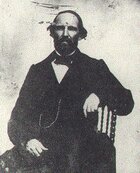
Brigadier_General_Ben_McCulloch.jpg


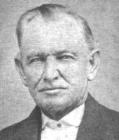
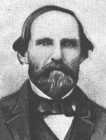
Luckily there are a ton of real photos of Ben and Henry, since they held positions with the federal government...and Henry survived the war. BTW, Ben died at Pea Ridge.

mccullochhenry.jpg


Just Google.

mcculben.jpg
 

Attachments

  • Brigadier_General_Ben_McCulloch.jpg
    Brigadier_General_Ben_McCulloch.jpg
    23.5 KB · Views: 70
  • mccullochhenry.jpg
    mccullochhenry.jpg
    12 KB · Views: 71
  • mcculben.jpg
    mcculben.jpg
    13.5 KB · Views: 60
Last edited:
I have seen books about the 7th Tenn. Its been a while since Ive researched Duckworth's Cavalry. What are you wanting to know? I have a huge library at home and an even larger one in my dad's WWI WWII museum. I have to admit it has been a while since Duckworth came up in a discussion. When I was a re-enactor I heard info regularly- 20 yrs ago
 
I have seen books about the 7th Tenn. Its been a while since Ive researched Duckworth's Cavalry. What are you wanting to know? I have a huge library at home and an even larger one in my dad's WWI WWII museum. I have to admit it has been a while since Duckworth came up in a discussion. When I was a re-enactor I heard info regularly- 20 yrs ago
Gosh, I would enjoy the basics! One never knows where the next great piece of a puzzle will come from.
 
I have seen books about the 7th Tenn. Its been a while since Ive researched Duckworth's Cavalry. What are you wanting to know? I have a huge library at home and an even larger one in my dad's WWI WWII museum. I have to admit it has been a while since Duckworth came up in a discussion. When I was a re-enactor I heard info regularly- 20 yrs ago
Anything you have would be awesome. I had an uncle that served in this unit. Thanks.
 
The story of Lexington in the Civil War has been told incorrectly for decades. The great Lexington, the one that Abe Buford bought a share of in the early fifties, was not confiscated during the war. He was standing at stud at Woodburn, the farm of Robert Alexander, an Englishman who wrongly believed that his stock would be left alone by both sides. Unfortunately for the Standardbred breed, Alexander's great trotting stallion Abdallah was taken and ridden to death by a Confederate raiding party early in 1865. Even so Abdallah became an ancestor of almost every harness race horse alive today. The loss of Abdallah prompted Alexander to move Lexington, known as the Blind Hero of Woodburn, to Illinois for the remainder of the war. He was used again at stud prior to his death in 1875 but he was not ridden. Grant may have had another Lexington (names were reused so often that you'd go blind trying to differentiate them). An Alexander stallion named Asteroid, a famous son of Lexington, was confiscated but I think he was bought back. And I think John Hunt Morgan lost a Lexington offspring when he was captured in Ohio.
Kentuckian Abraham Buford was the cousin of Union cavalryman John Buford and Union general Napoleon Bonaparte Buford. He was a West Point graduate who distinguished himself in the Mexican War as a captain of dragoons and also very much in the Civil War. He had tried to stay out of it, as his state had tried, but finally went with the Confederacy. He was one of Bragg's commanders during his invasion of Kentucky, and later served during the Vicksburg campaign. He distinguished himself at Brice's Crossroads and during Hood's retreat from Nashville. He was under Forrest's command from Brice's Crossroads to Selma and was much respected by his general.

Before the war, Buford was well known as a horse breeder and co-owner of the famous racer Lexington. Lexington was confiscated during the war and became Gen Sherman's prize. Sherman rode him when he entered Atlanta and again at the Grand Review in Washington at the end of the war, but Lexington was blind. He had set many records during his career and sired many exceptional offspring, one of which was Cincinnati, Ulysses Grant's favorite horse.

Buford, after the war, suffered severe personal losses including his Bosque Bonita horse ranch, his son and his wife. His brother Thomas, a judge, murdered another judge and was committed to an insane asylum. A few years later he escaped and there was a family upset. Buford went to visit his nephew. While in Indiana visiting Thomas' son, Buford committed suicide. He is buried in Lexington, Kentucky.

18264.jpg
 

Learn About Us
About CivilWarTalk
Contact the Webmaster
Meet the Staff
Link to CivilWarTalk
Join Our Community
Register
Browse Forums
View Today's Discussions
Search the Forum
Get Help
FAQ
Student Guide
Forum Rules & Etiquette
Copyright / DMCA

     Contact Us CivilwarTalk on Facebook CivilWarTalk on YouTube CivilWarTalk on Twitter RSS Feed

Bringing the American Civil War and More to Life.
© 1999 - , CIVILWARTALK, LLC - Site Version 10.0

SlaveryTalk.com - SecessionTalk.com - CivilWarTalk.com - ReconstructionTalk.com
Back
Top