Forrest Ranking Forrest's Commanders

We've just about derailed this thread by turning into a saga about the McCulloch cousins. My apologies to the original poster, but those McCulloch guys were a couple of interesting men.
 
We've just about derailed this thread by turning into a saga about the McCulloch cousins. My apologies to the original poster, but those McCulloch guys were a couple of interesting men.
Hey, I appreciate the apology but it's not needed. It was rather interesting trying to figure out who is who of the Mcculloch's.
 
Last edited:
Next up is Hylan Benton Lyon a fierce Lion in Kentucky. Born in 1836 in Caldwell County Kentucky. He went to West Point and served five years in the US forces as a 2nd Lt. When the Civil War broke out he resigned and offered his services to the Confederate cause and was at first a Captain in an Artillery unit. B.G. Lloyd Tilghman asked General Albert Sidney Johnston for Lyon for the man knew Kentucky well and believed he would be an asset, turns out he was and in a short time was promoted to Lt. Col of the 8th Kentucky Inf. Rgt. In just a short time after his promotion Lyon's Rgt. was engaged at Fort Donelson where he was taken prisoner and spent 7 months as a P.O.W. after being exchanged he fought in battles such as Coffeeville, Port Hudson, Holly Springs, and Vicksburg the latter he just barely escaped with his command. He ended up in NBF command and was promoted Colonel and fought in Chattanooga and Brice's Crossroads were he distinguished himself by taking his 800 man force and charging the Federal forces of around 1,500 men sending the Federals confused and fleeing. NBF wrote high praise about Lyon resulting in him getting promoted four days later to Brigadier General on June 14, 1864. Just after two months he was being transferred out of NBF's command, which infuriated Forrest who wrote a letter to Richmond getting the order rescinded after two weeks. Under Forrest Lyon was in command of Lyon's Brigade consisting of the 3rd, 7th, 8th, and 12th Kentucky Rgt's. After several months Confederate Secretary of War Seddon promoted Lyon to command Kentucky. Lyon started a aggressive campaign into Western Kentucky where his home was in Eddyville. The Federals first took his wife captive and after negotiations Lyon released 8 Union officers for his wife. This obviously ticked him off for he unleashed a devastating campaign through Union controlled Kentucky and out right fear into pro Union sympathizers. From Dec. 12th to Jan. 3rd, Lyon burned down 7 courthouses (Cadiz, Hartford, Johnsonville, Hopkinsville, Princeton, Burkesville, and Campbellsville) Prior this he joined forces with NBF and in Kentucky and destroyed 6 Union gun boats, 13 Union steam boats, and several barges along the Tennessee River. In Johnsonville they burned military buildings an estimate of 2 million dollars in damages. In Hartford took a Federal Garrison out and freed Confederate prisoners. In Elizabethton he captured 200 Union soldiers on a train and burned the railroad depot and stockade along with two bridges. He was a great choice for command in Kentucky :smile: He ended up going to Mexico for one year in opposition to surrendering and did well with serving Emperor Maximilian along with others like B.G. Jo Shelby. He returned back to Kentucky and served as a commissioner for building a penitentiary in Eddyville. He served three times on the state Assembly in Kentucky.
 
Last edited:
Next up is Hylan Benton Lyon a fierce Lion in Kentucky. Born in 1836 in Caldwell County Kentucky. He went to West Point and served five years in the US forces as a 2nd Lt. When the Civil War broke out he resigned and offered his services to the Confederate cause and was at first a Captain in an Artillery unit. B.G. Lloyd Tilghman asked General Albert Sidney Johnston for Lyon for the man knew Kentucky well and believed he would be an asset, turns out he was and in a short time was promoted to Lt. Col of the 8th Kentucky Inf. Rgt. In just a short time after his promotion Lyon's Rgt. was engaged at Fort Donelson where he was taken prisoner and spent 7 months as a P.O.W. after being exchanged he fought in battles such as Coffeeville, Port Hudson, Holly Springs, and Vicksburg the latter he just barely escaped with his command. He ended up in NBF command and was promoted Colonel and fought in Chattanooga and Brice's Crossroads were he distinguished himself by taking his 800 man force and charging the Federal forces of around 1,500 men sending the Federals confused and fleeing. NBF wrote high praise about Lyon resulting in him getting promoted four days later to Brigadier General on June 14, 1864. Just after two months he was being transferred out of NBF's command, which infuriated Forrest who wrote a letter to Richmond getting the order rescinded after two weeks. Under Forrest Lyon was in command of Lyon's Brigade consisting of the 3rd, 7th, 8th, and 12th Kentucky Rgt's. After several months Confederate Secretary of War Seddon promoted Lyon to command Kentucky. Lyon started a aggressive campaign into Western Kentucky where his home was in Eddyville. The Federals first took his wife captive and after negotiations Lyon released 8 Union officers for his wife. This obviously ticked him off for he unleashed a devastating campaign through Union controlled Kentucky and out right fear into pro Union sympathizers. From Dec. 12th to Jan. 3rd, Lyon burned down 7 courthouses (Cadiz, Hartford, Johnsonville, Hopkinsville, Princeton, Burkesville, and Campbellsville) Prior this he joined forces with NBF and in Kentucky and destroyed 6 Union gun boats, 13 Union steam boats, and several barges along the Tennessee River. In Johnsonville they burned military buildings an estimate of 2 million dollars in damages. In Hartford took a Federal Garrison out and freed Confederate prisoners. In Elizabethton he captured 209 Union soldiers on a train and burned the railroad depot and stockade along with two bridges. He was a great choice for command in Kentucky :smile: He ended up going to Mexico for one year in opposition to surrendering and did well with serving Emperor Maximilian along with others like B.G. Jo Shelby. He returned back to Kentucky and served as a commissioner for building a penitentiary in Eddyville. He served three times on the state Assembly in Kentucky.
An image of General Lyon:
HD_lyonHB-1.jpg

http://hd.housedivided.dickinson.edu/node/15017
 
Kentuckian Abraham Buford was the cousin of Union cavalryman John Buford and Union general Napoleon Bonaparte Buford. He was a West Point graduate who distinguished himself in the Mexican War as a captain of dragoons and also very much in the Civil War. He had tried to stay out of it, as his state had tried, but finally went with the Confederacy. He was one of Bragg's commanders during his invasion of Kentucky, and later served during the Vicksburg campaign. He distinguished himself at Brice's Crossroads and during Hood's retreat from Nashville. He was under Forrest's command from Brice's Crossroads to Selma and was much respected by his general.

Before the war, Buford was well known as a horse breeder and co-owner of the famous racer Lexington. Lexington was confiscated during the war and became Gen Sherman's prize. Sherman rode him when he entered Atlanta and again at the Grand Review in Washington at the end of the war, but Lexington was blind. He had set many records during his career and sired many exceptional offspring, one of which was Cincinnati, Ulysses Grant's favorite horse.

Buford, after the war, suffered severe personal losses including his Bosque Bonita horse ranch, his son and his wife. His brother Thomas, a judge, murdered another judge and was committed to an insane asylum. A few years later he escaped and there was a family upset. Buford went to visit his nephew. While in Indiana visiting Thomas' son, Buford committed suicide. He is buried in Lexington, Kentucky.

18264.jpg
 
Kentuckian Abraham Buford was the cousin of Union cavalryman John Buford and Union general Napoleon Bonaparte Buford. He was a West Point graduate who distinguished himself in the Mexican War as a captain of dragoons and also very much in the Civil War. He had tried to stay out of it, as his state had tried, but finally went with the Confederacy. He was one of Bragg's commanders during his invasion of Kentucky, and later served during the Vicksburg campaign. He distinguished himself at Brice's Crossroads and during Hood's retreat from Nashville. He was under Forrest's command from Brice's Crossroads to Selma and was much respected by his general.

Before the war, Buford was well known as a horse breeder and co-owner of the famous racer Lexington. Lexington was confiscated during the war and became Gen Sherman's prize. Sherman rode him when he entered Atlanta and again at the Grand Review in Washington at the end of the war, but Lexington was blind. He had set many records during his career and sired many exceptional offspring, one of which was Cincinnati, Ulysses Grant's favorite horse.

Buford, after the war, suffered severe personal losses including his Bosque Bonita horse ranch, his son and his wife. His brother Thomas, a judge, murdered another judge and was committed to an insane asylum. A few years later he escaped and there was a family upset. Buford went to visit his nephew. While in Indiana visiting Thomas' son, Buford committed suicide. He is buried in Lexington, Kentucky.

18264.jpg
Eric Wittenberg is currently in the early stages of writing a book on him.
 
I am going to attempt to do my best with Brigadier James Ronald Chalmers born Jan. 11, 1831 in Halifax County, Virginia. His father moved the family to Holly Springs, Mississippi when James was a boy and became a U.S. Senator. James after graduating college became a lawyer after passing the bar in Holly Springs in 1853. He later became a District Attorney in 1858 and a delegate to the convention and was in favor for seccession. When the war broke out in 1861, he joined the Confederate cause and became a Colonel in the 9th Mississippi Inf. Rgt. He first saw action as a Colonel on Oct. 9, 1861 fighting at Fort Pickens (Battle of Santa Rosa Island) in Pensacola, Florida. By Feb. 1862 Chalmers was made a Brigadier General and was in command of the 5th, 7th, 9th, 10th Miss. Inf. Rgts., 52nd Tenn. Inf. Rgt. also an Alabama Artilley Battery. He fought in Battles to name a few of Shiloh, Boonesville (encountered Sheridans Force there), Munfordville, Chattanooga, and Stone's River (wounded badly). He was praised at Shiloh for gallantry. In Bragg's invasion of Kentucky in summer of 1862 and Battle of Murfreesboro he was praised for good command and splendid fighting by Bragg. Chalmers fought extensively with Bragg and it is true he, was a Bragg man as some stated on this forum. A quote by Chalmers to Bragg. "I have not seen no man in this war who looked, talked and acted on all occasions so much like my beau ideal of a General, you have shown yourself a great military chieftain." After Stone's River it seems he was suitable for Cavalry service and joined that core. In April, 1863 Chalmers was placed in command of the 5th military district in Mississippi and East Louisiana. Eager to get back into the action joined NBF's command and lead Cavalry Brigades. Now it is true Chalmers and Forrest did not see eye to eye and Forrest wanted him transferred out of his command, but after the dust settled they began to work well together and effecientley. Chalmers had a nickname while under Forrest it was "Little Un". I have linked a report of Chalmers in regards to Fort Pillow and I believe DixieRifles to be the best expert here on Fort Pillow. He definetley is the best to elaborate on this particular battle. Chalmers after the war was heavily involved in politics like his father and served three times as an elected U.S. Representative for the state of Mississippi in 1877,1878, and 1882 and lost on three other occassions. He ended up going back to law after that before he died. He is in my opinion a very solid B.G. while under Bragg and NBF.
http://www.civilwarhome.com/chalmersftpillowor.html
 

Attachments

  • 220px-JamesRonaldChalmersp157crop.jpg
    220px-JamesRonaldChalmersp157crop.jpg
    10.7 KB · Views: 210
Last edited:
I have a problem or two with H.B. Lyon. Near the end of the war he talked his old friend Col. Reuben R. Ross into going on a forlorn hope raid into Ky. Ross had escaped capture by jumping off the train taking him to Johnson's Island in October and had only just made it back to CS lines. The raid was ordered by Hood to go ahead of his movement toward Nashville. The raiders conscripted a few hundred men along the way, most of whom deserted when they heard Hood had been defeated at Nashville. On Dec 16 a battle was fought at Hopkinsville in which Ross was killed in hand-to-hand combat, refusing to surrender. The defeated raiders, including a brother of Ross escaped back into Tennessee. In his report Lyon never mentions Ross, not even that he was killed.

Lyon was mentioned by Union POWs in 1863 as treating them badly or at least bullying them for no good reason. Don't recall the details.

I believe it was Lyon's political influence that got him command of Ross' regiment in 1861. Ross was elected [ Lt] colonel, but Jeff Davis refused to allow it and appointed Lyon. Ross then joined a Tenn battery as a captain, serving with distinction with the heavy arty at Ft. Donelson.
 
Last edited:
I can remember my dad and I reading Forrest biographies when I was a teenager, and my dad saying the books gave high praise to "Biffle, Dibrell and Starnes." It was almost as if we were discussing the backfield of our favorite football team. :dance:
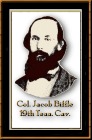
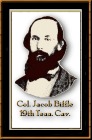
Im not sure where to post this information but the famed pic of Colonel Biffle is actually his brother Nathan Fletcher Biffle. Dan Kennerly and I found that photo years ago and the family was very divided on whether the photo of the colonel was actually him. I acquired a photo of Nathan Fletcher Biffle, his brother, and the photo used as Colonel Biffle is definitely that of N.F. Biffle. Biffle was where I sit right now on Dec 28 1862 and I had the pleasure of working with four of his grandsons. He was quite a soldier and I would say, I doubt anyone equaled his daring expeditions.
 
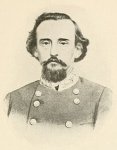
This one was a challenge and please anyone wanting to add on information about this man such as battles, etc please do. Colonel Jacob Barnett Biffle of the 9th Tenn. Cav. (19th Tenn. Cav.) It was interesting to read he had served under Albert Cooper when he was 16 years old in the Mexican War and later Cooper became his second command as a Lt. Col. In the 19th Tenn. Cav. There is two quotes which I read that stated Biffle was similar to NBF in some aspects. Biffle and his 9th were referred to as more of a commando style unit then a Cavalry force for Biffle would divide his men into smaller striking forces which were effective. Some Federal commanders branded his unit not as a conventional military force but as southern guerrillas. States his regiment was targeted and when men were captured they were sometimes tortured or murdered. If anyone knows more about this please inform me for I couldn't find any?
biffle.gif
This picture is of Nathan Fletcher Biffle and not Colonel Jacob Barnett Biffle and I am partly the blame for this. If you want proof I can muster it up. NF Biffle was his brother. Unfortunately, there are no known photos of the colonel. He had to flee his home county almost immediately after the war and ended up being murdered by a Yankee soldier years after the war.
 

Attachments

  • biffle.gif
    biffle.gif
    41.6 KB · Views: 81
This one was a challenge and please anyone wanting to add on information about this man such as battles, etc please do. Colonel Jacob Barnett Biffle of the 9th Tenn. Cav. (19th Tenn. Cav.) It was interesting to read he had served under Albert Cooper when he was 16 years old in the Mexican War and later Cooper became his second command as a Lt. Col. In the 19th Tenn. Cav. There is two quotes which I read that stated Biffle was similar to NBF in some aspects. Biffle and his 9th were referred to as more of a commando style unit then a Cavalry force for Biffle would divide his men into smaller striking forces which were effective. Some Federal commanders branded his unit not as a conventional military force but as southern guerrillas. States his regiment was targeted and when men were captured they were sometimes tortured or murdered. If anyone knows more about this please inform me for I couldn't find any?
biffle.gif
I can provide any information you seek on him. His county was heavily divided. Biffle acted as a regular cavalry officer however he left Company D (19th) or 9th Tenn Cvy Reg at home to protect southern sympathizers from the infamous Brewer gang who were mutilating them. the families of Biffle's Cvy were also subjected to Fielding Hurst guerillas. Capt Kirk of Co D of the 9th Tn Cvy remained in Wayne County most of the war and he did some pretty bad things to northern sympathizers. It went both ways. Biffle was an aggressive soldier in the field but there are no records of his unit, other than Kirk, doing bad deeds to others. But war is hell and gives birth to all kinds of actions/torture
 

Attachments

  • biffle.gif
    biffle.gif
    41.6 KB · Views: 65
Booner, I went to the Alabama Archive site and discovered that the photo is part of an album of Confederate officers' portraits once owned by a Doctor. I believe the doctor mislabeled the photo. Whether it is Gen. Ben McCulloch, I can't say, but it's definitely a general's insignia.
Following up on this earlier post. I sent a note to the Alabama Archives (owners of the album with the McCulloch photo) and pointed out the general's collar insignia. About two weeks later, an archivist there wrote me back to thank me. They said they agreed the image was mis-labeled by the original owner of the album and they believe it's an image of Gen. Ben McCulloch. They now attribute the image to Ben.
 
Thanks, PatrickH! I knew better, too... :redface: :laugh: I think somewhere in the archives is a thread on the McCullochs. There was another - Herbert? Eustace McCulloch. Think that was Ben's brother but not sure. Now...who is Red Bob? :smile coffee:
Henry Eustace was Ben's younger brother, and spent most of the war in Texas trying to get to along with idiots, guard the border, and protect the folks left at home. It was a thankless task.
 

Learn About Us
About CivilWarTalk
Contact the Webmaster
Meet the Staff
Link to CivilWarTalk
Join Our Community
Register
Browse Forums
View Today's Discussions
Search the Forum
Get Help
FAQ
Student Guide
Forum Rules & Etiquette
Copyright / DMCA

     Contact Us CivilwarTalk on Facebook CivilWarTalk on YouTube CivilWarTalk on Twitter RSS Feed

Bringing the American Civil War and More to Life.
© 1999 - , CIVILWARTALK, LLC - Site Version 10.0

SlaveryTalk.com - SecessionTalk.com - CivilWarTalk.com - ReconstructionTalk.com
Back
Top