Question about Django

Waterloo50

Major
Joined
Jul 7, 2015
Location
England
I have a question about slaves that I have wanted to ask for a while now, I have searched the internet for an answer but I haven't had much luck.

In the film 'Django Unchained', Samuel L Jackson plays the part of a particularly nasty character called 'Stephen'. Stephen had this discomfiting, unflinching loyalty to the slave owner Mr Candie, he thought of himself as superior to the other slaves and thought nothing of beating and punishing them. Obviously Django Unchained is a revisionist fantasy, but I wanted to ask the question, did men such as Stephen ever exist and if they did, what was the outcome for them after the war had ended.
 
Last edited:
I have a question about slaves that I have wanted to ask for a while now, I have searched the internet for an answer but I haven't had much luck.

In the film 'Django Unchained', Samuel L Jackson plays the part of a particularly nasty character called 'Stephen'. Stephen had this discomfiting, unflinching loyalty to the slave owner Mr Candie, he thought of himself as superior to the other slaves and thought nothing of beating and punishing them. Obviously Django Unchained is a revisionist fantasy, but I wanted to ask the question, did men such as Stephen ever exist and if they did, what was the outcome for them after the war had ended.

My apologies if this is the wrong thread to ask these questions, I will of course understand if this question needs to be moved to a different thread.

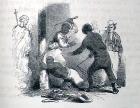
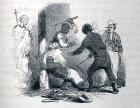
Haven't seen the movie, but it sounds like you're describing a driver. Stephen was doing this with the blessing of the owner, right, as part of plantation discipline? If so, it was an extremely common position. Northup in 12 Years a Slave was one, and a couple are described in Uncle Tom's Cabin. Here they are whipping Tom while Simon Legree watches.
jesus_waiting.jpg

Unfortunately, I don't have any info on how they integrated into free society post war. Such jobs still needed done, but with less violence, so it's possible they could have gone on working as plantation low level managers, but not with the sadism. Some drivers claimed they cheated the overseer' s or master's orders and got slaves to scream while barely flicking them with the whip, and such men might fit in well as "old time Negroes" who were loyal to whites but also appreciated by fellow ex-slaves.
 

Attachments

  • jesus_waiting.jpg
    jesus_waiting.jpg
    30.5 KB · Views: 58
Haven't seen the movie, but it sounds like you're describing a driver. Stephen was doing this with the blessing of the owner, right, as part of plantation discipline? If so, it was an extremely common position. Northup in 12 Years a Slave was one, and a couple are described in Uncle Tom's Cabin. Here they are whipping Tom while Simon Legree watches.
jesus_waiting.jpg

Unfortunately, I don't have any info on how they integrated into free society post war. Such jobs still needed done, but with less violence, so it's possible they could have gone on working as plantation low level managers, but not with the sadism. Some drivers claimed they cheated the overseer' s or master's orders and got slaves to scream while barely flicking them with the whip, and such men might fit in well as "old time Negroes" who were loyal to whites but also appreciated by fellow ex-slaves.

Hello,

Thanks for replying, If you haven't seen the movie I would highly recommend it. I have included a short scene with Stephen.
https://www.bing.com/videos/search?...A630BDC1F447D6F5915AA630BDC1F447D&FORM=VRDGAR
So, men like Stephen were called 'Drivers', that must be where the phrase 'Slave Driver' comes from. I would imagine that these drivers would have done anything to cling to the little power that they had, I was thinking that it must have been quite an uncomfortable position for these men to be in especially when it became clear that the Confederacy was not going to win the war. Its not hard to imagine how some of the more cruel 'Drivers' would have been treated by slaves when they gained their freedom. I liken these drivers to the Kapo in the concentration camps during WW2, a lot of them died at the hands of the repatriated concentration camp prisoners.
 

Attachments

  • jesus_waiting.jpg
    jesus_waiting.jpg
    30.5 KB · Views: 59
Hello,

Thanks for replying, If you haven't seen the movie I would highly recommend it. I have included a short scene with Stephen.
https://www.bing.com/videos/search?...A630BDC1F447D6F5915AA630BDC1F447D&FORM=VRDGAR
So, men like Stephen were called 'Drivers', that must be where the phrase 'Slave Driver' comes from. I would imagine that these drivers would have done anything to cling to the little power that they had, I was thinking that it must have been quite an uncomfortable position for these men to be in especially when it became clear that the Confederacy was not going to win the war. Its not hard to imagine how some of the more cruel 'Drivers' would have been treated by slaves when they gained their freedom. I liken these drivers to the Kapo in the concentration camps during WW2, a lot of them died at the hands of the repatriated concentration camp prisoners.
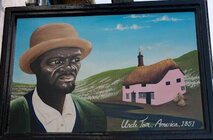
There is a pub in the town where I live called 'Uncle Tom's Cabin', I didn't realise that the name or the pub sign has negative connotations. this is the sign above the door of the pub.
_MG_2477a.jpg
UncleTomsCabin.jpg
 

Attachments

  • _MG_2477a.jpg
    _MG_2477a.jpg
    30.7 KB · Views: 52
  • UncleTomsCabin.jpg
    UncleTomsCabin.jpg
    52.3 KB · Views: 50
Thanks for the clip; didn't realize Stephen was so old. Drivers were usually fit youngish men, as it required being in the fields all day. The way he criticizes his owner in front of guests-- wow. He's certainly earned a special place among whites to get away with that.

I started to read the script for Django when it was online, and realized it had less to say about the 1850s and more to say about other movies, so it really wasn't for people like me. For example, the first time Django shows up in a coffle and the German fellow gets out of some difficilty by saying he has lots of witnesses and points to the other chained slaves. No. Just no. Can't get beyond that kind of obvious error to suspend disbelief. 12 Years a Slave was more my style.
 
Django was a bit over the top, but it had a few things I wondered about.
1. The townsfolk were aghast when they saw the black guy riding a horse into town (in Mississippi I think), as if that was completely unacceptable. I found that a little strange but maybe if a black guy was on a horse, he was generally assumed to be on the run. Or was this just Tarantino?
2. Were fighting contests between black slaves common as a gambling outlet in the South?
 
Django was a bit over the top, but it had a few things I wondered about.
1. The townsfolk were aghast when they saw the black guy riding a horse into town (in Mississippi I think), as if that was completely unacceptable. I found that a little strange but maybe if a black guy was on a horse, he was generally assumed to be on the run. Or was this just Tarantino?
From Stroud https://books.google.com/books?id=HW0TAQAAMAAJ&pg=PA166
"A slave for being on horseback without the written permission of his master incurs twenty-five lashes, (1 Martin's Dig. 622) "

Don't know what Martin's Digest is, so don't know what state(s). Maryland had a law https://books.google.com/books?id=_hpEAAAAYAAJ&pg=PA699 (see #17). Usually such things were repeated in many slave states codes, so I wouldn't be surprised to see it in the deep south too.
2. Were fighting contests between black slaves common as a gambling outlet in the South?
No. Extremely rare.
 
Django was a bit over the top, but it had a few things I wondered about.
1. The townsfolk were aghast when they saw the black guy riding a horse into town (in Mississippi I think), as if that was completely unacceptable. I found that a little strange but maybe if a black guy was on a horse, he was generally assumed to be on the run. Or was this just Tarantino?
2. Were fighting contests between black slaves common as a gambling outlet in the South?
A slave riding a horse alongside his white master would not have been shocking. The servants who traveled with the 7th TN cavalry were mounted. Black grooms and jockeys were the norm.

http://wfpl.org/how-black-jockeys-went-from-common-to-rare-in-the-kentucky-derby/

Django is more of an homage to the blaxploitation movie Mandingo than a serious exploration of slavery. Southern gentlemen had a reputation for betting on anything, and they certainly did other cruel sports such as cockfighting, but if there were really slave fights they were underground and not recorded for history. It's unlikely that risking a valuable slave would become a popular pastime.

http://www.huffingtonpost.com/2012/12/26/django-unchained-mandingo-fighting-real-not_n_2366113.html

A man like Stephen might have been his master's half brother or uncle, raised in the household, playing with the white children, and growing up with an entirely different perspective than that of a field servant. I doubt many men were as cruel as Stephen, but some definitely allied with their masters against other slaves. Following the war, such men did not always have an easy time adjusting. The story of one such man is told in "The Washingtons of Wessyngton Plantation." After years of being rejected by the black community and working in a servile position, he finally committed suicide.

If you take away anything from Django, take away the feeling of helplessness to intervene in the fate of your loved ones. That was very real. Slaves could not be legally married; their masters could sell them apart for any reason or no reason. "Kindly" masters who insisted they would never part families might die, and their heirs sell the slaves. Or they might go bankrupt and the slaves be sold to pay the debt. There was no security, even for the most trusted slave regarded as a "member of the family." Think about how dogs are regarded today. You might say your dog is a member of the family, but if your child develops an allergy to him, off he goes. If you have to move to a place that doesn't allow dogs, off he goes. Or if you get old and put in a home, your dog might be put down. Wills with stipulations about the care of dogs are often ignored. That is what it meant to be property. People were treated as we treat animals today.
 
Last edited:
A slave riding a horse alongside his white master would not have been shocking. The servants who traveled with the 7th TN cavalry were mounted. Black grooms and jockeys were the norm.
Was he with a mounted white man? Then yes, I agree, that would be the norm for servants accompanying a master and not draw attention. I thought he was on horseback alone.

Django is more of an homage to the blaxploitation movie Mandingo than a serious exploration of slavery.
Bingo.
 
Wonder whether this movie (Django Unchained) has anything to do with the original Django movie (Which I thought you were referring to based on the title, Spaghetti Western with Franco Nero playing Django, a Union veteran and avenger against a Clansmen gang in Southern TX post war)
 
Wonder whether this movie (Django Unchained) has anything to do with the original Django movie (Which I thought you were referring to based on the title, Spaghetti Western with Franco Nero playing Django, a Union veteran and avenger against a Clansmen gang in Southern TX post war)
Django Unchained, like most Tarentino movies, is best enjoyed if you also appreciate and are familiar with a variety of period films. The original Django is definitely part of the material it draws upon.

I thought the movie as a whole could have been better, but it has its moments. The Klan scene (anachronistic, since the Klan didn't exist until after the war) is one of the funniest scenes ever, and some of the scenes of them riding around in winter are just straight up beautiful.
 
Django Unchained, like most Tarentino movies, is best enjoyed if you also appreciate and are familiar with a variety of period films. The original Django is definitely part of the material it draws upon.

I thought the movie as a whole could have been better, but it has its moments. The Klan scene (anachronistic, since the Klan didn't exist until after the war) is one of the funniest scenes ever, and some of the scenes of them riding around in winter are just straight up beautiful.
I remember watching a documentary on the making of the movie Django Unchained, there was a black female make up artist, her relatives had been slaves, she recalled that she would watch the 'slave extras' working in the field dressed in their rags, it upset her a great deal but what really made an impact on her was the fact that the movie was filmed on the plantation 'Evergreen' where her ancestors had been slaves. Another more sobering fact is that the slave quarters that you see in the movie were original and the scene where a slave is tied to a post and whipped was the original structure that was used for punishment. Apparently, when the scene of the whipping took place the whip made a cracking sound, every bird and bee and all of nature ceased to make a noise, it was as if the plantation had remembered.
 
I have a question about slaves that I have wanted to ask for a while now, I have searched the internet for an answer but I haven't had much luck.

In the film 'Django Unchained', Samuel L Jackson plays the part of a particularly nasty character called 'Stephen'. Stephen had this discomfiting, unflinching loyalty to the slave owner Mr Candie, he thought of himself as superior to the other slaves and thought nothing of beating and punishing them. Obviously Django Unchained is a revisionist fantasy, but I wanted to ask the question, did men such as Stephen ever exist and if they did, what was the outcome for them after the war had ended.

The character is based on the so-called 'House Negro' narrative. Antebellum "House Negroes" were slaves who lived in the 'Big House' with their legal owner, and were usually cooks, butlers, maids, etc (i.e., they were not field laborers). According to the House Negro notion, they were men and women who lost their sense of self, pride, and community by reveling in their status as the favored or privileged slave.

The late Malcolm X referred to the House Negro in some of his speeches:

So you have two types of Negro. The old type and the new type. Most of you know the old type. When you read about him in history during slavery he was called "Uncle Tom." He was the house Negro. And during slavery you had two Negroes. You had the house Negro and the field Negro.

The house Negro usually lived close to his master. He dressed like his master. He wore his master's second-hand clothes. He ate food that his master left on the table. And he lived in his master's house--probably in the basement or the attic--but he still lived in the master's house.

So whenever that house Negro identified himself, he always identified himself in the same sense that his master identified himself. When his master said, "We have good food," the house Negro would say, "Yes, we have plenty of good food." "We" have plenty of good food. When the master said that "we have a fine home here," the house Negro said, "Yes, we have a fine home here." When the master would be sick, the house Negro identified himself so much with his master he'd say, "What's the matter boss, we sick?" His master's pain was his pain. And it hurt him more for his master to be sick than for him to be sick himself. When the house started burning down, that type of Negro would fight harder to put the master's house out than the master himself would.

But then you had another Negro out in the field. The house Negro was in the minority. The masses--the field Negroes were the masses. They were in the majority. When the master got sick, they prayed that he'd die. [Laughter] If his house caught on fire, they'd pray for a wind to come along and fan the breeze.

If someone came to the house Negro and said, "Let's go, let's separate," naturally that Uncle Tom would say, "Go where? What could I do without boss? Where would I live? How would I dress? Who would look out for me?" That's the house Negro. But if you went to the field Negro and said, "Let's go, let's separate," he wouldn't even ask you where or how. He'd say, "Yes, let's go." And that one ended right there.​

The House Negro is not regarded fondly in African American culture.

- Alan

FYI: Malcolm X uses the term "old type Negroes." This kind of language was used by many white southerners in the post-war decades to describe negroes who acted deferentially to whites, that is, they acted just as a slave would act. These were negroes who "knew their place," to use another term.
 
Last edited:
Talk about a movie which in my opinion was a total joke it wasn't only the inaccuracies but just the plain stupidity of that movie a waste of money in less you come from Hollywood and then I'm afraid it was a blockbuster so much for the dumbing down of the American people.
 
The character is based on the so-called 'House Negro' narrative. Antebellum "House Negroes" were slaves who lived in the 'Big House' with their legal owner, and were usually cooks, butlers, maids, etc (i.e., they were not field laborers). According to the House Negro notion, there were mean and women who lost their sense of self, pride, and community by reveling in their status as the favored or privileged slave.

The late Malcolm X referred to the House Negro in some of his speeches:

So you have two types of Negro. The old type and the new type. Most of you know the old type. When you read about him in history during slavery he was called "Uncle Tom." He was the house Negro. And during slavery you had two Negroes. You had the house Negro and the field Negro.

The house Negro usually lived close to his master. He dressed like his master. He wore his master's second-hand clothes. He ate food that his master left on the table. And he lived in his master's house--probably in the basement or the attic--but he still lived in the master's house.

So whenever that house Negro identified himself, he always identified himself in the same sense that his master identified himself. When his master said, "We have good food," the house Negro would say, "Yes, we have plenty of good food." "We" have plenty of good food. When the master said that "we have a fine home here," the house Negro said, "Yes, we have a fine home here." When the master would be sick, the house Negro identified himself so much with his master he'd say, "What's the matter boss, we sick?" His master's pain was his pain. And it hurt him more for his master to be sick than for him to be sick himself. When the house started burning down, that type of Negro would fight harder to put the master's house out than the master himself would.

But then you had another Negro out in the field. The house Negro was in the minority. The masses--the field Negroes were the masses. They were in the majority. When the master got sick, they prayed that he'd die. [Laughter] If his house caught on fire, they'd pray for a wind to come along and fan the breeze.

If someone came to the house Negro and said, "Let's go, let's separate," naturally that Uncle Tom would say, "Go where? What could I do without boss? Where would I live? How would I dress? Who would look out for me?" That's the house Negro. But if you went to the field Negro and said, "Let's go, let's separate," he wouldn't even ask you where or how. He'd say, "Yes, let's go." And that one ended right there.​

The House Negro is not regarded fondly in African American culture.

- Alan

That was an excellent post, I appreciate that, it has helped me understand a little more about Stephens character. I totally understand that it was a movie and that there was a lot of artistic licence applied. A lot of people dislike Django Unchained and I personally think it's because it leaves people feeling very uncomfortable, everything that was wrong with slavery was magnified a thousand times in that movie.
 
Talk about a movie which in my opinion was a total joke it wasn't only the inaccuracies but just the plain stupidity of that movie a waste of money in less you come from Hollywood and then I'm afraid it was a blockbuster so much for the dumbing down of the American people.

You have raised a valid point about the inaccuracies within the movie but it was never intended to be historically accurate and it makes no claims that it is, it was made in the same vain as Inglorious Bastards. The point is, it is one of those movies that focuses on a particular period and then magnifies the worst bits of that period of history, so, we end up with characters like Stephen and Mr Candie, the movie quite literally takes the worst aspects of human nature and shoves them in your face. Its not meant to be a comfortable historic piece. Take a TV series like 'Roots' for example, we got to know the characters, in fact most people were able to relate and identify with them. If you think about 'Kunta Kinte' the show never really went into great depth about the horrors that he faced in real life, it glossed over the horrors, if it did it wouldn't have made good entertainment. For me, I appreciate any movie or show that doesn't gloss over the truth regardless of how uncomfortable it makes me feel. If the American people that watched Django Unchained were horrified by the brutality within the movie then I would say that's a good thing, if they feel that it wasn't a fair representation of white plantation owners I would say take a look at the conditions these slaves lived under, they may not have been beaten, raped or killed on a regular basis but it did happened. Any movie that has the ability to generate a discussion and make people sit up and take notice has to be a good thing.

Respectfully
Waterloo
 
I enjoyed the movie. Samuel Jackson seems to play these quirky roles such as his role in Django and the bounty hunter Marquis Warren in the Hateful Eight. Whether historically accurate or not I leave to others to answer.
 

Learn About Us
About CivilWarTalk
Contact the Webmaster
Meet the Staff
Link to CivilWarTalk
Join Our Community
Register
Browse Forums
View Today's Discussions
Search the Forum
Get Help
FAQ
Student Guide
Forum Rules & Etiquette
Copyright / DMCA

     Contact Us CivilwarTalk on Facebook CivilWarTalk on YouTube CivilWarTalk on Twitter RSS Feed

Bringing the American Civil War and More to Life.
© 1999 - , CIVILWARTALK, LLC - Site Version 10.0

SlaveryTalk.com - SecessionTalk.com - CivilWarTalk.com - ReconstructionTalk.com
Back
Top