Plank Roads

Doc_Ralph

First Sergeant
Joined
Jul 12, 2023
Here's how plank roads were constructed: northcarolinahistory.org, Federal Highway Administration
  1. Workers graded the roadbed and elevated the center of the road to allow water to drain
  2. Wooden sills measuring about 5 feet by 8 feet were laid as support
  3. Pine planks measuring about eight feet long, eight inches wide, and four inches thick were laid on top of the sills northcarolinahistory.org
Plank roads resembled a large set of train tracks, but felt and sounded similar to boardwalks Federal Highway Administration
Support for plank roads was often divided along partisan lines, with almost three-fourths of Whigs supporting their construction and about the same number of Democrats opposing them North Carolina History Project
The days of the Plank Road were numbered due to the cost and difficulty of maintenance, improved road technology, the rough ride the planks created, and the fact that the road was only wide enough for a single vehicle en.wikipedia.org


Plank Roads Were An Economic Engine Before the Civil War
1690892796536.png
northcarolinahistory.org

1690892796552.jpeg
 
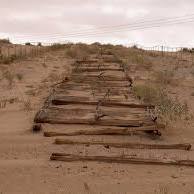
Before I moved to Spotsy I thought the plank roads were called corduroy roads. Sounds extremely bumpy. iMHO Roads - lack there of - and there conditions- often dictated movement of armies. Virginia clay can be nasty stuff. Of course necessity is the mother of invention. Case in point is Upton's "Road" trail, path - see pic and you decide.

OTC
Spotsy CH
 
IMG_2267.jpeg

Dang it I can't upload the video and it is a trail and you can walk it.
 
Here's how plank roads were constructed: northcarolinahistory.org, Federal Highway Administration
  1. Workers graded the roadbed and elevated the center of the road to allow water to drain
  2. Wooden sills measuring about 5 feet by 8 feet were laid as support
  3. Pine planks measuring about eight feet long, eight inches wide, and four inches thick were laid on top of the sills northcarolinahistory.org
Plank roads resembled a large set of train tracks, but felt and sounded similar to boardwalks Federal Highway Administration
Support for plank roads was often divided along partisan lines, with almost three-fourths of Whigs supporting their construction and about the same number of Democrats opposing them North Carolina History Project
The days of the Plank Road were numbered due to the cost and difficulty of maintenance, improved road technology, the rough ride the planks created, and the fact that the road was only wide enough for a single vehicle en.wikipedia.org


Plank Roads Were An Economic Engine Before the Civil War
View attachment 479292
northcarolinahistory.org
View attachment 479291
This would have helped Burnside during his "mud march" at Fredericksburg
 
I've read that in some instances roads leading to market towns were only planked on one side to accommodate heavily loaded wagons heading to market. The unplanked side was for lightly loaded wagons returning from market.
 
Before I moved to Spotsy I thought the plank roads were called corduroy roads. Sounds extremely bumpy. iMHO Roads - lack there of - and there conditions- often dictated movement of armies. Virginia clay can be nasty stuff. Of course necessity is the mother of invention. Case in point is Upton's "Road" trail, path - see pic and you decide.

OTC
Spotsy CH
Yea…I get how one would think that. For the uninitiated a corduroy road is constructed differently.
 
I thought the plank roads were called corduroy roads.
Same here.

Grant refers to constructing many corduroy roads on the west side of the Mississippi River (Louisiana) during the Vicksburg Campaign.

That was after he had decided to cross the Mississippi River, proceed down the swampy Louisiana side, recross the river, and attack
Vicksburg from the south and eventually east.


(From what I recall, a "plank or corduroy road" was extremely difficult to construct in the brutal heat of a Louisiana/Mississippi Summer)
 
I've read that in some instances roads leading to market towns were only planked on one side to accommodate heavily loaded wagons heading to market. The unplanked side was for lightly loaded wagons returning from market.
How about the yellow brick road?
 
Before I moved to Spotsy I thought the plank roads were called corduroy roads. Sounds extremely bumpy. iMHO Roads - lack there of - and there conditions- often dictated movement of armies. Virginia clay can be nasty stuff. Of course necessity is the mother of invention. Case in point is Upton's "Road" trail, path - see pic and you decide.

OTC
Spotsy CH
I looked into this as well one time. My understanding at the time, was, that a plank road had the boards or the "planks" running with the road, or parallel, for lack of a better description, and a corduroy road had the boards running perpendicular.
 
My understanding at the time, was, that a plank road had the boards or the "planks" running with the road, or parallel, for lack of a better description, and a corduroy road had the boards running perpendicular.
Either which way the planks were positioned, it seems such a road was a nightmare to construct.

However, these roads worked in the long term.

I recall a few sources talking about the ease of Grant's infantry, artillery, cavalry and supplies moving down said roads
after Vicksburg had been captured.

These same troops didn't have that advantage during the first year of the Vicksburg Campaign.
 
Another more ancient route wends its way from Florida to Maine. US Route 1 has many names and twists and turns. It originated as an Native American "Highway"

The Potomac Path was improved in the 17th century and became known as the Kings Highway. And then Washington Rochambeau route through Fredburg and north to Alexandria.

By the time of the CW this was the main north south route.

OTC
Spotsy
 

Learn About Us
About CivilWarTalk
Contact the Webmaster
Meet the Staff
Link to CivilWarTalk
Join Our Community
Register
Browse Forums
View Today's Discussions
Search the Forum
Get Help
FAQ
Student Guide
Forum Rules & Etiquette
Copyright / DMCA

     Contact Us CivilwarTalk on Facebook CivilWarTalk on YouTube CivilWarTalk on Twitter RSS Feed

Bringing the American Civil War and More to Life.
© 1999 - , CIVILWARTALK, LLC - Site Version 10.0

SlaveryTalk.com - SecessionTalk.com - CivilWarTalk.com - ReconstructionTalk.com
Back
Top