personalized Weapons

Specster

Sergeant Major
Joined
Sep 19, 2014
Location
Mass.
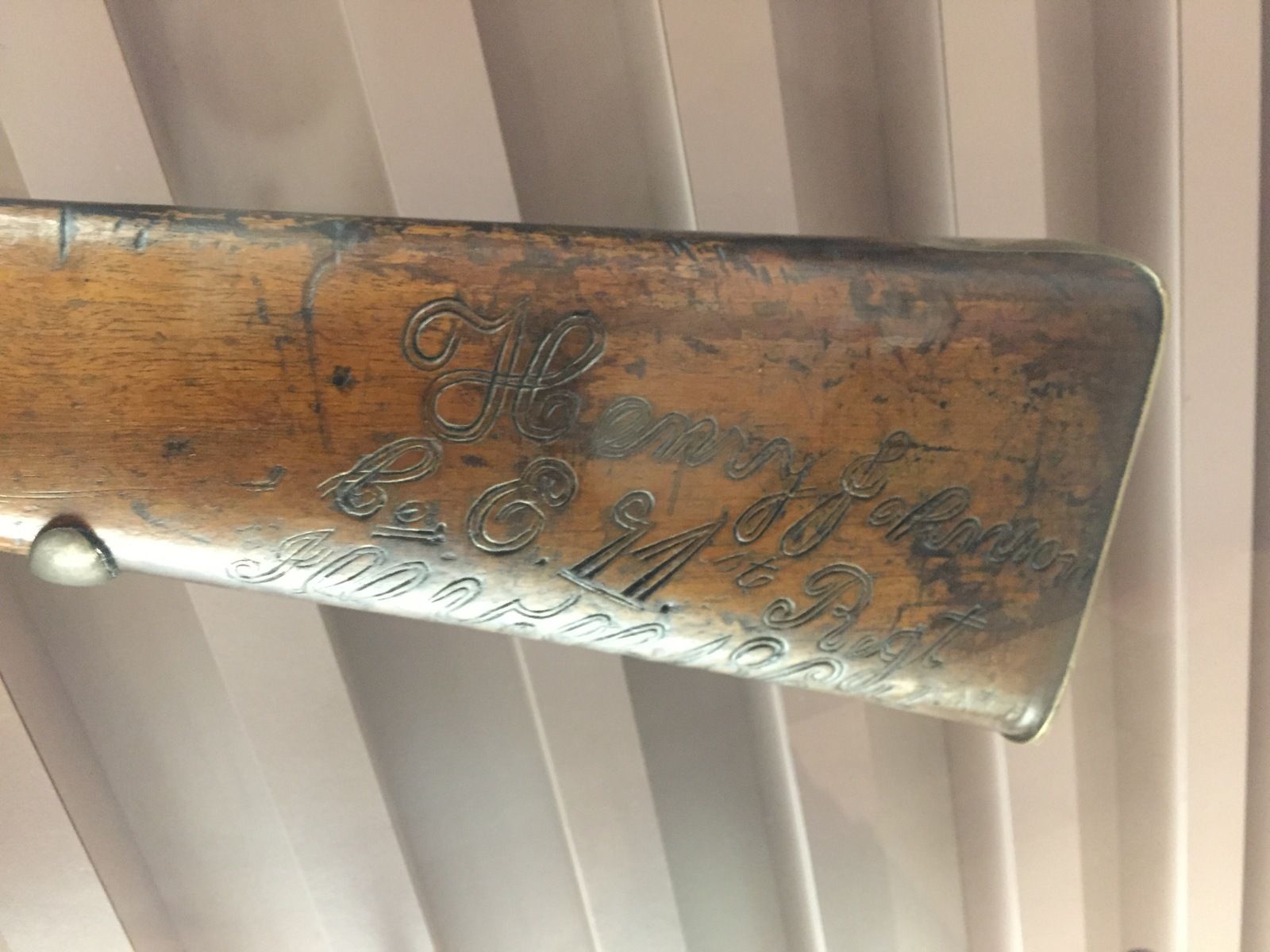
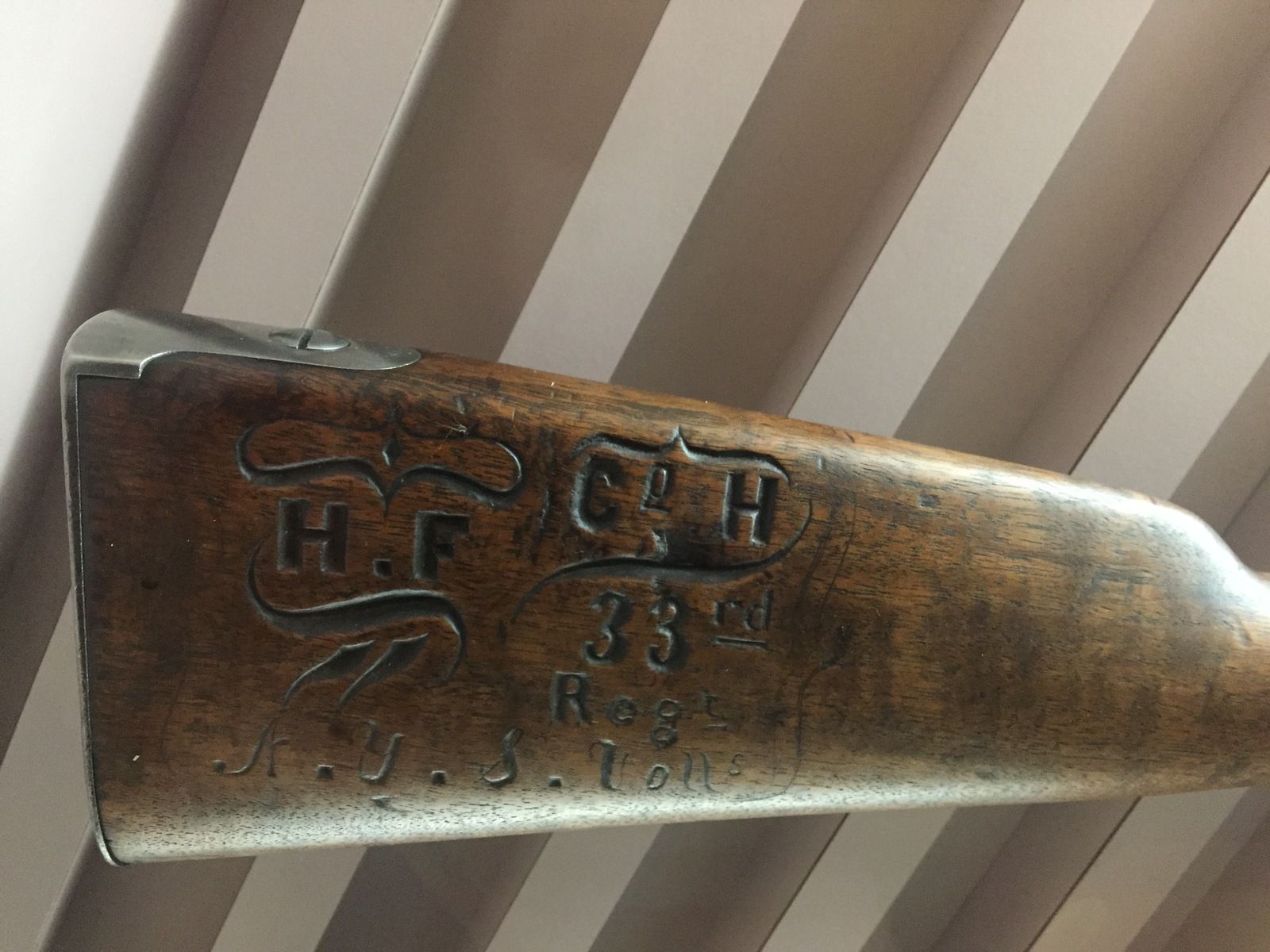
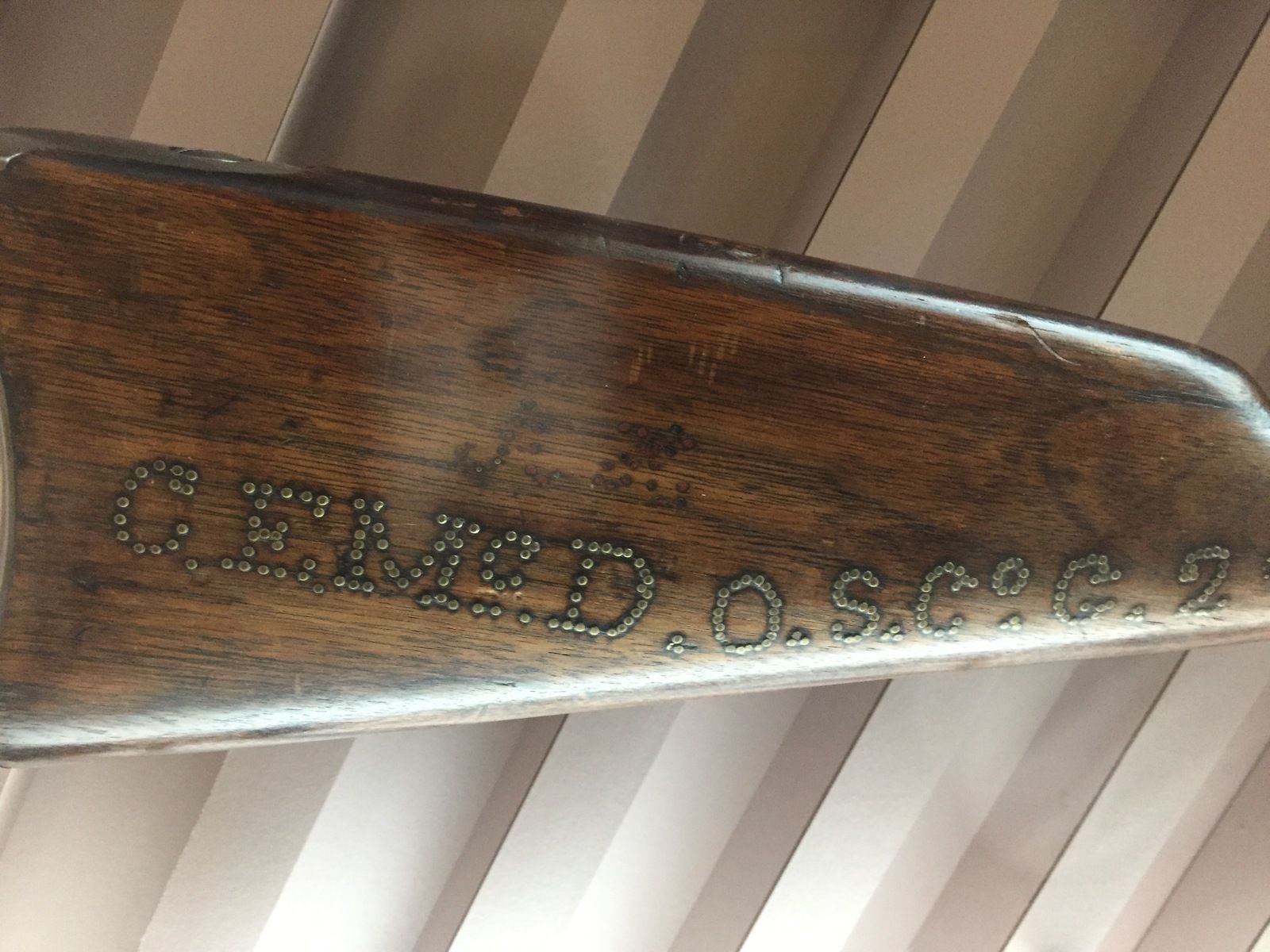
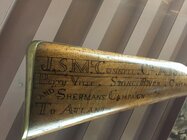
This has been mentioned in the newbies thread. I wanted to bring it into a main thread. I had come to believe that soldiers didn't personalize thier assigned weapons. Yet. These pics were from Springfield Armory. I did not ask the ranger if they had provinance but I doubt they would be on display Everything they had was first rate.

Also. When I restored a 3" ordinance rifle. And scraped it down to bare metal there were inscriptions. I am fairly confident that I was the first person in this century to see it as such. I couldn't make out what was written but it wasn't chicken scratch. I don't think the practice was that odd during the acw
image.jpeg
image.jpeg
image.jpeg
image.jpeg
 

Attachments

  • image.jpeg
    image.jpeg
    234.6 KB · Views: 325
These carved rifle butts are things of wonderment to me. In particular, I think Henry Johnson's is a remarkable feat of incised carving. J. S. McConnell's musket stock is fabulous, too, and reminds me very much of the sort of inscribed type and scenes we would see on old, "engraved" powder horns.
 
I tend to believe that the majority of these are post-war embellishments done as "rememberance" pieces to be handed down through the families. There are most certainly period pieces done during the war, but they seem to be name/initials, company/regiment, and maybe a date.

I know first hand of a family heirloom musket, complete with belt, buckle, cap box, sling, bayonet and scabbard which includes the papers showing purchase at time of discharge. The musket's stock is beautifully chip carved with his name and regiment. Every paper the family has which was signed by their German soldier relative is signed with "His Mark", usually an X, sometimes a cross, and witnessed by someone else. The family was baffled as to how he was able to carve his name when he was illiterate. I explained that, very simply, he got someone else to do it for him!
J.
 
"Florence Fleming" was the name of the rifle belonging to Sam Watkins messmate W A Hughes in Company Aytch. Watkins says it was "the brightest gun in the whole army." After Hughes was mortally injured in July 1864, he asked that Watkins receive some personal effects along with the rifle Florence Fleming, which Sam Watkins carried until the surrender at Bentonville, NC in 1865. Watkins writes that the rifle had the name on the stock in silver letters. It may have been in tacks. However, not much else is said about it after that.

In the Ordnance Returns for the 1st TN, the records show a mixture of Springfields and Enfields in the ranks. One thing I was told (from an extremely reliable source) was that "Florence Fleming" was either a captured US Springfield or a CS Richmond, so the returns suggest that there is a possibility this arm was not an Enfield as most readers of Co Aytch probably assumed it was (I did). "1st and 2nd quarter of 1864 Col. Feild's Ordnance repot shows the 1st, & 27th. Tenn. armed with 74 Enfields, and 174 .58 Cal. Rifled Muskets. This return is dated June 30th, 1864 from Marietta, Ga. In a report of ordnance issued to Col. Feild's Regt. at Dalton, Ga, April 20th, 1864 by Alex Allison acting Ordnance Officer Maney's Brigd. lists 20 Springfield Rifles Cal. 58. being issued to the 1st. & 27th. Tenn." The above info. comes from Col. Feild's, and Alex Allison's service records.
 
I think the initialed ones and personally marked ones are interesting. I have seen several but never could afford the price.
 
So you are saying that soldiers were allowed to purchase their weapons upon discharge? I did not know that.
Hey, Tin Can, I do believe this was the norm. In the case of my ancestor, I have his mustering out papers. On them, I see that he mustered out with his Colt revolver, his saber, his haversack and a few other issued items. All of those were deleted from his final pay and he got away with a very small final payroll payment, plus the issue items that he had just purchased from the Army.

Here's what drives me crazy: I know that man went home to Howard County, Missouri--a location just across the Missouri River from where I sit tonight. But I have NO idea where any of those items are tonight. My ancestor's direct line came down on a different branch. He was a great uncle to me. His son died without a wife as far as I know. He had daughters who married and, presumably, their progeny inherited the prized civil war soldier trappings. Man....I HOPE they didn't just get shuffled off to some collector in 1920 or whatever.......... I doubt I will ever know the truth.
 
I hear what your saying. My great-aunt wouldn't give me my g-g-grandfathers saber, because she said she didn't have anything to give my twin so now I have no ides where it is.
 
The owner of this repro copied the carving from an original. I have no memory of the provenance of the original other than it was an Iowa soldier and the carving was on an M1861 Springfield.
View attachment 89654
My heart skipped a beat or two when I saw the excellent condition of the stock. Then I read more carefully and saw that it is a repro. But that's still just excellent as far as I'm concerned. Very cool!
 
So you are saying that soldiers were allowed to purchase their weapons upon discharge? I did not know that.
Yep for Union soldiers it was something like $8 to buy your rifle, and if you carved it up with initials and the like it was probably not an option...you bought it. That was government property and they took a dim view of the personalized wood carvings by all accounts.
 
We must keep in mind that we only very rarely know when graffiti was put on a rifle stock. I have handled an M1817 percussion conversion rifle that was engraved with the soldiers name in the patch box and "I carried this to Vicksburg" carved into the wrist. His company was indeed issued M1817 in Minnesota before they left for the war but ordnance returns show no M1817's in the regiment during the Vicksburg campaign. So the question becomes when was the rifle acquired? As it almost certainly wasn't the weapon he carried as he marched into Vicksburg. But that rifle was owned by the soldiers Great grandson along with his diary some drawings and a pile of letters home.

Rock solid provenance is a difficult thing to establish and just because it was owned by a soldier post war doesn't mean it's the same weapon he carried. Surplus arms flooded the market post war and civil war arms were readily available on the cheap made more so by the rise of breech loading cartridge arms. I have long ago learned to buy the item, not the story. Many a story has been passed down across the generations that are just plain wrong. Whether distorted by time and memory or outright fabrication we may never know.
 
I was thinking about soldiers who bought weapons during the war - I understand that soldiers would by Spencers when they were available because it increase their chance of living (repeaters). I would imagine if you paid a few months worth of pay on a rifle you would want to be able to prove you owned it. I know most men were honorable but I have also seen some crazy thing happen when it comes to life and death situations. Even with the muzzleloaders, I am sure some were better than others. The Springfield Armory was pretty impressive is size. The British method of manuafacture invited more variation. I would imagine soldiers would try to switch rifles they felt werent working 100% or were "unluckey". I think I newbie, off a farm for the 1st time in his life, would not pick up on this too quickly.
 
John Allen Wyeth notes in his memoirs With Sabre & Scalpel (Harper Bros NY 1914) p 237 that, " It was on this march that an attempt was made to collect all the carbines and most modern and effective guns in the regiment and give them to the two flanking companies. I had bought my Burnside carbine with fifty dollars given me by my married sister, and I resented the order to turn it in for a long and heavy Austrian rifle. It so happened that a dear friend was the ordnance officer, and when the inspection was made he allowed me to retain my carbine."

Point being, I would not be so sure the Minnesota soldier with the M1817 did not carry it at Vicksburg even though the company was issued something else. A bond was formed sometimes from surviving life or death situations and having depended on your rifle/musket in such circumstances, soldiers could be reluctant to part with them...even when ordered to do so and exceptions were sometimes made. This psychological phenomenon also explains the initials which seem to personalize certain arms. Granted, most were glad for upgraded equipment and happily turned in their old clunkers, but exceptions can be found in the records.

On the other hand, memories are faulty sometimes. A Confederate soldier at 1st Manassas claims to have picked up an Enfield rifle from a fallen comrade. Problem is the first Enfield rifles to arrive in the Confederate States were on the blockade runner Bermuda and it left England with those rifles in August 1861 about a month after that battle.
 
Last edited:
John Allen Wyeth notes in his memoirs With Sabre & Scalpel (Harper Bros NY 1914) p 237 that, " It was on this march that an attempt was made to collect all the carbines and most modern and effective guns in the regiment and give them to the two flanking companies. I had bought my Burnside carbine with fifty dollars given me by my married sister, and I resented the order to turn it in for a long and heavy Austrian rifle. It so happened that a dear friend was the ordnance officer, and when the inspection was made he allowed me to retain my carbine."

Point being, I would not be so sure the Minnesota soldier with the M1817 did not carry it at Vicksburg even though the company was issued something else. A bond was formed sometimes from surviving life or death situations and having depended on your rifle/musket in such circumstances, soldiers could be reluctant to part with them...even when ordered to do so and exceptions were sometimes made. This psychological phenomenon also explains the initials which seem to personalize certain arms. Granted, most were glad for upgraded equipment and happily turned in their old clunkers, but exceptions can be found in the records.

On the other hand, memories are faulty sometimes. A Confederate soldier at 1st Manassas claims to have picked up an Enfield rifle from a fallen comrade. Problem is the first Enfield rifles to arrive in the Confederate States were on the blockade runner Bermuda and it left England with those rifles in August 1861 about a month after that battle.

Do you think men became attached to their issued weapons (I think you are making a point above about personal weapons), and if they did, how did they tell their from another when they look pretty much the same?
 

Learn About Us
About CivilWarTalk
Contact the Webmaster
Meet the Staff
Link to CivilWarTalk
Join Our Community
Register
Browse Forums
View Today's Discussions
Search the Forum
Get Help
FAQ
Student Guide
Forum Rules & Etiquette
Copyright / DMCA

     Contact Us CivilwarTalk on Facebook CivilWarTalk on YouTube CivilWarTalk on Twitter RSS Feed

Bringing the American Civil War and More to Life.
© 1999 - , CIVILWARTALK, LLC - Site Version 10.0

SlaveryTalk.com - SecessionTalk.com - CivilWarTalk.com - ReconstructionTalk.com
Back
Top