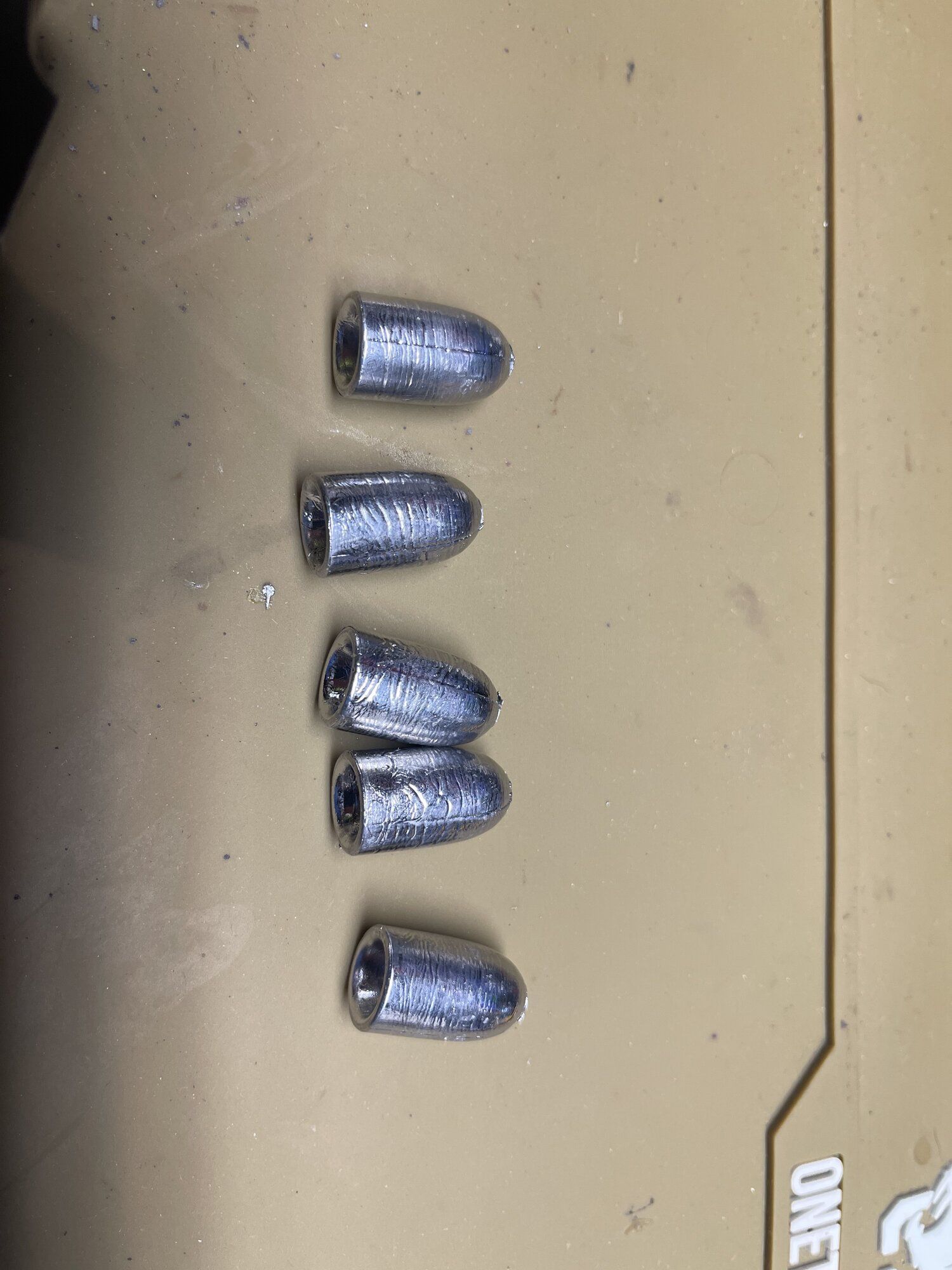
Original Enfield bullet mould

Shootist

Cadet
Joined
Sep 3, 2025
Against my better judgement I decided to cast a few with my ACW english import bullet mould. Yes I probably shouldn't have but curiosity got me.
I've had it for some time, I
never had the intention of using it, this is what I found. They're not that pretty but usable.
After casting about 6 rounds although marked .577 it throws a variety of bullets from .565-568 diameter .
Weight was the same, bouncing between 525 and 532gr
length was consistent at 989.5-990
Mould got pretty hot it's brass of course.
Correct me if I'm wrong but is the difference in diameter from temperature or something else?
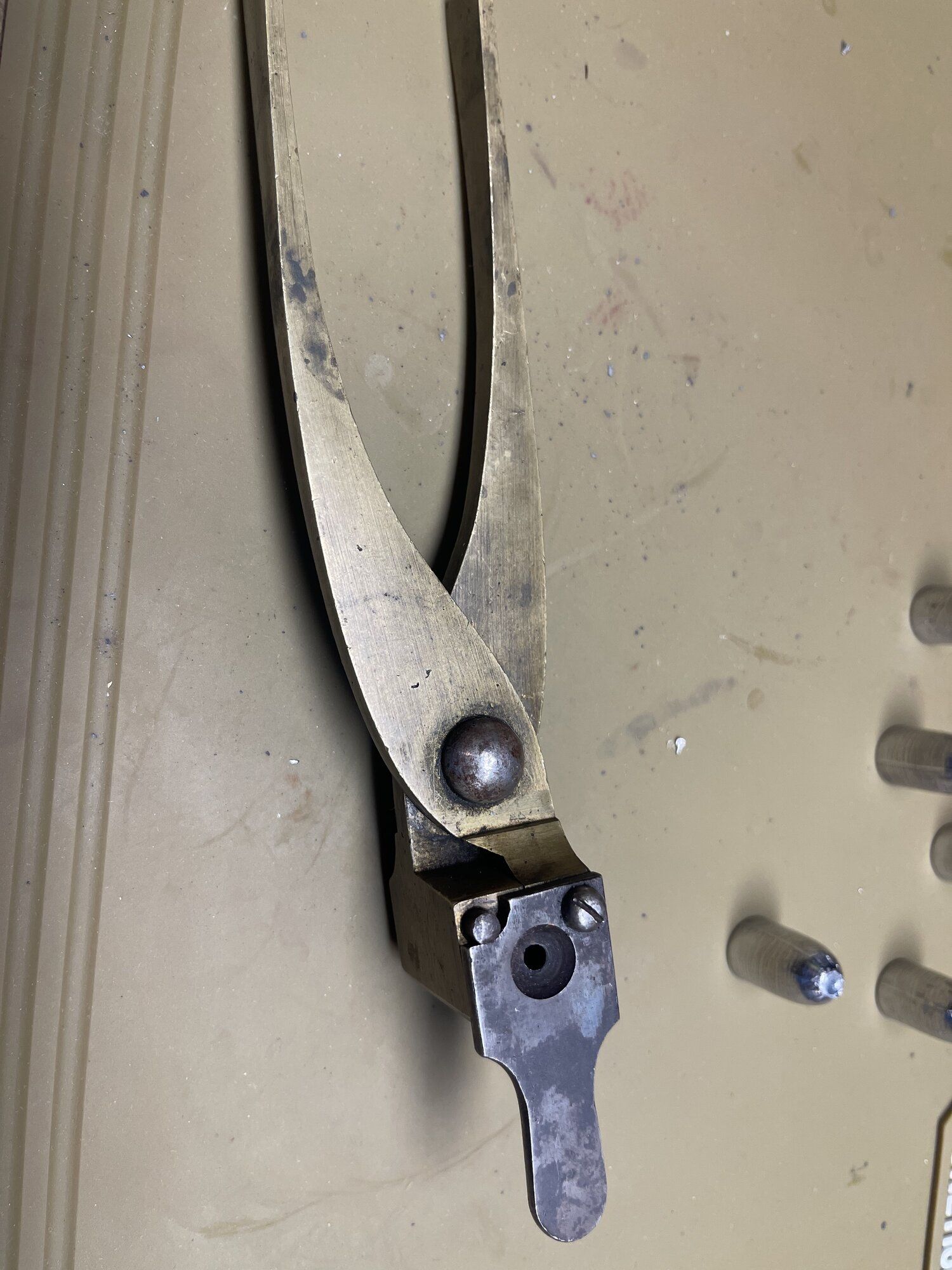
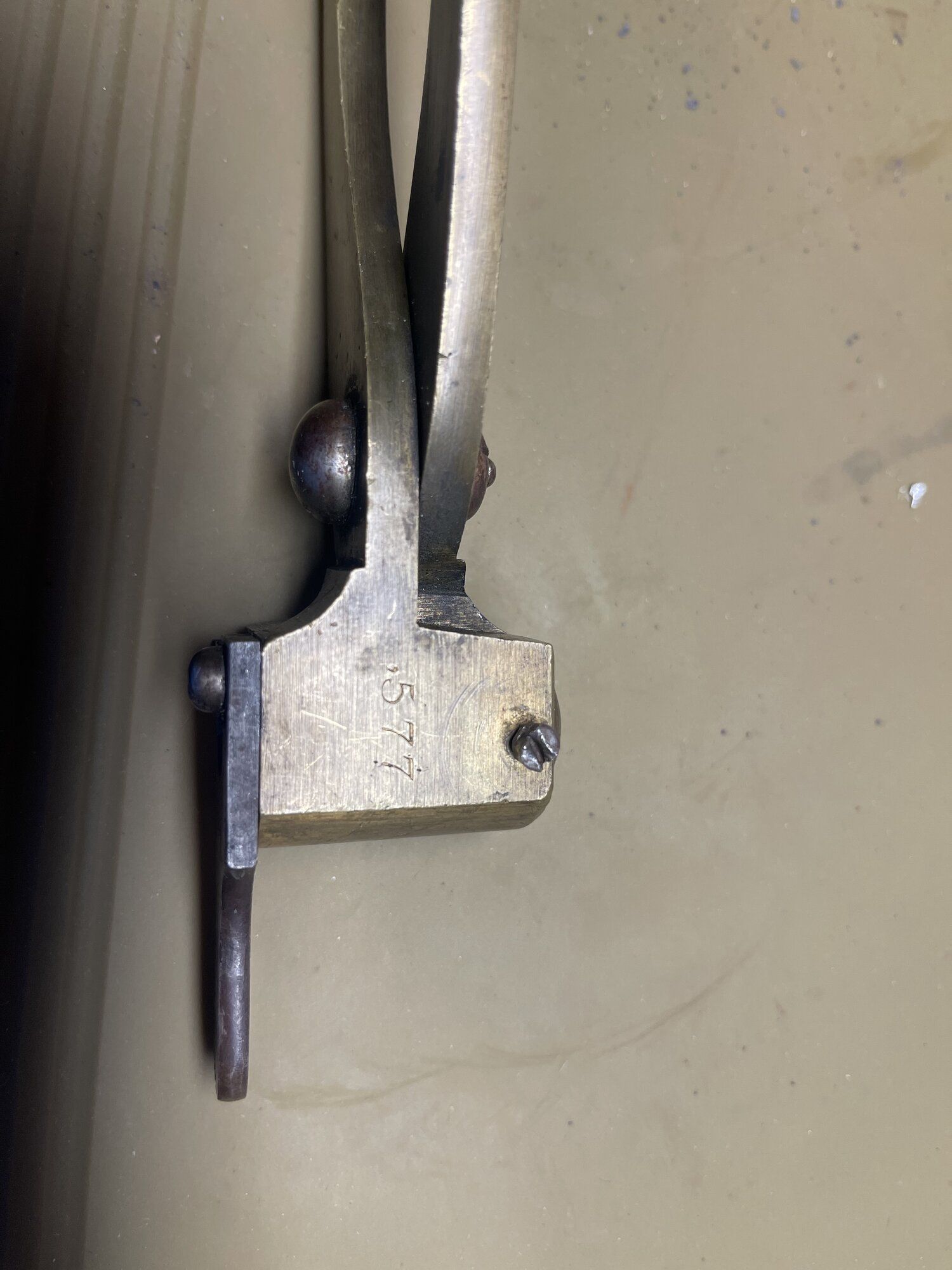
IMG_6819.jpeg


IMG_6820.jpeg


IMG_6821.jpeg


IMG_6822.jpeg
 
I think the difference comes from the mold heating up with use. The diameter you give is right on for the first issue .577 Pritchett bullet, the diamerter later dropping to .550 for easier loading. Turning up the temperture on your lead will help with the wrinkles. A couple of corn cobs slipped over the mold's handles will stop the hand burning.
 
Exactly. What I did was I pulled 2 mould handles off a mould I haven't used in years,
(I couldn't find any corn cobs Joe) That brass mould gets so **** hot. Any how
I was able to get most all of the wrinkles out and a fairly consistent 568 diameter and consistent 990 length along with a weight of 530. Now I'll make a a few cartridges and see how the fair in an original 24 bore. I'm hoping they work well.
I prefer the paper patch over a minie.
 
Against my better judgement I decided to cast a few with my ACW english import bullet mould. Yes I probably shouldn't have but curiosity got me.
I've had it for some time, I
never had the intention of using it, this is what I found. They're not that pretty but usable.
After casting about 6 rounds although marked .577 it throws a variety of bullets from .565-568 diameter .
Weight was the same, bouncing between 525 and 532gr
length was consistent at 989.5-990
Mould got pretty hot it's brass of course.
Correct me if I'm wrong but is the difference in diameter from temperature or something else?
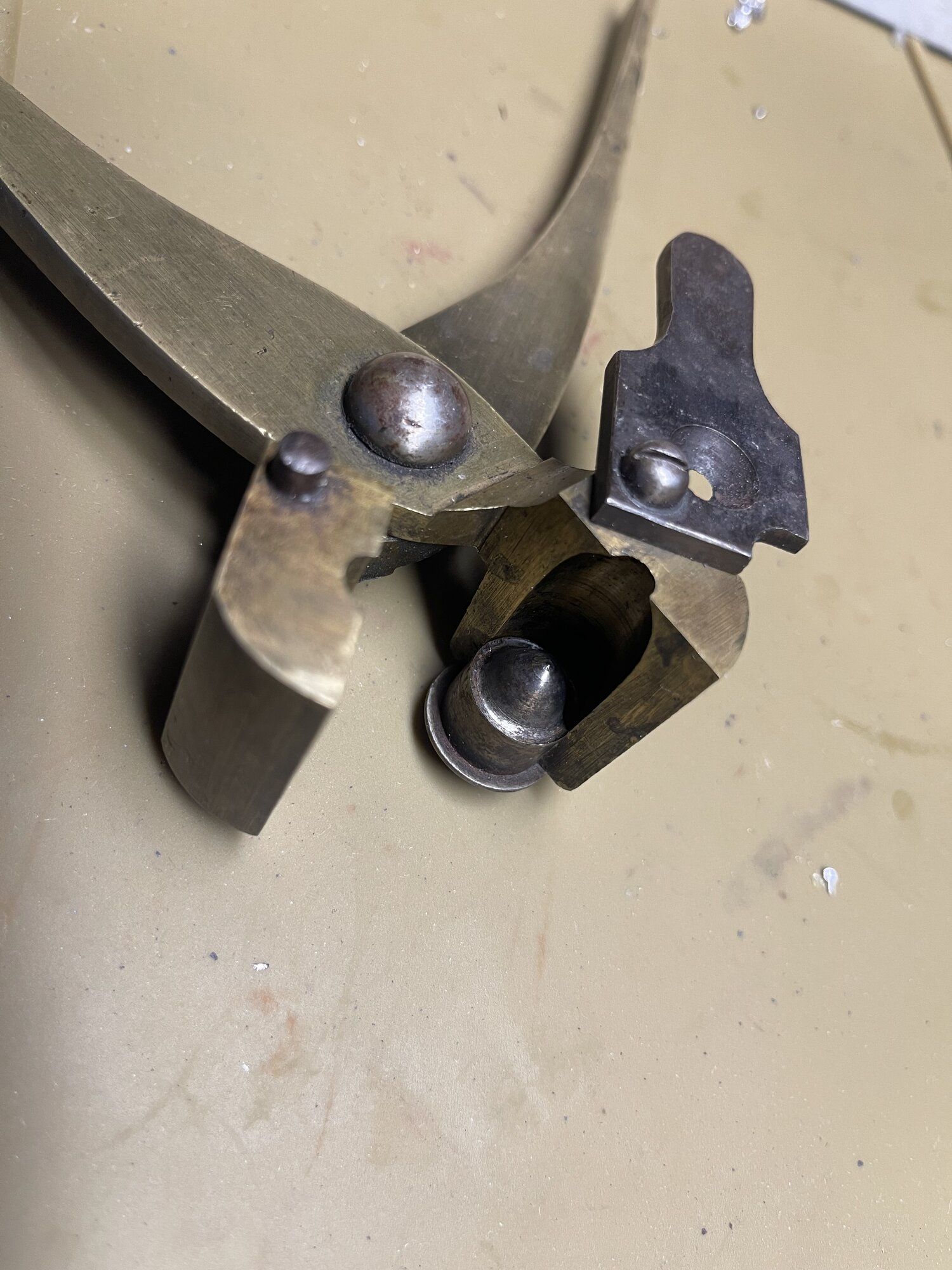
View attachment 565994

View attachment 565995

View attachment 565996

View attachment 565997
I'mI'm glad you castes some. And shared the results. Unlearned a while bunch. I have a Whitworth and the bolt mold. I have been unsuccessful at getting a descent casting. The advice here will help.
I am looking for bullet molds I found a .54 cal. mold made expressly for re pro Sharp's rifles and carbines. I had been using round ball and short plug In Line style bullets which kind of work. I'll need a new .58 mold for 4 hungry muskets that I have got to have ammo for.
My new Le Mat revolvers have a special mold but it is out of stock. You got a conical .44 and 2 shot pieces with every casting. What a hoot!
I have a .69 cal. Carbine but I don't know about a round ball mold for it. I may just used that as a shotgun. I can buy bags of round ball for what I need.
Any advice on molds or casting would be appreciated.
Cheers!
 
What Whitworth mold are you using?
The one that came with the rifle. It is a Parker Hale Whitworth. I think ca. 1970s. I got them from someone who needed quick cash. $650.00 or something like that for both rifle and mold. I have never fired it live. Here is a long Whitworth non hex bullet mold that I am considering. I just don't understand all the rings in the bullet for a hex bore barrel?
 
Somebody made a wood board to make bondo plugs for their enfield.

I wish I had a smooth sided pritchett ball mold.

Regarding the rings for a hex bore bullet, those are grease grooves.

Use a micrometer and not a caliper to measure the diameter of a cylindrical object.
 
Somebody made a wood board to make bondo plugs for their enfield.

I wish I had a smooth sided pritchett ball mold.

Regarding the rings for a hex bore bullet, those are grease grooves.

Use a micrometer and not a caliper to measure the diameter of a cylindrical object.
I also would like a Pritchett mold.
I realise they are grease grooves but how many are necessary?
I shall keep that in mind.
Thanks.
Cheers!
 
How many grooves are necessary? Dunno. As we both know, the original .451 Whitworth bullet was a smoothsided hexagonal projectile and .451 cylindrical bullets were found to be equally accurate (don't remember who made that assertion). Sounds like something worthwhile testing and writing a lengthy article on (complete with chronograph).
 
The one that came with the rifle. It is a Parker Hale Whitworth. I think ca. 1970s. I got them from someone who needed quick cash. $650.00 or something like that for both rifle and mold. I have never fired it live. Here is a long Whitworth non hex bullet mold that I am considering. I just don't understand all the rings in the bullet for a hex bore barrel?
Those are grease grooves, I'm pretty sure it was the same mold supplied for use in the .451 Volunteer rifle with a normal round bore and was also supplied with a .451 sizing die. That bullet when cast in pure lead will slump under firing and assume the hex shape of the bore. I shoot Linotype alloy hex bullets cast in a Pedersoli mold over 70 grains of 2F Goex. The Linotype makes a hard well filled out bullet. Since they don't upset I use a lubed felt wad under the bullet as a gas check. Never tried to get it super accurate, my at home range is only 100 yards so minute of milk jug was good enough. I have a cylindrical Whitworth mold but like just like casting and handling the unique 6 sided bullets more:cannon:
 
Those are grease grooves, I'm pretty sure it was the same mold supplied for use in the .451 Volunteer rifle with a normal round bore and was also supplied with a .451 sizing die. That bullet when cast in pure lead will slump under firing and assume the hex shape of the bore. I shoot Linotype alloy hex bullets cast in a Pedersoli mold over 70 grains of 2F Goex. The Linotype makes a hard well filled out bullet. Since they don't upset I use a lubed felt wad under the bullet as a gas check. Never tried to get it super accurate, my at home range is only 100 yards so minute of milk jug was good enough. I have a cylindrical Whitworth mold but like just like casting and handling the unique 6 sided bullets more:cannon:
The Hex Bolts are unique and are a hit at Living History events. Must be nice to have a home range.
My mold is the single cavity with a separate base tool that creates the "Minie'" hollow base. There is also a removal punch that is a small round metal dowel. Investing in a new easier mold I think would be awesome. My .58 single cavity is really messed up. Loose and there is some weird stuff all over it. See? talked myself into it.
I like setting a portable table out in the boonies and put big wooden beam ends from construction sites down range. Recovering lead is my thing. A bullet stuck in a splintered piece of wood does the illustrating for me at events.
 
Somebody made a wood board to make bondo plugs for their enfield.

I wish I had a smooth sided pritchett ball mold.

Regarding the rings for a hex bore bullet, those are grease grooves.

Use a micrometer and not a caliper to measure the diameter of a cylindrical object.
I bought an ice maker from TEMU last Summer and Ice Cubes are shaped.like smooth sided hollow base bullets. I found that amusing. 2 sizes but I haven looked at what caliber. Rifle and revolver I bet. HA!
Cheers!
 
For the bullet collectors out there. If you see a bullet with waves in its because of a cold casting. This is a perfect example of of why and how it happens. Sometimes good things can come from a mishap. Thanks for the education
 
The Hex Bolts are unique and are a hit at Living History events. Must be nice to have a home range.
My mold is the single cavity with a separate base tool that creates the "Minie'" hollow base. There is also a removal punch that is a small round metal dowel. Investing in a new easier mold I think would be awesome. My .58 single cavity is really messed up. Loose and there is some weird stuff all over it. See? talked myself into it.
I like setting a portable table out in the boonies and put big wooden beam ends from construction sites down range. Recovering lead is my thing. A bullet stuck in a splintered piece of wood does the illustrating for me at events.
Sounds like you have the Dyson type mold. While historically accurate in design it makes for a poor molding experience. The Pedersoli mold is a conventional clamshell mold, casting and dumping bullets with it is a snap. It comes without handles but inexpensive Lee handles will work.


Sounds like you have the Dyson type mold. While historically accurate in design it makes for a poor molding experience. The Pedersoli mold is a conventional clamshell mold, casting and dumping bullets with it is a snap. It comes without handles but inexpensive Lee handles will work.


I will look into this. I couldnt use a dozen or so for firing. I've never fired this thing. I also would lime a Davidson scope or a facsimile of one. The tubular scopes just don't look right on a Whitworth.
 
Sounds like you have the Dyson type mold. While historically accurate in design it makes for a poor molding experience. The Pedersoli mold is a conventional clamshell mold, casting and dumping bullets with it is a snap. It comes without handles but inexpensive Lee handles will work.


My only issue with this is if that bolt will fit a Parker Hale bore twist. The round one might be a better choice.
 

Learn About Us
About CivilWarTalk
Contact the Webmaster
Meet the Staff
Link to CivilWarTalk
Join Our Community
Register
Browse Forums
View Today's Discussions
Search the Forum
Get Help
FAQ
Student Guide
Forum Rules & Etiquette
Copyright / DMCA

     Contact Us CivilwarTalk on Facebook CivilWarTalk on YouTube CivilWarTalk on Twitter RSS Feed

Bringing the American Civil War and More to Life.
© 1999 - , CIVILWARTALK, LLC - Site Version 10.0

SlaveryTalk.com - SecessionTalk.com - CivilWarTalk.com - ReconstructionTalk.com
Back
Top