Lincoln Never signed, Never sent

frontrank2

Major
Forum Host
Joined
Oct 10, 2012
Location
Mt. Jackson, Va
July 14, 1863 OTD, President Lincoln writes a letter to General Meade regarding the escape of the ANV after the Battle of Gettysburg.

"I have just seen your despatch to Gen. Halleck, asking to be relieved of your command, because of a supposed censure of mine. . . . But I was in such deep distress myself that I could not restrain some expression of it. . . . I do not believe you appreciate the magnitude of the misfortune involved in Lee's escape. He was within your easy grasp, and to have closed upon him would, in connection with our other late successes, have ended the war. . . . Your golden opportunity is gone, and I am distressed immeasurably because of it." [The letter was never signed or sent.] Abraham Lincoln to George G. Meade, 14 July 1863, CW, 6:327-29.
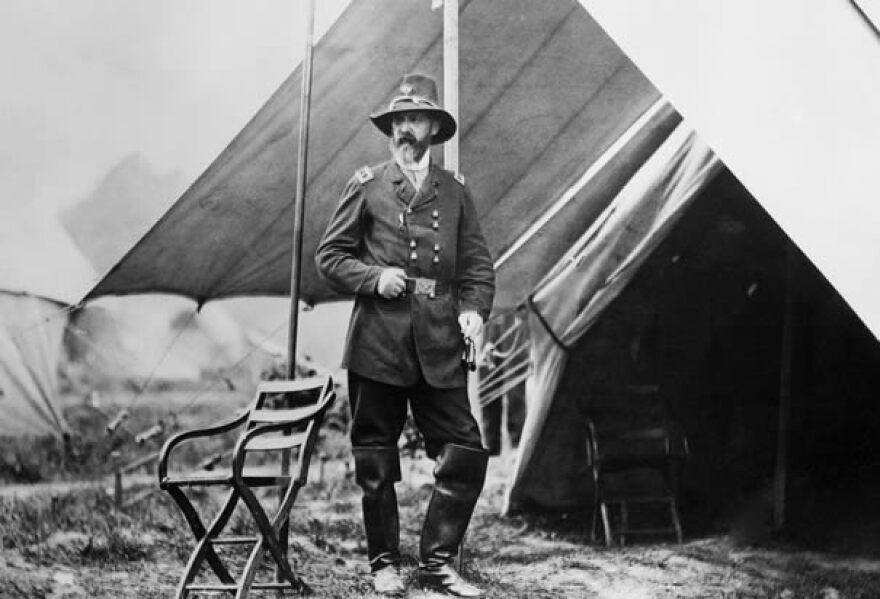
meade10.jpeg
 
Lincoln was being especially unfair to Meade here, similar to how he'd been to McClellan following the Maryland Campaign. Both men had just had their armies battered in fending off against Lee's invasions, but still had been able to defeat Lee (Meade of course at Gettysburg, and McClellan at South Mountain).
Excellent point!:thumbsup:
 
Lincoln was being especially unfair to Meade here, similar to how he'd been to McClellan following the Maryland Campaign.

Probably a better Angel whispered in his ear and he saw his error, which is why it remained unsigned and unsent.

Think of how many communications we've made in the modern era that we regret, or wished we'd pondered before hitting 'send'.
 
I think Lincoln needed to get his frustration off his chest (strange expression, that!), but realized he was being unfair to Meade, and that's why it was never sent. I wonder what other such 'unsent' notes might have been written but have not survived.
Agree; interesting that Lincoln chose to retain the letter in his papers as opposed to writing it and, once deciding to not send it, destroying it. Curious the thought process behind the retention of it.

I've read of instances where this technique has been employed; kind of a self-mental health treatment. Getting ones frustrations out on paper without causing harm to others or to relationships by actually sending.
 
Agree; interesting that Lincoln chose to retain the letter in his papers as opposed to writing it and, once deciding to not send it, destroying it. Curious the thought process behind the retention of it.

I've read of instances where this technique has been employed; kind of a self-mental health treatment. Getting ones frustrations out on paper without causing harm to others or to relationships by actually sending.
Besides the psychological aspect, I think the act of writing out a message and the time it takes provide opportunity for additional thought. How does the writer expect the recipient to respond? How likely is it that the same circumstances will arise again? How will the message affect the two parties' dealings with one another? Does the writer have all the facts or fully understand them? As @Story pointed out, today in the digital age, we hastily vent our opinions with the click of a button, often to our regret. But in the 19th Century, writing with a pen and inkwell, rereading while the ink dried, addressing an envelope, and then placing the letter in outgoing mail for posting or delivery by courier all allowed time to clarify one's thoughts and determine, finally, what is to be gained—or lost—by sending the message. Maybe Lincoln kept the letter to better recall his initial reaction to the ANV's escape. He wasn't known to be a diarist, but keeping the letter among his papers might have served a similar purpose.
 
Serendipitously tangential to this topic, a member bought a house SSE of the Union lines during the battle of Funkstown


Any order of battle experts know what Union units were near their structure?
 
Probably a better Angel whispered in his ear and he saw his error, which is why it remained unsigned and unsent.

Think of how many communications we've made in the modern era that we regret, or wished we'd pondered before hitting 'send'.
Interestingly enough, that angel was O. O. Howard, who went to see him and set him straight.
 
I think you're overlooking the obvious, namely Lincoln the politician realized that it would be unpopular to criticize the commander of the first army of the nation after stopping Lee.

Simply read Halleck's letter to Meade.

 
Agree; interesting that Lincoln chose to retain the letter in his papers as opposed to writing it and, once deciding to not send it, destroying it. Curious the thought process behind the retention of it.

I've read of instances where this technique has been employed; kind of a self-mental health treatment. Getting ones frustrations out on paper without causing harm to others or to relationships by actually sending.

Agree. Thought the retention of this proposed correspondence was the most interesting aspect of events surrounding this letter.

In modern times, some consider it beneficial as a cathartic experience (in appropriate circumstances) for individuals affected by intense inner turmoil to externally express their feelings in written form, then destroy what they penned shortly afterwards – as a form of release.

Here, on the basis of the bare letter contents, Lincoln at the time was clearly experiencing deep emotional disturbance (he repeatedly makes reference to the intensity of his 'distress' twice in the letter exhibited).

But upon later reflection, Lincoln allowed the calmer reasoned thoughts (perhaps aided by advice) of his nature to prevail over the deep upset that he felt at the time of penning it – that's why the letter was unsigned and unsent afterwards.

Wonder then, what motivated Lincoln to retain this letter as a reminder or record of his own resolved personal dilemma? Or, as was read somewhere, did he simply put the letter away and forgot about it, never to look at it again?
 
Probably a better Angel whispered in his ear and he saw his error, which is why it remained unsigned and unsent.

Think of how many communications we've made in the modern era that we regret, or wished we'd pondered before hitting 'send'.
Excellent point. Imagine if some of these Civil War era personalities had access to Twitter and Facebook 😯
 
Excellent point. Imagine if some of these Civil War era personalities had access to Twitter and Facebook 😯

Or ACW journalists were news-vacuuming each sides' Twitter postings (as is happening now with the RussUkraine War)
 
Agree. Thought the retention of this proposed correspondence was the most interesting aspect of events surrounding this letter.

In modern times, some consider it beneficial as a cathartic experience (in appropriate circumstances) for individuals affected by intense inner turmoil to externally express their feelings in written form, then destroy what they penned shortly afterwards – as a form of release.

Here, on the basis of the bare letter contents, Lincoln at the time was clearly experiencing deep emotional disturbance (he repeatedly makes reference to the intensity of his 'distress' twice in the letter exhibited).

But upon later reflection, Lincoln allowed the calmer reasoned thoughts (perhaps aided by advice) of his nature to prevail over the deep upset that he felt at the time of penning it – that's why the letter was unsigned and unsent afterwards.

Wonder then, what motivated Lincoln to retain this letter as a reminder or record of his own resolved personal dilemma? Or, as was read somewhere, did he simply put the letter away and forgot about it, never to look at it again?
Politics was always Lincoln's motivation
 
Indeed! Journalism has really taken a nose dive lately, hasn't it?

I was thinking of the near-instantaneous global transmission of Battle Damage Assessments, viz the Operational Security good (the Ukrainians) and bad (the Russians). Between the OSINT (Open Source Intelligence) observers professional and amateur, the general public has a pretty good idea of battle lines within 24 hours. Then again, Meade & Lee didn't have cell phones.

War Journalism has always been slimey. Oh look, a free book!
 

Learn About Us
About CivilWarTalk
Contact the Webmaster
Meet the Staff
Link to CivilWarTalk
Join Our Community
Register
Browse Forums
View Today's Discussions
Search the Forum
Get Help
FAQ
Student Guide
Forum Rules & Etiquette
Copyright / DMCA

     Contact Us CivilwarTalk on Facebook CivilWarTalk on YouTube CivilWarTalk on Twitter RSS Feed

Bringing the American Civil War and More to Life.
© 1999 - , CIVILWARTALK, LLC - Site Version 10.0

SlaveryTalk.com - SecessionTalk.com - CivilWarTalk.com - ReconstructionTalk.com
Back
Top