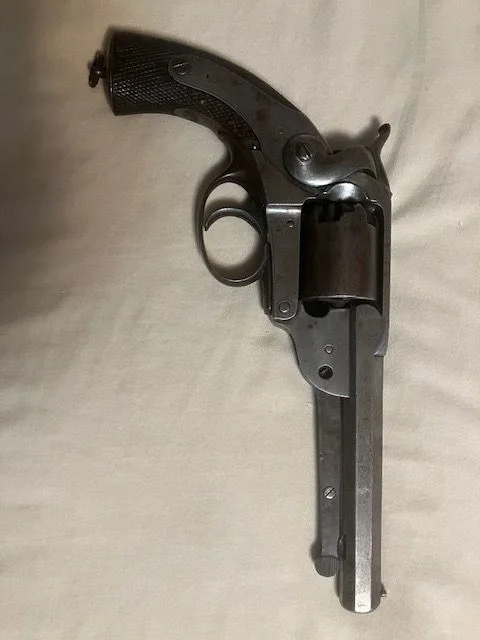
Need input on Kerr revolver

limestone1863

Corporal
Joined
Sep 19, 2019
Would like any info, input, remarks or suggestions on following:
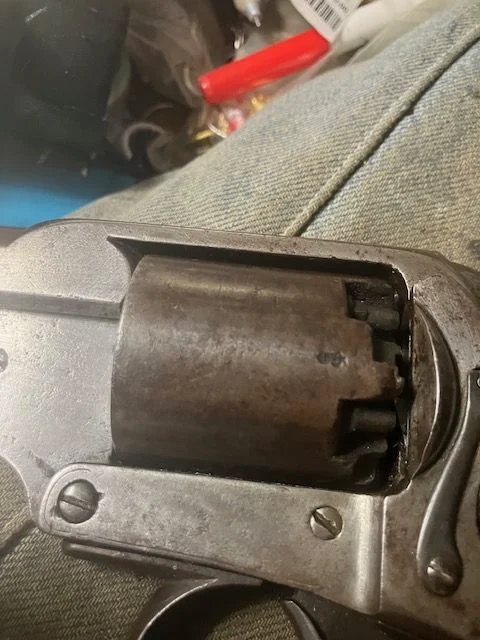
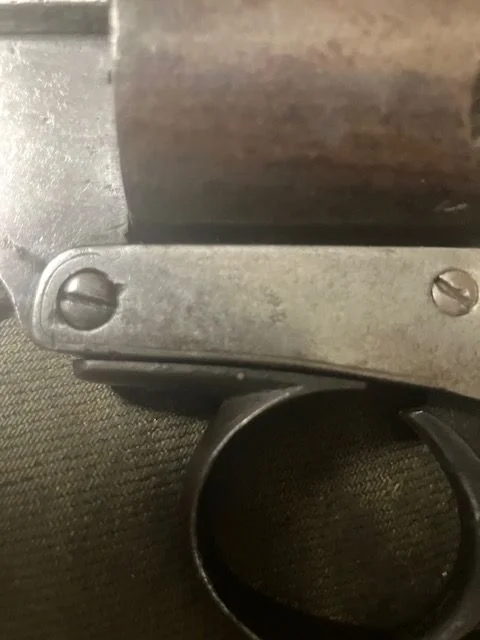
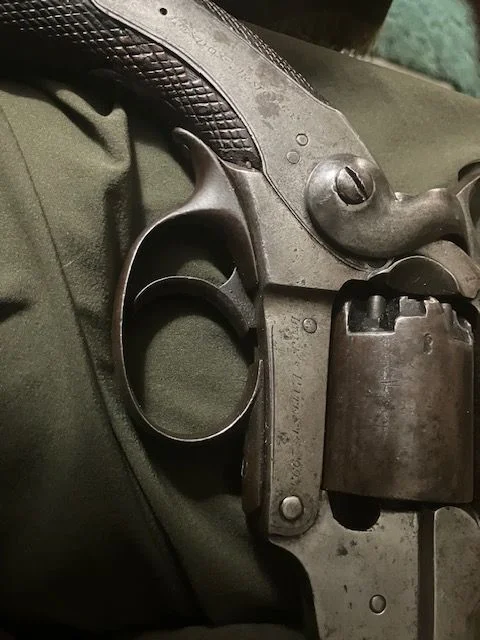
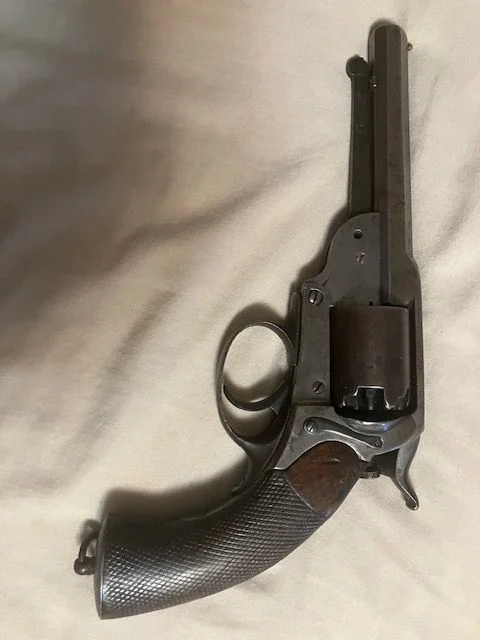
Kerr revolver 54 bore by London Armory Company. Inscribed SN. 2995 & stamped SN. under trigger guard confusing. Faint 2 & little lower & further- hard stamp 7, then light smaller 2, small possible 0 & further & higher up, harder stamp 0.
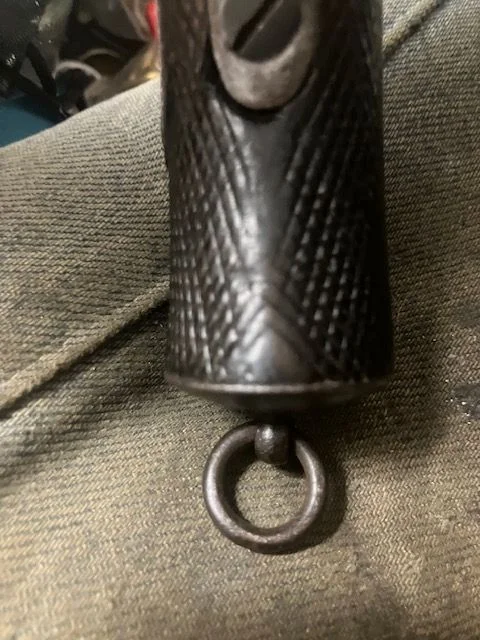
Been heavily sanded & then buffed, making other marking very light or hard to decipher. Butt still has faint remnant of bottom of anchor stamp.
Has early 1st rammer hole but has been modified to later rear rammer position. Believe factory mortifications. Thee cylinder has period screw head type cylinder rod.
Latch to hold lever rod in place to barrel broken on side.
Has oral provenance & found CS soldier that matching that but nothing else to associate revolver to him.
IMG_0129.webp


IMG_0138.webp


IMG_0139.webp


IMG_0136.webp


IMG_0135.webp


IMG_0134.webp
 
The inscribed number on the frame and the side of the cylinder is the serial number, often mistaken for the patent number. There should be stamped (not inscribed) numbers, and will be different to the serial number, on the inside of the trigger guard and also on the face of the cylinder. These stamped numbers, it has been suggested, are assembly numbers. A nice early Kerr and always nice to have any remnants of the JS anchor mark. Any chance of a better photo of the anchor mark? Only a few hundred away from my gun, I like it alot.
 
These are the numbers I mentioned in my last post. I have also attached a page copy of the 1963 Confederate Handguns by William Albaugh who was calling the stamped number the serial number. The engraved numbers follow the production numbers therefore are, in fact, the serial number. It is interesting to see the wide and varied spread of the stamped numbers. Mine are quite close to the serial number but many are nothing like.

kerr03.webp


kerr07.webp


kerr08.webp


kerr09.webp
 
On all British revolvers at the time, the official serial number was the one ENGRAVED on frame and cylinder. The frame would be prefixed by '(name) 's, Patent' and was added at the end of production. This is true of most 'top end' revolvers*. Assembler's marks or numbers with letters were used on production runs. Marks were the old way, numbers/letters were the 'new' way - pioneered by LAC and Adams in London.
Any retail source would be added along the top of frame A number were assembled by those retailers using parts supplied from the primary source - already serialled/markedand fitted locally. Kerr revolvers were mainly produced by London Armoury Company for the CSA - some 7,000. Many were NOT JS/anchor marked and not all would have reached the CSA. All will have London proofs on cylinder (each chamber) and on the barrel - usually, but not always, left upper side. Assembler's marks or numbers were generally used on production runs. The Union bought about 1,000 before 1862 too.

*The other designs such as Webley, Bentley, etc were not often graced with a patent number as they were produced/ machined and/orassembled by the retailer. There is also the problem of Belgian copies. Official copies (licenced) were marked 'Brevette' others were straight illegal copies marked in a similar fashion to the British examples, often differeing in detail. Proof marks were either Belgian (Liege) or illegal copies of British proofs and generally sold to locations not requiring proofs. The same applied to Colt and S&W copies.
 
The inscribed number on the frame and the side of the cylinder is the serial number, often mistaken for the patent number. There should be stamped (not inscribed) numbers, and will be different to the serial number, on the inside of the trigger guard and also on the face of the cylinder. These stamped numbers, it has been suggested, are assembly numbers. A nice early Kerr and always nice to have any remnants of the JS anchor mark. Any chance of a better photo of the anchor mark? Only a few hundred away from my gun, I like it alot.
Glad you like it & will try to post a better photo of remnant of anchor later today.
Wondering when & why rammer lever was modified?
 
Any more comments would be appreciated on this Kerr revolver. Curious as to obtain accessories for it or parts. Oral info with it states belonged to VA. Cav. Officer in unit early 1864. Appreciate early comments & info.
 
The early rammer levers were too weak when pivoting on the forward pivot point causing premature failure (a bad mechanical design). The later ones pivoted in the centre and many earlier ones (both yours and mine) were modified, I believe in period.
I have a nipple key/oiler for the Kerr which I obtained here in the UK but I believe they are quite scarce. There are 2 types one like mine and the other incorporates a mainspring vice. There are other threads covering this at some length. Thanks for posting, I do like the Kerr revolvers. I also like the Kerr small bore target rifles, again another rarity.

kerr01.webp
 
Thanks. While taking photo of remnants of anchor that will post later, noticed on front face of cylinder SN 27-0. Thanks to your photos I looked.:smoke: Thanks very much.
 
There is a very good section on the Kerr revolver in Russ Pritchards book "The English Connection". Shows the accessories very well, I have attached a copy of that page. I have a powder flask, with lanyard ring and made by James Dixon, again these are probably easier to find here in the UK.

kerr10.webp


kerr11.webp


kerr12.webp
 
Will send updated photo of remnants of anchor later. Thanks to your photos, I looked on face of cylinder & noted SN: 27-0, which is probable match to trigger guard. Thank you & appreciate your photos & info.
The early rammer levers were too weak when pivoting on the forward pivot point causing premature failure (a bad mechanical design). The later ones pivoted in the centre and many earlier ones (both yours and mine) were modified, I believe in period.
I have a nipple key/oiler for the Kerr which I obtained here in the UK but I believe they are quite scarce. There are 2 types one like mine and the other incorporates a mainspring vice. There are other threads covering this at some length. Thanks for posting, I do like the Kerr revolvers. I also like the Kerr small bore target rifles,
Can see in light, but not sure if you can see any of it in photos.

IMG_0143(1).webp


IMG_0143.webp


IMG_0144(1).webp


IMG_0144.webp
 

Learn About Us
About CivilWarTalk
Contact the Webmaster
Meet the Staff
Link to CivilWarTalk
Join Our Community
Register
Browse Forums
View Today's Discussions
Search the Forum
Get Help
FAQ
Student Guide
Forum Rules & Etiquette
Copyright / DMCA

     Contact Us CivilwarTalk on Facebook CivilWarTalk on YouTube CivilWarTalk on Twitter RSS Feed

Bringing the American Civil War and More to Life.
© 1999 - , CIVILWARTALK, LLC - Site Version 10.0

SlaveryTalk.com - SecessionTalk.com - CivilWarTalk.com - ReconstructionTalk.com
Back
Top